
Key Takeaways
- Automatic Deductions Are Not Automatic Compliance: The FLSA allows employers to exclude bona fide meal periods only when the employee is completely relieved of duty. If healthcare workers regularly work through or are frequently interrupted during the break, the time may be compensable.
- The Correction Process Matters: An automatic deduction is risky when the employer does not provide a realistic way to report missed or interrupted meal periods and make payroll whole.
- Collective Actions Hit Hardest: Because auto-deduction policies often apply across hourly nursing, CNA, and technician roles, these cases can become FLSA collective actions under 29 U.S.C. § 216(b).
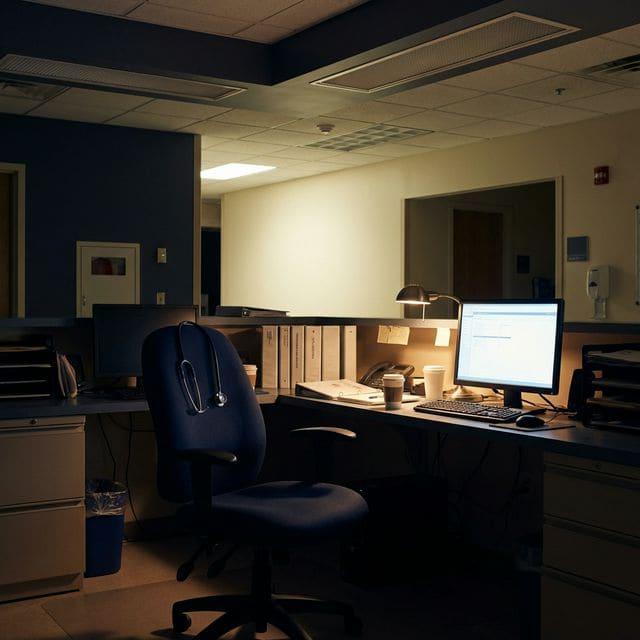
For many hourly healthcare workers, a 12-hour shift ends with the same problem: the timecard shows a 30-minute meal break that never really happened. The timekeeping system automatically deducts half an hour from the shift, reducing compensable time from 12 hours to 11.5 hours, even though the worker stayed responsible for patients. Instead of an uninterrupted meal, the worker was responding to call lights, administering medications, helping a patient to the bathroom, monitoring a post-surgical patient, or dealing with an admission that arrived mid-shift. The "break" existed only in the payroll software.
An automatic meal deduction is not illegal by itself. The problem is using that deduction when nurses are not actually relieved from patient-care duties, or when the hospital's correction process is too impractical to capture missed breaks. When nurses work through a deducted meal period, the deduction can become unpaid compensable time under the Fair Labor Standards Act. Because the same timekeeping rule may apply to many hourly workers at once, these cases are often evaluated as unpaid wages and FLSA collective actions, not just one-off payroll mistakes.
What the FLSA Actually Requires
The distinction between a compensable rest period and a non-compensable meal break is straightforward under Department of Labor regulations.
Rest periods of 20 minutes or less are compensable working time under 29 C.F.R. § 785.18. The employer must pay for them and cannot deduct them from hours worked.
Bona fide meal periods of 30 minutes or more may be excluded from hours worked under 29 C.F.R. § 785.19 - but only if the employee is completely relieved of all duties for the purpose of eating a regular meal. The regulation is explicit: the employee must be completely relieved. If the employee is required to remain at their workstation, respond to calls, or perform work during the meal period, the break is not bona fide and the time is compensable.
What Healthcare Workers Should Check First
The Department of Labor's healthcare guidance still frames auto-deducted meal periods the same way: the deduction can be used only when the employer ensures the worker receives a full, uninterrupted meal break. In Fact Sheet #53, the Department specifically addresses healthcare facilities that automatically deduct 30 minutes. If residents, patients, call lights, admissions, charting demands, or supervisor instructions interrupt the meal period enough that the break is predominantly for the employer's benefit, the employer must pay for the period.
That means the legal question is practical, not cosmetic. A hospital does not win because its handbook says nurses should report missed meals. The question is whether nurses actually receive meal periods free from all duties, whether missed-break reporting is usable during real shifts, and whether payroll corrects the deduction when the break was not bona fide.
For nurses working 12-hour shifts, this distinction matters enormously. A nurse who works 12 hours with a legitimate 30-minute meal break has 11.5 compensable hours. Over three shifts per week, that's 34.5 hours — no overtime. But if those meal breaks aren't legitimate because the nurse was never truly relieved of duty, the compensable time jumps to 36 hours per week. Add a fourth shift — common with overtime or staffing shortages — and the nurse hits 48 hours, with 8 hours of overtime that the hospital isn't paying because its timekeeping system already deducted 2 "meal breaks" that never happened.
How Auto-Deduction Works in Practice
Many Oklahoma hospitals and healthcare facilities use electronic timekeeping systems -- Kronos, ADP, Cerner, or similar platforms -- that may be configured to automatically deduct 30 minutes from shifts exceeding a certain length. The nurse clocks in at 6:55 AM and clocks out at 7:10 PM. The system records 12 hours and 15 minutes of work time, then automatically subtracts 30 minutes, resulting in 11 hours and 45 minutes of compensable time.
The problem is that the system may deduct the break regardless of whether the worker actually took one. And the mechanisms healthcare employers provide for reporting missed breaks are sometimes too cumbersome to work in real shifts:
- Exception-based reporting: Some employers require workers to fill out a paper form or submit an electronic request if they missed their meal break. But workers on understaffed units may not have time to fill out paperwork about not having time for breaks. The administrative burden can become a deterrent.
- Manager approval: Some systems require a supervisor to approve the override before the break is added back. Supervisors, under pressure to control labor costs, may deny overrides, question why the nurse didn't take a break, or simply ignore the requests.
- Time corrections: Some hospitals allow nurses to edit their time entries, but the process requires navigating multiple screens, providing justifications, and waiting for managerial approval. When corrections are routinely denied or discouraged, nurses stop requesting them.
- No mechanism at all: Some hospitals simply have no practical way for nurses to report missed breaks. The auto-deduction happens, and if the nurse didn't take a break, that's her problem.
The net effect can be a system that deducts break time from every shift, while making it hard for employees to recover the pay they are owed when breaks do not actually happen.
Why Nurses Don't Actually Take Breaks
Hospital nursing is not a job where you can walk away for 30 minutes and know everything will be fine. Patient care is continuous, unpredictable, and time-sensitive. The reasons nurses routinely miss meal breaks are inherent to the job:
- Patient acuity: Critical patients, post-surgical patients, and patients on telemetry monitoring require continuous attention. A nurse responsible for these patients cannot leave the unit unmonitored.
- Understaffing: When the unit is short-staffed — which is chronic in many Oklahoma hospitals — there is no one to cover the nurse's patients during a break. The nurse can either take a break and leave patients uncovered, or skip the break and provide safe care.
- Call lights and emergencies: Patient needs don't pause for meal breaks. A fall, a code, a rapid response, a new admission — any of these can interrupt a break and require immediate attention.
- Medication schedules: Medications must be administered at specific times. A nurse who leaves for a 30-minute break at noon may miss a 12:15 medication administration time, creating a patient safety issue.
- Documentation requirements: Charting must happen in real time or close to it. Nurses who fall behind on documentation often use "break" time to catch up while remaining on the unit and available to patients.
The Department of Labor has specifically addressed this. A meal period during which an employee must remain at their workstation, respond to calls, or stay available to work is not a bona fide meal period — it is compensable working time, regardless of whether the employee manages to eat something during it. Being "relieved of all duties" means genuinely free from work obligations, not just eating a sandwich at the nurses' station while charting.
The Overtime Multiplier Effect
Auto-deducted meal breaks don't just shortchange nurses on regular pay — they mask overtime that should be triggering premium rates. Consider a nurse working three 12-hour shifts per week:
With legitimate 30-minute breaks:
- 3 shifts × 11.5 hours = 34.5 compensable hours
- No overtime owed
Without legitimate breaks (reality for many nurses):
- 3 shifts × 12 hours = 36 compensable hours
- Still no overtime in a three-shift week — but much closer to the threshold
With a fourth shift (common with mandatory overtime or short staffing):
- 4 shifts × 12 hours = 48 compensable hours
- 8 hours of overtime owed at 1.5x the regular rate
- The hospital records only 4 × 11.5 = 46 hours, showing only 6 overtime hours
That 2-hour difference per four-shift week - entirely attributable to meal break deductions that did not match reality - adds up. Over a year, a nurse working regular overtime could lose thousands of dollars in unpaid premium pay. If the same practice applies across hourly nurses, CNAs, and techs, the aggregate exposure can be substantial.
What Recovery Looks Like
The FLSA provides strong remedies for workers subjected to unlawful auto-deduction practices. Under 29 U.S.C. § 216(b), affected workers can recover:
- Unpaid wages: The value of every meal break deduction that wasn't a bona fide meal period — typically 30 minutes per shift, at the nurse's regular rate or overtime rate depending on total weekly hours
- Liquidated damages: An equal amount, doubling the recovery. Liquidated damages are presumed unless the employer proves the violation was in good faith.
- Attorney's fees: The FLSA requires the employer to pay the prevailing employee's legal costs, making it financially viable to pursue these claims.
The statute of limitations is two years, or three years for willful violations. In an auto-deduction case, willfulness often turns on what the employer knew about interrupted breaks, whether employees complained, whether managers discouraged corrections, and whether payroll data showed routine missed-meal problems.
Why These Cases Become Collective Actions
Auto-deduction is a policy, not a one-time mistake. Hourly nurses, CNAs, patient care techs, and other non-exempt healthcare workers subjected to the same timekeeping system may share common proof: the system deducted a break, workers often did not receive a bona fide break, and payroll did not restore the time.
This uniformity makes auto-deduction cases textbook FLSA collective actions under 29 U.S.C. § 216(b). Named plaintiffs — typically a handful of nurses willing to step forward — file suit and seek conditional certification to send notice to all similarly situated employees. Every hourly healthcare worker at the hospital who experienced the same auto-deduction policy can then opt in to the collective.
The aggregate exposure in these cases can be substantial. A hospital with hundreds of hourly nurses and techs may face a claim measured shift by shift, employee by employee, plus potential liquidated damages and fees.
Hospital systems in Oklahoma are not immune from these rules. The legal question remains the same in every facility: did workers receive bona fide meal periods, and did the employer correct payroll when they did not?
What Nurses Should Do
If your hospital automatically deducts meal breaks from your timecards, here's how to protect yourself:
- Track your actual breaks: Use a personal log, a note on your phone, or even a text to yourself documenting whether you received an uninterrupted 30-minute meal break during each shift. Note what interrupted you — patient call, admission, code, medication pass.
- Save your timecards and pay stubs: These show the auto-deduction in action. If your timecard shows 11.5 hours when you worked 12, that's evidence.
- Document the correction process: If your hospital has a process for reporting missed breaks, use it — and document every time a correction is denied, delayed, or discouraged.
- Talk to coworkers: If you're not taking real breaks, your colleagues on the same unit almost certainly aren't either. A collective action is stronger with more participants.
- Contact an attorney: An employment lawyer can evaluate your situation, calculate your potential recovery, and determine whether a collective action is appropriate.
Your employer cannot retaliate against you for raising concerns about pay practices. The FLSA's anti-retaliation provision, 29 U.S.C. § 215(a)(3), protects employees who file complaints, participate in investigations, or join collective actions. An employment law attorney can evaluate your situation and determine whether a collective action is appropriate.
Frequently Asked Questions
Does it matter that my hospital has a break policy on paper?
No. What matters is whether you actually receive a bona fide meal break — 30 uninterrupted minutes completely relieved of all duties. A written policy that guarantees breaks is meaningless if the hospital doesn't staff adequately for nurses to actually take them. Courts focus on the reality of the workplace, not the employer's policy manual.
Is an automatic meal deduction legal by itself?
Sometimes. Federal law does not ban automatic meal deductions across the board. The problem arises when the employer deducts the time even though employees worked through the meal period, were interrupted by patient-care duties, or had no realistic way to report and correct missed breaks.
What if I eat at the nurses' station during my "break"?
If you're eating at the nurses' station while remaining responsible for patients — responding to call lights, monitoring telemetry, available for questions — you are not "completely relieved of all duties." That is compensable working time under DOL regulations, regardless of whether you managed to eat. A bona fide meal break means freedom from all work obligations, not just the ability to consume food.
I'm a CNA, not a nurse. Does this apply to me?
Yes. Any non-exempt (hourly) healthcare worker subjected to automatic meal break deductions has the same FLSA claim. CNAs, patient care techs, medical assistants, phlebotomists, respiratory therapists, and other hourly healthcare workers are all covered. If the hospital's timekeeping system auto-deducts your break and you don't actually take an uninterrupted 30-minute break, you're owed the same compensation.
How much could I recover?
This depends on your pay rate, shift length, number of missed breaks, and whether the unpaid time pushes you into overtime. A nurse earning $30/hour who misses one 30-minute break per 12-hour shift, working three shifts per week over three years, would have approximately $7,020 in unpaid regular-time wages — and $14,040 with liquidated damages. If missed breaks push weekly hours into overtime, the recovery is significantly higher because those 30-minute increments are owed at $45/hour (1.5x) instead of $30/hour.
Does it matter if I manage to eat something during my "break"?
Eating is not what makes a break bona fide. Under DOL regulations, the question is whether you were completely relieved of all duties for 30 uninterrupted minutes. If you ate a sandwich at the nurses' station while answering call lights and monitoring patients, that is compensable working time — regardless of whether food was consumed.
Can my employer retaliate against me for reporting missed breaks?
No. The FLSA's anti-retaliation provision (29 U.S.C. § 215(a)(3)) prohibits employers from firing, demoting, or disciplining employees for filing wage complaints, participating in investigations, or joining collective actions. If your employer retaliates, you may have a separate legal claim in addition to your wage claim.
What's the difference between a class action and a collective action?
In an FLSA collective action, affected employees must affirmatively "opt in" — meaning they actively choose to join the case. In a class action (used for state-law claims), all affected employees are automatically included unless they opt out. FLSA meal-break cases typically proceed as collective actions, and the opt-in requirement means that notice to potentially affected employees is a critical step.
Hospital Deducting Breaks You Never Take?
Auto-deducted meal breaks are one of the most common FLSA violations in healthcare. We represent nurses and healthcare workers in wage claims and collective actions — on contingency.
Free Case Evaluation →This article was materially updated on June 13, 2026, using the Department of Labor's healthcare hours-worked guidance and the current eCFR text of 29 C.F.R. §§ 785.18-.19. It is for general information only and is not legal advice.