Tribal government counsel
Oklahoma Tribal Law AttorneyCounsel built around sovereignty.
Counsel for tribal governments, commissions, and enterprises on sovereignty, governance, gaming, contracts, employment, and disputes.
Free initial consultation. No obligation.
Tribal Supreme Court Justice
Current judicial service
Oklahoma Administrative Law Judge
Former adjudicative role
Tribal governments
Counsel for governments and commissions
Federal forums
Federal Indian litigation and jurisdiction
The institutional question
Authority has to be part of the answer from the beginning.
A contract, internal dispute, or regulatory issue can change character when it touches sovereignty, a tribal enterprise, or more than one forum. The work starts by identifying the decision-maker, the governing law, and what must be protected.
This practice is for tribal governments, commissions, and enterprises. The firm does not represent individual employees in disputes against tribal employers.
Meet D. Colby Addison
A deliberate lens
Sovereignty is not a clause to notice at the end of the deal.
Start with the decision
The work in front of the Nation.
The right path depends on the question being decided—not simply the label attached to the matter.
Gaming and regulatory counsel
Counsel for gaming commissions and enterprises on compacts, regulatory obligations, vendor agreements, claims, and operational risk.Explore gaming counselEnterprises and economic development
Entity structure, commercial agreements, land, and growth decisions that need both business judgment and a clear view of sovereign interests.Explore enterprise counselFederal Indian litigation and federal forums
When a matter belongs in federal court, the strategy has to account for jurisdiction, exhaustion, statutory authority, and the record from the first filing.Explore federal practiceFederal Indian law in Oklahoma
Forum and jurisdiction can control the rest of the case.
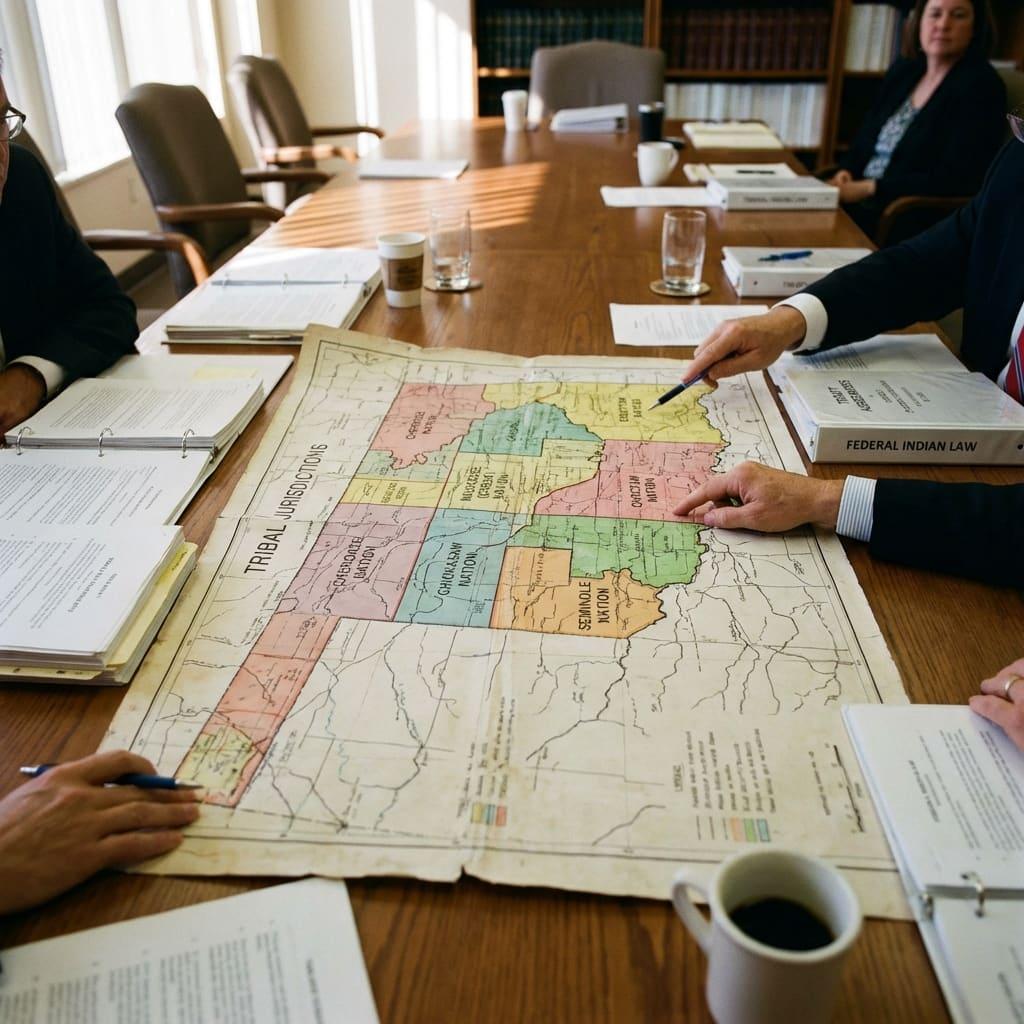
Questions involving tribal authority can touch federal, state, and tribal law at the same time. The initial analysis must be practical: who has authority, where does the dispute belong, and what must happen before another forum can act?
Sovereignty
Immunity, self-governance, and the institutional consequences of a waiver.
Jurisdiction
The parties, location, subject matter, and forum can each change the analysis.
Tribal remedies
Exhaustion may shape both timing and where a dispute is first addressed.
Federal obligations
Compacts, statutes, funding, and agency action require a clear record and strategy.
How an engagement begins
Start with the parties, the forum, and the decision that needs attention.
01
Understand the institution
Start with governance, authority, priorities, and the decision that needs to be made.
02
Identify the legal terrain
Assess the relevant law, forum, contracts, funding, and any immediate risk to institutional interests.
03
Set the strategy
Determine whether the matter calls for ongoing counsel, a defined project, negotiation, or litigation.
04
Move with the record
Keep advice grounded in the governing documents, the facts, and the forum where the issue will be decided.
Core considerations
Legal doctrines with practical consequences.
Sovereign immunity
A waiver can have consequences beyond the immediate transaction. Its text, scope, forum, and remedy all matter.
Tribal remedies
Tribal-court procedures and exhaustion questions can shape the right first move in a dispute.
Entity structure
The relationship between a Nation and an enterprise can affect risk, authority, and how a claim is analyzed.
Federal trust duties
Federal action, funding, land, and agency decisions can require both administrative and litigation strategy.
Gaming and enterprises
Operational work that still has a sovereignty question underneath it.
Gaming, vendor relationships, claims, compact obligations, and employment decisions are operational matters. They can also affect institutional authority, regulatory standing, and the protections built around the Nation.
Explore gaming counselRelated insight
Research for the questions that keep moving.


Frequently asked questions
Questions that deserve a precise answer.
Can a tribe be sued in state court?
Tribal sovereign immunity can bar suit in state court and other forums, but the answer depends on the defendant, claim, any express waiver or congressional abrogation, the relief requested, and the court's jurisdiction. Federal courts recognize limited prospective-relief claims against officials in some circumstances; that is not a general exception to tribal immunity.
How does the McGirt ruling affect my business?
The McGirt decision held that the Muscogee (Creek) Reservation remained Indian country for purposes of the federal Major Crimes Act. It does not answer every civil, tax, or regulatory question. Those issues can turn on the government and actor involved, citizenship, land status, conduct, subject matter, and any governing statute or compact.
What is a limited waiver of sovereign immunity?
A limited waiver is a voluntary, transaction-specific consent to suit or another enforcement mechanism. A waiver must be express and unequivocal. Its scope, forum, remedies, covered assets, procedures, and relationship to insurance or other security depend on the text, the governing law, and the entity with authority to approve it.
What is Ex parte Young and how do tribes defend against it?
Federal courts recognize limited prospective-relief claims against officials in some circumstances involving an alleged ongoing violation of federal law. Availability and defenses depend on the official's authority, the alleged violation, the requested relief, jurisdiction, and any tribal-court exhaustion issue. The doctrine does not authorize damages against the tribe or erase other limits on the claim.
What is involved in drafting a tribal constitution or legal code?
The work can involve governmental powers, separation of powers, membership, procedure, civil and criminal authority, and implementation. The process must begin with the Nation's existing law and approval rules, then account for the federal framework and any Secretarial or agency approval that actually applies to that Nation and document.
How do tribal gaming compacts work in Oklahoma?
Oklahoma tribes operate under gaming compacts negotiated with the state under the Indian Gaming Regulatory Act (IGRA). Class III gaming generally uses a Tribal-State compact or federally prescribed procedures; Class I and Class II gaming use different rules. Tribal law and regulation remain central, while the compact may allocate defined state roles. The National Indian Gaming Commission (NIGC) and Department of the Interior exercise distinct federal functions. We advise tribal gaming commissions on compliance, compact renegotiation, and regulatory framework development.
What is a Section 17 corporation and why do tribes use them?
A Section 17 corporation is a federally chartered tribal corporation under the Indian Reorganization Act. Its powers, any sue-and-be-sued language, immunity and waiver, governance, asset separation, and transaction authority depend on the charter and governing law. Tribes may use the form to separate governmental and business activity, but no general webpage can promise a firewall for the tribe's sovereign assets or other assets.
What is the exhaustion of tribal remedies doctrine?
Tribal-court exhaustion is a prudential doctrine that may require a federal court to stay its hand while a tribal court has a full opportunity to determine its own jurisdiction. It is tied to a colorable tribal-court jurisdiction question and has recognized exceptions. Whether it applies depends on the parties, forum, claim, procedural posture, and governing authority.
How does the Indian Self-Determination Act affect tribal contracting?
The Indian Self-Determination and Education Assistance Act allows tribes and tribal organizations to carry out eligible programs through self-determination contracts and self-governance compacts. The agreement and current law must be reviewed for funding, Federal Tort Claims Act treatment, audit duties, program standards, procurement, and dispute procedures; counsel cannot guarantee full funding or a particular protection.
Can tribal enterprises be held liable for employment claims?
It depends on the defendant, claim, governing law, and any waiver or abrogation. Whether an enterprise is an arm of the tribe is a multifactor question; the charter form alone is not dispositive. Governance, purpose, control, finances, the Nation's intent, and the practical effect on the treasury may matter under the applicable test.
What is the land-into-trust process and why does it matter?
A fee-to-trust acquisition transfers title to the United States to hold in trust for an eligible tribe or individual Indian. The application is evaluated under 25 C.F.R. Part 151 and other applicable law. Trust status can affect taxation, land use, jurisdiction, financing, and governance, but the consequences and required review depend on the parcel, applicant, proposed use, and other federal requirements.
A tribal matter
Start with the authority, the record, and the institutional interest at stake.
Tell us what decision or dispute is in front of the Nation. We will begin with the parties, forum, governing documents, and the work that needs to be protected.
Discuss a tribal matter
Free initial consultation. No obligation.