Key Takeaways
- The Tribal-Authority Defense Lost on Appeal: On August 12, 2026, in a published decision in Walden v. City of Duncan, the Tenth Circuit reversed summary judgment for a cross-commissioned Duncan officer, holding that a state officer may detain and investigate a suspect before determining the suspect's Indian status — and that an officer doing so can be acting under color of state law for Section 1983 purposes. Our case note on Walden walks through the holding and its limits.
- How the Gap Arose: In late 2025, Judges Wyrick and Heil III ruled against civil rights plaintiffs suing cross-commissioned officers, finding the officers were acting under tribal law when interacting with tribal citizens in Indian Country. Walden holds that the first of those rulings rested on "a misconception of the applicable law."
- Revived, Not Decided: Walden reversed summary judgment only. Whether the underlying arrest was unlawful, and every other defense the officer may raise, remains for the district court on remand — and tribal court claims and state tort claims remain fact-dependent avenues to evaluate alongside Section 1983.
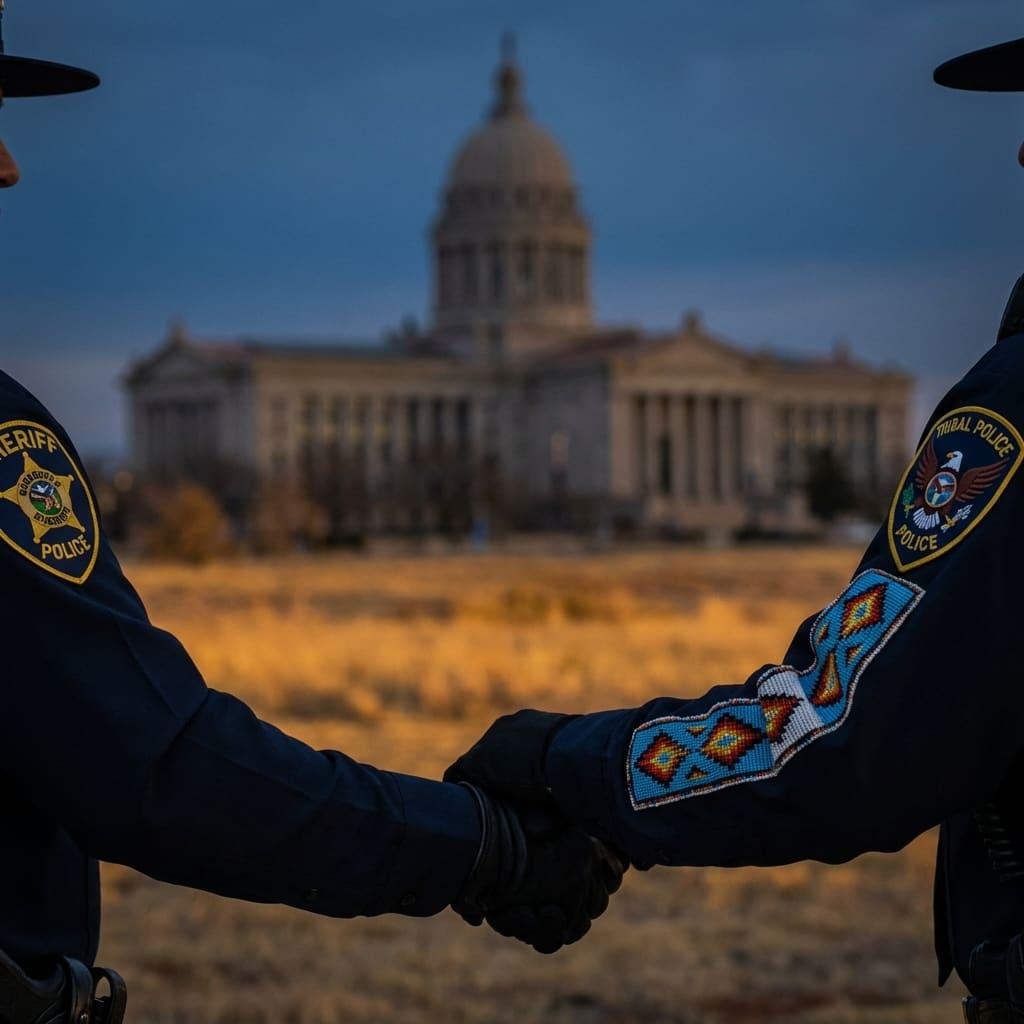
In the years since the U.S. Supreme Court's landmark McGirt v. Oklahoma decision recognized vast swaths of eastern Oklahoma as Indian Country, law enforcement agencies have scrambled to adapt. One common solution: cross-commissioning agreements, where state and local officers receive tribal authority to enforce laws on reservation land. These agreements solved an immediate jurisdictional problem. But they may have created a new one: a state-action defense that can make federal civil rights claims harder when an officer says they were acting only under tribal authority.
Two federal court decisions in Oklahoma illustrated the problem. In both cases, judges rejected Section 1983 civil rights lawsuits against officers who were cross-commissioned by tribes, finding that the officers were acting under tribal authority, not state authority, when the alleged violations occurred. Had those rulings stood and been followed by other courts, they could have significantly reshaped civil rights litigation in Indian Country. On August 12, 2026, however, the Tenth Circuit reversed the first of them in a published decision in Walden v. City of Duncan — restoring, though not guaranteeing, the federal remedy.
What Is Cross-Commissioning?
Cross-commissioning (sometimes called cross-deputization) is an agreement where one law enforcement agency grants authority to officers from another agency. In the post-McGirt landscape, these agreements typically work in two directions.
A county sheriff's deputy or city police officer may receive a commission from a tribal nation, allowing them to enforce tribal law and exercise authority over tribal citizens within Indian Country.
Conversely, tribal Lighthorse (police) officers may receive commissions from state or local agencies, allowing them to enforce state law and exercise authority over non-Indians within reservation boundaries.
These agreements address the jurisdictional complexities created by McGirt, which held that the Muscogee (Creek) Reservation had never been disestablished, and later cases recognizing other Oklahoma reservations. Criminal jurisdiction in Indian Country turns on the location, the crime, and the Indian status of the people involved; cross-commissioning is one way agencies try to avoid enforcement gaps.
The Problem: Section 1983 Requires "State Action"
Section 1983 of the federal civil rights laws (42 U.S.C. § 1983) provides a remedy for constitutional violations committed by persons acting "under color of" state law:
"Every person who, under color of any statute, ordinance, regulation, custom, or usage, of any State... subjects, or causes to be subjected, any citizen of the United States... to the deprivation of any rights, privileges, or immunities secured by the Constitution and laws, shall be liable to the party injured..."
The critical phrase is "under color of... any State." Section 1983 applies only to state actors—not federal actors, not private parties, and not tribal actors.
Federal courts have consistently held that tribal governments are not subject to Section 1983 because tribes are separate sovereigns, not arms of the state. This was established in cases like R.J. Williams Co. v. Fort Belknap Housing Authority (1983) and Burrell v. Armijo (10th Cir. 2006).
The question these Oklahoma cases raised is this: When a state officer who is cross-commissioned by a tribe acts in Indian Country, are they acting under state law or tribal law? The Tenth Circuit has now answered a critical piece of that question.
Walden v. City of Duncan: Reversed on Appeal
Shawn Walden, a citizen of the Choctaw Nation, was arrested on December 30, 2022, by Duncan Police Department officer Christian Archer. According to the Tenth Circuit's opinion, Duncan police got a call about a man inside a convenience store who had dropped his firearm twice; Archer arrived as Walden was backing out of a parking spot, suspected intoxication, had him perform a field sobriety test, arrested him, read Oklahoma's implied consent advisory, seized a firearm from the vehicle, and booked him into the Stephens County Jail on two state charges. Walden's complaint alleges that he passed the field sobriety test, was never offered a breathalyzer, that Archer "executed a false affidavit" claiming visible intoxication after Walden refused a blood test, and that he was held for five days.
In November 2023, Walden sued Archer and the City of Duncan under Section 1983, alleging violations of his Fourth Amendment rights.
The City and Officer Archer argued that because Archer was cross-commissioned by the Chickasaw Nation, he was acting under tribal authority—not state authority—when he arrested Walden, a tribal citizen, in Indian Country.
On September 22, 2025, Judge Patrick Wyrick agreed and granted summary judgment for the defendants:
"The Court finds that Archer was incapable of wielding the power of state law against Walden. Archer's authority over Walden flowed from a grant from the Chickasaw Nation."
Wyrick went further, writing that "the Court has been incapable of finding any case law that stands for the proposition that an officer is capable of acting under state law and tribal law simultaneously."
Walden appealed, and on August 12, 2026, the Tenth Circuit reversed in a published, unanimous decision, holding that the district court's ruling "was based on a misconception of the applicable law."
Writing for the panel, Judge Hartz explained that the state's inability to prosecute an Indian for crimes in Indian Country does not strip a state officer of the authority to police. Drawing on the U.S. Supreme Court's unanimous decision in United States v. Cooley (2021) — which upheld a tribal officer's temporary detention of a suspect who turned out to be non-Indian — the court held that a state officer may stop a suspect, detain them for an initial investigation, and hold or transport them to tribal authorities before conclusively determining the suspect's Indian status. Requiring officers to resolve Indian status first would be unworkable and, as the Supreme Court warned in Cooley, would create an incentive to lie.
The panel added two points that matter for future cases. First, even an officer who misuses state authority is still acting under color of state law — that is exactly who Section 1983 was written to reach. Second, on this record Officer Archer plainly purported to exercise state authority: he wore a DPD uniform, drove a DPD car, performed field sobriety tests he was trained by Oklahoma to perform, read Oklahoma's implied consent advisory, and booked Walden into county jail on state charges, never once identifying himself as a tribal officer.
The decision is deliberately narrow. The Tenth Circuit did not decide whether the arrest was supported by probable cause — the district court never reached that question — and it did not definitively resolve the color-of-law element, noting that further factual development may follow on remand. It also revived Walden's state-law claims against the City under the Governmental Tort Claims Act, questioning whether the Section 1983 color-of-law analysis was even relevant to those claims, which turn on scope of employment.
For a full breakdown of the opinion — the arrest record, the Cooley analysis, Judge Matheson's concurrence, and the four questions the court expressly left open — see our case note on Walden v. City of Duncan.
Barrick v. Kasbaum: A Fatal Encounter
On March 13, 2022, Bobby Barrick—whose truck had become stuck in mud—was later found in apparent mental distress at a closed corner store in Eagletown (within the Choctaw Nation reservation). Witnesses reported he ran through a glass door, jumped onto a car, and made statements about people trying to kill him. Bystanders restrained him before deputies arrived.
McCurtain County Deputies Matthew Kasbaum and Quentin Lee, along with Oklahoma Game Warden Mark Hannah, responded to the scene. According to the lawsuit filed by Barrick's widow, the officers used stun guns on Barrick four times, struck him with a baton, and used dangerous restraint techniques. Bobby Barrick later died at a hospital in Paris, Texas.
On September 29, 2025, Judge John Heil III granted summary judgment against the Section 1983 claims. Like Judge Wyrick, he found that because the officers were cross-commissioned by the Choctaw Nation, they were acting under tribal—not state—authority:
"Regardless of whether Defendants maintained state law authority, Defendants, in arresting an Indian in Indian country, were operating under Tribal law. Under these undisputed facts, the Court concurs that Tribal law took precedence."
The district court entered summary judgment in Barrick on September 29, 2025, and the plaintiff appealed in Barrick v. Kasbaum, No. 25-7082. The public docket snapshot available for this August 29, 2026 update shows merits briefing through April 2026; no published appellate opinion was located. Walden does not decide the appeal by itself. It does undercut the similar tribal-authority reasoning used below, and any appellate disposition must be evaluated on the Barrick record.
The Legal Theory: Why This Mattered
These district-court rulings raised a troubling possibility: a cross-commissioned officer interacting with a tribal citizen in Indian Country could argue they were acting under tribal authority and therefore were not acting under color of state law for Section 1983. The Tenth Circuit's published Walden decision has now rejected that theory as a basis for summary judgment where the record shows the officer possessed and purported to exercise state authority — but understanding what was at stake explains why the reversal matters.
This is not just a technical jurisdictional issue. It has real consequences for victims:
Section 1983 is the primary federal damages vehicle for civil rights lawsuits against state and local law enforcement. For more on how these suits work, see our article on § 1983 excessive force claims. If Section 1983 is unavailable, victims may lose the most familiar federal route for constitutional damages against that officer.
Tribes themselves are generally immune from suit unless immunity has been waived or abrogated. Claims involving tribal officers, tribal courts, and nonmembers involve different remedies, procedures, and immunity rules than ordinary Section 1983 litigation.
The Indian Civil Rights Act (25 U.S.C. § 1301 et seq.) imposes constitutional-like protections on tribal governments, but unlike Section 1983, there is no private right of action for money damages under the Indian Civil Rights Act (Santa Clara Pueblo v. Martinez, 1978). The express federal remedy is habeas corpus, which does not help victims of excessive force who are not in custody.
What Remedies Remain?
If Section 1983 is unavailable, victims of officer misconduct in Indian Country are not entirely without options—but the paths are narrower.
Tribal citizens may be able to file claims in tribal court under tribal law or tribal constitutional provisions. However:
- Tribal courts have varying procedures and resources
- Recoverable damages may be limited
- Some tribal courts may not have civil jurisdiction over non-member officers
Victims may still evaluate state law tort claims such as assault, battery, wrongful death, or negligence. However:
- The Oklahoma Governmental Tort Claims Act (GTCA) limits recovery against government entities
- Individual officers may assert statutory, common-law, or sovereign-immunity defenses depending on who employed them and what authority they were using
- Venue and jurisdictional issues may be complex
In Walden, the Tenth Circuit provided that circuit-level guidance: cross-commissioned officers who possess and purport to exercise state authority can be sued under Section 1983, reopening federal civil rights litigation in Indian Country. Plaintiffs must still prove the underlying constitutional violation, and officers retain their other defenses, including qualified immunity.
Depending on the state-action ruling, claims may still need to be evaluated against supervisory officials, municipalities, or other entities for policies, training failures, or customs that contributed to the violation. Those claims are difficult and usually require proof of a policy or custom, not just one bad incident.
The Unanswered Questions
These cases leave significant legal questions unresolved:
Can officers act under both authorities simultaneously?
Judge Wyrick wrote that he could find no case law supporting simultaneous state and tribal authority. The Tenth Circuit in Walden noted the possibility that an officer could act under color of both tribal and state law at once — but expressly declined to decide how Section 1983 would apply in that circumstance. What Walden does establish is that an officer wearing a city uniform, driving a city car, and following state procedures is not stripped of state authority merely because they also hold a tribal commission.
What about non-Indian victims?
If a cross-commissioned officer violates the rights of a non-Indian in Indian Country, does the same logic apply? Or does the state authority "take precedence" when the victim is not a tribal citizen?
Cherokee Freedmen and blood quantum.
There's an additional wrinkle: federal courts use both tribal citizenship and Indian blood quantum to determine "Indian status" for criminal jurisdiction purposes. But for civil purposes, tribal citizenship alone often suffices. Would a Cherokee Freedman—a tribal citizen without Indian blood—be able to sue under Section 1983? These cases don't answer that question.
Practical Guidance for Potential Victims
If you or a family member believes your civil rights were violated by an officer in Indian Country:
Document everything immediately. Preserve photos, video, medical records, witness information, and any communications with law enforcement. This evidence is critical regardless of which court hears the case.
Determine jurisdictional status.
- Were you in Indian Country?
- Are you a tribal citizen?
- Was the officer cross-commissioned?
- Which authority was the officer using?
These answers affect where and how you can sue.
File complaints with multiple agencies. Report the incident to:
- The tribal police department
- The state/local agency that employs the officer
- The tribal government
- The employing agency's internal affairs or professional-standards office
This creates a paper trail and may trigger internal investigations.
Consult an attorney with tribal law experience. These cases involve overlapping state, federal, and tribal jurisdiction. An attorney who understands federal Indian law and civil rights litigation is essential to navigate the options.
Act quickly. Statutes of limitations vary. The Oklahoma GTCA requires notice within one year for state tort claims. Federal Section 1983 claims generally have a two-year limit. Tribal law may have different deadlines. Don't wait.
Frequently Asked Questions
Can I sue a cross-commissioned officer under Section 1983?
After Walden, yes — where the officer possessed and purported to exercise state authority, a tribal commission does not by itself defeat a Section 1983 claim. Color of law remains an element the plaintiff must prove, and state tort claims and tribal court claims may also be available depending on the facts.
Does this only affect tribal citizens?
The district-court rulings and the Walden appeal involved tribal citizens in Indian Country. Officers interacting with non-Indians were always more clearly subject to Section 1983, and Walden leaves open questions about different crimes, officer roles, and cross-commissioning arrangements — including how Section 1983 applies to an officer acting under both authorities at once.
What did the Tenth Circuit decide in the Walden appeal?
On August 12, 2026, in a published decision, the court reversed the summary judgment and remanded. Our case note on Walden v. City of Duncan covers the holding, the four questions the court expressly left open, and what it means for pending cases.
Can I sue the tribe itself for the officer's conduct?
Generally no. Tribes possess sovereign immunity and cannot be sued without their consent. Some tribes have waived immunity in limited circumstances, but this varies.
Are cross-commissioned officers immune from Section 1983?
No. Under the Tenth Circuit's published Walden decision — binding on federal courts throughout the circuit — a cross-commissioned officer cannot escape Section 1983 at summary judgment simply by pointing to a tribal commission when the record shows them exercising state authority. Officers may still raise other defenses, including qualified immunity, and each case turns on its own record.
The post-McGirt era has transformed law enforcement in Oklahoma. Cross-commissioning solved one problem—the jurisdictional gaps created by reservation recognition—and for a time it appeared to have created another. The Tenth Circuit's published Walden decision has narrowed that second gap: for a tribal citizen alleging a civil rights violation by an officer who possessed and purported to exercise state authority, the primary federal remedy is back on the table. It still has to be proven. Walden reversed a summary judgment; it did not decide anyone's case.
At Addison Law, we represent clients in civil rights cases and tribal law matters throughout Oklahoma. We understand the complex jurisdictional landscape and can help you evaluate your options when officers violate your rights—whether the remedy lies in federal, state, or tribal court.
Rights Violated by Law Enforcement?
The jurisdictional landscape in Indian Country is complex. We can help you understand your options and pursue accountability.
Get a Free Consultation →This article is for general information only and is not legal advice.