Key Takeaways
- The Driver May Not Be the Only Defendant: A serious delivery crash can involve the individual driver, a contractor, a delivery platform, the shipper, and multiple insurance policies.
- Contractor Structures Matter: Amazon, FedEx Ground, and gig platforms often use contractor models, but a label in a contract does not always end the liability analysis.
- Control Is the Key Question: Courts look at the actual level of control the company exercises over routes, branding, delivery windows, safety rules, and driver behavior.
The Amazon van that ran a red light and T-boned your car may not have been driven by an Amazon employee. The FedEx Ground truck that rear-ended you at a stoplight may belong to a contractor. The DoorDash driver who hit you while checking their phone may be classified as an independent contractor. Those corporate structures matter, but they do not always answer the liability question.
If you have been hit by a delivery vehicle, you may be facing a maze of contractor agreements, app-platform terms, and insurance coverage disputes that most personal injury victims have never encountered before. The driver who hit you may have minimum-coverage insurance that will not come close to covering serious injuries. The company whose logo is on the van may deny responsibility. This article explains how to identify the parties and coverage that may actually matter.
The Liability Shield Problem
Under respondeat superior, an employer generally may be vicariously liable for an employee's negligence committed within the scope of employment. The rule still requires proof of employment, negligence, scope, causation, and damages; a logo or delivery label alone does not decide those issues.
Modern delivery companies often structure operations around contractor models. Some classify drivers as independent contractors, route them through intermediary companies, require contractors to carry insurance, and contractually allocate liability away from the brand-name company. The result is that when a driver causes a crash, the first available defendant may be the individual driver or a contractor with limited assets. Understanding how each major delivery company structures its delivery network is essential to knowing who should be investigated.
Amazon and the Delivery Service Partner Model
Amazon does not directly employ many last-mile delivery drivers. Instead, it contracts with Delivery Service Partners — logistics companies that hire drivers, own or lease vans, and handle last-mile deliveries for Amazon. When you see an Amazon-branded van on the road, the driver may work for a separate delivery company rather than Amazon itself. If a Delivery Service Partner driver causes an accident, the first named defendants may be the driver and the delivery company, while Amazon argues it is not the employer.
But Amazon's liability does not turn only on the contract label. The key is the level of control Amazon exercises over delivery companies and their drivers. Evidence may include who sets routes and delivery sequences, who dictates delivery windows, who monitors driver behavior, who specifies uniforms and vehicle branding, and who can terminate the delivery company for poor performance.
When a company controls not just what work is done but how that work is performed—including routes, timing, safety metrics, and required procedures—the facts may support an agency or employment relationship despite contractor language. Amazon may also face negligent selection or retention theories if the evidence shows it failed to vet or continued using a delivery contractor with known safety problems. The viability of those theories depends on the contract, the facts, and the discovery.
FedEx's Mixed Courier and Service-Provider Network
Legacy FedEx Ground operations historically relied heavily on contracted service providers, while legacy FedEx Express used more employee couriers. That service-label shortcut is no longer reliable. FedEx says its Network 2.0 transition is consolidating package operating companies and routes market by market, and current pickups and deliveries may be handled by either FedEx couriers or contracted service providers.
After a FedEx crash, investigate the actual market and route on the crash date: the driver's employer, station, service provider, vehicle owner, insurance, scanner and dispatch records, and governing contracts. Evidence about who assigned territory, controlled the vehicle and branding, set safety standards, directed the route, and retained removal authority may bear on agency, scope, direct negligence, and vicarious liability. The package service name or logo does not establish who employed the driver or which entity is legally responsible.
Gig Delivery Platforms: DoorDash, Uber Eats, Instacart
Gig platforms present a difficult liability challenge for injury victims. These platforms classify delivery drivers as independent contractors — "Dashers," "drivers," or "shoppers" — who use their own vehicles, set their own hours, and accept or decline individual deliveries. Unlike branded-van delivery networks, gig platforms often provide the app, payment system, routing information, and delivery standards rather than the vehicle itself.
When a DoorDash driver runs a stop sign while delivering your food, you face significant obstacles. The driver may carry only a state-minimum personal auto policy, and that policy may exclude commercial delivery activity. Many personal auto policies limit coverage when a vehicle is used for delivery, creating a potential coverage gap. Some platforms provide contingent liability coverage, but coverage depends on the platform's policy language, the driver's app status, and whether a delivery was active.
There are arguments for platform liability, but they are fact- and state-law dependent. In Oklahoma, the control actually exercised by the platform matters: who sets the delivery rules, who can remove the driver, how the app directs timing and routes, and what safety screening occurred. Negligent hiring or retention claims may be available when the platform failed to screen drivers adequately or continued using drivers with known safety problems.
This is precisely why uninsured/underinsured motorist (UM/UIM) coverage on your own auto policy is so important. When the at-fault driver's insurance is inadequate or disputed, your own UM/UIM policy may become a critical recovery source.
Traditional Carriers: United Parcel Service and the United States Postal Service
Not every delivery company uses the same contractor model. UPS primarily uses employee drivers for its familiar brown trucks and uniformed routes, which often makes the direct-employer liability analysis more straightforward when the driver was acting within the scope of employment.
United States Postal Service claims present a different challenge. Postal workers are federal employees, and a crash claim may proceed under the Federal Tort Claims Act. 28 U.S.C. § 2401(b) generally requires a tort claim to be presented in writing to the appropriate federal agency within two years after it accrues. If the agency mails a final denial, suit generally must begin within six months. 28 U.S.C. § 2675 ordinarily requires administrative presentment before suit and addresses when six months of agency inaction may be treated as a final denial. These are federal presentment rules, not the ordinary Oklahoma two-year lawsuit rule.
Building Your Case After a Delivery Vehicle Accident
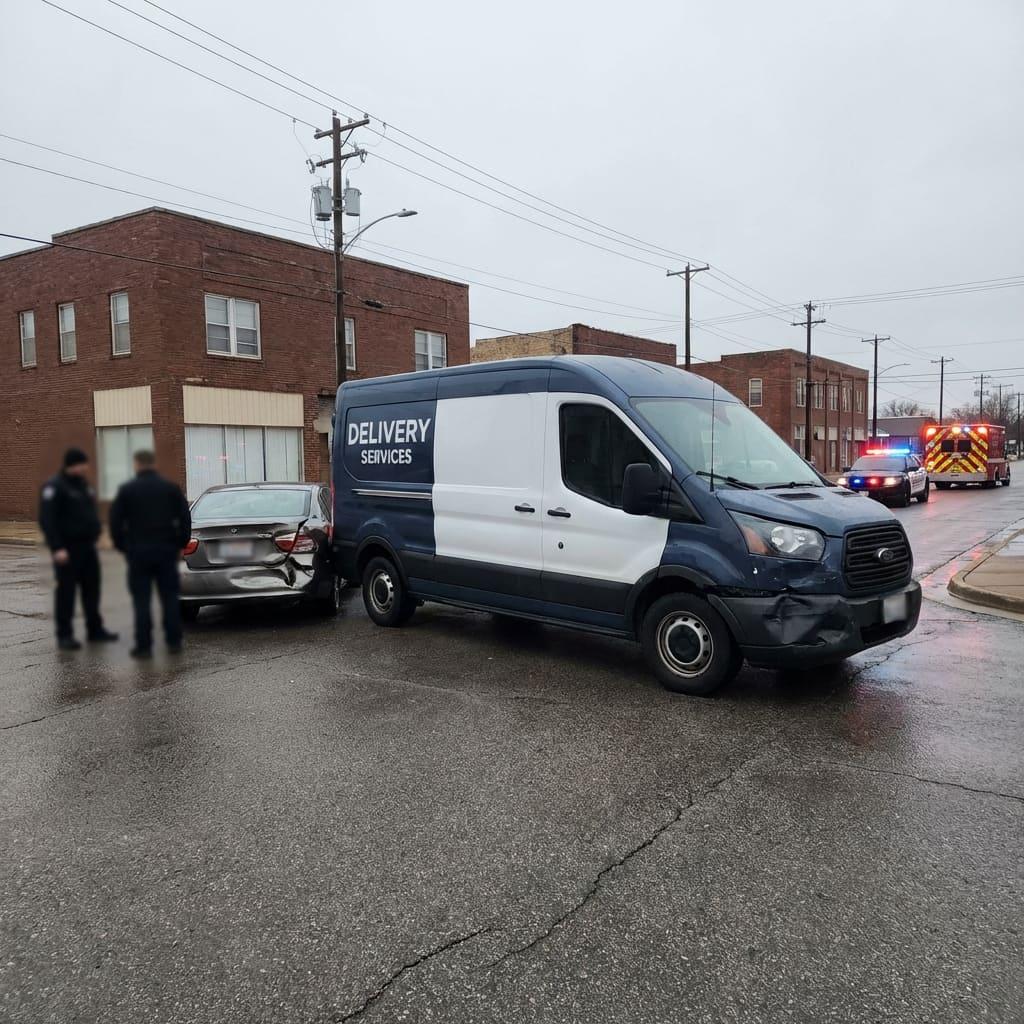
The minutes after a delivery vehicle accident are critical for evidence preservation. Document the vehicle thoroughly — photographs of the van or truck, any company branding, license plate numbers, and visible company identification numbers. Get the driver's name and contact information, and specifically ask who they work for — the answer may be different from the name on the van. If the driver was making a delivery at the time of the crash, that fact is central to establishing that the accident occurred within the scope of employment or the contractor relationship.
Check whether a package was delivered to your address or a neighbor's around the time of the accident. Tracking information may help establish the route and timing; when paired with app or telematics data, it may also help evaluate speed. Witness accounts of whether the driver appeared distracted, rushed, or aggressive add context, but each observation still must be tested against the other evidence.
In litigation, discovery may include the driver's employment or contractor agreement, training and safety records, route and app data, applicable insurance policies, prior safety events, and communications about contractor performance. Those records help test whether the written contractor label matches the control actually exercised in the delivery operation.
The force of a delivery-vehicle collision depends on speed, mass, angle, and the vehicles involved. A serious crash may produce medical expenses, rehabilitation needs, lost earnings, reduced earning capacity, pain and suffering, and property loss beyond one driver's policy limits. Punitive damages are not automatic; they require the governing legal standard and supporting proof. The United States is not liable for punitive damages under the Federal Tort Claims Act.
Comparative Negligence in Delivery Accidents
Oklahoma follows modified comparative negligence under 23 O.S. §§ 13–14. If you're found partially at fault for the accident, your recovery is reduced by your percentage of fault. If you're more than 50% at fault, you recover nothing. Delivery companies and their insurers investigate aggressively to find any evidence of your contributing negligence — whether you were distracted, failed to yield, or were speeding at the time of the collision. Every piece of evidence you preserve at the scene helps defend against these attacks.
What to Do Immediately After a Delivery Vehicle Accident
Call 911 and tell the responding officer that a delivery vehicle was involved. Photograph the vehicle, branding, plate, unit numbers, packages or equipment, damage, roadway, and any app screen the driver voluntarily identifies. Get the driver's information and ask for the legal name of the employer or contractor—not only the logo on the vehicle. Preserve your own dashcam footage, nearby-camera locations, delivery tracking, witness contacts, and phone records. Seek appropriate medical care and avoid signing releases or giving a recorded liability statement before you understand who is asking and what coverage is involved.
At Addison Law, we handle car accident cases and trucking accidents throughout Oklahoma, including delivery vehicle claims against major carriers and contractors. We investigate the driver, the company structure, the insurance stack, and the evidence needed to identify the responsible parties. Contact us for a free consultation.
Frequently Asked Questions
Can I sue Amazon if an Amazon van hit me?
Possibly. Amazon will often argue the driver is employed by a Delivery Service Partner, not by Amazon directly. But the control Amazon exercises over routes, delivery windows, uniforms, vehicle branding, and driver monitoring may support agency, negligent-selection, or other theories in some cases. An experienced attorney can evaluate the specific facts to determine whether Amazon is a viable defendant.
What if the FedEx driver was speeding to meet a deadline?
It can strengthen the case if the evidence shows the delivery system created unsafe pressure or tolerated unsafe driving. The liability target still depends on who employed the driver, who controlled the route, and what safety rules or incentives were in place.
The DoorDash driver has no insurance — am I out of luck?
Not necessarily. Investigate the driver's policy, any platform policy actually in force on the crash date, the driver's app and delivery status, and your own uninsured/underinsured motorist coverage. Coverage cannot be assumed from a platform's current marketing or a policy from a different date.
How long do I have to file a claim?
An ordinary Oklahoma private-party negligence claim generally uses the two-year period in 12 O.S. § 95. A United States Postal Service crash instead raises the federal presentment and six-month final-denial rules discussed above. State or local government vehicles, wrongful death, minors, and other special circumstances may use additional rules, so do not calendar every delivery crash the same way.
Will a delivery-accident claim go to trial?
A claim may resolve through an insurance settlement, mediation, dispositive motion, or trial. The path depends on disputed fault, injuries, the contractor structure, available coverage, and whether the responsible parties produce the records needed to evaluate the claim.
Hit by a Delivery Vehicle?
Don't let a contractor structure end the investigation too early. We can identify responsible parties and available insurance.
Get a Free Consultation →This article is for general information only and is not legal advice. Federal statutory sources checked July 13, 2026.