
Key Takeaways
- A Deposition Is Sworn Testimony: Everything you say is under oath and recorded by a court reporter. Your answers can be used against you at trial if they contradict your later testimony.
- Preparation Is Everything: The difference between a helpful and harmful deposition often comes down to how well the witness was prepared. Never go in cold.
- Less Is More: Answer the question asked—nothing more. Volunteering information is the most common mistake witnesses make, and it creates problems that are hard to fix.
You've received notice that you will be deposed. Maybe you're the plaintiff in a personal injury case. Maybe you're a witness in an employment dispute. Maybe you're a party to a business lawsuit. Whatever your role, the same anxiety hits: What happens in a deposition? What questions will they ask? What if I say the wrong thing? These fears are normal—and this guide will help you understand the process, prepare effectively, and avoid the mistakes that can damage your case.
A deposition is one of the most important events in any lawsuit. For many witnesses, it's also the most stressful. But with proper preparation and an understanding of what to expect, you can walk into that conference room confident that you're ready.
Short answer: a deposition is sworn testimony given before trial. A lawyer asks questions, a court reporter creates a transcript, and the testimony may later be used in motions or at trial. The practical goal is not to memorize a script. It is to understand the process, review the right records, and answer each question truthfully and precisely. Our deposition-preparation checklist gives witnesses a shorter day-of reference.
What Is a Deposition?
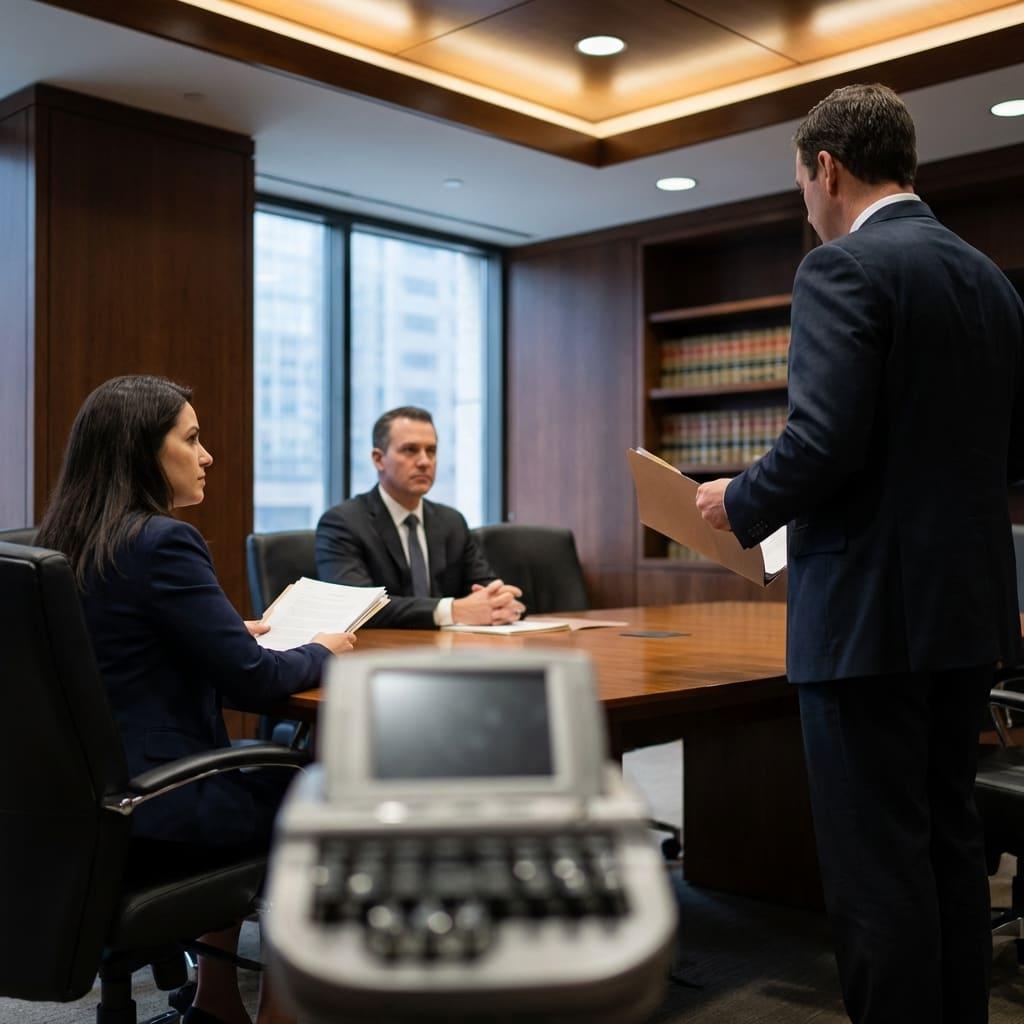
A deposition is a formal question-and-answer session that takes place outside of court, typically in a lawyer's conference room. It's part of the discovery phase of litigation, where parties gather information before trial.
During a deposition:
- A lawyer asks you questions under oath
- A court reporter creates an official transcript of your sworn testimony
- The session may also be video recorded
- The transcript may later be used in motions, hearings, or trial
Depositions serve several critical purposes. First, information gathering: the questioning attorney wants to learn what you know, what you saw, what you remember, and what opinions you hold. This helps them understand the case and prepare for trial.
Second, locking in testimony: once you give an answer under oath, you're generally stuck with it. If you say something different at trial, the attorney will read your deposition transcript to the jury: "Isn't it true that under oath on January 25, 2026, you said the opposite?" This is called impeachment.
Third, evaluating witnesses: attorneys use depositions to assess how witnesses will perform at trial. Are you credible? Likeable? Nervous? Evasive? Your deposition performance influences settlement discussions.
Finally, creating trial evidence: if you're unavailable for trial (illness, death, geographic distance), your deposition transcript can be read to the jury as if you were testifying live.
Who Will Be in the Room?
A typical deposition includes:
- You (the witness/deponent)
- The questioning attorney (the lawyer who scheduled your deposition)
- Your attorney (if you have one, or the attorney representing the party on whose behalf you're testifying)
- A court reporter (who swears you in and transcribes the testimony)
- A videographer (if the deposition is being recorded on video)
- Other attorneys (in multi-party cases, each side may have counsel present)
The room is usually a conference room at a law firm. It's not a courtroom—there's no judge present during the deposition itself.
What to Expect: The Process
Before the deposition, your preparation should be practical:
- Review relevant documents. If there are contracts, emails, medical records, photographs, or other documents related to your testimony, review them with your attorney beforehand.
- Get a good night's sleep. Being tired makes you more likely to make mistakes.
- Dress professionally. Business casual at minimum, especially if the deposition is video recorded.
- Arrive early. Rushing in stressed will hurt your performance.
Getting sworn in. The deposition begins with the court reporter administering an oath, similar to what you'd hear in court:
"Do you swear or affirm that the testimony you are about to give is the truth, the whole truth, and nothing but the truth?"
You answer "I do" or "Yes," and now everything you say is under oath. Lying is perjury—a crime.
Background questions. The attorney will start with:
- Your name, address, and contact information
- Your educational background
- Your employment history
- Whether you've been deposed before
Substantive questions. Then they'll move to the facts of the case:
- What did you see, hear, or do?
- When did events occur?
- Who else was present?
- What documents exist?
Damages and opinion questions. Finally, they may ask:
- How has this affected you?
- What are your injuries?
- What are you claiming?
Objections and instructions not to answer. Your attorney may object to certain questions. In most depositions, the objection is simply stated for the record—"Objection, leading" or "Objection, form"—and you still answer the question. The judge will rule on the objection later if the testimony is used at trial.
There are limited exceptions. Your attorney may instruct you not to answer if the question invades attorney-client privilege or seeks attorney work product. Under Oklahoma's discovery rules and Federal Rule of Civil Procedure 30(c)(2), an attorney may also instruct a witness not to answer to enforce a court-imposed limitation or when necessary to present a motion to terminate or limit the deposition due to bad faith or unreasonable annoyance. Outside these narrow grounds, you usually must answer even over an objection.
Breaks. You're entitled to reasonable breaks for water, restroom, or simply to collect yourself. However, you generally cannot take a break in the middle of answering a question—that looks like you're conferring with your attorney to craft an answer.
Length. Depositions can last an hour or an entire day. Under the Federal Rules of Civil Procedure, depositions are generally limited to 7 hours unless the court orders otherwise. Oklahoma's Discovery Code at 12 O.S. § 3230 governs deposition procedures in state court and generally limits a deposition to 6 hours unless the court orders or the parties agree otherwise. Complex cases may involve multiple deposition sessions.
The Golden Rules of Deposition Testimony
1. Tell the truth
This is non-negotiable. You're under oath. Lies will be discovered, and they'll destroy your credibility—and potentially your case. If the truth hurts your position, your attorney can deal with that. What they can't deal with is a client who lied under oath.
2. Listen to the whole question
Don't answer until you've heard and understood the entire question. If you start answering before the attorney finishes, you might answer a different question than the one being asked.
If you don't understand a question, say so: "I don't understand the question. Can you rephrase it?"
3. Answer only what was asked
This is the most important tactical rule. If the attorney asks "What color was the car?", the answer is "Blue." Not "Blue, and it was going really fast, and I think the driver was texting."
Every word you volunteer is a new avenue for follow-up questions. If the attorney wants to know about speed or texting, they'll ask. Your job is to answer what's asked—nothing more.
4. Do not guess
You're not expected to know everything or remember every detail. If you genuinely don't know or don't remember something, say so. Don't guess to be helpful.
- "I don't know" = I never had that information
- "I don't recall" = I might have known, but I can't remember now
Both are perfectly acceptable if honest.
5. Be careful with estimates
If asked to estimate something you're not sure about, you can decline: "I can't give you an accurate estimate." Don't let the attorney pressure you into guessing numbers, times, or distances that you're not confident about.
6. Pause before answering
There's no prize for answering quickly. Pause after each question. This gives you time to think and gives your attorney time to object if needed.
7. Stay professional
The questioning attorney may be pleasant. They may chat with you, compliment you, try to build rapport. This is a technique to make you comfortable—and comfortable witnesses talk too much.
Be courteous and professional, but remember: this person is not your friend. Their job is to get information that helps their client, not yours.
8. Break compound questions apart
A compound question asks multiple things at once: "Did you stop at the stop sign and look both ways before proceeding?" If you answer "Yes," you've affirmed both parts. What if you stopped but only looked left?
Ask the attorney to break the question into parts: "Can you ask those separately?"
9. Read a document before answering about it
If the attorney shows you a document and asks if it's accurate, don't answer until you've read it. Take as long as you need. Don't rely on the attorney's characterization of what the document says.
10. Correct mistakes promptly
If you realize you answered a previous question incorrectly, you can correct it: "Earlier I said the meeting was on Tuesday—actually, looking at my calendar, it was Wednesday." It's far better to correct a mistake in the deposition than to be impeached with it at trial.
Common Traps and How to Avoid Them
"Is there anything else?"
After you've listed facts or documents, the attorney may ask if that's everything. If you say "That's all" and later remember something else, they'll argue you're making things up.
Answer: "That's everything I can recall at this time."
"Did you always follow company policy?"
"Always" and "never" are dangerous words. One exception, and you've made a false statement.
Answer: "To the best of my recollection, yes" or "I tried to follow policy consistently."
"So what you're saying is..."
The attorney restates your answer in words that are less favorable to you. If you agree, you've adopted their version.
Answer: "No, what I said was [repeat your original answer]."
Casual conversation
The attorney engages in casual conversation about your family, hobbies, or background. This loosens you up—and often leads to statements that can be used against you.
Solution: Give brief, polite answers. Don't elaborate.
An unfamiliar document
The attorney pulls out a document you've never seen and asks about it.
Solution: Read it carefully. Don't let them rush you. If you've genuinely never seen it, say so: "I don't recall seeing this document before."
What Your Attorney Will Do
If you have an attorney, they will:
- Prepare you beforehand with practice questions and strategy
- Object to improper questions during the deposition
- Instruct you not to answer in limited circumstances
- Ask clarifying questions at the end (called "redirect")
- Review the transcript afterward for errors
Your attorney generally cannot coach you during the deposition—that's improper. But they will protect your rights and help you prepare.
After the Deposition
Review the transcript carefully
You have the right to read the transcript and note any errors. This is called "reading and signing." Typographical errors happen. Substantive changes are more complicated—if you change an answer, the opposing attorney will use both versions against you.
Understand how the testimony may be used
Your deposition becomes part of the case record. The attorneys will use it:
- To prepare for trial
- In settlement negotiations
- To support or oppose motions
- To impeach testimony if it changes
A deposition ordinarily is not filed with the court merely because it was taken. But discovery is not automatically confidential. Without a protective order, testimony may become public if it is filed or used in an open hearing or trial.
Frequently Asked Questions
What if I really don't remember something?
"I don't recall" is a perfectly acceptable answer if it's true. Don't guess to fill in gaps. The attorney may try to refresh your memory with documents—review them carefully before answering.
Can I bring notes to my deposition?
Discuss this with your attorney first. Notes you bring may be discoverable—the opposing attorney can ask to see them. Generally, it's better to review documents beforehand rather than bring them to the deposition.
What if I need to use the restroom?
Ask for a break. You can take reasonable breaks for physical needs. Just don't take a break in the middle of answering a question.
What if the attorney is mean or aggressive?
Stay calm. Don't argue. Answer the question and let your attorney handle any improper conduct. Aggressive attorneys want you to get emotional—don't give them that satisfaction.
Can I talk to my attorney during breaks?
Yes, but there are limits. You can discuss general strategy, but you cannot coach on how to answer pending questions. If you ask for a break in the middle of a question line, it looks like you're coordinating testimony.
What if I make a mistake?
Correct it as soon as you realize. "I need to clarify something I said earlier" is always appropriate. It's much better than being caught in an inconsistency at trial.
How should I dress?
Business casual at minimum. If the deposition is video recorded (and it often is), dress as you would for court. Appearance matters for credibility.
A deposition is not a conversation—it's a legal proceeding where everything you say matters. The attorneys have prepared for it. So should you. With proper preparation, a clear understanding of the process, and adherence to these principles, you can give testimony that helps rather than hurts your case.
At Addison Law, we prepare our clients thoroughly for every deposition. If you're facing a deposition in a personal injury, employment, or civil rights matter, we can help you understand what to expect and how to present your best case. For the larger case sequence, see our guide to the discovery process in Oklahoma lawsuits. If you received a subpoena rather than a routine deposition notice, start with the subpoena-response checklist. Contact us for a consultation.
Facing a Deposition?
Don't walk in unprepared. We can help you understand the process and present your strongest testimony.
Schedule a Consultation →This article is for general information only and is not legal advice.