Key Takeaways
- Bystander Officers Have a Duty: Officers who observe a fellow officer violating someone's constitutional rights have an affirmative duty to intervene if they have a realistic opportunity to do so.
- Silence Is Not Protection: An officer who stands by and watches excessive force—without acting to stop it—can be held personally liable under Section 1983.
- Qualified Immunity Is Still Fact-Specific: The Tenth Circuit recognizes a duty to intervene, but the plaintiff still must show the officer had enough time and ability to act.
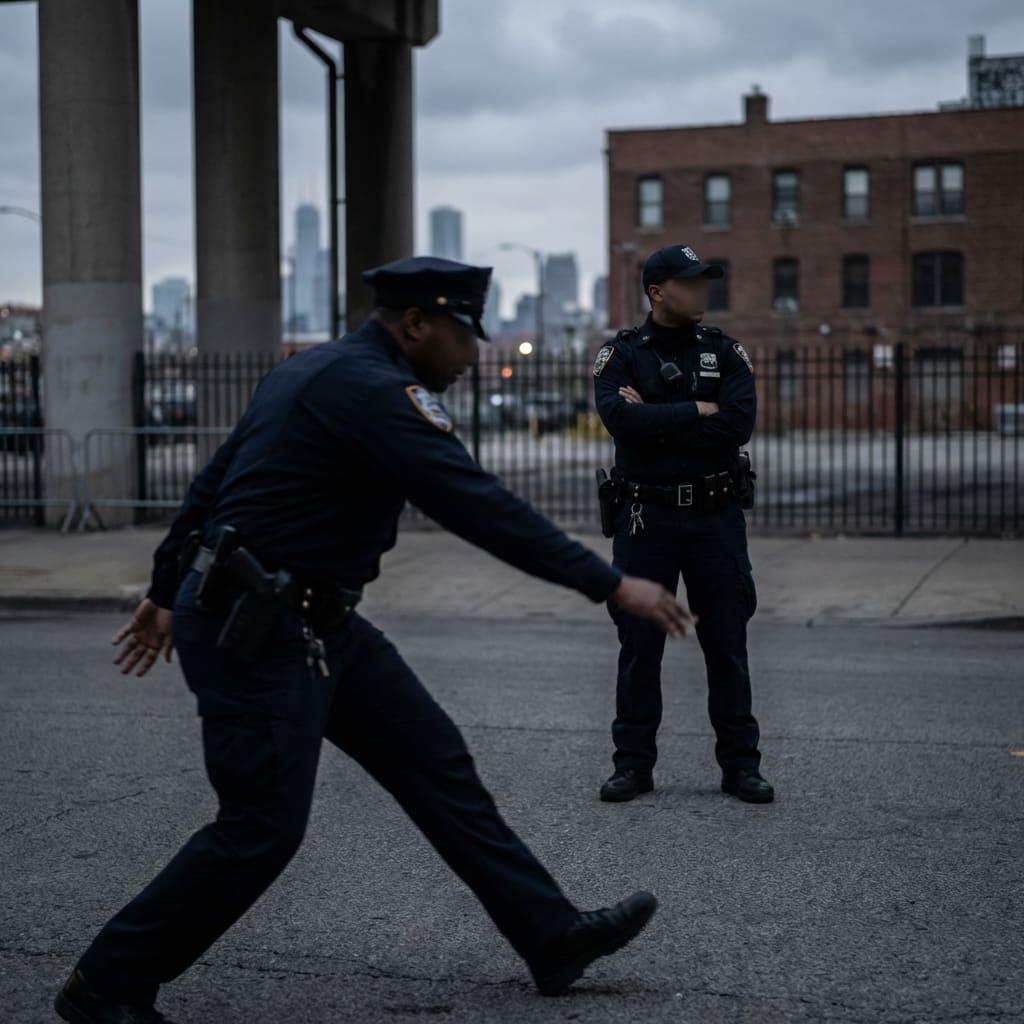
When we talk about police brutality, the focus is usually on the officer who swings the baton, fires the shot, or applies the chokehold. But there is often another officer present—one who watches it happen and does nothing. That officer may not be just a witness. Under federal civil rights law, an officer who has a realistic chance to stop a constitutional violation and fails to act may face liability too. This is the failure-to-intervene doctrine, and it is an important tool for holding law enforcement accountable.
If you or a loved one was the victim of police misconduct, the bystander officer who stood by may be a defendant in your case. The key question is whether that officer saw enough, had enough time, and had a realistic ability to intervene.
The Legal Foundation: Section 1983
Section 1983 of the federal civil rights laws provides a remedy for constitutional violations committed by persons acting "under color of" state law. When police officers violate the Fourth Amendment's prohibition on unreasonable seizures—including excessive force—victims can sue for damages.
The duty to intervene can extend Section 1983 liability beyond the officer who directly commits the violation. An officer who fails to intervene may be liable for harm they had a realistic chance to prevent.
The Duty to Intervene: What the Law Requires
The Tenth Circuit Court of Appeals (which covers Oklahoma, Kansas, Colorado, New Mexico, Wyoming, and Utah) has clearly recognized the duty to intervene. In Vondrak v. City of Las Cruces (10th Cir. 2008), the court held:
"An officer who fails to intervene to prevent a fellow officer's excessive use of force may be liable under § 1983."
To establish a failure-to-intervene claim in the Tenth Circuit, a plaintiff must prove:
- A constitutional violation occurred (typically excessive force)
- The bystander officer was present and observed the violation
- The bystander officer had a realistic opportunity to intervene
- The bystander officer failed to act
What is a "realistic opportunity"? This is the key factual question in most failure-to-intervene cases. Courts recognize that officers sometimes face rapidly evolving, split-second situations where intervention is impossible. The question is whether the officer had time and ability to do something meaningful.
Evidence of a realistic opportunity includes:
- Duration of the use of force: A beating that continues for 30 seconds offers more opportunity than a single punch
- Physical proximity: An officer standing feet away has more opportunity than one arriving at the scene
- The nature of the force: Ongoing violence (kicks, baton strikes, choking) offers more opportunity than a single gunshot
- Communications: Did the officer say anything to the violating officer? Did they call for a supervisor?
The cases are fact-specific. A realistic opportunity is more likely when force continues long enough for another officer to say something, move, call a supervisor, or otherwise act. It is less likely when a shot or strike happens in a fraction of a second, when the bystander was dealing with another threat, or when the officer arrived after the force was over.
Why Failure to Intervene Claims Matter
1. Accountability for Police Culture
Excessive force does not happen in a vacuum. Department culture matters, and tolerance by nearby officers can help misconduct continue. Failure-to-intervene liability sends a concrete message: officers cannot ignore a constitutional violation when they have a realistic chance to stop it.
2. A Full Accountability Picture
Adding a bystander officer is not about naming more people for leverage. It is about identifying everyone whose conduct contributed to the injury, including officers who had a duty and a real opportunity to stop the violation.
3. Proof Can Be Clearer on Video
Sometimes, proving excessive force is complicated—there's disputed testimony about what the suspect did, whether the officer perceived a threat, and whether the force was proportionate. But proving failure to intervene can be simpler:
- Was the bystander officer there? (Body camera shows it)
- Did the force continue for a meaningful period? (Timestamps show it)
- Did the bystander do anything to stop it? (No evidence they did)
If the answer is "present, watched, had time to act, and did nothing," the bystander officer becomes a serious part of the case.
4. Qualified Immunity Is Weaker
Qualified immunity protects officers from suit unless they violated "clearly established" law. Defendants argue that the specific circumstances of their case weren't addressed by prior precedent.
But the duty to intervene has been clearly recognized in the Tenth Circuit since at least 2008. That helps plaintiffs, but it does not end the qualified-immunity analysis. The facts still must show a realistic opportunity to intervene in a clearly unconstitutional use of force.
What Intervention Looks Like
Officers defending against these claims often argue they "couldn't" intervene. But intervention doesn't require physically tackling your partner. Courts recognize various levels of intervention:
Verbal Intervention:
- Telling the other officer to stop
- Ordering them to step back
- Calling for a supervisor
Physical Intervention:
- Stepping between the officer and the suspect
- Pulling the officer away
- Physically stopping the use of force
Reporting:
- Immediately calling for a supervisor
- Documenting the misconduct
- Reporting up the chain of command
An officer who did nothing—said nothing, called no one, made no effort—will need to explain why intervention was not realistic under the circumstances.
The Supervisor Liability Connection
Failure to intervene is related to—but distinct from—supervisory liability. Supervisory liability holds higher-ranking officers responsible for the misconduct of those they supervise. Failure to intervene can apply to officers of any rank who are present at the scene.
However, if a supervisor is present and watches a subordinate violate someone's rights, they face potential liability on multiple theories:
- Failure to intervene (they were present and did nothing)
- Supervisory liability (they failed to train or control their subordinate)
- Ratification (by watching without objection, they implicitly approved)
Recent Developments: George Floyd and Beyond
The murder of George Floyd in 2020 brought failure-to-intervene claims into the national spotlight. Officers at the scene faced federal civil-rights charges that included failure-to-intervene and failure-to-provide-medical-aid theories.
Those prosecutions reinforced what civil rights attorneys have argued for decades: standing by is not neutral when an officer has the duty and ability to act.
Many states have since enacted laws explicitly codifying the duty to intervene. While Oklahoma has not passed such legislation, the Tenth Circuit's case law already establishes the duty in civil Section 1983 cases.
Building a Failure-to-Intervene Case
Evidence You Need:
Body Camera Footage — The most valuable evidence. It shows who was present, what they could see, how long the force lasted, and whether anyone attempted to intervene.
Witness Statements — Bystanders, other officers, or the victim themselves can testify about what they observed.
Timeline Reconstruction — Establishing the duration of the use of force is critical. A few seconds doesn't provide a realistic opportunity; a few minutes usually does.
Communications Records — Radio traffic, dispatch logs, and contemporaneous calls can show whether anyone called for backup, a supervisor, or medical assistance.
Defendants' Common Arguments:
"It Happened Too Fast" — This works for split-second incidents (shootings) but fails when force continues over time (repeated Taser deployments, sustained beating, chokehold).
"I Was Dealing with Other Threats" — If the bystander officer was genuinely engaged with other suspects or threats, they may not have had a realistic opportunity. But body camera footage often contradicts this claim.
"I Didn't Realize It Was Excessive" — Willful blindness isn't a defense. An officer watching a colleague punch a handcuffed, non-resisting suspect cannot credibly claim confusion about whether intervention was warranted.
"I Did Intervene — I Told Him to Stop" — If true, this is evidence in the officer's favor. But if there's no video or audio of such an attempt, juries may not believe it.
Damages in Failure-to-Intervene Cases
Officers who fail to intervene may be liable for damages caused by the constitutional violation they had a realistic chance to prevent:
Compensatory Damages:
- Medical expenses (ER, surgery, rehabilitation)
- Lost wages and earning capacity
- Pain and suffering
- Emotional distress
Punitive Damages:
If the failure to intervene demonstrated callous indifference to the victim's rights, punitive damages may be awarded to punish the officer and deter similar conduct.
Attorney Fees:
Under 42 U.S.C. § 1988, prevailing plaintiffs in Section 1983 cases can recover attorney fees, making these cases economically viable even when damages are limited.
Practical Guidance for Victims
1. Request All Body Camera Footage — Not just from the officer who used force—from every officer present. The bystander's footage may be more valuable than the primary officer's.
2. Identify All Officers Present — Names, badge numbers, and roles of every officer at the scene. Some departments try to hide bystander officers; insist on complete disclosures.
3. Preserve Your Own Evidence — If you were recording, secure that footage. If witnesses were recording, get their contact information and copies.
4. Document Injuries Immediately — Photographs, medical records, and documentation of injuries support both the underlying excessive force claim and the damages from failure to intervene.
5. Consult a Civil Rights Attorney — Failure-to-intervene claims are complex and require experienced counsel. These cases involve qualified immunity analysis, municipal liability, and procedural requirements that general practitioners may not know.
Frequently Asked Questions
Can the bystander officer be liable even if the main officer isn't?
Theoretically, failure to intervene requires an underlying constitutional violation. But juries sometimes find the bystander liable even when the direct use-of-force claim is closer. The failure to act can be more obviously wrong than the split-second decision to use force.
What if the bystander officer was more junior than the one using force?
Rank doesn't eliminate the duty. A rookie has the same duty to intervene as a sergeant. Courts recognize that intervening against a superior is harder, but the law doesn't excuse inaction based on department hierarchy.
Does the duty apply to off-duty officers?
Generally no. The duty applies to officers acting in their official capacity, present at the scene in their role as law enforcement. An off-duty officer who happens to witness misconduct isn't automatically liable.
What if the bystander tried to intervene but failed?
If the officer made a genuine, reasonable attempt to stop the violation, they likely satisfied their duty—even if the attempt was unsuccessful. The question is whether they tried, not whether they succeeded.
Are cities liable for officers' failure to intervene?
Potentially. Under Monell liability, cities can be liable if a policy, custom, or failure to train caused the constitutional violation. If a department's culture tolerates silent complicity, the city may share responsibility.
The duty to intervene reflects a basic moral principle: if you can stop harm and choose not to, you share responsibility for that harm. In policing, where officers have unique power over citizens' liberty and safety, this duty is essential to accountability.
At Addison Law, we represent victims of police misconduct in civil rights cases throughout Oklahoma and the Tenth Circuit. We investigate who used force, who watched, who had a chance to intervene, and what the department's policies allowed. Contact us for a free consultation.
Officers Stood By While You Were Beaten?
Failure to intervene claims work alongside your excessive force case. We build the full picture — every officer who participated or watched.
Schedule a Free Consultation →This article is for general information only and is not legal advice.