
Key Takeaways
- Different Claims, Different Requirements: False arrest focuses on the initial seizure without probable cause. A Fourth Amendment malicious-prosecution claim requires a qualifying prosecution-related seizure caused by unsupported charges, not merely the existence of a criminal case.
- Probable Cause Is the Central Question: Both claims turn on whether law enforcement had a sufficient factual basis to arrest or continue the prosecution. The closer the probable-cause question, the harder the civil claim becomes.
- Favorable Termination Required for Malicious Prosecution: Under the Supreme Court's Thompson v. Clark (2022) decision, your criminal case must have ended without a conviction — you do not need an affirmative indication of innocence.
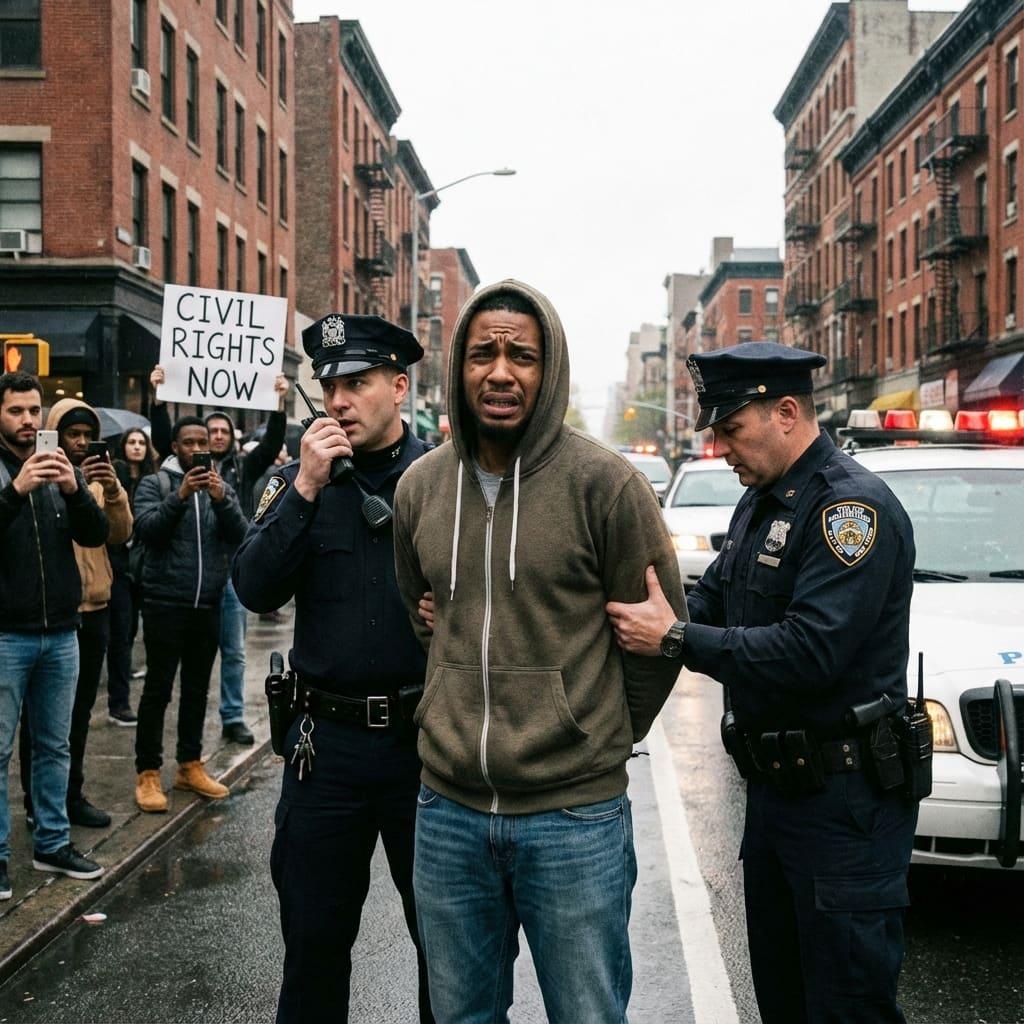
The police arrested you in front of your neighbors, put you in handcuffs, and took you to jail. The charges were based on mistaken identity, a lying witness, or an officer's hunch that turned out to be wrong. Eventually the case was dismissed — but not before you lost your job, spent thousands on bail and defense attorneys, and had your name dragged through public records that anyone with an internet connection can find. The criminal justice system is supposed to protect the innocent, but when it fails, the consequences are devastating.
Wrongful arrests and unfounded prosecutions are not just frustrating — they can be constitutional violations. The Fourth Amendment protects you from unreasonable seizures, including arrest or prosecution-related detention without probable cause. When these rights are violated, 42 U.S.C. § 1983 may provide a remedy, allowing citizens to sue government officials who violate constitutional rights while acting under color of law. But these are complex claims with specific legal requirements, and understanding the distinction between false arrest and malicious prosecution is critical to pursuing the right case.
False Arrest: When the Seizure Itself Is Unlawful
A false arrest claim arises when someone is detained or arrested without legal justification — most commonly, without probable cause. The claim targets the initial seizure itself: the moment officers restrained your liberty without a constitutionally sufficient basis for doing so.
To prevail, you must show that you were arrested or detained in a way that restricted your freedom of movement, that the arresting officer lacked probable cause to believe a crime had been committed and that you committed it, and that you suffered harm as a result. The concept of probable cause sits at the center of the analysis. It exists when the facts available to the officer at the time of arrest would lead a reasonable person to believe that a crime has been committed and that the person being arrested committed it. Probable cause doesn't require certainty — officers don't need to be right — but it requires more than a hunch, a gut feeling, an uncorroborated anonymous tip, or a decision driven by racial profiling rather than articulable facts.
The standard is deliberately objective: would a reasonable officer, knowing what this officer knew at that moment, have believed there was probable cause? What the officer subjectively thought is irrelevant. What matters is whether the facts available at the time justified the arrest.
False arrest claims commonly arise from several recurring patterns. Mistaken identity arrests can occur when officers seize the wrong person based on a vague description or a shared name. A complainant's statement may establish probable cause without independent corroboration when officers have no reason to doubt it, so a later-disproved accusation is not enough by itself. The stronger civil claim involves known credibility problems, obvious reasons for doubt, or material facts an officer intentionally or recklessly fabricated or omitted. Officers also ordinarily need not exhaust every lead once probable cause exists; the question is whether the information they possessed, including material facts they could not lawfully disregard, supplied an objective basis for the arrest.
The timeline for false arrest claims is important. The claim covers the period from the initial seizure through the time when legal process begins — typically arraignment or the first judicial determination of probable cause. Once a judge reviews the evidence and finds probable cause to hold you, the false arrest claim crystallizes, and any challenge to proceedings after that point falls under malicious prosecution.
Malicious Prosecution: When the Case Should Never Have Been Brought
Malicious prosecution is a distinct and more demanding Fourth Amendment claim. It addresses a prosecution-related seizure caused by criminal charges that lacked probable cause, not prosecution in the abstract. A summons, bond requirement, court appearance, or travel restriction does not automatically amount to the traditional arrest-or-imprisonment-type seizure the claim requires.
The Tenth Circuit's formulation requires proof that the defendant caused the plaintiff's continued confinement or prosecution; the original action terminated in the plaintiff's favor; no probable cause supported it; the defendant acted with malice; and the plaintiff sustained damages. Because the claim arises under the Fourth Amendment, the plaintiff also must identify a qualifying seizure tied to the unsupported charge. The Tenth Circuit's unpublished 2025 Crothers v. Carr decision explains that posting bond, attending court, and facing travel restrictions were not enough on that record.
The favorable termination requirement is where many potential claims end. The Supreme Court clarified the standard in Thompson v. Clark (2022), holding that a malicious-prosecution plaintiff need only show that the prosecution ended without a conviction — not that it ended with an affirmative indication of innocence. This is a more plaintiff-friendly standard than some circuits had previously applied. Acquittal at trial qualifies, as does dismissal of charges, a prosecutor's decision to drop the case (nolle prosequi), or a grand jury's refusal to indict (no-bill). However, a conviction typically prevents the claim while the conviction stands, and plea bargains to lesser offenses usually do not qualify because the plea itself is a conviction. The key question is whether the case ended without a criminal conviction against you.
Malice in this context is broader than personal hatred. It encompasses reckless disregard for whether probable cause existed, improper motivations like covering up police misconduct, personal vendettas or discrimination, and knowingly using false evidence or perjured testimony. Courts will infer malice from circumstances — if the evidence was so weak that no reasonable officer or prosecutor could have believed charges were warranted, a jury may conclude the prosecution was driven by something other than legitimate law enforcement. This inference is particularly powerful in cases where officers fabricated reports, withheld exculpatory evidence from prosecutors, or rushed charges to cover their own misconduct.
How These Claims Relate — and Differ
False arrest and malicious prosecution are related but doctrinally distinct. False arrest addresses the initial seizure, while malicious prosecution addresses a qualifying seizure caused by unsupported criminal charges. False arrest doesn't require that your case ended favorably — only that the arrest lacked probable cause at the time it occurred. Malicious prosecution requires favorable termination and defendant-specific proof connecting the unsupported charge to the seizure. The same events can require evaluation under both theories, but each claim has its own accrual rule, elements, defenses, and damages. Pleading both labels does not strengthen a case unless the facts support each one.
| Factor | False Arrest | Malicious Prosecution |
|---|---|---|
| Focus | The initial arrest | A prosecution-related seizure caused by an unsupported charge |
| Timing | Initial seizure through the start of legal process | Qualifying seizure tied to legal process |
| Key Issue | Probable cause at arrest | Probable cause, causation, and a qualifying seizure |
| Favorable termination | Not required | Required |
Who Can Be Sued — and Who Cannot
The arresting officers are the most obvious defendants. Officers who arrested you without probable cause can be sued personally under Section 1983. But liability is not limited to the person who physically placed you in handcuffs. An investigating officer may be responsible when knowingly or recklessly false material caused an unsupported charge and the resulting qualifying seizure. The analysis remains defendant-specific: the falsehood or omission must be material, the defendant must have caused the continued confinement or prosecution, and the unsupported charge must have caused the seizure. The Supreme Court left parts of that causation inquiry open in Chiaverini v. City of Napoleon, so a simple "but for" formulation is not enough.
Prosecutors generally receive absolute immunity for conduct within the judicial phase of the criminal process, including presenting the state's case. Immunity follows the function being performed, not the job title. Conduct outside the advocacy function requires a separate analysis, and qualified immunity or other defenses may still apply.
Municipalities may be liable under Monell when a constitutional injury was caused by an official policy, widespread custom, final-policymaker decision, or qualifying training failure. Municipalities do not receive qualified immunity, but they are not vicariously liable merely because they employed the officer.
Qualified Immunity: The Primary Obstacle
Officers sued under Section 1983 will assert qualified immunity, the judicially-created doctrine that protects government officials from civil liability unless they violated clearly established constitutional rights. In false arrest and malicious prosecution cases, the qualified immunity analysis typically turns on how close the probable cause question is. When probable cause was clearly absent — the arrest was based on fabricated evidence, the suspect had an ironclad alibi, or the officer's own report contradicts the basis for arrest — qualified immunity is difficult to sustain. But when the probable cause question is a genuinely close call, officers frequently prevail on immunity even if a court ultimately concludes probable cause was lacking.
Overcoming qualified immunity requires showing that probable cause was clearly absent under the specific circumstances, identifying Tenth Circuit or Supreme Court precedent establishing the right in similar situations, and demonstrating that any reasonable officer would have known the conduct was unlawful. Many false arrest and malicious prosecution claims are dismissed on qualified immunity grounds, which makes evidence preservation, thorough investigation, and experienced legal representation critical from the outset.
What You Can Recover
Available relief depends on the claim, defendant, causation, and proof. A supported claim may allow compensatory damages for proven financial, physical, liberty, or emotional harm. Punitive damages require separate proof and are unavailable against a municipality under § 1983. Under 42 U.S.C. § 1988, a court may award a reasonable attorney fee to a prevailing party in a qualifying civil-rights action; an award is not automatic.
The damages in these cases can be substantial, particularly when the wrongful arrest or prosecution caused lasting career damage, destroyed personal relationships, or resulted in significant time in jail. The value depends on the proof, the length and conditions of detention, the strength of the immunity defenses, and whether municipal liability or punitive damages against individual officers are available.
Time Limits
In Oklahoma, Section 1983 claims must generally be filed within two years. For false arrest or false imprisonment, the claim usually accrues no later than when the person is held pursuant to legal process. For malicious prosecution, the limitations period starts when the criminal proceedings terminate in your favor — the date of dismissal, acquittal, or no-bill. Understanding the statute of limitations for Section 1983 claims is critical, because missing the deadline means losing the right to bring the claim regardless of its merit.
Frequently Asked Questions
Can I sue even if I was eventually charged with something minor?
It depends entirely on the outcome. If you were convicted — even of lesser charges through a plea bargain — malicious prosecution claims are likely barred because the conviction isn't a favorable termination. False arrest claims focus on probable cause at the time of arrest, so a subsequent conviction on different charges doesn't automatically defeat the claim, but it complicates the analysis significantly.
What if the officer had an arrest warrant?
An arrest warrant issued by a judge typically provides strong probable cause protection, because a neutral judicial officer reviewed the evidence before authorizing the arrest. However, the warrant doesn't provide protection if the officer lied in the warrant affidavit, omitted material exculpatory information, or knew the affidavit contained false statements. Challenging a warrant-based arrest requires attacking the foundation of the warrant itself.
Can I sue the prosecutor who handled my case?
In most cases, no. Prosecutors enjoy absolute immunity for decisions made in their prosecutorial capacity — filing charges, conducting trials, negotiating pleas. This is one of the most frustrating aspects of civil rights law for victims of baseless prosecution. However, when prosecutors cross the line from advocacy into investigation — personally directing officers to fabricate evidence, for example — they lose absolute immunity and receive only qualified immunity, which can be overcome.
What if the case was dismissed "in the interests of justice" without explanation?
This generally constitutes favorable termination for malicious prosecution purposes under Thompson v. Clark. The Supreme Court held that the plaintiff need only show the prosecution ended without a conviction — an unexplained dismissal satisfies this standard. The key question is whether the case concluded without a criminal conviction against you, not whether the dismissal affirmatively declared your innocence.
How long do I have to file a claim?
The statute of limitations for Section 1983 claims in Oklahoma is generally two years. For false arrest or false imprisonment, the clock usually starts no later than when legal process begins. For malicious prosecution, it starts when the criminal case terminates in your favor. These deadlines are strictly enforced, and consulting an attorney promptly after a favorable termination is essential to preserving your rights.
An arrest or prosecution-related detention without probable cause can violate the Fourth Amendment, but the result depends on the criminal-case outcome, the legal-process timeline, each defendant's role, and applicable immunities. The emotional, financial, and reputational harm can be profound, which is why the underlying records and dates deserve careful review.
At Addison Law, we represent victims of wrongful arrests and prosecutions. If your case was dismissed or you were acquitted after being arrested without probable cause, contact us to discuss your options.
Wrongfully Arrested or Prosecuted?
False arrest and malicious prosecution are just two types of police misconduct claims we handle. Learn about your full range of options.
Schedule a Free Consultation →This article is for general information only and is not legal advice.