
Key Takeaways
- "Independent" Is a Misnomer: The doctor conducting your IME is selected and paid by the requesting side. Their report often minimizes injuries or disputes treatment recommendations.
- Everything Is Being Evaluated: From the moment you enter the parking lot until you leave, the doctor and staff are observing you. Inconsistencies between your reported symptoms and observed behavior will appear in the report.
- You Have Rights During the Exam: You can bring someone with you, request a copy of the report, and refuse to answer questions unrelated to your injury. An attorney can help you prepare.
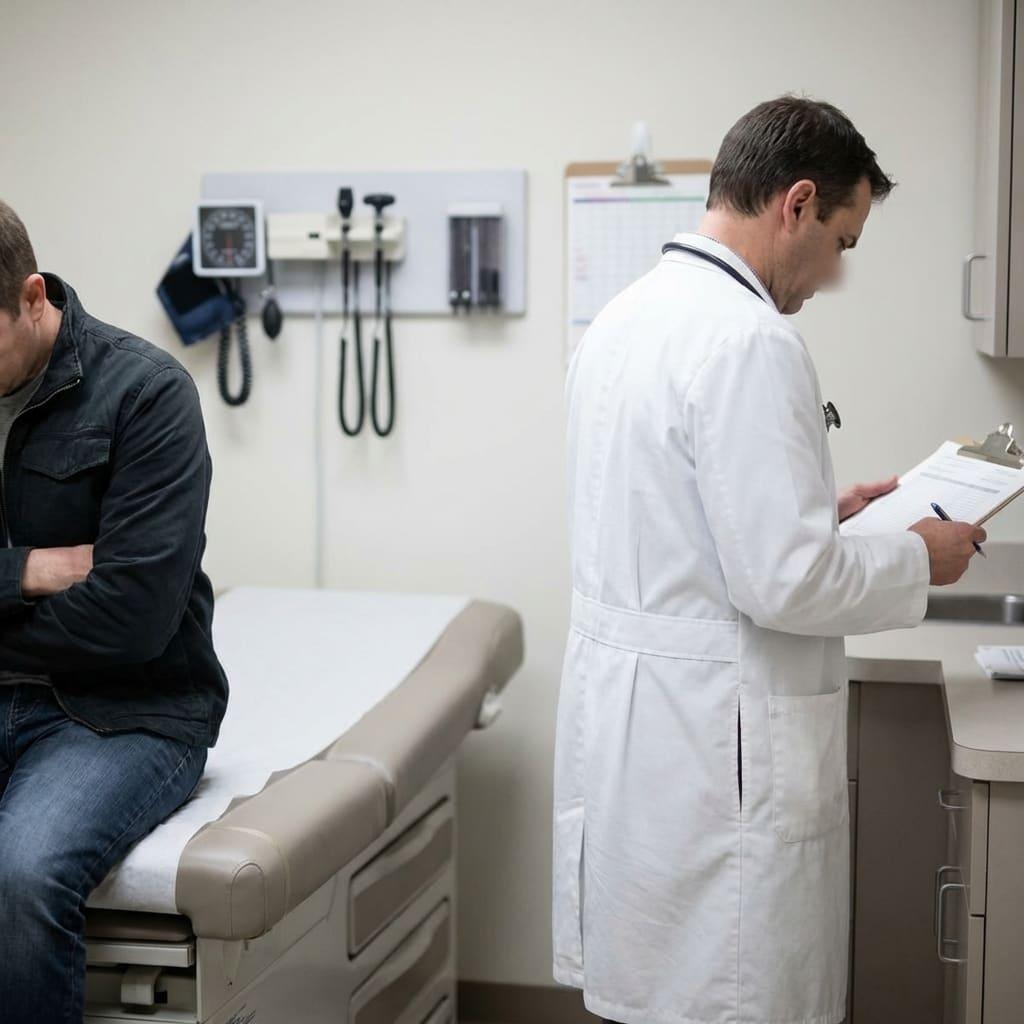
Months into your personal injury case, a letter arrives from the defendant's insurance company. They're requesting that you attend an "independent medical examination" with a doctor of their choosing. The letter makes it sound routine—just a formality to verify your injuries. In reality, this examination is anything but independent, and what happens during it can significantly affect the value of your case. The insurance company isn't looking for confirmation of what your treating doctors have found; they're looking for ammunition to dispute your injuries, minimize your treatment, and reduce what they have to pay. Understanding what an IME really is—and how to protect yourself—can mean the difference between fair compensation and a lowball settlement.
What an IME Really Is
The term "independent medical examination" suggests a neutral evaluation by an impartial physician. This framing is strategic—and often misleading. The doctor conducting your IME was selected by the insurance company or defense side, is paid for that examination, and may receive repeat referrals from insurers and defense firms. It is not independent in the everyday sense.
These doctors are sometimes called "defense medical examiners" by plaintiff's attorneys, a more accurate description of their role in many cases. Some IME doctors derive a substantial portion of their income from insurance company or defense referrals. The financial incentive can run in one direction: toward findings that minimize the insurer's exposure.
This doesn't mean every IME doctor is dishonest or that the examination is worthless. Some are genuinely trying to provide accurate evaluations. But the structural incentives create systemic bias, and you should approach the examination with eyes open about whose interests the doctor serves.
Under Oklahoma law, if you've filed a lawsuit and your physical or mental condition is in controversy, the defendant can request or seek a court-ordered examination under 12 O.S. § 3235. In pre-litigation claims, the insurance company can request an IME as a condition of continuing to negotiate. You generally cannot refuse without consequences—but you can prepare strategically.
How IME Doctors Minimize Your Case
The examination itself is typically brief—often 15 to 30 minutes, sometimes less. Compare that to the hours your treating physicians have spent evaluating and treating you over months or years. The IME doctor is working from a snapshot, often reviewing records selectively provided by the insurance company.
The report that follows usually does several things that hurt your case. It may dispute causation, suggesting your injuries preexisted the accident or resulted from something other than the defendant's conduct. It may minimize severity, characterizing serious injuries as minor strains that should have resolved weeks ago. It may criticize your treatment as excessive or unnecessary—too many physical therapy sessions, surgery that wasn't warranted, ongoing care that isn't medically supported.
The IME doctor may also identify perceived inconsistencies between your reported symptoms and their observations. If you told the doctor your back pain is constant and severe, but you sat comfortably during the examination, that will appear in the report. If you parked far from the building and walked briskly across the lot—not realizing you were being observed—the report will note that your gait and mobility seemed unremarkable. These observations, often taken out of context, become weapons in settlement negotiations or at trial.
Some IME doctors conduct perfunctory examinations but produce lengthy reports. They may not perform the same tests your treating doctors did, yet still reach different conclusions. They may rely on your medical records more than their own examination findings, cherry-picking information that supports minimization while ignoring evidence of serious injury.
Preparing for the Examination
Preparation is essential. Your attorney should help you understand what to expect, what to say, and what traps to avoid.
Be completely honest about your symptoms. Exaggeration is the most damaging mistake you can make at an IME. If you overstate your limitations, the doctor will likely catch you, and the resulting credibility damage will infect your entire case. If you have good days and bad days, say so. If some activities hurt while others don't, be specific. Consistency matters—what you tell the IME doctor should align with what you've told your treating physicians and what appears in your records.
At the same time, don't minimize. Many claimants, out of stoicism or a desire to appear strong, downplay their symptoms during medical examinations. They say they're "doing okay" when they're not. They demonstrate range of motion that exceeds what they can comfortably sustain in daily life. The IME doctor will not give you credit for toughness—they will record that your symptoms are mild and your function is good.
Describe your worst days, not just your best days. Explain how your injuries affect your daily life, your work, your sleep, your relationships. If you've had to give up activities you once enjoyed, say so. Be specific: "I used to coach my daughter's softball team, but I can't throw anymore without my shoulder locking up." Concrete examples are more compelling than vague complaints.
Answer questions directly, but don't volunteer information. The doctor may ask leading questions designed to elicit answers that can be used against you. If asked whether you've ever had back pain before, and you had one minor episode ten years ago that resolved completely, don't let that become "a history of back problems." Be precise: "I had a brief episode of muscle strain in 2015 that resolved completely within two weeks. I had no back issues after that until this accident."
What Happens During the Examination
Arrive on time but not early enough to be observed extensively in the waiting room. Dress normally—not in workout clothes that suggest you're more active than claimed, but not in a back brace you don't normally wear either. The goal is to present yourself as you actually are, not to perform.
The doctor will likely ask about your medical history, the accident, your current symptoms, and your treatment. Take your time answering. If you don't understand a question, ask for clarification. If you don't remember something, say so—don't guess.
The physical examination will include tests relevant to your claimed injuries. The doctor may push on areas to assess tenderness, put your joints through range-of-motion tests, check reflexes, and observe your movement. Tell the doctor if something hurts. Don't grimace silently through tests that cause pain—vocalize it. "That hurts," or "I feel a sharp pain when you do that." The doctor can only report what you communicate.
Note the duration of the examination and what tests were performed. After you leave, write down everything you remember—questions asked, tests conducted, how long the exam lasted, anything notable the doctor said. This contemporaneous record may be valuable if the IME report later mischaracterizes the examination.
Your Rights During an IME
You have more rights than the insurance company's letter suggests. In many cases, you can bring a witness with you—often a family member or your own medical professional to observe and take notes. Oklahoma courts have generally permitted observers, though the examining doctor can object if the presence would interfere with the examination. Having a witness can deter the most egregious misrepresentations and provides someone who can testify about what actually happened if disputes arise.
Your attorney can request or seek disclosure of the materials the IME doctor was provided—often the medical records and other documents the insurance company selected for review. Knowing what the doctor saw helps you and your attorney understand the basis for their conclusions.
You are entitled to a copy of the IME report. This should be provided automatically after the examination, but if not, your attorney can request it. Review the report carefully. Inaccuracies should be addressed—your attorney may write a letter to the insurance company pointing out factual errors, or your treating physicians may prepare responsive reports addressing the IME doctor's conclusions.
You can refuse to answer questions unrelated to your claimed injuries. If the IME doctor starts asking about your marriage, your finances, or other personal matters not connected to your physical condition, you can politely decline. "I'm here for a physical examination of my [injury]. I don't think that question is relevant."
After the IME
The IME report will eventually be produced. In litigation, it's part of discovery; in pre-litigation claims, the insurance company may share it as part of negotiations. Either way, you'll want your attorney to review it carefully.
Common problems include factual inaccuracies, mischaracterizations of your statements, opinions unsupported by the examination findings, and conclusions that ignore or dismiss evidence from your treating physicians. Your attorney may address these through various means: a detailed letter pointing out errors, a responsive report from your treating doctor explaining why the IME conclusions are wrong, or, in litigation, cross-examination of the IME doctor at trial.
The IME is rarely the last word. Jurors may view paid defense examinations skeptically when they understand the referral relationship, the limited exam time, and the contrast with treating-physician records. A well-prepared plaintiff whose story has been consistent, whose treating physicians have provided solid documentation, and whose attorney effectively cross-examines the IME doctor can overcome an unfavorable report.
But the IME can still significantly affect settlement value. Insurance adjusters use IME reports as justification for low offers that may constitute bad faith. "Our doctor says you're fine, so we're only offering $15,000." Your response—backed by your treating physicians, your testimony, and exposure of the IME doctor's bias—determines whether that lowball offer holds or crumbles.
Red Flags and Warning Signs
Some IME practices are so problematic that they warrant extra vigilance. Watch for doctors who spend only minutes on the examination but produce lengthy, detailed reports that couldn't possibly have resulted from their brief evaluation. Watch for doctors whose conclusions seem disconnected from their own examination findings—they found full range of motion, normal strength, and negative clinical tests, yet somehow still concluded you have significant impairment.
Watch for IME doctors who have testified exclusively for insurance companies and defendants. Your attorney can research the doctor's history through verdict reporters, court records, and attorney networks. A doctor who has conducted thousands of IMEs and never once supported a plaintiff's case is revealing something about their approach.
Watch for reports that rely heavily on your old records to suggest preexisting conditions while ignoring the fact that you were asymptomatic for years before the accident. A previous X-ray showing degenerative changes doesn't mean you had pain—many people have imaging findings that never cause symptoms. The accident caused your pain, regardless of what your spine looked like before.
Frequently Asked Questions
Can I refuse to attend an IME?
In pre-litigation negotiations, technically yes—but the insurance company may refuse to continue negotiating or use your refusal against you. Once litigation is filed, Oklahoma's discovery rules allow defendants to compel an examination, and refusal can result in sanctions including dismissal of your case. The better approach is to attend but prepare thoroughly.
Can I record the examination?
Oklahoma's communications statute generally allows a person who is a party to a conversation to record it, but an IME is not just an ordinary conversation. The court order, exam notice, office policy, or doctor may object to recording. Discuss this with your attorney before the exam; having a representative present under 12 O.S. § 3235 may be a less contentious alternative.
What if the IME doctor's report contains false statements?
Document the inaccuracies and provide your attorney with specific corrections. Your attorney can address errors through a letter to the insurance company, a responsive report from your treating physician, or cross-examination at trial. In extreme cases of fabrication, complaints to the medical licensing board may be warranted.
How much weight do juries give IME reports?
It varies, but jurors are often skeptical of IME doctors once they understand the financial arrangement. An IME doctor who admits on cross-examination that 90% of their income comes from insurance company referrals, that they've conducted 500 IMEs this year, and that they rarely if ever support plaintiffs' claims will lose credibility quickly.
Can I have my own doctor examine me to rebut the IME?
Absolutely, and this is often advisable. Your treating physicians can prepare narrative reports responding to the IME doctor's conclusions, or you can arrange for an independent examination by a physician of your choosing who has no financial stake in the outcome. This gives the jury a competing opinion from someone without structural bias.
What if the IME doctor recommends I stop treatment?
The IME doctor's opinion has no binding effect on your medical care. Continue treating as recommended by your physicians. The IME doctor has not treated you over time, and their litigation opinion may be based on a short examination and selected records. Follow your doctors' advice, not a litigation examiner's treatment recommendation.
Does Oklahoma law limit how many IMEs the defense can request?
Oklahoma's discovery rules under 12 O.S. § 3235 generally allow one examination per defendant. Additional examinations require a showing of good cause and court approval. If the defense requests multiple IMEs with different specialists, your attorney can object and require the court to balance the need for additional examinations against the burden on you.
The "independent" medical examination is one of the insurance industry's most effective tools for minimizing claims. But with proper preparation, understanding, and legal support, you can protect yourself from its worst effects. The examination is not a trap you must fall into—it's a strategic challenge you can navigate.
At Addison Law, we prepare our clients thoroughly for IMEs and know how to respond when reports are unfair or inaccurate. If you're facing an IME in your personal injury case—or if you've already had one and received a troubling report—contact us to discuss your options.
Facing an Insurance Company IME?
Don't go in unprepared. We can help you understand your rights and avoid common pitfalls.
Get a Free Consultation →This article is for general information only and is not legal advice.
Source status checked June 14, 2026 against Oklahoma Discovery Code section 3235 and Oklahoma communications-recording statutes.