Key Takeaways
- Repeated inspection failures: KOSU reported on June 18, 2026, that the jail failed its latest state health inspection, the twelfth consecutive failure since 2020, based on Oklahoma State Department of Health records.
- The 2025 federal report was not a jail-conditions finding: The Department of Justice examined Oklahoma's community behavioral-health system and Oklahoma City's emergency response. The Department now lists that matter closed.
- Claims remain fact-specific: State immunity rules and federal constitutional standards depend on the defendant, legal theory, proof, and deadlines. A death, injury, or failed inspection does not by itself establish liability.
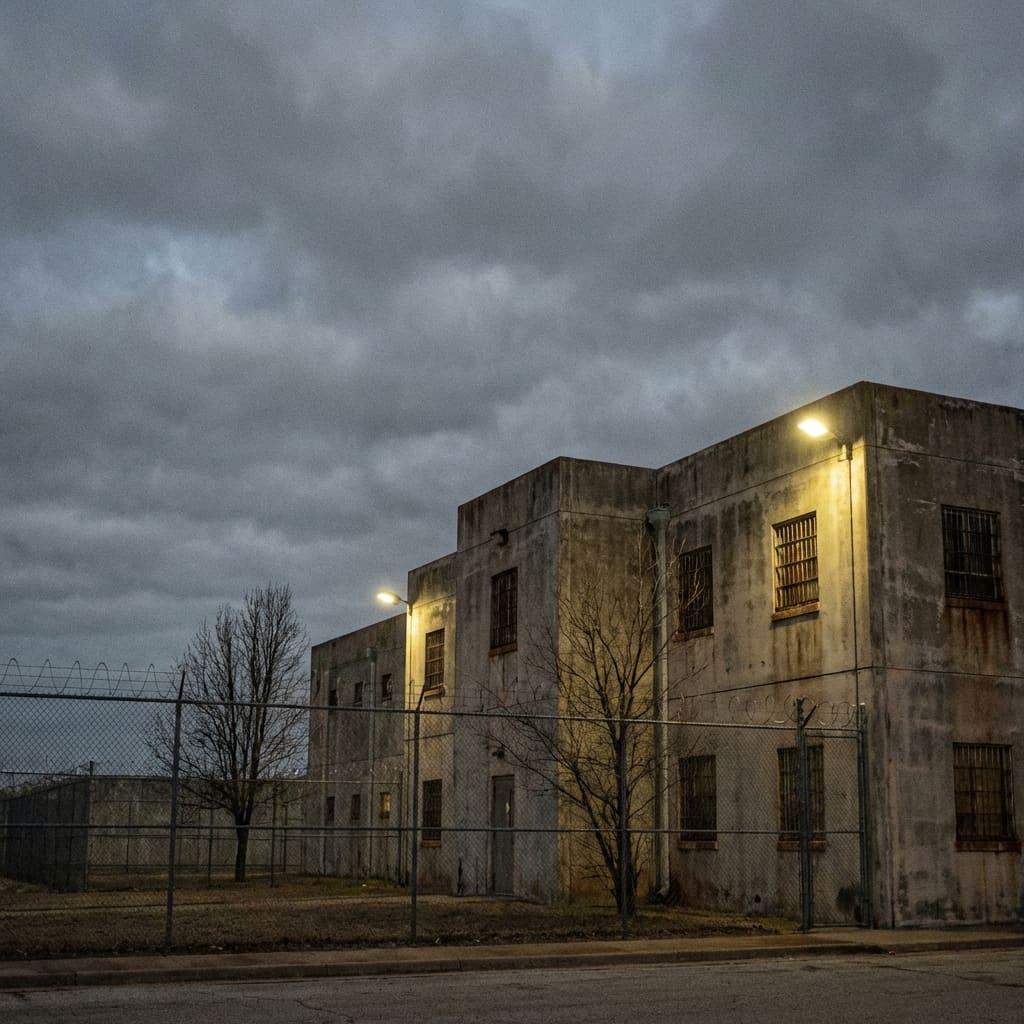
The Oklahoma County Detention Center has faced years of custody deaths, staffing pressure, and failed state health inspections. KOSU reported on June 18, 2026, based on state records, that the jail had failed a twelfth consecutive inspection since 2020. That history deserves scrutiny. It does not answer the narrower legal questions in an individual case: what happened, who knew about the risk, what each person did, and whether a policy or decision caused the harm.
For a family dealing with a death or serious medical event, the first job is to preserve the timeline and identify the records. Public reporting can show the setting. The case itself turns on evidence tied to the person who was harmed.
The Death Toll
The Oklahoma County Criminal Justice Authority, commonly called the Jail Trust, assumed operational control from the county sheriff on July 1, 2020. KOSU's June 2026 review reported that at least 60 people had died in custody since 2020. Public totals can differ because sources use different cutoff dates and definitions, so this article does not maintain a separate running count.
Public reporting has described deaths involving suicide, overdose, acute medical problems, and violence. The manner of death does not decide whether anyone is legally responsible. That requires medical evidence, custody records, proof of notice, causation, and the legal standard governing each defendant.
A broader pattern can matter in a federal claim against a public entity, but it is not enough by itself. In Bond v. Sheriff of Ottawa County, a published April 2026 decision, the Tenth Circuit explained that policy violations and jail standards can be evidence, but do not alone prove deliberate indifference or liability under Section 1983.
How We Got Here
Oklahoma County's fiscal 2024 annual financial report states that the Jail Trust was established on May 22, 2019, and began operating the detention center on July 1, 2020. The current building's problems predate that transition.
The most recent inspection history is concrete. KOSU's review of the May 2026 inspection reported missed or inadequately documented sight checks, sanitation problems, serious-injury reporting failures, and insufficient staffing. Inspectors reviewed 20 logbooks and identified at least 2,400 required sight checks that did not occur or were not properly documented between April 7 and May 4. Those are state compliance findings. Whether any lapse caused a particular injury or death still requires case-specific proof.
The new detention-center project also has moved beyond the old claim that construction had not started. County oversight records from April 21, 2026 include construction updates for the Behavioral Care Center and Phase 1 of the Adult Detention Center. Funding and later phases remained subjects of public debate. Because project estimates have changed, any current total should be tied to a dated county document rather than repeated as a fixed number.
The Governance Dispute
The Jail Trust remains the detention center's governing authority. Its board includes the county sheriff, a member of the Board of County Commissioners, and appointed trustees. The sheriff and county commissioner hold elected office.
On March 18, 2026, the Oklahoma County Budget Board voted to recommend that the Board of County Commissioners begin the process of dissolving the Trust. That vote did not dissolve it. The Trust's official page continued to identify its trustees, and county records show an Authority meeting on July 13, 2026.
Whether control eventually returns to the sheriff is a public-policy question. Families should not wait for that question to be resolved before preserving records or checking a claim-specific deadline.
Behavioral Health and the Justice Department Report
The Department of Justice opened a behavioral-health investigation in November 2022. Its January 2025 report found reasonable cause to believe that Oklahoma violated the Americans with Disabilities Act through unnecessary institutionalization and inadequate community-based services. It separately addressed Oklahoma City and the Oklahoma City Police Department's response to behavioral-health emergencies.
The report discussed the county jail's role in the larger behavioral-health system. It was not a conditions-of-confinement finding that the Oklahoma County Detention Center itself violated the Americans with Disabilities Act. The Department's current cases-and-matters index lists “Oklahoma City Behavioral Health Services” as closed. Its archive separately lists the Oklahoma City Police Department component as closed and the findings report withdrawn. The 2025 report should not be described as an active federal jail investigation or an ongoing remedy process.
A separate federal matter should not be blended into that history. In September 2024, a federal court approved the Briggs competency-restoration consent decree. That case addresses delays in restoring criminal defendants to competency. It is not the same as the Justice Department behavioral-health investigation or an individual conditions claim against the county jail.
The Department also continues to list a separate 2009 Oklahoma County Jail memorandum of understanding under enforcement. That older agreement and the closed 2025 behavioral-health matter are different proceedings.
Medical Care and the Provider Change
Turn Key Health Clinics provided medical services at the jail for years. In October 2024, The Frontier reported that Turn Key gave notice it would end the contract, citing security-staffing problems that interfered with access to patients.
That is no longer the current provider description. The detention center now states that it maintains its own medical and mental-health staff, with outside vendors supporting some functions. Any case involving medical care must identify the date of treatment, the people involved, their roles, and the contract or policy in force at that time.
Poor care and constitutional deliberate indifference are not the same thing. Under current Tenth Circuit law, a pretrial detainee's constitutional medical-care claim under a deliberate-indifference theory has both an objective and a subjective component. The medical need must be sufficiently serious, and the required state of mind must be proved as to the defendant. Negligence or a bad outcome alone is not enough.
The Sanders Decision
In Sanders v. Turn Key Health Clinics, the Oklahoma Supreme Court addressed a state-law claim arising from a death at the Creek County Jail. The court held that licensed medical professionals who provide detainee care under contract with a city, county, or the state can fall within the Governmental Tort Claims Act's definition of “employee.” It upheld dismissal of the negligence allegations presented there.
The holding should not be stretched into a rule that every claim against every jail contractor is barred. The court noted that the plaintiff had not alleged conduct by nonlicensed employees or contractors and had leave to amend. The opinion also did not decide whether a properly supported federal civil-rights claim could proceed.
For any state claim, the identity of the actor and the conduct alleged matter. So do the Governmental Tort Claims Act's separate exemptions and procedures.
Legal Options for Families
Federal claims under 42 U.S.C. § 1983 address constitutional violations. For an individual medical-care or safety claim based on deliberate indifference, the evidence generally must show a sufficiently serious risk and that the defendant knew of and disregarded it. An individual officer may raise qualified immunity, which requires separate analysis of the alleged violation and clearly established law.
A public entity is not automatically liable for an employee's conduct. A Monell claim requires an actionable policy or custom, causation, and the required municipal fault. Repeated inspection problems may be relevant evidence, but the records still must connect the policy or practice to the injury.
State-law claims require a different analysis. Title 51 of the Oklahoma Statutes includes a Governmental Tort Claims Act exemption at 51 O.S. § 155(25) for losses arising from the provision, equipping, operation, or maintenance of a prison or jail. That exemption may bar some negligence theories. When a claim is covered by the Act, 51 O.S. §§ 156–157 generally require notice within one year and suit within 180 days after denial. Filing a notice does not make an otherwise barred claim viable.
Federal civil-rights claims in Oklahoma generally borrow a two-year personal-injury limitations period, but federal law controls accrual. Tolling, capacity to sue, the proper claimant, and the procedural history can change the calculation. No family should calculate a deadline from a general website statement.
What Comes Next
As of July 2026, the Jail Trust continued to govern the facility despite a formal recommendation to begin dissolution. The existing jail continued to operate, the state inspection record remained poor, and county records reflected construction activity on the Behavioral Care Center and the first phase of the new detention center.
Oklahoma also rewrote its jail statutes in 2025. Senate Bill 595 retained the requirement that the Oklahoma State Department of Health inspect detention facilities at least once each year and placed detailed operational standards into the Oklahoma Jail Standards Act. Annual inspection was not a new concept created for the first time in 2025.
None of those institutional developments decides an individual case. A useful investigation still starts with the person's medical condition, the warnings given, the custody timeline, the response, the responsible actors, and the evidence tying the conduct to the harm.
Frequently Asked Questions
If my family member is currently detained at Oklahoma County Jail, what can I do?
Put any serious medical or safety concern in writing to the appropriate facility contact and keep the sent copy. Record the person's name, booking information, symptoms, medications, prior warnings, and dates of requests. Preserve messages and the names of people who received notice. If there is an immediate emergency, use the facility's emergency channels and seek prompt legal advice.
Can I sue the Jail Trust directly for a death that occurred there?
Possibly. The Trust is a public entity, but it is not automatically liable for an employee's conduct. A federal entity claim requires proof of an actionable policy or custom, the required municipal fault, and a causal connection to the constitutional injury. The records must tie the broader practice to what happened in the individual case.
What is the difference between a Section 1983 claim and a state negligence claim?
A Section 1983 claim alleges a violation of federal rights. A medical deliberate-indifference claim requires more than ordinary negligence. A state claim has different elements and may face the Governmental Tort Claims Act's jail-operation exemption, notice rules, damages limits, or other defenses. One theory does not automatically survive because another is barred.
How long do I have to file a lawsuit after a jail death?
There is no single deadline for every claim. Federal civil-rights claims in Oklahoma generally borrow a two-year period, but federal accrual and tolling rules matter. A covered Governmental Tort Claims Act claim may require notice within one year and suit within 180 days after denial. The claim, defendant, proper plaintiff, and procedural history all must be reviewed.
Does a failed health inspection prove a civil-rights claim?
No. An inspection finding may help show conditions, notice, or a repeated practice. It does not by itself prove that a defendant violated the Constitution or caused a particular injury. The Tenth Circuit made that distinction clear in Bond.
Can I get records about what happened to my family member?
Some records may be available, but access depends on the record and the requester's legal authority. The Oklahoma Open Records Act provides access to specified law-enforcement records, while other records may be withheld or redacted. Medical records generally require the detainee's authorization or a legally authorized personal representative. The Office of the Chief Medical Examiner explains how to request its reports. Litigation can provide additional discovery if a claim is filed.
The public history of the Oklahoma County Jail is serious. The legal question in any one case is narrower: what happened to this person, who knew about the risk, what did they do, and did a policy or decision cause the harm?
At Addison Law, we evaluate jail death and civil rights matters across Oklahoma. If a family member died or suffered serious harm in custody, contact us for a confidential case review.
A Jail Case Starts With the Record
Bring the timeline, names, messages, medical information, and reports you have. We will evaluate the proper claim, defendants, evidence, and next step.
Request a Case Review →This article is for general information only and is not legal advice.