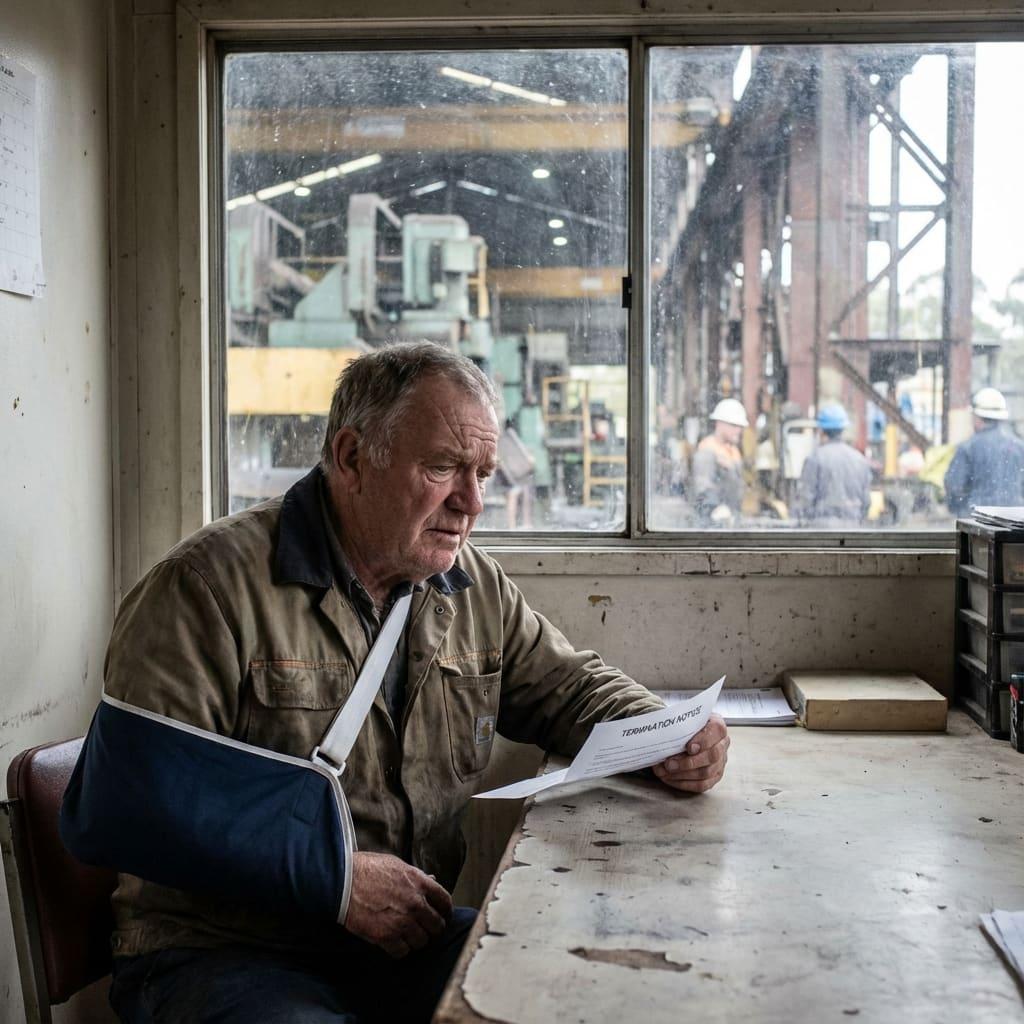

Key Takeaways
- Retaliation Is Illegal: Oklahoma law specifically protects workers who file workers' compensation claims from being fired or discriminated against for doing so.
- It's Not Just Firing: Demotion, pay cuts, schedule changes, harassment, and other adverse treatment may support a retaliation claim when tied to protected activity.
- Timing Matters: If the negative action happened shortly after you filed your claim, that timing can be strong evidence of retaliation.
You got hurt at work. You did what you were supposed to do—you reported the injury and filed a workers' compensation claim. Then suddenly, your hours got cut. Or you got written up for things that were never a problem before. Or you were told your position was being "eliminated." That timing deserves careful review.
Oklahoma law is clear on the protected activities it covers: retaliating against workers for filing workers' comp claims is illegal under 85A O.S. § 7. The protections are specific, and violations carry real consequences for employers. The practical fight is usually proof: whether the employer's stated reason is legitimate or a pretext for claim-related retaliation.
What Oklahoma Law Says
Oklahoma's workers' compensation anti-retaliation law (Title 85A, Section 7) prohibits employers from discriminating against employees who:
- File a workers' compensation claim
- Hire an attorney to represent them in a workers' comp matter
- Institute or participate in any workers' comp proceeding
This protection applies when you engage in the protected activities listed in the statute. Reporting the injury, filing the claim, hiring counsel, participating in proceedings, and testifying may implicate different protections, so the exact facts matter. Your employer cannot lawfully discriminate against you because you exercised protected workers' compensation rights. If they do, you may have a separate workplace retaliation claim that goes beyond your workers' comp benefits.
What Counts as Retaliation?
Retaliation is not always a dramatic firing. Sometimes it is more subtle. Examples that may matter when tied to protected workers' compensation activity include:
Termination is the most obvious form. "We're letting you go" shortly after you filed a claim.
Demotion can mean a lower title, less responsibility, or less prestigious work assignments.
Pay reduction means cutting your wages or reducing your hours.
Schedule changes that make it impossible to keep your job—suddenly being assigned overnight shifts when you've always worked days, for example.
Harassment and hostility from supervisors can make your work environment so miserable that you feel forced to quit.
Denial of promotions or opportunities you would otherwise have received.
Disciplinary actions for things that were never enforced before, or that are applied to you but not to coworkers.
The common thread is that you're being treated worse because you filed a claim or exercised a protected workers' compensation right, not for a legitimate work reason. It does not have to be a full termination to matter, but the adverse treatment, damages, and causal link must be provable.
How to Recognize Retaliation
Employers rarely say "we're firing you because you filed workers' comp." They'll usually give some other reason—performance issues, restructuring, attendance problems, policy violations.
But the timing and circumstances often reveal the truth. Warning signs include:
Sudden timing. You'd been employed for years with no problems, then you file a claim and suddenly you're a problem employee.
Changed treatment. Before your injury, you were valued. After your claim, you're being pushed out.
Inconsistent enforcement. You're being held to standards that aren't applied to others.
Pretextual reasons. The stated reason for your termination doesn't hold up under scrutiny—the "policy" you violated wasn't really a policy, or other people violated it without consequences.
Documentation that doesn't match reality. Suddenly there's a paper trail of write-ups and complaints that seem designed to justify firing you.
What You Can Recover
If you can prove retaliation, 85A O.S. § 7(B) provides for a district court action to recover:
Actual damages — lost wages, lost benefits, and other compensable losses sustained as a result of the retaliation.
Attorney fees and costs for the prevailing party, which makes litigation risk important for both sides.
Punitive damages up to $100,000 — designed to punish the employer and deter future retaliation.
The statute is designed to compensate employees for what retaliation cost them and to deter unlawful retaliation. The fee-shifting provision also changes the litigation stakes for both employee and employer.
The Intersection with Other Protections
Workers' comp retaliation often overlaps with other employment protections. If you're fired while recovering from a workplace injury, you may also have claims under the Family and Medical Leave Act (FMLA) if you qualify, the Americans with Disabilities Act (ADA) if your injury qualifies as a disability, or another Oklahoma public-policy theory if the facts support it. These overlapping protections may create separate deadlines and remedies beyond workers' compensation retaliation law alone.
What to Do If You Think You're Being Retaliated Against
Document everything. Keep records of any negative treatment after your claim—dates, what happened, who was involved, what was said. Save emails and text messages. Write down conversations while they're fresh.
Don't quit unless you have to. Quitting can complicate your case. If you can endure the situation, it's often better to let them fire you than to resign.
Ask about your personnel records. Access rules depend on the employer and the records involved, but performance reviews, attendance records, and written discipline often become important evidence.
Talk to a lawyer. Retaliation claims have time limits, and early advice can help preserve the strongest evidence.
The Employer's Likely Defense
Employers often claim the action was for legitimate business reasons, not retaliation. They may point to performance issues, attendance problems, or restructuring.
Your job (with help from your attorney) is to show that those reasons are pretextual—that they're not the real reason, or that they wouldn't have resulted in termination if you hadn't filed the claim.
Evidence that undermines the employer's stated reason is powerful. If they say you were fired for attendance, but others with worse attendance weren't fired, that's evidence. If they say you were fired for performance, but your performance reviews were good until you filed your claim, that's evidence. A sudden history of write-ups and warnings after the claim may support a pretext argument rather than refuting retaliation.
Frequently Asked Questions
Can my employer fire me for filing a workers' comp claim?
No. Oklahoma law prohibits employers from retaliating against employees who file workers' compensation claims, retain a lawyer for a claim, participate in proceedings, or testify. Termination, demotion, or discipline motivated by protected workers' compensation activity may be actionable. If you've been fired without warning after filing a claim, the timing and stated reason need immediate review.
How do I prove workers' comp retaliation?
You need to show: (1) you filed a workers' comp claim, (2) you suffered an adverse employment action, and (3) there's a causal connection between the two. Timing is often the strongest evidence — if you were fired shortly after filing, that's significant. Courts also look at whether the employer's stated reason is consistent with how it has treated other employees, whether the employer began documenting performance issues only after the claim was filed, and whether the employer's story has changed over time.
What damages can I recover for workers' comp retaliation?
Retaliation claims are separate from your workers' comp benefits. Under 85A O.S. § 7(B), an employee may recover actual damages, punitive damages if applicable up to $100,000, and fees/costs under the statute's prevailing-party provision. Retaliation damages claims proceed in district court, not before the Workers' Compensation Commission.
What if my employer says I was fired for a different reason?
Employers often offer a non-retaliatory explanation, such as poor performance or attendance issues. Your job is to show that reason is pretextual — for example, by demonstrating that similarly situated employees without comp claims were not treated the same way. Our guide on hostile work environments covers how workplace mistreatment can escalate.
Fired After Filing Workers' Comp?
Oklahoma law protects workers from claim-related retaliation. Preserve the timing, documents, and stated reasons now.
Learn How We Can HelpContact us for a free consultation about your retaliation claim.
This article is for general information only and is not legal advice.