Key Takeaways
- $126 Million Jury Verdict: A jury in the Western District of Oklahoma awarded $90 million against former Moore police officer Kyle Lloyd on a federal civil-rights claim and $36 million against the City of Moore on a state-law vicarious liability claim after finding Lloyd acted within the scope of his employment when he killed 18-year-old Emily Gaines.
- Scope-of-Employment Finding Was Decisive: The jury rejected the City's argument that Lloyd was off-duty and acting on his own. Because he was rushing to deliver keys to another officer during a department event, the jury found his actions fell within the scope of his employment — supporting state-law liability against the City.
- Reported as Largest Non-Class-Action Verdict in Oklahoma: The combined $126 million award has been reported as the largest non-class-action plaintiff's verdict in Oklahoma history. The court subsequently entered judgment capping the City of Moore's liability at $125,000 under the Oklahoma Governmental Tort Claims Act.
Quick Answer: What Happened in the Emily Gaines Case?
| Question | Answer |
|---|---|
| Who was Emily Gaines? | An 18-year-old Moore High School senior killed on December 14, 2019 while driving to take the ACT. |
| Who hit her? | Kyle Lloyd, then a Moore Police Department sergeant, while off duty in his personal vehicle. |
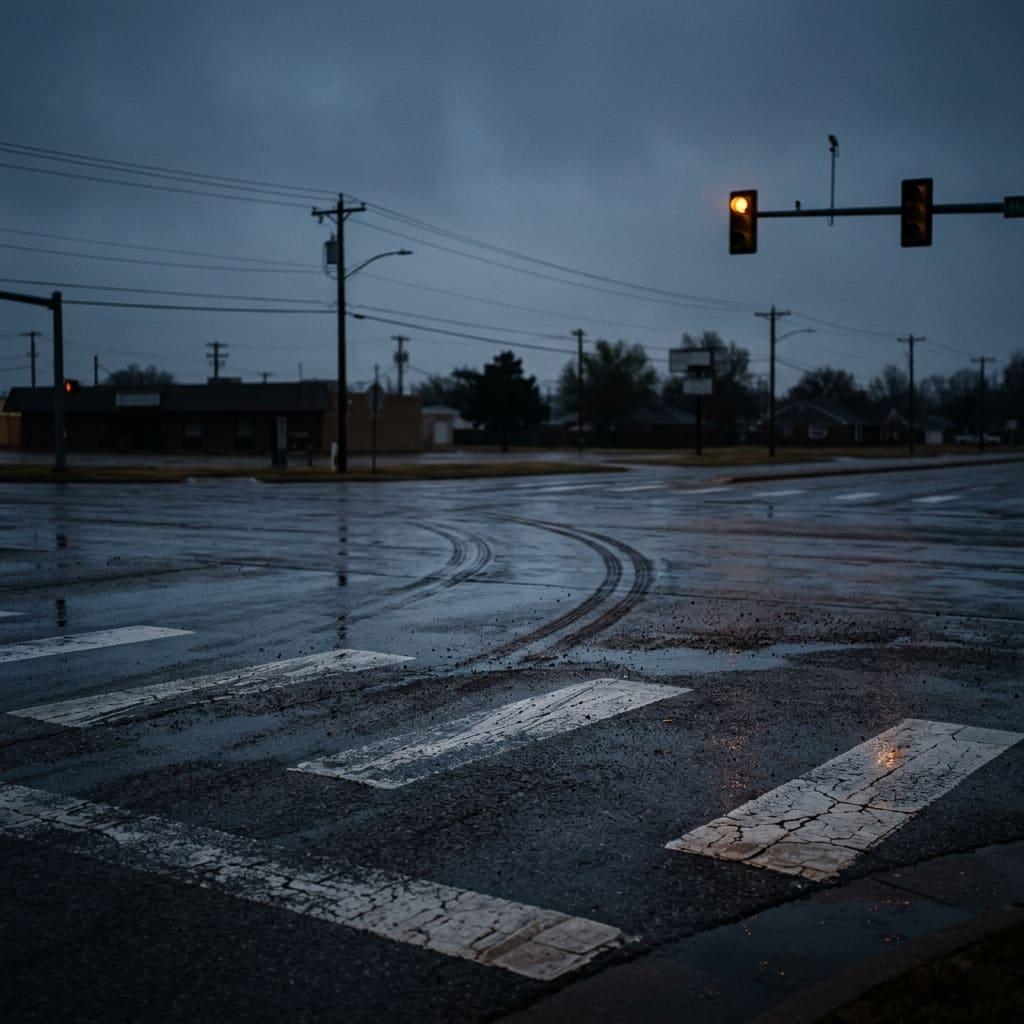
| Where did it happen? | Near South Sooner Road and S.E. 134th Street, now designated the Emily Gaines Memorial Intersection. |
| What did the jury award? | $90 million against Lloyd on the federal civil-rights claim and $36 million against the City of Moore on the state-law scope-of-employment claim. |
| What judgment was entered? | The federal court entered the full $90 million against Lloyd and applied the Governmental Tort Claims Act cap to limit the City judgment to $125,000. |
| Was Addison Law involved? | No. The family was represented by Chris Hammons and Jason Hicks. Addison Law was not counsel. |
The court record describes Lloyd driving 94 miles per hour as he approached South Sooner Road and S.E. 134th Street and 77 miles per hour at the moment of collision. The City of Moore later posted the entered judgment and its statement that it disagreed with the scope-of-employment finding while acknowledging the statutory cap.
On April 1, 2026, a federal jury in Oklahoma City returned a $126 million verdict in favor of the family of Emily Gaines, an 18-year-old Moore High School senior who was killed on December 14, 2019, when an off-duty police officer collided with her vehicle while driving far above the posted speed limit. The verdict in Gaines v. City of Moore, Case No. 5:20-cv-00851 (W.D. Okla.), delivered before Chief Judge Timothy D. DeGiusti, has been reported as the largest non-class-action plaintiff's verdict in Oklahoma history. The Gaines family was represented at trial by Chris Hammons of Laird Hammons Laird and Jason Hicks of the Hicks Law Firm in Oklahoma City. Addison Law was not counsel in this case, but we follow police accountability litigation in Oklahoma closely because this verdict carries important lessons for families across the state.
What Happened to Emily Gaines
Emily Gaines was a senior at Moore High School on the morning of December 14, 2019. She was driving to take the ACT, a college admission exam, when her vehicle was struck by Kyle Lloyd, a sergeant with the Moore Police Department. Lloyd was off duty that Saturday morning, driving his personal vehicle, but he was not on a purely personal errand. Another Moore officer, Kyle Wagner, had accidentally locked his keys inside a police vehicle while participating in the department's annual "Shop With a Cop" charitable event. Wagner called Lloyd, the only person with a spare key, and told him to hurry. Lloyd left his home and, according to the federal court's 2024 summary-judgment order, was driving 94 miles per hour as he approached South Sooner Road and S.E. 134th Street. The order described his speed at impact as 77 miles per hour. Emily died at the scene.
Oklahoma later designated State Highway 77H and S.E. 134th Street in Cleveland County as the Emily Gaines Memorial Intersection. The designation does not undo the harm. It does mark, in public law and on the roadway itself, that this was not just another traffic fatality.
The Criminal Case
In June 2021, Kyle Lloyd pleaded guilty to first-degree manslaughter in Cleveland County. He was sentenced to 18 years, with nine years to be served in prison and the remainder suspended. The guilty plea resolved the criminal case, but it did not address the broader civil question — whether the City of Moore bore legal responsibility because Lloyd was acting within the scope of his employment. That question went to a federal jury.
The criminal sentence was significant in its own right. The 18-year sentence reflected the severity of Lloyd's conduct — driving at nearly double the speed limit through a suburban intersection for a non-emergency task. But criminal accountability and civil accountability serve different purposes. A criminal conviction punishes the individual. A civil verdict determines whether the institution that employed, trained, and directed that individual should share responsibility for the harm. The Gaines family pursued both.
The Federal Civil Rights Lawsuit
Emily's parents filed Gaines v. City of Moore in the Western District of Oklahoma in 2020, bringing claims under 42 U.S.C. Section 1983 against Kyle Lloyd and state-law claims against the City of Moore. The case proceeded on two distinct legal theories. The Section 1983 claim against Lloyd alleged that his conduct, driving at reckless speed while performing a police department task, violated Emily's constitutional rights under the Fourteenth Amendment. The claim against the City of Moore was based on state-law respondeat superior principles: if Lloyd was acting within the scope of his employment when he killed Emily, the City was vicariously liable for his actions under Oklahoma law.
The City argued that Lloyd was off-duty, driving his personal vehicle, and responding to a personal request from a colleague. Under this theory, he was acting on his own, and the City bore no responsibility. The Gaines family argued that Lloyd was performing a task directly connected to department operations — delivering keys to a fellow officer so that officer could continue participating in an official police department event — and that his actions therefore fell within the scope of his employment.
The jury sided with the Gaines family on both theories. It awarded $90 million against Kyle Lloyd on the Section 1983 civil-rights claim and $36 million against the City of Moore on the state-law vicarious liability claim. The combined $126 million verdict has been reported as the largest non-class-action plaintiff's verdict in Oklahoma history.
Why Scope of Employment Mattered
The scope-of-employment finding is one of the most legally significant aspects of this verdict. Under Oklahoma law, an employer is liable for the torts of an employee committed within the scope of employment — meaning the employee was performing work assigned by the employer or was engaged in conduct incidental to that work. The question is always whether the employee's actions were undertaken to serve the employer's interests, even if the specific conduct was unauthorized or reckless.
In police cases, scope-of-employment analysis can become particularly complex. Officers often argue they were "off-duty" at the time of an incident, and municipalities often rely on that characterization to contest liability. But Oklahoma courts look beyond the clock to whether the officer's actions were connected to the employer's business. An officer who responds to a department need, uses department authority, or acts in furtherance of department operations may be within the scope of employment regardless of shift status.
Here, the evidence was strong. Lloyd was not running a personal errand. He was responding to a call from a fellow officer who needed help with a department vehicle during a department-organized event. The spare key Lloyd was delivering belonged to a police vehicle. The event was an official Moore Police Department function. The jury concluded that Lloyd's actions, however reckless, were undertaken in furtherance of his employment — and that the City of Moore therefore bore responsibility for the consequences under state law.
This analysis matters for any Oklahoma family considering a civil rights claim against a municipality. Municipalities often argue that the offending officer was acting outside the scope of employment. Understanding how Oklahoma courts and juries evaluate that defense — looking at the nature of the task, the connection to departmental operations, and the employer's interests — is essential to building a viable case.
The GTCA Cap and the Entered Judgment
The City of Moore issued a public statement after the verdict acknowledging the jury's finding that Lloyd was negligent but disagreeing with the determination that he was acting within the scope of his employment. The City noted that its liability under the Oklahoma Governmental Tort Claims Act is capped — and that distinction played out in the entered judgment.
The Governmental Tort Claims Act (GTCA) imposes statutory damage caps on tort claims against Oklahoma political subdivisions. Because this case arose from a 2019 incident, the pre-amendment version of 51 O.S. § 154 applied, capping liability at $125,000 per claimant for non-property claims. On April 6, 2026, the court entered judgment reflecting that cap — $125,000 against the City of Moore and $90 million against Kyle Lloyd individually.
The practical reality of this case illustrates a dynamic that families must understand. The jury found that the City bore responsibility — but the GTCA cap means the City's actual financial exposure was a fraction of the jury's $36 million award. Meanwhile, the $90 million § 1983 judgment against Lloyd is not subject to the GTCA cap because it is a federal civil rights claim, not a state-law tort claim. Federal courts have consistently held that state damage caps cannot limit recoveries under 42 U.S.C. § 1983, because doing so would undermine the federal statute's purpose of providing a meaningful remedy for constitutional violations.
For families evaluating potential cases against Oklahoma municipalities, this distinction is critical. Pursuing claims exclusively under state law subjects the family to the GTCA cap. Pursuing claims under Section 1983 in federal court, where municipalities cannot assert qualified immunity against damages, may provide a path to meaningful financial accountability when the facts support a constitutional claim. But as the Gaines case demonstrates, proving municipal liability under Section 1983 requires meeting the demanding Monell standard of showing that a constitutional violation resulted from an official policy, custom, or practice, a higher bar than state-law respondeat superior. Here, the court granted Moore summary judgment on the Monell claim before trial, meaning the City's ultimate liability was governed by state law and its GTCA cap. The Gaines verdict illustrates both the power and the complexity of pursuing accountability on multiple fronts.
What This Verdict Means for Police Accountability in Oklahoma
The Gaines verdict arrives at a moment when Oklahoma juries have shown a willingness to hold law enforcement institutions accountable for the consequences of their operations. This verdict followed closely on the heels of other significant accountability results in the state, including the $2 million verdict against the Oklahoma County Jail Trust in April 2026 for the death of Gregory Davis — a case in which Addison Law served as part of the trial team.
These verdicts share a common thread: juries are looking beyond the conduct of individual officers and evaluating whether the institutions that employ them created the conditions for harm. In the Davis case, the jury found that the Jail Trust's systemic understaffing and missed cell checks constituted deliberate indifference. In the Gaines case, the jury found that the City of Moore bore responsibility because Lloyd's fatal drive was undertaken in service of department operations.
For Oklahoma families, the lesson is practical. When a law enforcement officer causes serious harm — whether through excessive force, reckless conduct in the course of police duties, or medical neglect in custody — the question is not limited to what the individual officer did. The question can extend to what the institution allowed, facilitated, or failed to prevent. Federal Section 1983 claims provide the legal mechanism to ask that question in front of a jury when the facts support a constitutional violation. Section 1983 requires more than negligence — a plaintiff must show that the officer's conduct rose to the level of a constitutional violation, such as conduct that shocks the conscience or demonstrates deliberate indifference.
The Importance of Experienced Trial Counsel
The Gaines verdict also underscores a reality that families considering police accountability cases must understand: these cases can require trial. The City of Moore did not settle before trial. Many municipalities will not, particularly when the scope-of-employment defense gives them a plausible argument for avoiding institutional liability. Cases like Gaines v. City of Moore require attorneys who are prepared to try the case to a jury — not just file the lawsuit and negotiate.
Chris Hammons, Jason Hicks, and their teams took this case through years of litigation, pretrial motion practice, and a full federal jury trial. Addison Law handles complex civil rights and wrongful death matters across Oklahoma, and this verdict shows the kind of preparation these cases demand.
Families evaluating potential civil rights claims should seek counsel with demonstrated federal trial experience — attorneys who have tried § 1983 cases in the Western District and the Tenth Circuit and who understand the specific procedural and evidentiary demands of federal police accountability litigation.
Frequently Asked Questions
What was the verdict in the Emily Gaines case?
On April 1, 2026, a federal jury in the Western District of Oklahoma returned a $126 million verdict in favor of the family of Emily Gaines. The verdict included $90 million against former Moore police officer Kyle Lloyd on a 42 U.S.C. § 1983 civil rights claim and $36 million against the City of Moore on a state-law vicarious liability claim. The court subsequently entered judgment capping the City's liability at $125,000 under the GTCA while entering the full $90 million judgment against Lloyd.
Who represented the Gaines family?
The Gaines family was represented at trial by Chris Hammons of Laird Hammons Laird and Jason Hicks of the Hicks Law Firm in Oklahoma City. Addison Law was not counsel in this case.
What happened to Kyle Lloyd criminally?
Kyle Lloyd pleaded guilty to first-degree manslaughter in Cleveland County in June 2021 and was sentenced to 18 years, with nine years to be served in prison. The civil lawsuit was filed separately and addressed the City of Moore's institutional liability.
Why was the City of Moore's judgment capped at $125,000?
The $36 million jury award against the City was a state-law vicarious liability verdict, not a federal civil rights verdict. State-law tort claims against Oklahoma political subdivisions are subject to the damage caps in the Governmental Tort Claims Act. Because this case arose from a 2019 incident, the pre-amendment version of 51 O.S. § 154 applied, limiting the City's liability to $125,000 per claimant. The $90 million § 1983 judgment against Lloyd individually is not subject to the GTCA cap.
What does "scope of employment" mean in a police case?
Scope of employment determines whether an employer is vicariously liable for an employee's actions under state law. In the Gaines case, the jury found that Lloyd — although technically off-duty — was acting within the scope of his employment because he was delivering keys to another officer during an official police department event. Oklahoma courts evaluate whether the employee's actions were connected to the employer's business, not simply whether the employee was on the clock.
Does this verdict affect other police accountability cases in Oklahoma?
While each case depends on its own facts, the Gaines verdict demonstrates that Oklahoma juries may impose substantial accountability when evidence shows that an officer's harmful conduct was connected to department operations. The scope-of-employment finding is particularly instructive for families considering claims against cities or counties in similar circumstances. The case also illustrates the importance of evaluating both federal Section 1983 claims and state-law theories so available paths are preserved.
How long do I have to file a civil rights lawsuit in Oklahoma?
The statute of limitations for a 42 U.S.C. § 1983 claim in Oklahoma is two years. The limitations period generally begins to run when the plaintiff knows or has reason to know of the injury and its cause. Preserving evidence — including body camera footage, dispatch records, internal communications, and department policies — requires prompt action. Families who believe a law enforcement officer caused the death or serious injury of a loved one should consult an attorney as soon as possible.
Addison Law represents families across Oklahoma in civil rights and wrongful death cases involving law enforcement misconduct, including claims under 42 U.S.C. § 1983. If you have lost a loved one due to unconstitutional police conduct, contact us for a free, confidential consultation.
Harmed by Law Enforcement Misconduct?
Recent Oklahoma verdicts show how police accountability cases can be tried and proven. If you or your family has been harmed by unconstitutional police conduct, we can evaluate your case and explain the legal options available under federal law.
Get a Free Case Evaluation →This article is for general information only and is not legal advice. Addison Law was not counsel in the Gaines case. Past results do not guarantee future outcomes.