Key Takeaways
- Safety Checker Contract Terminated: The Oklahoma County Criminal Justice Authority voted on March 31 to cancel a contract with VieMed Healthcare Staffing LLC that provided 20–30 dedicated safety checkers whose sole job was conducting sight checks on detainees. The contract workers will leave after April 30, 2026.
- Catastrophic Staffing Levels: The jail had just 74 detention officers as of April 17—against a budget for 111—responsible for supervising approximately 1,500 detainees in a 13-story facility that has been cited seven times since 2020 for insufficient staffing.
- Legal Consequences of Reduced Monitoring: Oklahoma law requires hourly visual sight checks on every detainee. The jail's documented failure to perform these checks has appeared in death investigations and civil rights litigation, including a $2 million jury award just days ago.
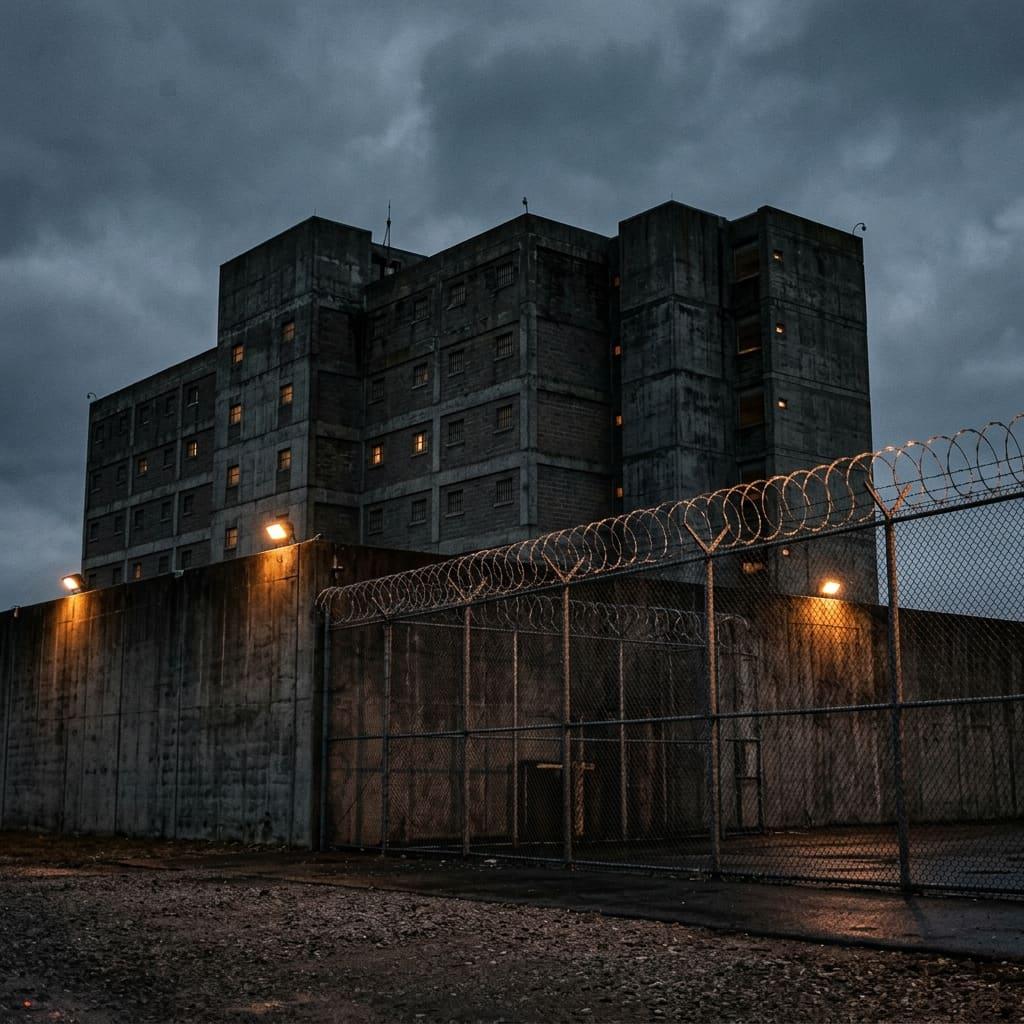
The Oklahoma County Detention Center is about to lose the only dedicated staff it had for conducting safety checks on its 1,500 detainees. On March 31, the Oklahoma County Criminal Justice Authority—the entity that governs the jail—voted to terminate a $180,000-per-month contract with Louisiana-based VieMed Healthcare Staffing LLC, which since May 2024 had provided 20 to 30 contract workers whose sole task was to visually check on every person housed in the facility. After April 30, those workers will be gone. The jail says it cannot afford them. Advocates say the decision is dangerous and irresponsible. The math says both are correct.
The cancellation came after the state health department, the county budget board, and a multi-county grand jury had documented serious operational and safety concerns at the facility. KOSU reported on June 18, 2026, based on state records, that at least 60 detainees had died at the jail since the Criminal Justice Authority assumed operations in July 2020. Two had died by the article's April 20 publication date: Jeremiah Coffey, 22, who was found unresponsive in his cell on January 21, and Sheila Prince, 52, who died less than 11 hours after being booked on April 8. And just three days before the contract cancellation became public, a federal jury in Oklahoma City returned a $2 million verdict against the Criminal Justice Authority in the death of Gregory Davis—a man who died in 2021 after detention officers missed five of six mandatory cell checks in the hours before he was found unresponsive.
The safety checkers were hired in the first place because the jail could not reliably perform one of the most basic functions required of it by law: visually checking every person in custody at least once an hour.
Why Safety Checkers Existed
Oklahoma law is specific about what jails owe their detainees. Under the Oklahoma Jail Standards Act and its implementing regulations in the Oklahoma Administrative Code, state jail standards require hourly visual sight checks on every detainee. A "sight check" requires a detention officer to physically observe each inmate—not merely glance at a video monitor. For detainees flagged as suicide risks, the standards require frequent observation consistent with facility policy. These are not aspirational goals. They are binding legal obligations, and the Oklahoma State Department of Health has the authority to inspect jails without notice to verify compliance. The Oklahoma Supreme Court unanimously affirmed that authority in May 2025 after the Jail Trust attempted to block unannounced inspections.
The Oklahoma County Jail has a well-documented history of failing to meet these standards. The Frontier reported in 2024 that security checks were routinely missed because there were simply not enough officers to conduct them. The OSDH has cited the jail for insufficient staffing seven times since the Jail Trust took over. A December 2024 walk-through inspection documented 98 missed or undocumented hourly safety checks over just five days. During that same inspection, an inmate was discovered dead in their cell.
The VieMed contract, which began in May 2024, was designed to address this specific problem. By bringing in 20 to 30 contract workers dedicated exclusively to conducting sight checks, the jail could separate the monitoring function from the duties of its overstretched detention officers. The idea was straightforward: officers who are running inmates to court appearances, distributing medication, managing intake, and responding to emergencies cannot simultaneously walk every floor of a 13-story building performing hourly visual inspections. Dedicated checkers could.
The evidence suggests the approach was working. Mark Faulk of the People's Council for Justice Reform told The Frontier that "with contracted outside staffing, the death toll in what is known as the deadliest jail in America was finally dropping." The math bears scrutiny: after recording eight deaths in 2025 and seven in each of the preceding two years, the pace of deaths appears to have slowed since the contract workers arrived—though the sample size is limited and causation is difficult to isolate in a facility with this many compounding failures.
Now the contract is ending, and the jail is losing the only staff whose job description consisted entirely of the task the facility has repeatedly failed to perform on its own.
The Budget Crisis Behind the Cut
The contract was not canceled because it was ineffective. It was canceled because the jail is running out of money.
The Oklahoma County Detention Center was facing a $5.8 million budget deficit heading into the current fiscal year. The Oklahoma County Budget Board stepped in to cover $4.6 million of that shortfall with additional funding, but that left a gap the jail still had to close. The VieMed contract, at $180,000 per month, represented one of the largest discretionary line items that administrators could eliminate without laying off permanent staff. "The bottom line is we had to cancel because we will not have the money to pay them," Mark Opgrande, a spokesperson for the jail, told The Frontier.
The financial crisis is not new. The jail has operated on life support for years. Oklahoma County Commissioner Brian Maughan, a member of the county budget board, has repeatedly advocated for a dedicated sales tax to fund jail operations and the construction of a new facility. Oklahoma County is the only county in the state without a dedicated sales tax, according to Maughan. Without one, the jail relies on general fund appropriations that have never been sufficient to adequately staff, maintain, or modernize a 13-story facility built in the 1990s with more than $20 million in deferred maintenance.
At a January 23, 2026, budget meeting, Jail Administrator Tim Kimrey said the facility is "running with a skeleton crew" and is short 100 detention officers. As of April 17, the jail had only 74 officers—against a budget for 111 and well below the approximately 500 workers that a staffing analysis determined the jail needs to operate safely. The jail has seen continuous staffing declines since the Criminal Justice Authority took over in 2020. Staffing dipped to just 134 officers in late August, and has only gotten worse since.
Commissioner Maughan told The Frontier that while losing the contracted safety checkers is "unfortunate," he does not believe it will impact detainee safety. The documented record at the facility—the missed checks, the preventable deaths, the failed inspections, the federal verdicts—suggests otherwise.
What Happens Without Dedicated Monitoring
The consequences of eliminating dedicated safety checkers at a facility with this staffing level are not speculative. They are documented in the case files of the people who have already died there.
Gregory Davis died on August 12, 2021, after detention officers missed five of six required cell checks in the hours before he was found unresponsive. Davis, 53, had been visibly psychotic for days, chanting in his cell, naked and delusional. A fellow inmate testified at trial that Davis screamed in pain and begged for a nurse. No officer reported hearing anything. He died of a perforated ulcer that a gastroenterologist testified was survivable with treatment. On April 17, 2026—three days before the VieMed contract termination became public—a federal jury in Oklahoma City awarded Davis's family $2 million after finding that the Criminal Justice Authority was deliberately indifferent to his medical needs.
The Davis case is not an outlier. Charles Moore died in March 2022 after being found unresponsive during medication distribution—not during a dedicated safety check. Derek Strother died of a narcotics overdose in February 2024 after, his mother alleged, his medical needs were neglected. Dina Latrell Kirven died within six hours of being booked in April 2023; the cause was a fentanyl overdose, and his mother filed a federal lawsuit alleging deliberate indifference. Clinton Pike died in April 2025 after what was reported as an altercation; an employee was later booked for negligence. In case after case, the same question appears: did the jail have enough people, systems, and supervision to notice a crisis before it became fatal?
The VieMed contract was specifically designed to improve this problem by ensuring someone was always actively looking. Without it, the 74 remaining detention officers will be responsible for monitoring 1,500 detainees across 13 floors while simultaneously performing every other operational function a jail requires. The gap between a detainee's crisis and its discovery could grow wider, and the risk that the next crisis becomes the next death could increase.
Michael Olson, policy counsel for Oklahomans for Criminal Justice Reform, told The Frontier that he worries more suicides and violent incidents will occur with reduced supervision. Suicide is one of the leading causes of death at the facility. "Cutting safety staff is unlikely to ease these problems and will likely make these situations more common," Olson said. "Everyone is safer when there is a consistent, visible source of supervision throughout the facility."
The Legal Landscape for Families
Any future death at the Oklahoma County Jail after this decision could add to the pattern evidence families use in civil rights litigation. The documented record of staffing failures, missed checks, deaths after delayed observation, and now the elimination of dedicated safety monitoring may support federal civil rights claims under 42 U.S.C. § 1983 when the evidence ties those failures to a specific injury or death.
Under the Fourteenth Amendment, pretrial detainees have a constitutional right to adequate conditions of confinement, including adequate safety and medical monitoring. When jail officials know about a substantial risk to safety and consciously disregard it, they are deliberately indifferent. The decision to cancel the safety checker contract—after years of documentation that the jail cannot perform required checks without them—is the kind of institutional decision that can support municipal liability under the Monell doctrine. Government entities are liable under Section 1983 when constitutional violations result from an official policy, custom, or deliberate failure to act in the face of known risk.
The $2 million Davis verdict shows these claims can succeed when the evidence supports them. The jury in that case found that the Criminal Justice Authority's systemic failures—not just individual officer mistakes—caused Davis's death. The elimination of the safety checker contract adds another layer of institutional knowledge: the jail knew checks were being missed, knew people had died after missed or inadequate monitoring, hired dedicated staff to address the problem, and then removed them to save money.
Families should also be aware of critical deadlines. Federal Section 1983 claims carry a two-year statute of limitations in Oklahoma. State claims under the Oklahoma Governmental Tort Claims Act require filing a notice of claim within one year under 51 O.S. § 156. In wrongful death cases, the notice must be presented by the personal representative of the estate. After the government denies the claim or fails to act within 90 days—a "deemed denial"—the family has 180 days to file suit under 51 O.S. § 157. These deadlines interlock and require careful management, which is why consulting an attorney experienced in civil rights jail death claims is essential.
Perhaps most critically, evidence must be preserved immediately. Surveillance footage, shift logs, staffing rosters, incident reports, internal communications about the contract cancellation, and electronic health records can all disappear if not preserved through a formal litigation hold. The Davis trial revealed that an internal investigation documented the missed cell checks—documentation that would never have surfaced without litigation. Families who have lost someone at this facility should assume that critical records exist and act to preserve them before they are overwritten or deleted.
The Governance Failure Is the Funding Failure
The elimination of safety checkers is a symptom of a deeper institutional breakdown. The Oklahoma County Criminal Justice Authority has operated the jail since July 2020. KOSU's June 18, 2026 review reported at least 60 custody deaths during that period and a twelfth consecutive failed state health inspection since 2020. The Trust also has faced leadership turnover, whistleblower allegations, and a 2023 multi-county grand jury report that described a "significant loss of life" and recommended that the Trust self-terminate. The separate 2025 Department of Justice behavioral-health report was not a conditions-of-confinement finding against the jail.
In March 2026, the Oklahoma County Budget Board voted 6 to 1 to recommend dissolving the Jail Trust. Commissioner Jason Lowe said: "There's been some great people that have served... but at the end of the day, the trust has been a failed experiment." That recommendation did not dissolve the Trust. Its official page and county records of a July 13, 2026 meeting show that it remained the detention center's governing authority.
Meanwhile, the jail's upkeep cost continues to grow while its revenue base remains static. Commissioner Maughan has said what most county officials privately acknowledge: without a dedicated sales tax, the county cannot adequately fund jail operations or build the new detention center that every stakeholder agrees is necessary. "I can't build the current new jail with air," Maughan told The Frontier, "and we can't continue to operate at a sufficient level the current operating jail that we have if we don't get some additional funding here soon."
Until that funding materializes, the jail will continue to cut costs. The safety checkers were one of the few systems added to reduce the risk created by chronic understaffing. They are now gone. The jail says it hopes 25 to 35 recruits will attend the next detention officer academy, which begins May 4. Hope is not a staffing plan—and it is not a substitute for the systematic monitoring that Oklahoma law requires for the 1,500 people who have no choice but to remain inside those walls.
At Addison Law, we represent families who have lost loved ones at Oklahoma County Jail and other detention facilities across the state. We have followed this crisis closely and handled cases arising from the jail's systemic failures. If your family member died or was seriously injured while in custody, contact us for a free, confidential consultation. Evidence disappears quickly in these cases—acting promptly is essential.
Frequently Asked Questions
Why did Oklahoma County Jail cancel the safety checker contract?
The Oklahoma County Criminal Justice Authority voted on March 31, 2026, to terminate its contract with VieMed Healthcare Staffing LLC, which provided 20 to 30 dedicated safety checkers at a cost of approximately $180,000 per month. The jail was facing a $5.8 million budget deficit. After the Oklahoma County Budget Board covered $4.6 million of the gap, jail administrators recommended cutting the VieMed contract to help close the remaining shortfall. A jail spokesperson said: "The bottom line is we had to cancel because we will not have the money to pay them."
What are safety checkers, and what did they do?
Safety checkers, also called "sight checkers," were contract workers employed solely to conduct visual checks on detainees housed at the Oklahoma County Detention Center. Oklahoma law under the Jail Standards Act and OAC 310:670 requires detention facilities to visually check on every detainee at least once per hour and to document each check. The safety checkers were brought in specifically because the jail's own detention officers were too short-staffed to consistently perform these legally required checks.
How many detention officers does the jail have now?
As of April 17, 2026, the jail had 74 detention officers, well below the 111 positions budgeted. A staffing analysis determined the facility needs approximately 500 workers to operate safely. These 74 officers are responsible for overseeing approximately 1,500 detainees across a 13-story facility while also handling court transports, medication distribution, intake processing, and emergency response.
Has the failure to conduct safety checks caused deaths at this jail?
There is documented evidence that missed or inadequate checks have played a role in deaths at the Oklahoma County Detention Center. In the most recent example, a federal jury on April 17, 2026, awarded $2 million to the family of Gregory Davis after finding that jail staff missed five of six mandatory cell checks before he was found unresponsive and died. Multiple other deaths at the facility have raised similar questions about whether detainees deteriorated without timely observation.
Can families sue over deaths caused by missed safety checks?
Potentially. Federal civil rights claims under 42 U.S.C. § 1983 are available when jail officials are deliberately indifferent to a detainee's serious medical or safety needs. The documented pattern at Oklahoma County Jail—years of missed checks, failed inspections, and deaths after delayed observation—may support both individual liability claims and institutional liability under the Monell doctrine when tied to the facts of a specific case. The statute of limitations for federal Section 1983 claims is two years in Oklahoma. State claims under the Governmental Tort Claims Act require a notice of claim within one year.
What is the current status of the Jail Trust?
The Oklahoma County Criminal Justice Authority, known as the Jail Trust, has governed the Oklahoma County Detention Center since July 2020. In March 2026, the Oklahoma County Budget Board voted 6 to 1 to recommend dissolving the Trust, but that recommendation did not dissolve it. As of July 2026, the Trust remained the governing authority. KOSU reported on June 18, 2026, that at least 60 detainees had died since the Trust assumed operations and that the facility had failed a twelfth consecutive state health inspection since 2020.
What should families do if they are concerned about a detained loved one?
Families should document every interaction and request regarding their loved one's care. If a family member is experiencing a medical or mental health crisis at the jail, the family should contact the jail's medical unit in writing and consider reaching out to the OSDH complaint line. If a loved one has died or been seriously injured at the facility, contacting an attorney experienced in jail death litigation immediately is critical to preserve evidence. Surveillance video, shift logs, and electronic health records can be overwritten or destroyed quickly without a formal preservation demand.
Concerned About a Loved One at Oklahoma County Jail?
The elimination of dedicated safety checkers may put detainees at greater risk. If your family member has been harmed or killed at this facility, federal civil rights claims may be available regardless of the jail's budget decisions. We can evaluate your case.
Get a Free Case Evaluation →This article is for general information purposes only and does not constitute legal advice. The facts described are drawn from reporting by The Frontier, official jail communications, and publicly available records. Investigation into conditions at the Oklahoma County Detention Center is ongoing.