
Key Takeaways
- Recording is generally protected: The Tenth Circuit recognizes a First Amendment right to record police performing public duties, subject to reasonable safety, noninterference, and time-place-manner restrictions.
- Stay out of the operation: Recording does not authorize entering a closed scene, obstructing an arrest, ignoring a lawful safety direction, or trespassing.
- Seizure, search, and deletion are separate questions: Police may temporarily seize a phone under some circumstances, but they generally need a warrant or recognized exception to search its digital contents.
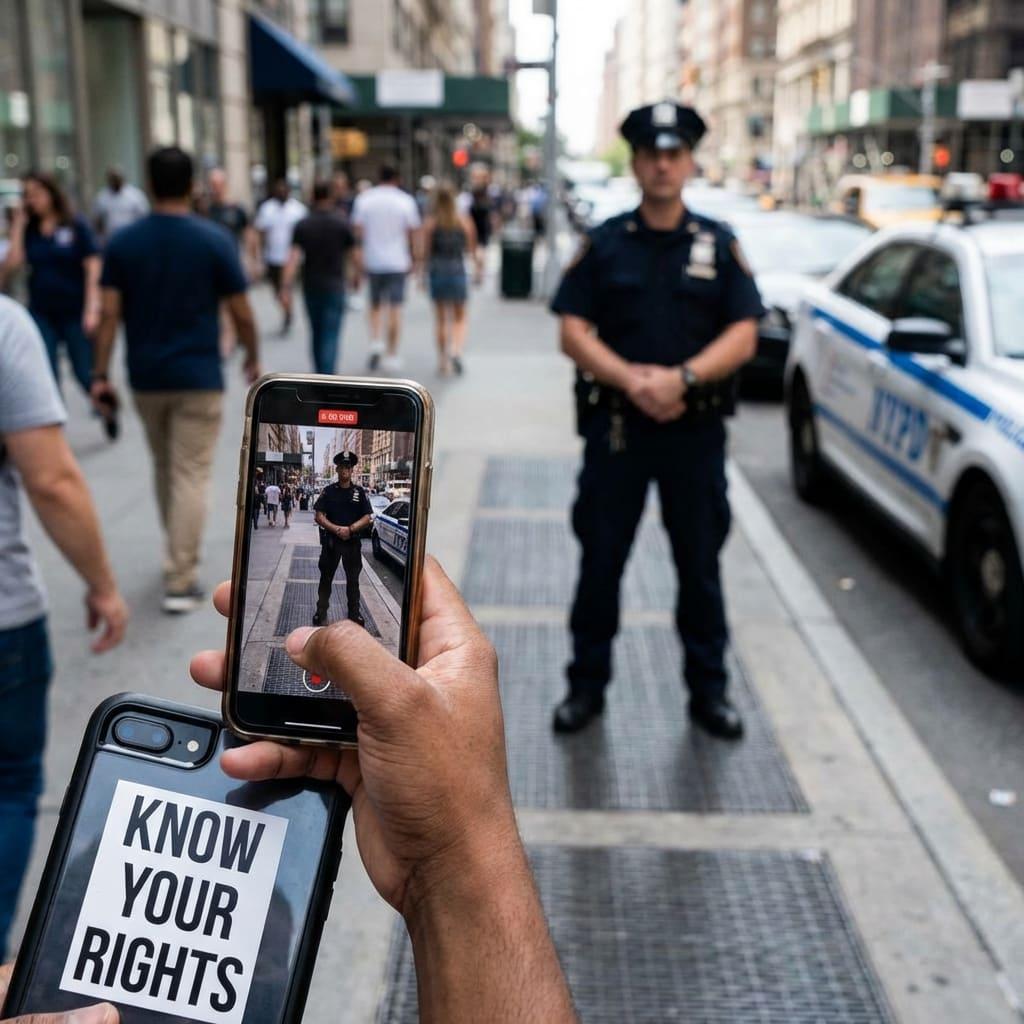
In Oklahoma, you generally may record police officers performing their duties from a place where you have a legal right to be. That does not mean every order to move is unlawful. Officers may impose genuine safety and noninterference restrictions. The practical question is whether the officer was managing a legitimate operation or suppressing recording because of what the camera might capture.
The Right to Record Police in Oklahoma
In Irizarry v. Yehia, the Tenth Circuit recognized a First Amendment right to film police performing their duties in public. The Tenth Circuit covers Oklahoma, so that decision is important authority here.
The right protects gathering information about public officials. It applies to a person recording an encounter involving that person and to a bystander recording from a lawful location. It does not depend on being a journalist or obtaining an officer's permission.
The right remains subject to reasonable time, place, and manner restrictions. An officer may direct a bystander away from moving traffic, an active search, an unsecured weapon, an emergency-medical response, or a defined crime scene. The officer may not use “safety” as a pretext to prohibit recording that does not interfere with the work.
What Counts as Interference?
There is no universal number of feet that makes every recording lawful. Context matters. Conduct more likely to qualify as interference includes:
- Moving into an officer's physical work area during an arrest or search.
- Blocking an officer, emergency vehicle, doorway, traffic lane, or medical responder.
- Crossing a lawfully established perimeter.
- Touching an officer, witness, detained person, weapon, or evidence.
- Refusing a reasonable direction tied to an identifiable safety need.
- Entering private property without permission to improve the camera angle.
Holding a phone, asking a question, or making an officer uncomfortable is not the same as physically obstructing police work. But a person at the scene usually cannot know every danger the officer sees. The safer course is to keep recording while complying with a reasonable direction about where to stand, state any objection calmly, and document the instruction.
Does Oklahoma's Audio-Recording Law Apply?
Oklahoma law generally permits interception when the recorder is a party to the communication or one party has given prior consent, unless the recording is made for the purpose of committing a criminal act. The operative provisions appear in Title 13 of the Oklahoma Statutes, including § 176.4. The separate federal one-party-consent provision, 18 U.S.C. § 2511(2)(d), uses the broader exception for a criminal or tortious purpose.
That rule commonly permits a person to record the person's own conversation with an officer. A public police encounter may also present little reasonable expectation of conversational privacy, but “it happened in public” is not a complete substitute for analyzing the participants, location, method, and purpose of an audio interception.
Can an Officer Order You to Stop Recording?
An officer generally may not order you to stop merely because you are recording lawful public activity. An officer may, however, issue a lawful direction addressing distance, location, safety, evidence control, or actual interference. A direction to step behind a perimeter while continuing to record presents a different legal issue from an order to turn the camera off because police do not want to be filmed.
If the instruction appears improper, avoid a physical confrontation. Ask where you may stand and whether you may continue recording from there. State calmly that you are not interfering. The precise words, distance, surrounding hazards, and what the officer was doing can matter later.
What to Do While Recording
- Keep your hands and device visible.
- Stay out of traffic and away from officers' immediate work area.
- Do not reach suddenly toward an officer, detained person, or evidence.
- If directed to move, ask where you may safely stand and comply without physically resisting.
- If the phone is taken, say: “I do not consent to a search of the phone.”
- Ask whether you are free to leave or being detained.
- Do not unlock the device or provide credentials unless you have received legal advice or are otherwise legally required to do so.
Physical resistance can lead to injury, arrest, or separate criminal allegations even when the original seizure was questionable. A calm verbal objection preserves the dispute without escalating it.
Seizure, Search, and Deletion Are Different
Seizing the phone
A temporary seizure restricts your possession of the device. Its legality depends on facts such as probable cause, a warrant, officer-safety concerns, preservation of evidence, and the duration and manner of the seizure. See our overview of unlawful seizure claims.
Searching the contents
Opening photographs, messages, cloud accounts, or other digital files is a search. In Riley v. California, the United States Supreme Court held that police generally must obtain a warrant before searching the digital contents of a phone seized incident to arrest. A warrant or another recognized exception may change the analysis.
Deleting footage
Deletion can be powerful evidence, but it does not automatically establish a particular constitutional claim. The legal analysis may involve the First Amendment, the Fourth Amendment, due process, evidentiary preservation, intent, causation, and available remedies. Oklahoma generally addresses spoliation of evidence through evidentiary and procedural remedies rather than a stand-alone spoliation tort.
How to Preserve the Recording
Keep the original file. Do not crop it, add captions, change its speed, or save an edited version over it. Preserve metadata and the device if possible. Make a separate cloud or external backup, record when and how the copy was made, and avoid repeatedly forwarding a compressed social-media version as the only surviving copy.
Also write down the time, location, officer names or badge numbers, commands given, your distance from the activity, whether you were detained, the stated basis for the detention or seizure, and the names of witnesses. If footage appears to have been deleted, stop using the device more than necessary and seek prompt technical and legal advice. Our body-camera evidence guide explains related preservation issues for government-held video.
When a Civil-Rights Claim May Exist
A viable claim depends on more than showing that an officer objected to a camera. Counsel will examine:
- Whether you were in a lawful location and actually interfering.
- What orders were given and whether they served a legitimate safety need.
- Whether the officer seized or searched the device, and on what legal basis.
- Whether probable cause existed for any arrest.
- Whether protected recording activity caused the challenged action.
- Whether qualified immunity or another defense applies.
- Whether a policy, custom, or failure to train supports municipal liability.
Probable cause is especially important in a retaliatory-arrest case. Under Nieves v. Bartlett, probable cause generally defeats that theory, subject to a narrow exception involving objective evidence that otherwise similarly situated people not engaged in protected speech were not arrested.
Claims against an individual officer may proceed under 42 U.S.C. § 1983. A municipality is not automatically responsible for every officer's conduct; a Monell claim requires proof tying the violation to a municipal policy, custom, or qualifying failure. Compensatory damages require proof of an actual violation and loss. Punitive damages have a separate standard and generally concern individual defendants rather than the municipality. A prevailing party may seek attorney fees under 42 U.S.C. § 1988, but an award is not automatic merely because a suit was filed.
Deadlines Depend on the Defendant and Claim
Federal § 1983 claims and Oklahoma tort claims do not necessarily share the same notice rules, defendants, or defenses. A state tort claim against a city or other political subdivision may trigger the Oklahoma Governmental Tort Claims Act, while a federal constitutional claim follows a different framework. See our § 1983 limitations guide. Prompt review is important because a missed notice or filing deadline can end an otherwise viable claim.
Frequently Asked Questions
Can police arrest me for recording?
Police should not arrest someone merely for lawfully recording from a lawful location. An arrest may still occur if officers have probable cause for interference, trespass, failure to obey a lawful safety order, or another offense. Whether the stated reason was valid or retaliatory depends on the complete facts.
Do I have to identify myself because I am recording?
Recording alone does not create an identification duty. A lawful detention or other circumstances may raise separate Oklahoma identification issues. Ask whether you are free to leave, remain calm, and avoid turning the dispute into an obstruction allegation.
Can police search a phone after taking it?
Generally not without a warrant or a recognized exception. Seizing the device and searching its contents are different acts. Clearly state that you do not consent to a search.
What facts will a lawyer need?
Preserve the original video and identify the location, your distance, every material command, surrounding hazards, whether you were detained or arrested, the stated basis for police action, officer identities, witnesses, and what happened to the device. Police body-camera footage and dispatch records may provide additional evidence.
What damages are available?
That depends on the proven constitutional violation and resulting injury. Potential categories can include physical injury, emotional distress, lost income, or property damage. Punitive damages and attorney fees have separate legal requirements. No category is automatic.
Recording Led to a Detention, Search, or Arrest?
Preserve the original file and the details of the encounter. We can evaluate the recording, the officer's stated basis, and the applicable deadlines.
Schedule a Free Consultation →This article was materially updated on July 13, 2026. It is for general information only and is not legal advice.