
Key Takeaways
- Spoliation has serious consequences: Courts can impose evidence remedies, fee sanctions, or adverse instructions when the facts meet the governing standard.
- The duty to preserve can begin before a lawsuit: Parties may need to preserve evidence once litigation is reasonably anticipated, not just after a lawsuit is filed.
- Early preservation demands are critical: Sending a preservation letter immediately after an accident puts defendants on notice and makes any subsequent destruction harder to excuse.
Evidence loss does not produce an automatic adverse inference. A court first asks what should have been preserved, when the duty arose, what reasonable steps were taken, whether another source can replace the information, how the loss prejudiced the case, and—when severe sanctions are requested—whether there was an intent to deprive another party of the evidence.
Oklahoma discovery law, including 12 O.S. § 3237, gives state courts sanctions tools when the governing requirements are met. In federal court, Federal Rule of Civil Procedure 37(e) supplies the specific framework for lost electronically stored information.
What Spoliation Is and Why It Matters
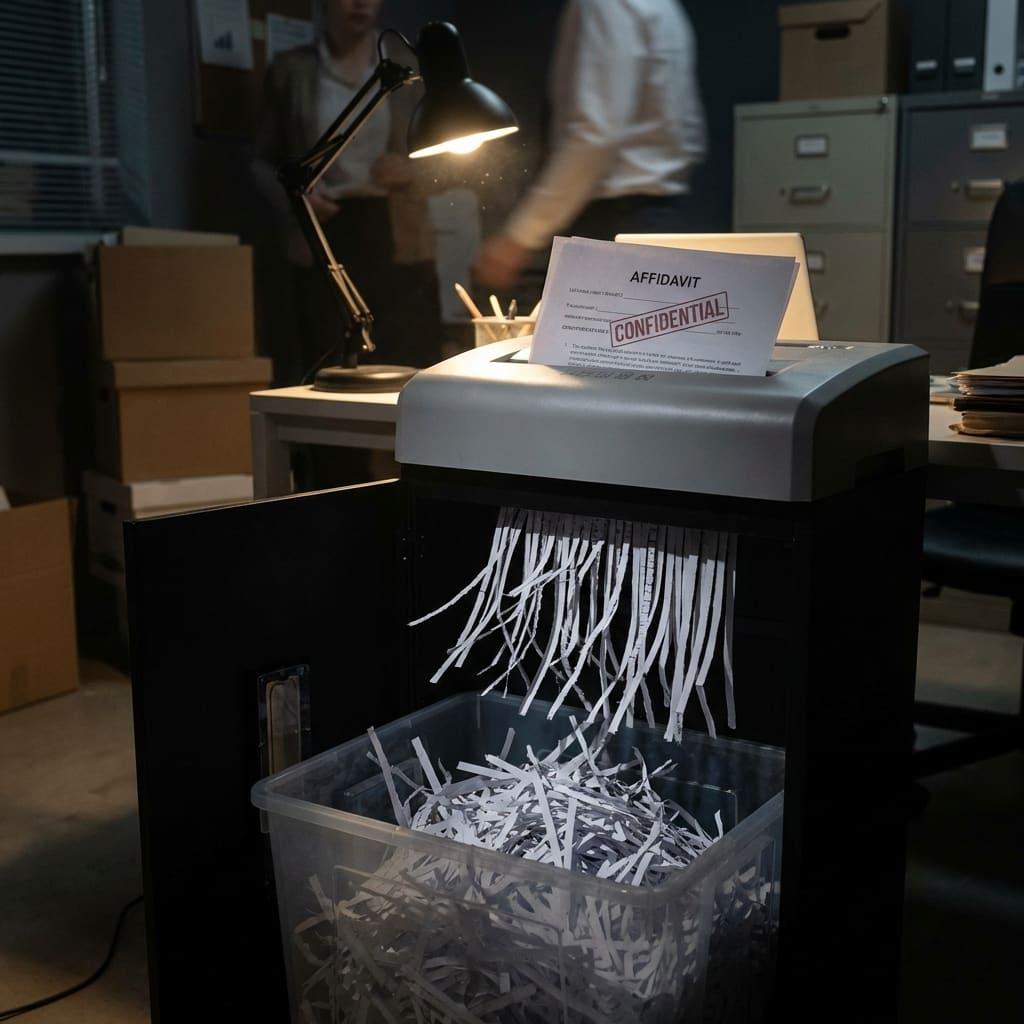
Spoliation occurs when a party destroys, alters, loses, or conceals evidence that is relevant to pending or anticipated litigation and within that party's control to preserve. The party doesn't need to destroy evidence with a smoking-gun memo saying "get rid of this before trial." A negligent failure to suspend routine destruction can support remedial sanctions in some circumstances, while the harshest remedies — such as adverse-inference instructions, default, or dismissal — usually require stronger proof of fault, prejudice, or intent. Courts treat spoliation seriously because it undermines the integrity of the fact-finding process.
The duty to preserve can arise once litigation is reasonably anticipated — which may be earlier than most defendants realize. A lawsuit doesn't always need to be filed, and a preservation letter may not be the only trigger. If circumstances make litigation foreseeable, the duty may already exist. A trucking company involved in a serious crash should understand that ECM data, driver logs, maintenance records, and dashcam footage may become evidence. A store where a customer slips and falls should evaluate surveillance footage and incident records promptly, not wait until the footage is overwritten.
Types of Evidence That Disappear
Electronic evidence can include vehicle event data, surveillance footage, messages, email, location data, telematics, and database records. Each system has its own custodian, retention settings, and recovery options. The preservation request should identify the material that is relevant to the actual claims and defenses.
Physical evidence presents different challenges. A vehicle may be repaired or sold, a product may be returned or tested, and equipment may be put back into service. Photographs, measurements, samples, testimony, or another source may preserve some information, but they may not answer every question that an inspection of the original item would have answered.
Documentary evidence can create its own preservation problems. Maintenance and inspection records may be discarded under retention schedules. Personnel files, incident reports, and prior versions of policies can be lost, altered, or replaced. The preservation inquiry turns on what happened and why, not on an assumption of bad faith.
What Courts Do About It
The remedy should fit the loss. A court may allow additional discovery, exclude evidence, shift costs caused by the loss, permit evidence or argument about what happened, or give a tailored instruction. The most severe remedies require the most demanding findings.
Federal Rule 37(e) separates two levels of relief for lost electronically stored information. If information should have been preserved in anticipated or pending litigation, was lost because reasonable steps were not taken, and cannot be restored or replaced, a federal court may order measures no greater than necessary to cure proven prejudice. Only after finding an intent to deprive another party of the information's use may the court presume the information was unfavorable, instruct the jury that it may or must make that presumption, dismiss the action, or enter default.
Courts can also exclude evidence, reopen discovery, require additional production, shift fees and costs caused by the spoliation, or allow targeted jury instructions. Monetary sanctions may cover expenses for motion practice, expert work needed to reconstruct destroyed evidence, and additional discovery made necessary by the destruction. In extreme cases involving intentional destruction of critical evidence, courts may enter default judgment against the spoliating party entirely.
The required showing depends on the court, the source of sanctions authority, the kind of evidence, and the remedy requested. A useful motion identifies the evidence, its relevance, the preservation trigger, who controlled it, what steps were or were not taken, whether another source can replace it, the resulting prejudice, and the evidence of intent if a severe sanction is sought.
Preventing Spoliation Before It Happens
The better result is to preserve relevant evidence before it is lost. A focused notice should go to the people or organizations likely to control identified material, describe why litigation is anticipated, and give enough detail to locate the information. Overbroad requests to preserve everything can obscure what actually matters. After a collision, our first-72-hours crash checklist identifies other immediate evidence steps.
In trucking accidents, preservation notices are especially urgent because modern trucks contain electronic data about speed, braking, hours of service, and mechanical conditions that a carrier or vendor may control. Engine-control-module data can be overwritten by subsequent use. Freight brokers may also have relevant transaction, carrier-vetting, and communication records. In premises cases, businesses may recycle surveillance footage on short loops. In product cases, inspection, repair, return, or destructive testing can change the item before both sides have a fair opportunity to examine it. In employment cases, emails, personnel records, chat messages, and policy versions may require preservation once litigation is reasonably anticipated.
Loss alone does not prove what the evidence showed. The preservation record matters: the timing and specificity of the notice, retention settings, deletion history, custodian testimony, efforts to recover the information, and availability of duplicates. If evidence is at risk, a focused preservation letter should identify the systems and material that actually matter rather than demand that an organization preserve everything.
Frequently Asked Questions
What is an adverse inference instruction?
An adverse inference instruction tells the jury that it may presume destroyed evidence was unfavorable to the party who destroyed it. For example, if a store deleted surveillance footage after a slip-and-fall despite a duty to preserve it, and the court finds the required level of fault and prejudice, the jury may be allowed to infer the footage would have hurt the store's position. This instruction can dramatically change the outcome of a case.
How quickly can evidence be lost after an accident?
Sometimes within days. Retention periods vary by camera, business, vehicle system, account, and device. Surveillance footage and vehicle data may be overwritten through routine operation. Identify the likely custodian and send a specific preservation request as soon as the need is known.
Can I be sanctioned for spoliation if I accidentally deleted evidence?
Possibly. A failure to take reasonable preservation steps can justify curative measures when the governing rule and prejudice requirements are met. In federal court, the adverse-presumption, dismissal, and default remedies listed in Rule 37(e)(2) require intent to deprive. State-law standards and other forms of evidence may be analyzed differently.
What is a preservation letter?
A preservation letter is written notice that litigation is anticipated and a focused request to preserve identified material. It should describe the event, relevant date range, likely custodians or systems, and categories of evidence at risk. The letter documents notice; whether a legal duty existed and what preservation was reasonable remain questions governed by the facts and applicable law.
Does spoliation only apply to physical evidence?
No. Spoliation applies to all forms of evidence — electronic data such as emails, text messages, GPS logs, dashcam footage, and ECM data; physical evidence like vehicles, equipment, and products; and documentary evidence including records, reports, and policies. Electronic evidence spoliation is increasingly common and often the most impactful in modern litigation.
Are spoliation remedies available even if my underlying case is otherwise weak?
Spoliation remedies are designed to address the evidentiary imbalance created by the destruction, not to guarantee a win on the merits. However, an adverse inference instruction — which may allow the jury to treat destroyed evidence as unfavorable to the spoliator — can significantly strengthen an otherwise circumstantial case. The court considers the severity of the destruction, the spoliator's intent, and the prejudice to your case when deciding which sanctions to impose.
Truck Accident Victim?
Truck data, electronic logging records, and dashcam footage may be overwritten through ordinary system use. Learn what should be identified and preserved early.
Read Our Complete Truck Accident Guide →This article is for general information only and is not legal advice. Source status checked July 13, 2026 against current Oklahoma discovery law and Federal Rule of Civil Procedure 37(e).