Key Takeaways
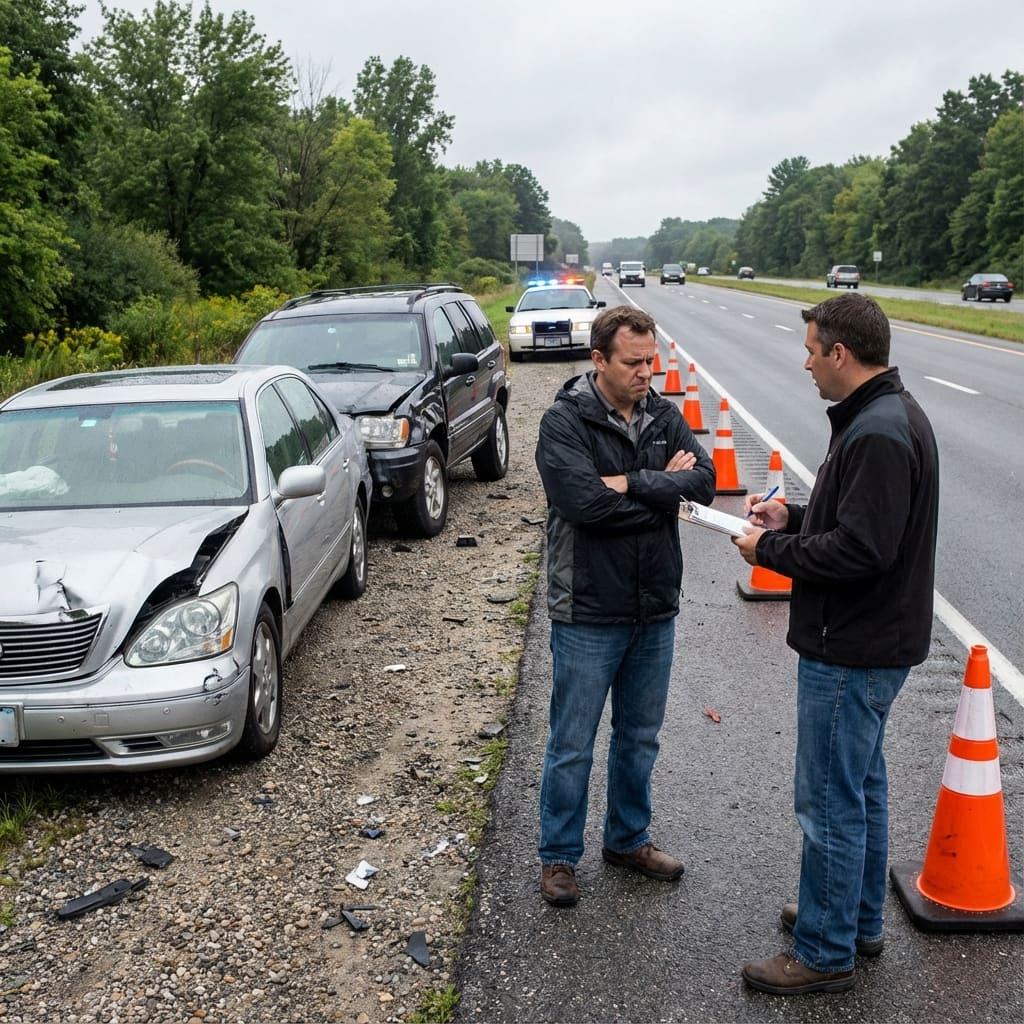
- Start With Proof: Report the crash, photograph the scene and vehicles, identify witnesses, and preserve video before it disappears.
- Find Every Policy: Request your complete auto policy and UM selection or rejection forms. Household, employer, rideshare, and vehicle policies may also require review.
- Do Not Rush a Release: Liability limits, UM/UIM notice duties, health-insurance liens, and other claims should be evaluated before rights are released.
After an Oklahoma crash with an uninsured driver, call law enforcement, preserve scene and insurance evidence, obtain appropriate medical care, report the loss to every potentially applicable insurer, and request the complete policies. Do not assume there is no recovery source—or that your own policy applies—until the vehicles, household policies, employment context, and UM/UIM forms have been reviewed.
The Oklahoma Insurance Department explains why uninsured-motorist coverage matters. This page is the after-crash action guide. For the policy, rejection-form, stacking, and coverage analysis, use our separate Oklahoma UM/UIM guide.
Obtain the UM/UIM Policy and Forms
Under 36 O.S. § 3636, Oklahoma auto insurers must offer uninsured-motorist coverage, and the named insured or applicant may reject it in writing. After a crash, request the complete policy, declarations, endorsements, application, and every UM selection or rejection form. The declarations page alone may not resolve coverage.
When UM coverage applies, the claim is made under your own policy. The insurer still evaluates fault, causation, damages, coverage, and compliance with policy conditions. Covered benefits remain limited by the policy and Oklahoma law.
Because this is a first-party claim, preserve the insurer's requests, your responses, coverage positions, payment explanations, and claim log. Those records matter if the dispute later concerns contract performance or claim handling.
UM/UIM benefits remain subject to policy limits and conditions. Identify the limits for each potentially applicable policy, but do not add them together without reviewing the policy language and current Oklahoma stacking rules.
If a policy covers multiple vehicles, stacking may be an issue. For current policies, the answer can depend on express policy language, policy dates, endorsements, and premium history. See our Oklahoma stacking guide rather than assuming every listed vehicle adds another limit.
Before Settling With an Insured Driver
An underinsured claim can begin with a liability-limits settlement. Section 3636(F) sets out a notice and substitution procedure before that settlement is completed: the insured gives the UM carrier written notice by certified mail, includes specified loss documentation and medical-and-employment authorizations or a court order, and allows the carrier 60 days to substitute its payment for the tentative settlement amount. The exact documents and timing matter. Review the policy and statute before signing the liability release, because an early release can create a dispute over the UM carrier's recovery rights.
Other Recovery Options
Beyond UM/UIM, Medical Payments coverage may address some medical expenses regardless of fault. Health insurance, employer or vehicle policies, and other coverage may also apply, subject to their terms, deductibles, reimbursement rights, and liens.
The at-fault driver may remain personally liable, but a judgment and collection are different questions. Asset exemptions, liens, income, other responsible parties, and bankruptcy issues can affect what is practically recoverable. Investigate collectability before assuming a lawsuit against the driver will fund the loss.
Identify Every Possible Policy
The policy shown at the scene may not be the complete insurance picture. Confirm who owned the vehicle, whether the driver had permission to use it, whether the driver was working, and whether a delivery or rideshare application was active. A vehicle-owner policy, driver policy, employer policy, commercial policy, or platform policy may require separate notice and analysis. Then review the injured person's own household, employer, and vehicle policies to determine who qualifies as an insured.
Do not treat “no insurance” in the police report as the final coverage determination. Ask the identified carrier for a written coverage position and the policy dates. Preserve any cancellation, lapse, or denial letter, the insurance card, and communications with the driver or owner. If the carrier says no policy existed, the reason can matter: the policy may have expired, the driver may be excluded, the vehicle may not be listed, or the carrier may dispute permission or use. Those are different coverage questions and may point to different evidence or another policy.
Hit and Run Situations
If the driver fled or cannot be identified, UM coverage may still apply. Oklahoma law does not require physical contact with the unidentified vehicle for hit-and-run UM protection. Hulsey v. Mid-America Preferred Insurance Co., 1989 OK 107, states that rule directly. Causation and coverage still must be proved, so preserve the police report, witness statements, vehicle damage, debris, dash-camera footage, nearby surveillance, and any description of the other vehicle.
Bad Faith: When Your Own Insurer Won't Pay
A denial, delay, or low evaluation may present a contract or insurance bad-faith issue, but the result turns on the policy, the information available to the insurer, and the reasonableness of its investigation and position.
A coverage or value dispute is not automatically bad faith. The question is whether the insurer acted reasonably under the circumstances in investigating, evaluating, and handling the covered claim. Preserve claim communications, requests, responses, and payment explanations.
Oklahoma Uninsured-Driver Checklist
- Call law enforcement and obtain the report number.
- Photograph the vehicles, roadway, plates, insurance documents, and visible injuries.
- Save witness information and identify nearby cameras.
- Obtain appropriate medical evaluation and keep treatment and wage-loss records.
- Notify potentially applicable insurers without guessing about fault or injury extent.
- Request the complete policies and UM/UIM forms in writing.
- Review notice, consent, substitution, and release requirements before settling with anyone.
At Addison Law, we handle uninsured and underinsured motorist claims and disputes with insurance companies across Oklahoma. If you've been hurt by an uninsured driver and need help pursuing recovery, contact us for a free consultation.
Frequently Asked Questions
What is uninsured and underinsured motorist coverage in Oklahoma?
Uninsured motorist coverage may pay covered bodily-injury damages when the at-fault driver has no liability insurance. Underinsured motorist coverage may apply when available liability limits do not compensate all covered damages. Section 3636 requires the coverage to be included in covered Oklahoma auto policies unless the named insured or applicant rejects it in writing.
How much uninsured and underinsured motorist coverage should I carry?
Ask the insurer or agent for written UM/UIM options, prices, and forms, then decide based on your household's risks and finances. This article cannot recommend a limit for a particular policyholder.
Can I sue my own insurance company for an uninsured motorist claim?
You may pursue contract remedies when covered benefits are wrongfully withheld. A separate bad-faith claim requires proof beyond disagreement over coverage or value and should be evaluated from the claim file and handling history.
What if I was hit by an uninsured driver and I don't have uninsured motorist coverage?
Investigate other policies and responsible parties before concluding there is no coverage. A claim against the driver, Medical Payments coverage, health insurance, employer or vehicle policies, and other sources may matter. Each has separate terms, defenses, and collection issues.
What is the difference between uninsured and underinsured motorist coverage?
Uninsured motorist coverage applies when the at-fault driver has no liability insurance. Underinsured motorist coverage may apply when liability coverage exists but does not compensate all covered damages. Both are addressed by 36 O.S. § 3636.
How long do I have to file an uninsured or underinsured motorist claim in Oklahoma?
Your injury claim against the at-fault driver generally follows Oklahoma's two-year personal-injury limitations period under 12 O.S. § 95. A claim against your own insurer also depends on policy notice requirements, contract language, and sometimes different dispute procedures. Review the policy and notify the insurer promptly.
Can I stack my uninsured and underinsured motorist coverage across multiple vehicles?
Some policies allow stacking, but the answer depends on the policy language, policy date, endorsements, and premium history. Request the complete policy and use the stacking guide for the separate legal analysis.
Hit by an Uninsured Driver?
We can help you understand your options for recovery, including claims against your own insurer.
Get a Free Consultation →This article is for general information only and is not legal advice. Source status checked July 13, 2026 against 36 O.S. § 3636 and current Oklahoma Insurance Department uninsured-motorist guidance.