
Key Takeaways
- Warning signs matter: Jail-suicide cases often turn on whether staff ignored screening results, prior attempts, family warnings, mental-health records, or other facts showing a serious suicide risk.
- Deliberate indifference is the legal standard: In Oklahoma federal courts, jail-suicide claims generally require proof of an objectively serious suicide risk and proof that officials actually knew of and disregarded that risk. That subjective knowledge can be proven through intake screens, prior attempts, warnings, mental-health records, staff communications, and video.
- Municipalities can be held liable: Monell claims against the jail or county can succeed when systemic policy, training, or supervision failures are proven — and municipalities don't have qualified immunity.
When someone dies by suicide in an Oklahoma jail, the facility and its officials often claim it was unforeseeable — a tragic event that couldn't have been prevented. Some deaths do occur without clear warning. But many jail-suicide cases involve documented risk factors: ignored warning signs, inadequate screening, missing suicide-prevention protocols, and staff who treated a person in crisis as a management problem rather than a medical emergency.
Under 42 U.S.C. § 1983, families of jail suicide victims can pursue federal civil rights claims when these constitutional standards are violated.
The Constitutional Standard: Deliberate Indifference
Jail suicide claims arise under the Fourteenth Amendment for pretrial detainees or the Eighth Amendment for convicted inmates. The governing standard is deliberate indifference — but the specific requirements differ depending on the detainee's status.
For pretrial detainees, the Fourteenth Amendment supplies the constitutional protection, but families in Oklahoma federal courts should not assume an objective-only standard applies to jail-suicide claims. Kingsley v. Hendrickson (2015) established an objective standard for pretrial detainee excessive-force claims. For jail medical-care and safety claims, the Tenth Circuit's decision in Strain v. Regalado, 977 F.3d 984 (10th Cir. 2020), continues to require deliberate indifference: an objectively serious risk plus proof that officials knew of and disregarded that risk. In suicide cases, that subjective knowledge is often proven through intake screening, prior attempts, mental-health referrals, family warnings, cell-check records, staff communications, and video.
For convicted inmates, the standard requires subjective awareness: the official must have known of a substantial risk of serious harm and disregarded it. This is a higher bar, requiring evidence that the specific defendant was actually aware of the suicide risk — not merely that they should have been aware. However, knowledge can be inferred from circumstantial evidence, and courts recognize that an obvious risk creates an inference that the official must have been aware of it.
Under either standard, the core principle is the same: officials cannot ignore obvious risks.
Warning Signs That Trigger Liability
Certain warning signs are so well-established that ignoring them can strongly support a finding of deliberate indifference. Prior suicide attempts — especially recent ones — are one of the strongest predictors of future suicide. When intake screening reveals prior attempts and the jail fails to implement suicide precautions, the causal chain from knowledge to inaction to death can become clear and devastating at trial.
Mental health crises at booking present obvious risks that trained staff should recognize immediately. Active psychosis, severe depression, substance withdrawal, statements about wanting to die, and recent traumatic events like the arrest itself all signal elevated suicide risk. Jails that fail to screen for these conditions — or that screen but take no action based on the results — create the very circumstances that make suicide predictable.
Statements of suicidal intent are among the most straightforward bases for liability. When an inmate tells staff they want to hurt themselves and staff fail to respond — or worse, respond with dismissal or ridicule — the evidence can strongly support deliberate indifference. Documenting whether such statements were reported, recorded, and acted upon is critical to building the claim.
Substance withdrawal dramatically increases suicide risk and creates overlapping medical and psychological dangers. Alcohol withdrawal in particular can produce severe depression, agitation, and psychosis. Proper medical screening should identify individuals in withdrawal and trigger both medical treatment and heightened suicide monitoring — yet many jails treat withdrawal as a behavioral problem rather than a medical emergency.
The Evidence That Builds These Cases
Building a jail suicide case requires comprehensive discovery of records the jail controls and may not be eager to produce. Intake screening records reveal whether the decedent was screened for suicide risk, what questions were asked, what answers were recorded, whether risk factors were identified, and what housing assignment followed. A screening form that identifies prior suicide attempts followed by general population housing with available ligature points is powerful evidence of deliberate indifference.
Check logs and observation records document when officers physically checked on inmates. Facility policy and correctional-health standards often require frequent, documented observation for at-risk inmates, with closer monitoring for people on suicide precautions. When check logs are falsified — officers claiming checks were performed when video footage proves they weren't — they become among the most damaging evidence available. Check logs completed in advance, backdated entries, and gaps between recorded checks can show that the written record was not the real practice. Comparing check logs against surveillance footage whenever possible is essential.
Video footage from jail cameras can confirm or contradict every official account. Footage shows the decedent's condition, whether checks actually occurred, and what staff observed or should have observed. Critically, video footage is often automatically overwritten after fixed retention periods — which is why preservation demands must go out immediately after a death, before the system overwrites the evidence.
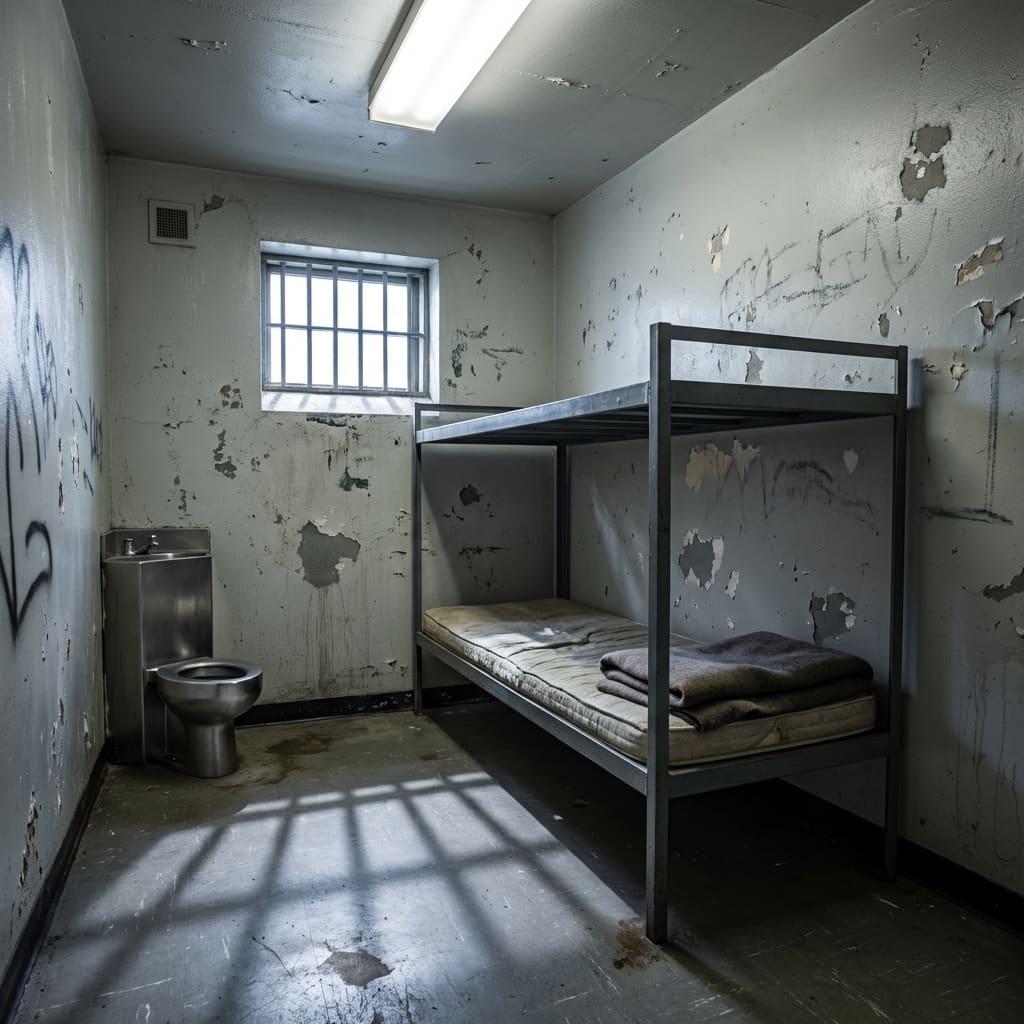
Cell assignment records establish whether the decedent was housed appropriately for their risk level. Were ligature points present in the cell — vents, bed frames, light fixtures capable of supporting weight? Was the decedent isolated when isolation would increase risk? "Suicide-resistant" cells exist at most facilities, but they only prevent suicides when at-risk inmates are actually placed in them.
Training records and facility policies round out the evidentiary picture. Were officers trained in suicide prevention? When was training last conducted? What did it cover? Do written policies meet national standards? Were policies actually followed? The gap between what policies require and what staff actually did is often the most compelling evidence of systemic failure.
Common Failures in Oklahoma Jails
Oklahoma jail suicide cases often follow patterns that repeat across facilities. Inadequate screening is a common allegation — intake forms that don't ask about mental health history, prior attempts, or current suicidal ideation, or that ask these questions in non-private settings where honest answers are impossible. Screeners who mechanically check boxes without following up on concerning answers. Screening protocols that exist on paper but aren't implemented in practice.
Falsified check logs are especially serious when they appear. Officers may claim they performed 15-minute checks, while video footage from the same time period shows no one approaching the cell for hours. This is not merely negligence — it is affirmative misrepresentation of whether a constitutional duty was performed, and juries respond to it accordingly.
Inadequate mental health staffing affects small and rural jails disproportionately. Facilities without any mental health personnel — where inmates in crisis have no access to professional evaluation or treatment — face structural liability arguments because the staffing decision itself reflects deliberate indifference to predictable mental health emergencies.
Isolation without monitoring is particularly dangerous. Placing suicidal inmates in isolation as punishment or ostensibly for their safety — without increasing observation frequency — actually increases suicide risk by removing social contact and observation from cellmates. The practice directly contradicts established suicide-prevention standards and creates strong evidence of deliberate indifference when a death follows.
Municipal Liability
While qualified immunity may shield individual officers from personal liability, Monell claims against the jail or county can succeed when systemic failures are proven. Policy failures include inadequate suicide-prevention policies that don't meet nationally recognized standards. Training failures include insufficient or infrequent training on suicide risk identification. Supervisory failures include patterns of ignored misconduct by individual officers. And custom or practice arguments establish department-wide disregard for suicide risk through evidence of prior incidents that produced no systemic changes.
Municipal defendants do not receive qualified immunity, but municipal liability is not automatic. The plaintiff must separately prove that an official policy, widespread practice, final-policymaker decision, or qualifying training failure caused the constitutional violation.
Claims Available to Families
Potential federal and state theories must be evaluated separately. A Section 1983 claim requires a constitutional violation and defendant-specific proof; punitive damages are unavailable against a municipality, and any claim against an eligible individual requires a separate showing. Under 42 U.S.C. § 1988, a court may award a reasonable attorney fee to a prevailing party in a qualifying action. Oklahoma wrongful-death, survival, or negligence theories involve different proper plaintiffs, defendants, immunities, notice rules, and remedies under the Governmental Tort Claims Act and other state law.
What Families Should Do
If your family member died by suicide in an Oklahoma jail, the most critical step is preserving evidence immediately. Send a preservation demand to the jail before video footage, electronic records, and shift logs are overwritten or destroyed. Request incident reports through open records requests or litigation. Obtain the medical examiner's report and any internal jail investigation. Document your loved one's mental health history and everything the jail should have known at intake. And contact an attorney as quickly as possible — both because statutes of limitations apply and because evidence degrades with every day that passes.
At Addison Law, we handle jail death civil rights cases throughout Oklahoma, including suicide cases involving systemic failures. If your family member died by suicide in an Oklahoma jail, contact us for a free consultation. We'll investigate what happened and whether constitutional violations contributed to this tragedy.
Frequently Asked Questions
What is "deliberate indifference" in jail suicide cases?
Deliberate indifference means jail officials knew of a substantial risk that an inmate would attempt suicide and failed to take reasonable steps to prevent it. This is more than negligence but less than intentional harm. In the Tenth Circuit, families should assume they must prove both an objectively serious risk and subjective awareness unless a court applies a different standard to the specific claim.
What evidence proves a jail knew about suicide risk?
The strongest evidence includes intake screening forms showing prior attempts or mental health issues, documented statements of suicidal intent, mental health records, staff communications about the inmate's condition, and video footage. Courts also examine what the jail should have known through proper screening — if the screening process was inadequate, that itself establishes notice.
Can families sue if the jail had a suicide-prevention policy but didn't follow it?
Yes. A policy that exists on paper but isn't followed actually strengthens your case. It demonstrates the jail knew what precautions were necessary but failed to implement them. Discrepancies between written policies and actual practices are powerful evidence of deliberate indifference.
What are check logs and why do they matter?
Check logs document when officers physically checked on inmates. Most jails require checks every 15 to 30 minutes for at-risk inmates. Falsified check logs — where officers claim checks were performed but video footage proves otherwise — are among the most damning evidence in jail suicide cases.
How long do families have to file a jail suicide lawsuit?
For Section 1983 claims in Oklahoma, the statute of limitations is generally two years from the date of death. State tort claims may require earlier notice under the Governmental Tort Claims Act. Contact an attorney immediately because critical evidence — particularly video footage and electronic records — may be automatically deleted if not preserved.
Can both the individual officers and the county be sued?
Yes. You can file claims against individual officers who were directly responsible, though they may assert qualified immunity, and Monell claims against the county or municipality for systemic failures in policy, training, or supervision. Municipalities cannot assert qualified immunity, making them essential defendants in cases where individual officers seek immunity protection.
What national standards apply to jail suicide prevention?
The National Commission on Correctional Health Care and other correctional-health authorities publish suicide-prevention standards that are widely referenced in litigation. Key expectations include validated mental health screening at intake, close or constant observation depending on risk level, removal or mitigation of obvious ligature risks where possible, staff training on recognizing warning signs, and prompt mental health referral upon identification of risk. When a facility's actual practices fall below accepted correctional-health standards, the gap can become evidence of deliberate indifference.
Lost a Loved One in Custody?
Our comprehensive practice covers all types of in-custody deaths — medical neglect, suicide watch failures, detox deaths, and more.
Read Our Complete Jail Death Guide →This article is for general information only and is not legal advice.