
Key Takeaways
- Parents Are Not Automatically Liable: Oklahoma follows the general rule that a parent is not responsible for a child's torts just by being the parent. In Glidden v. Higgs, 1992 OK CIV APP 55, the Oklahoma Court of Civil Appeals called the parental responsibility statute an exception to that rule — and reversed a judgment against the parents of a teen driver whose only wrong was an ordinary traffic violation.
- The Statutory Claim Is Narrow and Capped: Under 23 O.S. § 10, a person harmed by a minor's criminal or delinquent act can recover from the parents only if the child was living with them at the time — and recovery under that subsection is capped at $2,500.
- Signing a Teen's License Application Has Consequences: Under 47 O.S. § 6-107, the parent or guardian who signs an unemancipated minor's driver license application can have the minor's negligence imputed to them, with joint and several liability — unless proof of financial responsibility, in the form and amounts the state's financial responsibility laws require, has been deposited for that minor and is maintained.
- Common-Law Theories Are Not Limited by the $2,500 Cap: Where a parent's own negligence contributed — handing car keys to a teen with a known dangerous driving record, or leaving a dangerous item within a child's reach — ordinary negligence doctrines like negligent entrustment apply. They are not limited by the $2,500 parental-responsibility cap, although Oklahoma's general damages rules, including where it applies the noneconomic damages cap in 23 O.S. § 61.3, still govern.
When a minor damages property or injures someone, a claim against the parents requires its own legal basis. Oklahoma law starts from the rule that parents are not liable for a child's acts merely because they are the parents. What the law adds on top of that baseline is a short list of specific routes: a parental responsibility statute that is limited to criminal or delinquent acts and capped at $2,500, a driver license signature statute that can make the signing parent answer for a teen driver's negligence, and common-law claims — most importantly negligent entrustment — that target what the parent personally did wrong. Which route fits determines who can be sued, for how much, and what has to be proved.
This article is general legal information, not legal advice. Whether a parent can actually be held responsible in a specific case depends on the facts — the child's age, what the child did, what the parents knew, and how the family's insurance is written.
The Starting Point: No Automatic Parental Liability
Unlike an employer, who can be vicariously liable for an employee's on-the-job negligence, a parent in Oklahoma is not vicariously liable for a child's torts simply because of the relationship. The injured person needs a statute or a recognized common-law theory that fits the facts.
The Oklahoma Court of Civil Appeals said this plainly in Glidden v. Higgs, 1992 OK CIV APP 55, 839 P.2d 680. A minor who lived with his parents was driving another family's car when he failed to yield on a left turn and caused a collision; he received a city traffic citation. The vehicle's owners sued the parents under the parental responsibility statute, and the trial court in Tulsa County found the parents liable. The Court of Civil Appeals reversed. The court explained that 23 O.S. § 10 is an exception to the general rule that parents are not liable for their children's acts, and that it reaches only criminal or delinquent conduct. A garden-variety failure to yield — a municipal ordinance violation, with no exacerbating circumstances — was neither. The parents won; the judgment against them was reversed.
Glidden matters for both sides of these cases. For injured people, it is a warning not to assume the statute covers every harm a minor causes. For parents, it is the baseline: ordinary carelessness by your child, without more, does not create statutory liability for you.
The Parental Responsibility Statute: 23 O.S. § 10
Oklahoma's parental responsibility statute, 23 O.S. § 10, gives the state, local governments, school districts, and private persons and organizations a claim against the parents of a child under eighteen when three things line up:
The child committed a criminal or delinquent act. This is the element Glidden turned on. Vandalism, theft, and assault are the classic examples; an ordinary traffic infraction is not enough.
The act caused bodily injury to a person, or damage to or larceny of property.
The child was living with the parent or parents at the time of the act. If the child was living elsewhere at the time — with another relative, in state custody, or on their own — the statutory claim against the parents generally is not available.
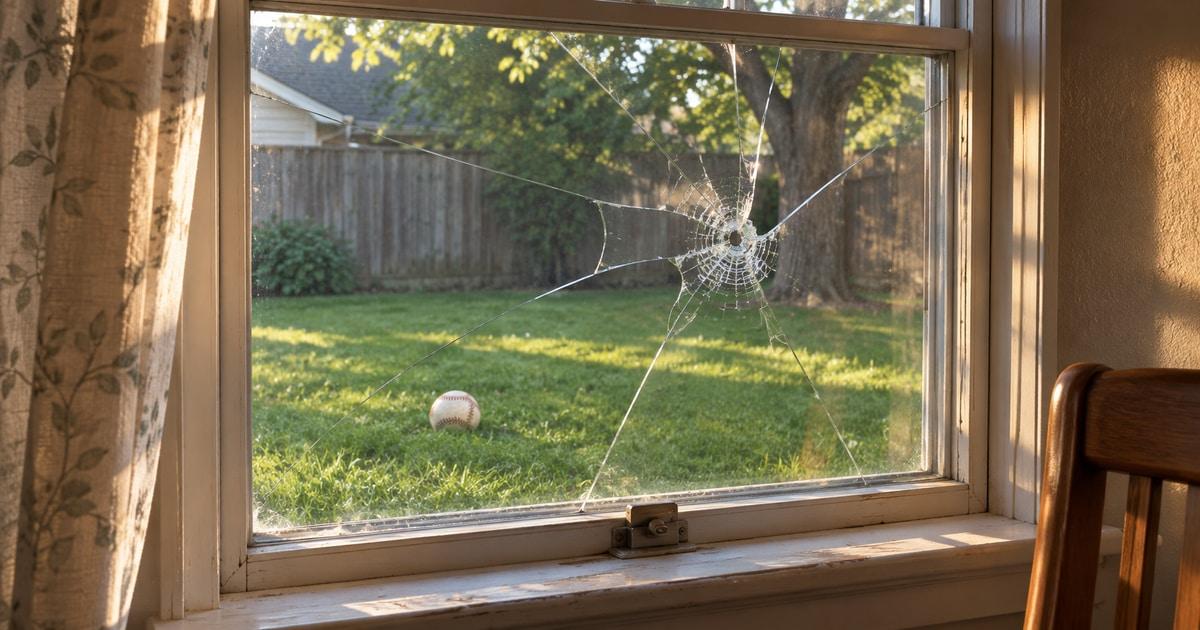
When those elements are met, the statute authorizes recovery of damages — but subsection A caps that recovery at $2,500. For a spray-painted fence or a broken window, that cap may cover the whole loss. For a serious bodily injury, it plainly does not, which is why the statute is usually just one piece of a larger claim built on the theories described below.
One more feature of the statute deserves a mention. A separate subsection addresses the situation where a parent or guardian has been criminally convicted under 21 O.S. § 1273(B) — Oklahoma's prohibition on intentionally, knowingly, or recklessly permitting a child to possess a firearm or other listed weapon when the parent is aware of a substantial risk the child will use it to commit a crime, or the child has a qualifying delinquency or violent-crime record. Subsection B of 23 O.S. § 10 lets the victim (or the victim's representative) recover damages from the person convicted, and the $2,500 limit written into subsection A does not appear in subsection B. Firearm-access cases are fact-intensive and the interplay between the criminal conviction and the civil claim is technical, so they warrant early attorney involvement.
The License Signature: 47 O.S. § 6-107
The second statutory route is one many Oklahoma parents sign without reading. An unemancipated driver under eighteen cannot get a restricted license unless a custodial parent or legal guardian signs and verifies the application. That signature is not a formality: under subsection B of the statute, when the minor drives on a highway with the knowledge and consent of the person who signed, the minor's negligence or willful misconduct is imputed to the signer, who becomes jointly and severally liable with the minor for resulting damages.
The statute then supplies an escape hatch: if proof of financial responsibility for the minor is deposited "in form and in amounts as required under the motor vehicle financial responsibility laws of this state," and that proof is maintained, the signing parent or guardian is not subject to that imputed liability. The statute speaks of proof being deposited, not simply of a policy existing, and we have not found an Oklahoma appellate decision explaining what satisfies that requirement for a teen listed on an ordinary family policy — so whether the exception applies is a document question in each case. The statute also lets a signer ask to have the minor's license cancelled, which ends responsibility for the minor's subsequent driving.
For an injured person, this means the first questions after a crash caused by a teen driver are who signed the license application and whether the required proof of financial responsibility was deposited and maintained. For parents, it means keeping the teen continuously insured matters, and so does confirming what proof of financial responsibility was actually submitted for the teen, rather than assuming a family policy satisfies the statute. Our guide to negligent entrustment explains how these statutory questions interact with the separate common-law claim against whoever supplied the car, and our uninsured and underinsured motorist guide covers what happens when the coverage that should have been there is not.
Common-Law Claims: When the Parent's Own Conduct Is the Case
The statutes above make a parent answer for the child's act. The common law adds claims aimed at the parent's own negligence, and these have no $2,500 ceiling.
Negligent entrustment. An owner or supplier of a vehicle who hands it to a driver they know — or should know — is reckless or incompetent can be directly liable for the harm that driver causes. In Green v. Harris, 2003 OK 55, the Oklahoma Supreme Court reversed a summary judgment for the parents of a 17-year-old with prior speeding tickets and a DUI citation, holding that fact questions about what they knew and how they controlled the car had to be tried, and it called certificates of title "documents of convenience" rather than the last word on who controlled a vehicle. The elements, the leading Oklahoma cases, and the insurance realities are covered in our dedicated guide to lending a car in Oklahoma.
Furnishing alcohol. Furnishing alcohol to underage drinkers, or knowingly allowing underage guests to drink on your property, is a crime in Oklahoma. Whether it also makes a private, noncommercial adult civilly liable to someone the intoxicated minor later injures is less settled: Oklahoma courts have recognized claims against commercial sellers, but we have not found an Oklahoma Supreme Court decision squarely resolving that question for a private host. Our guide to social host liability for teen drinking covers that body of law.
Negligent supervision and dangerous instrumentalities. Oklahoma courts have also recognized claims that focus on a parent's own carelessness in supervising a child or in giving a child access to something dangerous. In Sawyer v. Kelly, 1944 OK 256, the Oklahoma Supreme Court affirmed a verdict against a father who let his minor son ride a horse guided only by a halter, which then ran into a passing car, explaining that a parent may answer for permitting a child to pursue conduct a reasonably prudent parent would know is dangerous. And in Vance v. Thomas, 1986 OK CIV APP 3, 716 P.2d 710, the Court of Civil Appeals reversed a summary judgment for parents after a visiting child was shot in the eye with a loaded BB gun bought for their sons that day and left within the children's reach, discussing the Restatement rule that a parent must use reasonable care to control a minor child when the parent knows or should know of the ability, need, and opportunity to do so. These claims depend on what the parent knew or reasonably should have known about the danger and the ability to prevent it. Prior incidents, warnings, the child's age, and how the item was stored can matter. Because the proof requirements are strict and fact-specific, they should be evaluated by an attorney rather than assumed.
A practical note on insurance: whether a homeowner's, renter's, or auto policy responds to any of these claims depends entirely on the policy's language, including how it treats intentional acts by household members. Policies differ, and the coverage question is often as important as the liability question. Get the actual policy and any denial in writing, and have a lawyer read both.
What This Means If a Child Injured You or Damaged Your Property
Start by documenting the incident the same way you would any other claim: photographs, repair estimates or medical records, a police or incident report if one exists, and the names of every adult connected to the child — parents, guardians, and whoever owned the car, home, or weapon involved. Then sort the claim into its lanes. If the child's act was criminal or delinquent — vandalism, theft, assault — the statutory claim against the parents exists but is capped, so the real question is whether a common-law theory or an insurance policy reaches further. If the harm came from a teen driver, the license-signature statute and negligent entrustment make the parents' knowledge and the family's insurance the center of the case. Oklahoma's ordinary civil rules — including the comparative negligence system and the statutes of limitations — apply to all of it, and claims involving minors have procedural wrinkles of their own, so the earlier the claim is evaluated, the more options stay open.
Parents reading this from the other side should take the same inventory in reverse: what did the family know, what was signed, and what coverage is in place. The time to fix an insurance gap for a teen driver is before the crash, not after.
Frequently Asked Questions
A neighborhood kid vandalized my property. Can I make the parents pay?
If the child is under eighteen, committed a criminal or delinquent act, and was living with the parents at the time, 23 O.S. § 10 gives you a claim against the parents — capped at $2,500. For losses inside the cap, that statute (plus the family's insurance, if a policy responds) is often the whole case. For larger losses, an attorney will look at whether the parents' own conduct supports a common-law claim outside the $2,500 parental-responsibility cap and whether any policy covers the loss.
My teenager caused a car accident. Am I personally on the hook?
Possibly, through two different doors. If you signed the license application and your teen drove with your knowledge and consent, 47 O.S. § 6-107 can impute the teen's negligence to you — unless proof of financial responsibility for the teen was deposited and is maintained as the statute requires, which is why both the license paperwork and the insurance matter. Separately, if you supplied the car knowing your teen was a dangerous driver, a negligent entrustment claim targets your own decision and is not subject to the statutory cap. Whether the coverage you carry satisfies that exception, and what happens to any amount above the policy limits, depends on the documents and is worth reviewing with a lawyer rather than assuming you are protected.
Does the $2,500 cap limit everything I can recover?
No. The cap applies to the statutory claim under subsection A of 23 O.S. § 10 — the claim that makes parents answer for the child's criminal or delinquent act without proof of any fault of their own. Claims built on the parents' own negligence, such as negligent entrustment or negligent supervision, are ordinary tort claims without that cap, and the $2,500 limit does not appear in the separate firearm-conviction subsection described above. The child can also be personally liable, although collecting a judgment from a minor is often difficult.
What if my child was hurt by another student at school?
Two separate targets exist: the family of the student who caused the harm — analyzed under the rules in this article — and the school, whose responsibility runs through different doctrines and special governmental immunity rules. Our guide to children injured at school in Oklahoma covers the school side, including the short deadlines that apply to claims against public schools.
Sorting Out Who Answers for a Child's Act
These cases are rarely about one statute. The capped parental responsibility claim, the license-signature statute, negligent entrustment, and the available insurance each cover a different slice of the same incident, and the viable recovery is usually assembled from several of them. Addison Law Firm's personal injury practice evaluates all of the potential defendants and policies after an injury caused by a minor. Contact us for a free, confidential consultation. This article is general information, not legal advice, and does not create an attorney-client relationship.
Injured by a Minor — or Worried About Your Own Exposure?
A parent's liability depends on the legal basis for the claim and the parent's own conduct. Contact Addison Law Firm to sort out the claims and the coverage.
Talk to a Personal Injury Lawyer