
Key Takeaways
- Strict Liability: Oklahoma's dog bite statute (4 O.S. § 42.1) can make owners liable even when the dog had no known bite history.
- Lawful Presence Required: The victim must have been in a public place or lawfully on private property — guests, delivery drivers, utility workers — to recover under the statute. Trespassers generally cannot.
- Provocation and Location Matter: Provocation, rural-location exceptions, and the victim's legal right to be where the bite happened can change the analysis.
A neighbor's dog lunges at your child. A delivery driver gets bitten on the porch. A stray attacks you during a morning jog. In the chaos that follows, one question dominates: who pays for this? Oklahoma's dog bite statute often puts responsibility on the dog's owner, even without proof that the dog had bitten before. But the details still matter: lawful presence, provocation, location, ownership, and insurance can all affect the claim.
Oklahoma's Strict Liability Standard
Many states follow the "one bite rule," which shields dog owners from liability until they have reason to know their dog is dangerous, often because it has bitten someone before. Oklahoma's statute is different. Under 4 O.S. § 42.1, the owner of a dog is liable for damages when the dog, without provocation, bites or injures a person who is in a place where that person has a lawful right to be.
What "strict liability" means in practice is significant. If the statutory elements are met, no prior knowledge of dangerousness is required, and the victim does not have to prove the owner was careless. In "one bite" states, proving prior knowledge of dangerousness can be extremely difficult. Oklahoma's statute removes that barrier when it applies.
The statute protects people who are lawfully present where the bite occurred. This can include invited guests and visitors, delivery drivers, utility workers and meter readers with access rights, service providers such as plumbers and contractors on the property with permission, pedestrians in public spaces, and customers at businesses where dogs are present. Trespassers generally are not covered by the strict liability statute. Veterinarians, groomers, and others who work with animals as part of their profession may also face assumption-of-risk arguments.
Defenses Available to Dog Owners
Even under strict liability, defenses exist. Provocation is the most commonly raised: if the victim provoked the dog, the owner may reduce or defeat liability. Hitting, kicking, deliberately tormenting the animal, or cornering a frightened dog may support a provocation argument. Merely walking past a fence, making eye contact, or running nearby usually requires a much closer factual look before it can be treated as provocation. The analysis is fact-specific, and the victim's age, mental capacity, and intent can matter.
Another important limitation is the rural/no-mail-delivery exception in 4 O.S. § 42.3. That statute says the dog bite act does not apply to rural areas of Oklahoma or to cities or towns without city or village United States mail delivery service, while preserving other existing rights and liabilities. In those situations, a plaintiff may need another liability theory, such as negligence, instead of relying only on § 42.1.
Oklahoma's modified comparative negligence system also applies. If the victim's own conduct contributed to the injury — ignoring warning signs, approaching an obviously aggressive animal — their recovery may be reduced proportionally by their percentage of fault. If the victim is more than 50% at fault, they recover nothing.
Damages in Dog Bite Cases
Dog bite injuries can be catastrophic, particularly for children, who are disproportionately the victims of facial and head bites. Oklahoma law allows recovery for the full range of damages these attacks cause.
Medical expenses cover emergency room treatment, surgery (including reconstructive and plastic surgery), stitches, antibiotics, rabies vaccinations, physical therapy and rehabilitation, and future medical costs for scar revision and ongoing treatment. Lost wages compensate for time missed from work for treatment, recovery, and medical appointments. Pain and suffering damages address the physical pain from the bite, surgeries, and the recovery process.
The psychological impact of dog attacks often rivals or exceeds the physical injuries. Victims — especially children — may develop PTSD symptoms including flashbacks and nightmares, cynophobia (a persistent fear of dogs that affects daily life), and generalized anxiety and depression. Children may suffer long-term psychological effects that interfere with school, social development, and quality of life for years after the physical wounds have healed. Disfigurement and scarring, particularly on the face, warrant significant compensation for the lasting impact on appearance, self-esteem, and social interactions.
In rare cases where the owner knew the dog was dangerous and recklessly disregarded the risk — repeatedly letting a known aggressive dog roam free, for example — punitive damages may be available under Oklahoma's punitive damages statute (23 O.S. § 9.1).
Landlord Liability
Landlords are not automatically liable when a tenant's dog bites someone, but they may share responsibility under certain circumstances. A landlord can be held liable if they knew or should have known the dog was dangerous, had the ability to remove the dog or require its removal, and failed to act. This typically requires evidence that the landlord received complaints about the dog, knew of prior bites, or observed aggressive behavior and did nothing. A landlord who ignores repeated warnings about a dangerous animal on their property may bear responsibility alongside the dog's owner.
Insurance and the Practical Reality
Homeowner's and renter's insurance policies often provide the first source of recovery, but coverage is policy-specific. Some policies exclude certain dogs, exclude animal liability altogether, or add dog-specific exclusions after a prior bite incident. Umbrella policies may provide additional coverage above the primary policy limits. If you own a dog, especially a larger or "restricted" breed, review your insurance policy to confirm coverage before an incident occurs.
This insurance reality also matters for families. If your child is bitten at a friend's house, the friend's homeowner's or renter's policy may be part of the claim analysis. The policy language, exclusions, and limits need to be reviewed before anyone assumes coverage is available.
Statute of Limitations and Practical Steps
The statute of limitations for personal injury claims in Oklahoma, including dog bites, is two years from the date of injury. Miss this deadline and the right to sue is lost. For claims involving minors, the deadline may be tolled until the child reaches adulthood, but this is complex and shouldn't be relied upon without consulting an attorney.
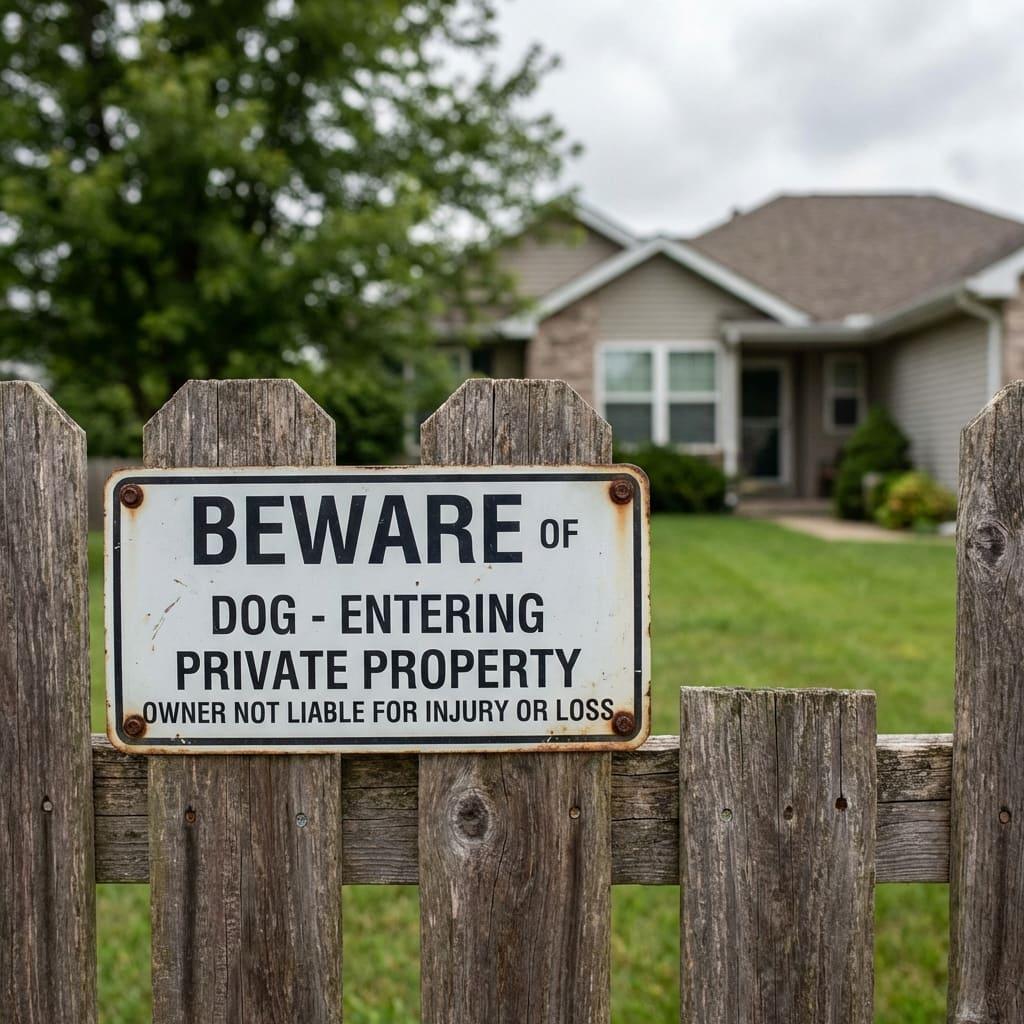
If you're bitten, seek medical attention immediately — dog bites carry serious infection risks including rabies. Identify the dog and its owner, getting their name, address, and phone number. Report the incident to Animal Control, which creates an official record and triggers an investigation into the dog's vaccination status and bite history. Photograph your injuries immediately and throughout the healing process, including the location where the attack occurred and any "Beware of Dog" signs (or their absence). Preserve blood-stained or torn clothing as evidence. And do not give a recorded statement to the owner's insurance company without consulting an attorney first — insurers often try to settle quickly and cheaply before you understand the full extent of your injuries.
Frequently Asked Questions
What if the dog was a stray with no identifiable owner?
Strict liability under 4 O.S. § 42.1 requires an identifiable owner. If the dog is truly a stray, you may not have a claim under the statute. However, other theories — such as premises liability against the property where the dog was harbored — may apply.
Does the breed of dog matter legally?
Under Oklahoma's strict liability statute, breed does not matter — all dogs are treated the same. However, some cities have breed-specific ordinances, and insurance coverage may vary by breed.
Can I sue if the dog didn't bite me but knocked me down?
Yes. The statute covers being "bitten or injured" by the dog. Being knocked down, scratched, or otherwise injured by a dog's aggressive behavior supports a claim.
What if my child was bitten at a friend's house?
The friend's homeowner's or renter's insurance may cover the claim, but exclusions and limits matter. Do not assume coverage is available until the policy is reviewed.
Does my own home insurance cover my dog biting someone?
Usually, yes — unless your policy has a specific exclusion for your dog or its breed. Review your policy and contact your insurer to confirm coverage.
Dog bites can cause permanent physical and psychological injuries. Oklahoma law provides meaningful protection for many victims through its strict liability statute, and at Addison Law, we handle personal injury cases throughout Oklahoma, including dog bite claims. If you or your child has been injured by a dog, contact us for a free consultation.
Injured by a Dog Attack?
Oklahoma's dog bite statute may protect you. We can evaluate liability, insurance, medical costs, lost wages, and pain-and-suffering damages.
Get a Free ConsultationThis article is for general information only and is not legal advice.