
Key Takeaways
- Safety and medical care come first: Call 911 for emergencies and seek prompt care when you are injured or develop concerning symptoms.
- Preserve what will disappear: Photograph the scene and vehicles, collect witness details, keep the report number, and identify nearby cameras.
- Notify your insurer, but be measured: Give prompt factual notice under your policy. You ordinarily do not need to give the other driver's insurer an immediate recorded statement.
After an Oklahoma car crash, start with four things: get to safety, call for help, document the scene if you can do so safely, and get medical care when needed. Over the next three days, preserve the report number and witness information, notify your insurer, follow medical advice, and avoid signing a release before the injuries and coverage are understood.
For a broader claim-specific framework, including fault, damages, insurance, and common injury issues, see our Oklahoma car accident guide.
The Oklahoma Insurance Department's auto-claim guidance gives the same practical baseline: call police, exchange contact and insurance information, take photographs, get witness phone numbers, avoid admitting fault, and contact your insurer promptly.
Hour 0-1: At the Scene
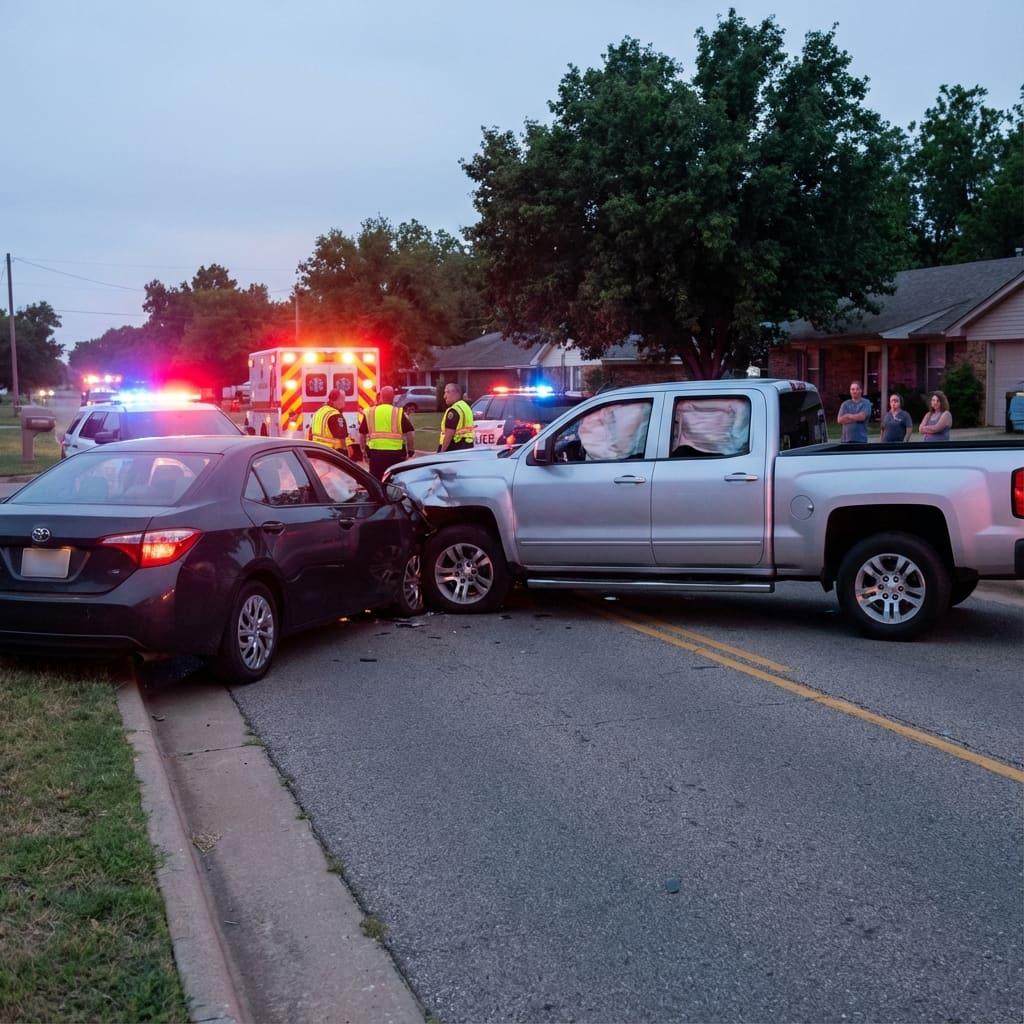
The first priority is safety. Call 911 for an injury or emergency, and contact law enforcement for a hit-and-run, suspected impairment, blocked roadway, or other crash that requires a response. Title 47, Sections 10-102 through 10-108 address stop, information, aid, notice, and reporting duties for covered collisions. A responding officer may create a collision report, but the report's contents and later evidentiary use depend on the circumstances.
While you wait for police, check for injuries—yours first, then others. Some injuries or symptoms are not immediately obvious. Use emergency services for emergency signs and seek appropriate care as symptoms develop. Do not move a seriously injured person unless necessary for immediate safety or directed by emergency personnel.
Oklahoma law requires identifying and vehicle information, license display on request, and reasonable aid in covered crashes. If it is safe, also exchange phone and insurance information and photograph the insurance card, driver's license, plate, and vehicles. Separate the legal duties from the additional details that make later reporting easier.
Document the scene thoroughly using your phone camera. Photograph all vehicles involved from multiple angles, capturing both the overall positions of the vehicles and close-up details of the damage. Photograph the intersection or roadway, including traffic signs and signals, any skid marks or debris on the road, and the weather and road conditions. Take a photo of the other driver's license and insurance card. These images serve as a visual record that can corroborate your account of what happened—and they are far more reliable than memory, which degrades quickly after a traumatic event.
If anyone witnessed the crash, ask for a name and phone number before they leave. Independent witnesses can be difficult to identify later, and their recollection may help resolve a disputed account.
Finally, do not speculate about fault. Give truthful facts to the responding officer, exchange the required information, and avoid arguing with the other driver about blame.
Hours 1-24: Medical Care
If you are injured or develop concerning symptoms after the crash, seek appropriate medical care. Call 911 or use emergency care for an emergency. For non-emergency symptoms, contact an appropriate health-care provider and follow the provider's advice.
Symptoms can change after a crash. Our delayed-symptom guide identifies warning signs and explains why new or worsening symptoms should be reported to a medical professional rather than self-diagnosed.
Tell the provider when the crash occurred and describe symptoms accurately. Do not exaggerate or minimize them. The medical record should reflect the clinical history and care actually provided.
Follow the treatment plan or tell the provider why you cannot. Gaps can affect both recovery and later causation questions, but records should reflect what actually happened rather than be created for a claim.
Hours 24-48: Documentation and Insurance
Request the collision report from the responding agency when it becomes available; timing and procedures vary. Keep the report number if one was provided. A report may contain officer observations, diagrams, witness information, and statements, but its conclusions are not necessarily binding or admissible for every purpose.
Notify your own insurance company promptly as your policy requires. Keep the first report factual: when and where the crash happened, who was involved, and the report number. Review the policy and cooperate with reasonable requests required by it.
The other driver's insurer may request a recorded statement. That carrier evaluates liability and damages for its insured, and you ordinarily have no policy-based duty to give it an immediate recorded statement. Get the adjuster's name, company, claim number, and contact information. Politely defer a detailed statement until you understand the request and, when injuries are significant or fault is disputed, have obtained advice.
Start organizing your records in one central location. Keep your scene photographs, the police report, insurance information, all medical records and bills, receipts for any accident-related expenses such as medication, transportation to medical appointments, and rental cars, and daily notes about how you are feeling. This contemporaneous documentation becomes increasingly valuable as time passes and memories fade.
Hours 48-72: Next Steps
Continue following medical advice. Contact the provider when symptoms materially change or the treatment plan is not workable. Keep the records, bills, prescriptions, and referral information together.
Not every crash requires counsel. Consider early advice if injuries are significant, fault is disputed, coverage is uncertain, a governmental entity is involved, or an insurer requests a release. A consultation can identify deadlines and preservation needs. Our injury-case timeline explains the usual stages.
Review any settlement release, medical authorization, assignment, or other document with legal effect before signing. A valid release can end the covered claim, so confirm what claims and parties it includes and whether the injuries and available coverage are understood.
Oklahoma-Specific Considerations
Several Oklahoma-specific legal rules directly affect what you need to do after an accident and how your eventual claim will be evaluated.
Oklahoma follows modified comparative negligence under 23 O.S. § 13. A claimant's recovery is reduced by the percentage of fault and is barred when the claimant's negligence is greater than the combined negligence of the defendants. Our Oklahoma comparative-fault guide explains how that allocation works.
The general Oklahoma limitations period for a negligence-based personal-injury action is two years under 12 O.S. § 95, but exceptions can change the calculation. Claims involving a state or local governmental entity can require much earlier notice. Get claim-specific deadline advice rather than counting two years from the crash in every case.
If the at-fault driver has no insurance or insufficient limits, uninsured or underinsured motorist coverage may apply under your policy. Check the declarations, endorsements, and any rejection form. The Oklahoma Insurance Department identifies the state's minimum auto liability limits as 25/50/25.
Oklahoma does not require Personal Injury Protection coverage the way some no-fault states do. Some Oklahoma policies include Medical Payments coverage or another policy-specific medical benefit. Knowing whether your policy provides that coverage can affect how immediate bills are handled in the first 72 hours.
Finally, identify evidence that may change or disappear: nearby video, dashcam footage, vehicle data, the damaged vehicles, debris, and witness contact information. Retention periods vary. A focused preservation notice can identify the material and document that litigation is anticipated.
Frequently Asked Questions
Should I call the police after every car accident?
Call law enforcement after any crash involving injury, death, hit-and-run, suspected impairment, blocked traffic, or significant property damage. Even for minor collisions, an official report can document what happened while the evidence is fresh. That report often becomes an important document in the insurance claim process.
What if the other driver's insurance calls me right away?
Get the adjuster's name, company, claim number, and contact information. You can provide basic identifying information without guessing about fault or the medical outcome. You ordinarily do not owe the other carrier an immediate recorded statement merely because it asks. Significant injuries, disputed fault, or a proposed release justify legal review before a detailed statement.
How long do I have to file a personal injury lawsuit in Oklahoma?
The general Oklahoma negligence rule is two years under 12 O.S. § 95, but the correct date and any exception depend on the parties and claim. A governmental defendant can trigger an earlier notice process. Evidence may also disappear long before the filing deadline.
Do I need a lawyer for a car accident claim?
Not every accident requires a lawyer. But if you have significant injuries, the other driver is disputing fault, the insurance company is lowballing your claim, or liability is unclear, an experienced personal injury attorney can protect you from common mistakes that undermine claims.
What if I feel fine after the accident but develop pain later?
Later-developing symptoms do not by themselves decide whether the crash caused an injury. Seek appropriate care when symptoms appear or change, give the provider an accurate history, and follow the provider's advice. A delay may become part of the causation evidence, but the medical facts control.
Can the insurance company use my social media posts against me?
Potentially. Public posts and other relevant account content may become evidence. Avoid discussing the crash, treatment, or claim online, and ask counsel before deleting existing material because deletion can create a separate preservation issue.
What if the other driver doesn't have insurance?
The Oklahoma Insurance Department warns that uninsured drivers remain a serious Oklahoma problem. If the at-fault driver has no insurance, your recovery may depend on your own uninsured motorist coverage. If you carry uninsured or underinsured motorist coverage, you can file a claim against your own policy for covered injuries and damages. If you do not carry this coverage, your options are more limited, though you may still be able to pursue the at-fault driver personally.
Injured in an Accident?
Early advice can help identify coverage, preserve evidence, and prevent an uninformed release. The consultation is free.
Get a Free Consultation →This article is for general information only and is not legal advice. Source status checked July 13, 2026 against current Oklahoma statutes and Oklahoma Insurance Department guidance.