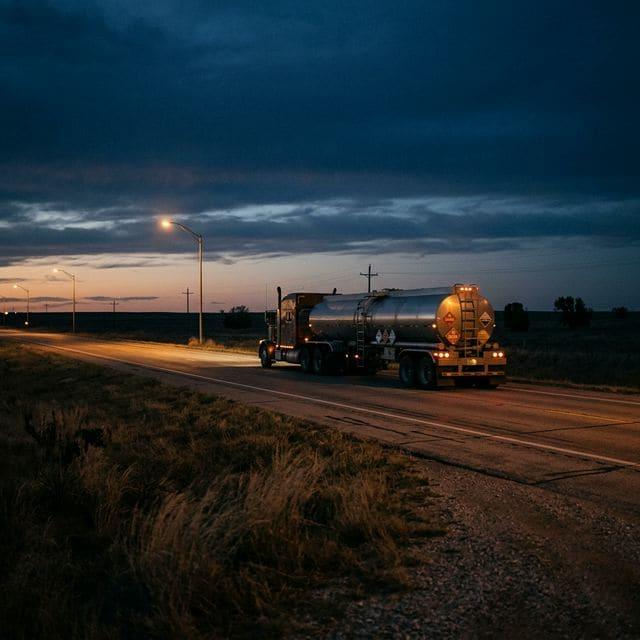

Key Takeaways
- Hazmat wrecks can create cascading harm: Unlike ordinary truck crashes, hazmat accidents may involve chemical burns, toxic inhalation injuries, explosions, evacuation, and environmental contamination affecting people beyond the vehicles involved.
- Federal rules govern hazmat transport: The Federal Motor Carrier Safety Administration, Pipeline and Hazardous Materials Safety Administration, and Department of Transportation impose requirements on packaging, labeling, driver training, routing, and emergency response. Violations can be powerful evidence of negligence.
- Multiple defendants may be responsible: A hazmat crash may involve the driver, carrier, shipper, packager, broker, container manufacturer, or owner of the hazardous material. Each role has to be investigated separately.
Commercial trucks carrying hazardous materials travel Oklahoma highways every day. Petroleum products, agricultural chemicals, industrial solvents, corrosives, compressed gases, and other regulated materials move through interstate corridors, rural highways, refineries, farms, and distribution routes. Most of the time, the system works. When it does not — when a tanker rolls on an I-40 off-ramp, a cylinder ruptures on a rural two-lane, or a fuel truck rear-ends stopped traffic and ignites — the consequences can be unlike ordinary motor vehicle litigation. Hazmat truck accidents may destroy vehicles, poison air, contaminate soil or water, force evacuations, and produce injuries that conventional auto accident medicine rarely encounters.
Oklahoma's position in the energy and agricultural economy means hazmat transport is a recurring highway risk. The state's refinery corridor, oil and gas infrastructure, and agricultural chemical supply chain generate hazardous cargo through heavily traveled corridors and rural roads. Understanding how hazmat truck accidents differ from conventional trucking crashes, and why the legal claims require fast technical investigation, is essential for anyone injured in or affected by one of these events.
Why Hazmat Accidents Are Different
An ordinary trucking accident involves force, mass, and speed — a heavy vehicle striking a lighter one with devastating kinetic energy. A hazmat accident adds an entirely separate dimension of danger: the cargo itself becomes a weapon. The collision is often only the beginning of the harm. What follows — fire, explosion, toxic gas release, chemical burns, or environmental contamination — can dwarf the physical damage of the impact itself.
When a tanker carrying crude oil or gasoline overturns, the resulting fire can reach extreme temperatures, destroy vehicles beyond the immediate crash site, and create thermal injuries to bystanders and first responders who were never in the original collision. When pressurized containers of anhydrous ammonia or chlorine rupture, a toxic gas cloud can spread downwind, potentially forcing evacuations and sending people to emergency rooms with chemical burns to their lungs, eyes, and skin. When corrosive materials spill onto roadways and drain into storm sewers, environmental contamination can persist and affect soil, groundwater, and agricultural operations far from the crash itself.
These cascading consequences mean that the universe of injured parties in a hazmat case often extends far beyond the occupants of the vehicles directly involved in the collision. First responders who arrive without adequate protective equipment suffer chemical exposure. Residents in nearby homes are exposed to toxic fumes. Businesses along the evacuation corridor lose revenue during road closures that can last days. Property owners face contamination cleanup costs on land they never consented to have exposed to industrial chemicals. Each of these harmed parties may have independent legal claims — and each claim arises from the same fundamental failure: someone violated the rules governing the safe transport of hazardous materials.
The Federal Regulatory Framework
Hazmat transport is heavily regulated, with overlapping federal agencies and distinct jurisdictions. The Pipeline and Hazardous Materials Safety Administration sets the rules for how hazardous materials must be classified, packaged, labeled, and documented for transport. These regulations, beginning with 49 C.F.R. Part 171, establish a system that covers the hazmat shipping process from classification through delivery.
The Federal Motor Carrier Safety Administration governs the carriers and drivers who actually move hazardous materials on the road. FMCSA regulations impose additional requirements beyond those applicable to ordinary commercial trucking — including specialized driver training and endorsements, more stringent vehicle inspection standards, and designated routing restrictions. PHMSA's Hazardous Materials Regulations in 49 C.F.R. Part 172 separately require mandatory placarding that identifies the type and danger level of the cargo to emergency responders. The Hazardous Materials Endorsement on a commercial driver's license requires the driver to pass a knowledge test demonstrating understanding of hazmat handling procedures, emergency response protocols, and the specific dangers associated with the materials being transported.
Together, PHMSA and FMCSA create a regulatory architecture designed to prevent hazmat incidents and minimize harm when they occur. When a crash investigation reveals that any of these regulations were violated — that the cargo was improperly classified, the container was not rated for the material, the driver lacked the required endorsement, or the carrier failed to follow designated hazmat routes — the violation itself becomes evidence of negligence. The regulations establish the standard of care that the industry is required to meet, and failure to meet them speaks directly to fault.
Oklahoma's Hazmat Highway Corridors
Oklahoma is not a state where hazmat transport happens only at the margins. It happens through populated areas, interstate corridors, and rural energy and agricultural routes. I-35 runs from the Kansas border through Oklahoma City to the Texas border. I-44 connects Tulsa, Oklahoma City, and Lawton near major refinery and industrial areas. I-40 traverses the state east to west. Those routes can carry petroleum products, agricultural chemicals, compressed gases, corrosives, and other regulated cargo.
Oil and gas production in western Oklahoma can generate tanker truck traffic on state highways and rural two-lane roads. Routes connecting production sites to pipeline terminals and processing facilities may involve crude oil tankers, produced water trucks, and vehicles hauling drilling chemicals. When these tankers are involved in rural collisions, emergency response times may be longer, hazmat-trained resources may be farther away, and spill containment infrastructure may be limited.
The Oklahoma Corporation Commission regulates aspects of the in-state oil and gas transportation chain, and the Oklahoma Department of Environmental Quality has jurisdiction over contamination resulting from hazmat spills. When a hazmat truck accident results in environmental damage — soil contamination, groundwater pollution, or damage to agricultural land — the cleanup obligations and liability framework involve both federal and state environmental law. For non-petroleum hazardous substances, the Comprehensive Environmental Response, Compensation, and Liability Act, commonly known as CERCLA or the Superfund statute, imposes strict liability on covered parties responsible for releases, meaning that fault in the traditional negligence sense is not required for environmental cleanup liability. It is important to note that CERCLA generally excludes petroleum products, crude oil, and natural gas from its definition of "hazardous substance" — so spills involving those materials are typically addressed through state environmental law, RCRA, or the Clean Water Act rather than CERCLA. For the many non-petroleum hazardous materials transported through Oklahoma — industrial chemicals, corrosives, compressed gases, and toxic substances — CERCLA's strict liability framework remains a powerful tool for holding responsible parties accountable for cleanup costs.
How Hazmat Crashes Happen
The causes of hazmat truck accidents mirror many of the causes of conventional trucking accidents, but with amplified consequences. Driver fatigue remains a leading factor. Hours of service violations are just as common among hazmat drivers as among general freight haulers, despite the elevated stakes. A fatigued driver hauling 8,000 gallons of gasoline poses a qualitatively different risk than one hauling palletized consumer goods — but the economic pressures to push past legal driving limits apply equally to both.
Improper loading and securement create hazmat-specific dangers that go beyond the cargo weight violations seen in general freight. Incompatible chemicals loaded in the same vehicle can react and produce toxic gases, fires, or explosions — even without a collision. Containers not rated for the material they hold can fail under normal transit conditions, leading to leaks and releases during routine operations. Inadequate securement allows containers to shift, fall, or rupture in curves, during braking, or when the truck encounters rough road surfaces. Each of these scenarios involves violations of specific PHMSA packaging and compatibility regulations — violations that serve as strong evidence of negligence and, depending on the jurisdiction and the specific duty violated, may establish negligence per se.
Vehicle maintenance failures are particularly dangerous in the hazmat context. Brake failure, tire blowouts, and steering defects that might result in a recoverable lane departure for an empty flatbed can produce catastrophic outcomes for a fully loaded tanker. The physics of liquid cargo — the sloshing effect of partially filled tanks — already makes tanker trucks among the most difficult commercial vehicles to control. When the vehicle itself has mechanical defects that compromise the driver's ability to manage that inherent instability, the combination is frequently fatal. Carriers have an obligation to inspect and maintain hazmat vehicles to standards at least as rigorous as those required for the cargo itself, and failure to do so creates direct carrier liability independent of any driver negligence.
The Chain of Liability in Hazmat Cases
One of the most significant differences between hazmat litigation and ordinary trucking accident cases is the expanded chain of liability. In a conventional truck wreck, the liable parties typically include the driver, the motor carrier, and potentially the shipper or broker. In a hazmat case, that chain extends further because the regulatory framework imposes independent duties on additional participants.
The shipper bears primary responsibility under PHMSA regulations for correctly classifying the hazardous material, selecting the appropriate container, labeling and marking the shipment, and providing the driver with the required shipping papers and emergency response information. A shipper who misclassifies a corrosive as a non-hazardous material, who selects a container that is not rated for the material's pressure and temperature characteristics, or who fails to provide accurate emergency response guidance creates liability that is independent of anything the driver or carrier does wrong. The shipper's failures may cause the accident itself — as when an improperly rated container fails in transit — or may prevent effective emergency response after a collision, amplifying injuries that would otherwise have been contained.
The carrier is responsible for ensuring that its drivers hold the required hazardous materials endorsement, that its vehicles meet the enhanced inspection standards for hazmat transport, and that it follows designated hazmat routing requirements. Carriers must also provide drivers with the required emergency-response information for the specific materials being transported and, for certain high-risk shipments, maintain written security plans as required by the Hazardous Materials Regulations. A carrier that dispatches a driver without the hazmat endorsement, that fails to train its drivers in spill response procedures, or that selects a non-designated route to save time or tolls has violated federal regulations in ways that create direct liability.
The container manufacturer and the party that packaged the material for shipping are additional potential defendants when a container failure — rather than a collision — is the proximate cause of the release. If a specification container fails under conditions it was rated to withstand, the manufacturer faces product liability claims. If a certified packager assembled or tested the container incorrectly, the packager bears independent responsibility.
What Victims Should Do After a Hazmat Accident
If you've been injured or your property has been damaged by a hazmat truck accident, the steps you take in the immediate aftermath are critical — and they differ in important ways from the steps after an ordinary crash.
First, get upwind and away from the scene if you can. Hazmat releases create invisible dangers — toxic gases, flammable vapors, and contaminated surfaces that may not be apparent by sight or smell. Do not approach the truck, do not attempt to salvage personal property from your vehicle if it is near the spill zone, and do not assume that because you can't see or smell anything, the area is safe. Many of the most dangerous industrial chemicals — carbon monoxide, hydrogen sulfide, and certain organic solvents — are colorless and can be odorless at concentrations that are immediately dangerous to life.
Seek medical evaluation promptly, even if you feel fine. Chemical exposure injuries are frequently delayed. Inhalation of toxic fumes can produce pulmonary edema — fluid accumulation in the lungs — that develops hours after exposure and can be life-threatening. Chemical burns from mist or vapor contact may not become apparent until hours later. Delayed injury symptoms are the rule, not the exception, in hazmat exposure cases.
Document what you can without endangering yourself. Photograph the scene from a safe distance, note the truck's DOT number and any visible placard numbers, record the time and your location, and note wind direction and weather conditions. The placard numbers — the four-digit UN identification numbers displayed on hazmat vehicles — are critical pieces of information that identify exactly what chemical was being transported and inform the medical treatment you may need.
Contact an attorney immediately. Trucking evidence preservation is time-critical in every truck crash case, but hazmat cases add layers of urgency. Environmental response teams will begin cleanup operations that alter the physical evidence at the scene. The carrier and shipper will begin their own internal investigations — investigations designed to limit liability, not to help victims. Shipping papers, hazmat manifests, container inspection records, driver training certifications, and routing documentation must be preserved through immediate spoliation demands. Waiting even days can result in the loss of evidence that is essential to proving the violations that caused the incident.
Damages in Hazmat Truck Accident Cases
The damages available in hazmat truck accident cases reflect the extraordinary scope of harm these incidents cause. Beyond the medical expenses, lost wages, and pain and suffering recoverable in any personal injury case, hazmat victims may face unique categories of damage that require specialized valuation.
Chemical exposure injuries — particularly inhalation injuries — can produce chronic conditions including reactive airway disease, chemical pneumonitis, and permanent reduction in lung function. These conditions require ongoing medical monitoring and treatment for years or decades after the exposure, and their full cost must be projected by medical experts and life care planners. Burn injuries from chemical or thermal exposure often require multiple surgeries, extensive rehabilitation, and produce permanent scarring and disfigurement. The emotional and psychological toll of these injuries, combined with their visibility, supports substantial pain and suffering and loss of enjoyment of life damages.
Property owners whose land, water supply, or agricultural operations are contaminated may face substantial remediation costs depending on the nature and extent of the contamination. Environmental damages and cleanup costs may be recoverable from responsible parties under federal law, Oklahoma law, or both, depending on the material released and the parties involved.
When hazmat regulatory violations are egregious — when a carrier knowingly dispatched an unqualified driver, when a shipper deliberately misclassified a hazardous material to avoid regulatory requirements, or when a carrier bypassed designated hazmat routes to save time — punitive damages may be available under 23 O.S. § 9.1. Punitive damages require proof beyond ordinary negligence, but deliberate violations of safety rules can support that claim.
Frequently Asked Questions
What counts as a "hazardous material" in trucking?
The federal Hazardous Materials Regulations define hazardous materials broadly to include any substance or material that poses an unreasonable risk to health, safety, or property during transportation. This includes explosives, compressed gases, flammable and combustible liquids, oxidizers, poisons, corrosives, and radioactive materials. The nine hazard classes are defined in 49 C.F.R. § 173.2, and the complete Hazardous Materials Table listing thousands of regulated substances appears in 49 C.F.R. § 172.101.
What types of chemicals are most commonly transported on Oklahoma highways?
Oklahoma highways may carry crude oil and refined petroleum products, anhydrous ammonia for agricultural use, liquefied petroleum gas, natural gas liquids, industrial solvents and cleaning chemicals, drilling and completion fluids used in oil and gas operations, and chlorine for water treatment facilities. I-35, I-44, I-40, and rural highways connecting production sites to processing facilities can all matter in a hazmat investigation.
Can I sue if I was affected by a hazmat spill but wasn't in the actual crash?
Yes. If you suffered harm from a hazmat release — whether through chemical exposure, forced evacuation, property contamination, business interruption, or agricultural damage — you may have a claim against the responsible parties regardless of whether you were involved in the collision itself. Hazmat liability extends to all persons foreseeably harmed by the release, and the regulatory framework specifically contemplates harm to bystanders, communities, and the environment.
How is a hazmat truck accident case different from a regular truck accident case?
Hazmat cases involve additional federal regulatory agencies (PHMSA in addition to FMCSA), expanded chains of liability (shippers, packagers, and container manufacturers in addition to drivers and carriers), specialized injury patterns (chemical exposure, inhalation, burns), potential environmental damage claims, and often more complex expert testimony requirements. The available damages may be larger because hazmat injuries tend to be severe and chronic, and the regulatory violations supporting punitive damages are often well-documented.
What is the statute of limitations for a hazmat truck accident claim in Oklahoma?
Oklahoma's general personal injury statute of limitations is two years from the date of the accident under 12 O.S. § 95. However, some chemical exposure injuries manifest after a delay, and the discovery rule may extend the limitations period in cases where the injury could not reasonably have been discovered at the time of the exposure. Environmental contamination claims may have different limitation periods. Consult an attorney promptly to preserve all applicable deadlines.
Who pays for environmental cleanup after a hazmat truck accident?
For non-petroleum hazardous substances, CERCLA imposes strict liability on covered parties responsible for the release — which can include the carrier, the shipper, the driver, and the owner of the hazardous material. For petroleum spills (crude oil, gasoline, diesel), which are generally excluded from CERCLA, cleanup liability arises under state environmental law, the Clean Water Act, or RCRA. In either case, the responsible parties — not innocent property owners — bear the cleanup costs. In practice, the carrier's insurance typically covers initial response costs, but environmental remediation can exceed policy limits, at which point contribution claims among responsible parties come into play. Property owners affected by contamination should not bear these costs themselves and should consult both a personal injury attorney and environmental counsel.
Do I need a specialized attorney for a hazmat truck accident?
Hazmat cases require attorneys who understand both Federal Motor Carrier Safety Administration trucking regulations and Pipeline and Hazardous Materials Safety Administration hazmat regulations, who have experience with chemical exposure injury claims, and who can coordinate with environmental experts, toxicologists, and industrial hygienists. A general personal injury practitioner may miss liable parties, regulatory evidence, or long-term medical monitoring and environmental remediation issues. An attorney experienced in trucking accident litigation with hazmat-specific knowledge is important.
Injured in a Hazmat Truck Accident?
Hazmat crashes create urgent, complex claims involving federal rules, multiple companies, medical proof, and environmental evidence. Early preservation matters.
Get Help Now →This article is for general information only and is not legal advice.