
Key Takeaways
- ECM Data Can Overwrite Quickly: The truck's "black box" may record speed, braking, and engine data, but normal use can overwrite event data within days or weeks depending on the system.
- Spoliation Letters Matter: A formal preservation demand helps put the trucking company on notice. If relevant evidence is destroyed after the duty to preserve arises, there can be consequences.
- Speed Is Everything: The difference between a strong case and a weak one is often whether evidence was preserved before it disappeared.
A semi-truck just caused a catastrophic accident. The driver may have been speeding. He may have been on the road too long. The company may have known the brakes needed work but kept the truck running anyway. Those facts can be provable — if you get the evidence before it's gone.
That's the challenge in trucking cases. The most valuable evidence has the shortest lifespan. Understanding what exists, where it lives, and how fast it disappears is the difference between proving what happened and being left with nothing but competing stories. Federal regulations under 49 C.F.R. Parts 390–399 impose recordkeeping requirements on carriers, but those records are only useful if they're preserved before routine overwriting occurs.
The Evidence That Matters
Electronic Control Module (ECM) / Event Data Recorder (EDR)
Modern commercial trucks contain electronic systems that record operational data—speed, throttle position, braking, engine RPM, cruise control status, and more. Some systems capture data continuously; others record only when triggered by an event like hard braking or a collision.
The critical limitation: ECM data can get overwritten. The storage is finite. As the truck continues operating, new data may write over old data. Depending on the system and how the truck is used, you may have weeks, days, or less.
If the truck is repaired and returned to service quickly, the data that proves what happened in the moments before the crash may be gone before anyone thinks to preserve it.
Driver Logs and Hours of Service Records
Federal regulations limit how long commercial drivers can operate. Violations—driving beyond the allowed hours, inadequate rest breaks—are common factors in fatigue-related crashes.
Electronic logging devices (ELDs) are now required for most commercial trucks, making falsification harder than it was with paper logs. Under 49 CFR § 395.8, motor carriers must retain ELD records for six months, but that's the regulatory minimum. Companies may not voluntarily preserve records beyond what's required, especially if those records show violations.
Dispatch and Communication Records
Text messages, dispatch instructions, GPS tracking, and internal communications can show:
- Whether the driver was pressured to meet unrealistic schedules
- Whether the company knew about safety issues
- What instructions the driver was given before the accident
These records exist on company servers, in dispatch systems, and on personal devices. They can be deleted, overwritten, or "lost" remarkably quickly once the company realizes litigation is coming.
Maintenance Records
Was the truck properly maintained? Were there known mechanical issues? Brake problems, tire wear, steering defects—these don't happen overnight. The maintenance history tells the story.
Under 49 C.F.R. § 396.3(c), carriers must retain required inspection, repair, and maintenance records where the vehicle is housed or maintained for one year and for six months after the vehicle leaves the motor carrier's control. But required and available aren't always the same thing.
Physical Evidence
The truck itself is evidence. Damage patterns, mechanical condition, tire wear, brake measurements—all of this can be examined by experts. But only if the truck is preserved.
If the truck is repaired, sold, or scrapped, that evidence is gone. Trucking companies have financial incentives to get damaged vehicles back on the road quickly. Waiting means lost revenue.
The Preservation Timeline
Here's the reality of how fast evidence disappears:
| Evidence Type | Typical Preservation Window |
|---|---|
| ECM/EDR data | Days to weeks in some systems (can overwrite with use) |
| Scene evidence | Hours to days (weather, cleanup, repairs) |
| Physical vehicle condition | Days to weeks (repair or disposal) |
| Witness memory | Weeks (fades quickly) |
| ELD/driver logs | 6 months (regulatory minimum) |
| Dispatch records | Varies (no guaranteed retention) |
| Maintenance records | 1 year (regulatory minimum) |
The most critical evidence—ECM data and scene evidence—has the shortest lifespan. By the time most people think about preservation, it may already be too late.
The Spoliation Letter
A spoliation letter is a formal written demand to preserve evidence. It puts the trucking company, driver, and any relevant parties on notice that litigation may follow and that they have a legal duty to preserve relevant evidence.
If you need a starting point for a written demand, use our preservation of evidence letter template and tailor it to the crash facts, evidence sources, and potential defendants.
Once a party receives a spoliation letter (or reasonably anticipates litigation), they cannot destroy, alter, or lose relevant evidence without legal consequences. Courts can impose sanctions, allow adverse inference instructions (telling the jury they can assume the destroyed evidence was unfavorable), or even dismiss defenses.
The spoliation letter should go out as soon as possible. Not after weeks of informal calls. The sooner preservation duties are clearly documented, the better.
An effective spoliation letter specifically identifies:
- The accident (date, location, parties)
- The evidence to be preserved (ECM data, logs, communications, maintenance records, the vehicle itself)
- The legal obligation to preserve
- The consequences of spoliation
What to Preserve and How
Immediate (Day 1)
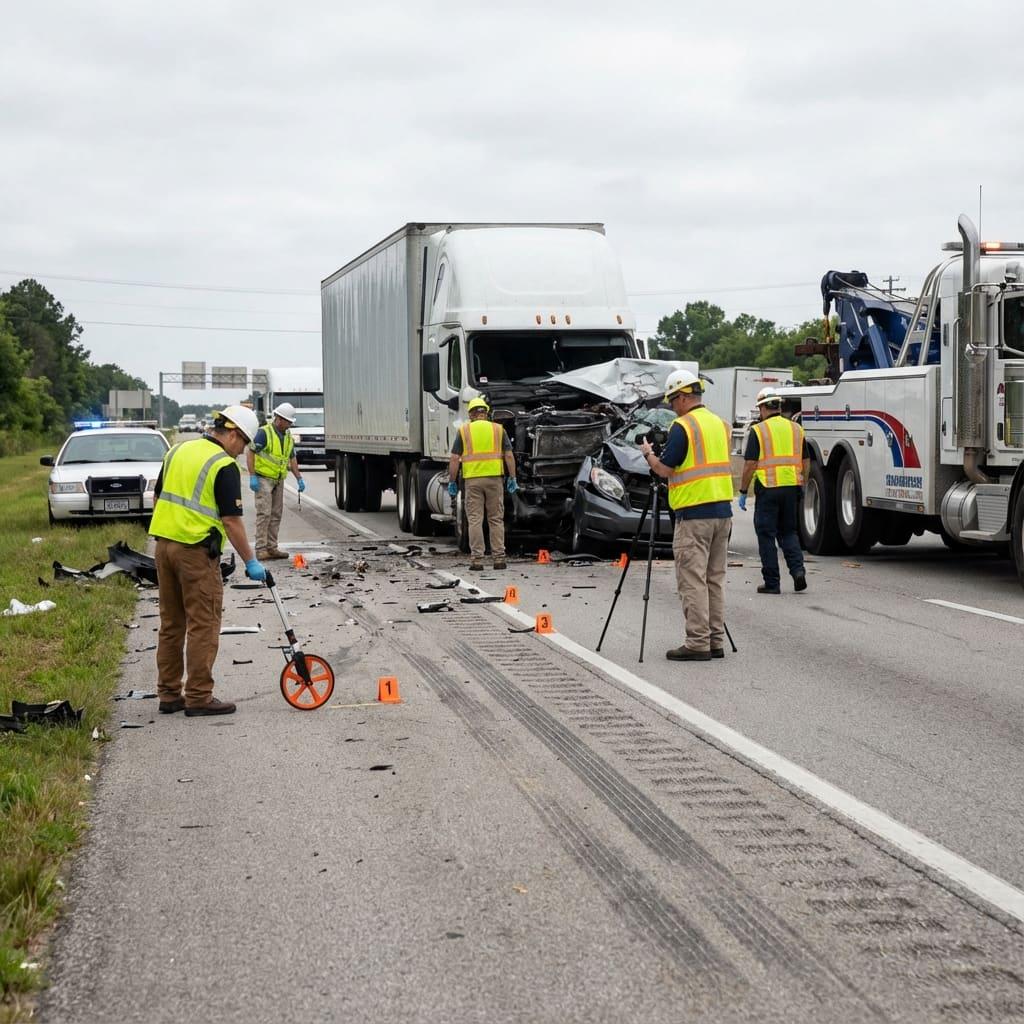
Scene documentation. Photographs and video from every angle. Damage to all vehicles. Road conditions. Skid marks. Traffic control devices. Weather. Get as much as possible before the scene is cleared.
Witness information. Names, phone numbers, what they saw. Witnesses scatter quickly.
Your own records. If you were injured, photograph your injuries. Keep a journal of symptoms and treatment.
Within 48-72 Hours
Spoliation letter. This is attorney work. A properly drafted letter goes to the trucking company, the driver, and potentially the insurer. It creates a legal duty to preserve.
Police report request. Get the report number at the scene; request the full report as soon as it's available.
Medical records. Begin documenting your injuries and treatment.
Within 30 Days
ECM data extraction. If a spoliation letter is in place, the company should preserve the data. But verification matters. In some cases, independent extraction is necessary to ensure the data is actually preserved.
Vehicle inspection. If the truck hasn't been repaired or disposed of, a qualified expert should examine it.
Subpoena preparation. For ELD data, dispatch records, maintenance files, and driver qualification files.
When Companies Destroy Evidence
It happens. Despite legal obligations, records go missing. ECM data gets overwritten because the truck went back into service. Phones get wiped. Servers get "upgraded."
When spoliation occurs, there are remedies:
- Adverse inference instructions tell the jury they may assume the destroyed evidence was unfavorable to the party who destroyed it.
- Sanctions can include monetary penalties or limitation of defenses.
- Other remedies may be available depending on who destroyed the evidence and when the duty to preserve arose.
But remedies aren't as good as having the actual evidence. An adverse inference helps, but it doesn't replace ECM data showing speed, braking, or throttle input. For more on what ECM black box data reveals, see our detailed guide. You may also want to understand Oklahoma's broader spoliation of evidence framework.
Why Speed Matters
Trucking companies have lawyers on call. When a serious accident happens, that call goes out fast. Their focus is protecting the company, which often means controlling the narrative around evidence before plaintiffs have a chance to preserve it.
Victims who wait—who think they have time to figure things out, who don't realize how quickly evidence disappears—lose that race. By the time they hire a lawyer, the truck is repaired, the ECM is overwritten, and the case becomes an uphill battle.
Frequently Asked Questions
How quickly does trucking evidence disappear after a crash?
Very quickly. Electronic data on trucks can be overwritten quickly depending on the system and continued vehicle use. Surveillance footage may be deleted in days. Trucking companies may repair or scrap vehicles quickly. Acting within the first 72 hours is critical.
What is a spoliation letter?
A spoliation letter (also called a preservation letter) is a formal legal demand requiring a trucking company to preserve all evidence related to the crash — including electronic data, driver logs, maintenance records, and the vehicle itself. It puts them on notice that destroying evidence could result in sanctions.
What evidence do trucking companies have to keep?
Federal regulations require trucking companies to maintain driver logs, inspection reports, drug/alcohol test results, and maintenance records for specified periods. However, some data (like real-time GPS and ECM data) isn't subject to the same retention requirements, making early preservation essential.
Can I get the truck driver's phone records?
Yes, through the discovery process in litigation. Cell phone records can show whether the driver was texting, calling, or using apps at the time of the crash — critical evidence for distracted driving claims.
Involved in a Trucking Accident?
Time matters. Contact us now to preserve critical evidence before it disappears. Learn more about our trucking accident practice.
Get Immediate Help →This article is for general information only and is not legal advice.