
Key Takeaways
- Allen Gamble Is the Holdenville Prison: Allen Gamble Correctional Center is the Oklahoma prison in Holdenville formerly known as Davis Correctional Facility. The Oklahoma Department of Corrections announced the rename effective October 1, 2023, and CoreCivic lists the facility at 6888 East 133rd Road in Holdenville.
- 22 Homicides Reported Since 2022: Allen Gamble Correctional Center has recorded 22 homicides in the last four years, according to autopsy reports, criminal filings, and corrections data reported by The Oklahoman. ODOC's live Deaths in Custody dashboard can change as final medical examiner reports arrive, so families should preserve evidence before waiting on a final manner-of-death label.
- Current Dashboard Entries Still Matter: ODOC's June 2026 deaths-in-custody page lists several recent Allen Gamble deaths as "Awaiting ME Results." That label is not the end of the legal inquiry; it is a warning to preserve video, logs, classification records, and medical-response evidence before the paper trail goes cold.
- The Takeover Did Not End the Violence: ODOC assumed operational control from CoreCivic on October 1, 2023. Yet homicides continued after the transition, with fifteen of the twenty-two deaths occurring under state operation.
- Families May Have Constitutional Claims: When prison officials know of a substantial risk of serious harm and disregard it, the Eighth Amendment may support federal civil rights claims under 42 U.S.C. § 1983.
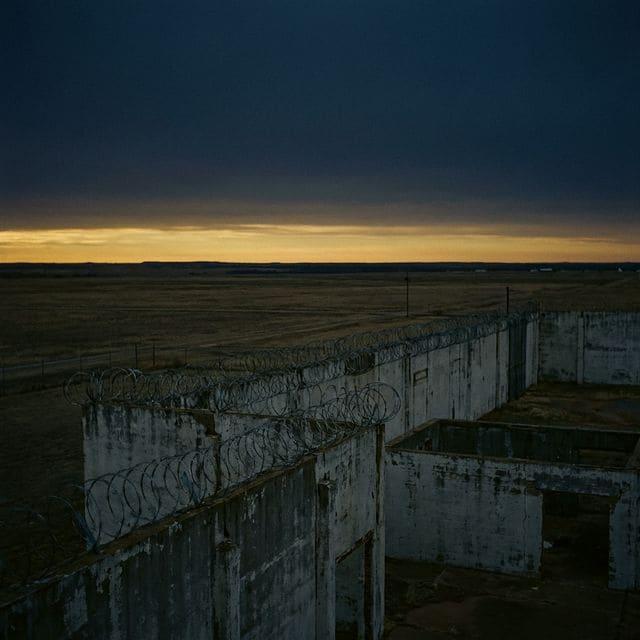
Allen Gamble Correctional Center is the Oklahoma prison in Holdenville formerly known as Davis Correctional Facility. Families have good reason to ask hard questions about the facility: public reporting has identified twenty-two homicides there since 2022, and recent deaths have raised urgent issues about video preservation, classification decisions, staff response, and federal civil-rights claims.
For families, the first question is rarely technical. They want to know what happened, who knew there was danger, and why no one stopped it. Those are also the questions a civil-rights case has to answer.
What Is the Holdenville Prison?
Allen Gamble Correctional Center is the state prison in Holdenville that was formerly known as Davis Correctional Facility. ODOC announced the rename in September 2023 and said the new name would take effect October 1, 2023. CoreCivic's facility page lists Allen Gamble as "formerly Davis Correctional Facility," gives the Holdenville address, and states that the facility is leased to and operated by ODOC.
| Searcher question | Current answer |
|---|---|
| What is the official name? | Allen Gamble Correctional Center. |
| What was the old name? | Davis Correctional Facility. |
| Where is it? | 6888 East 133rd Road, Holdenville, OK 74848-9033, according to CoreCivic's facility listing. |
| Who operates it? | CoreCivic lists the facility as leased to and operated by ODOC. |
| Where are death classifications posted? | ODOC maintains a Deaths in Custody dashboard, but it states that manner of death is released after the Oklahoma Office of the Chief Medical Examiner's final report, which may take months. |
| Where do records requests start? | ODOC's homepage links to Open Records Request and Inmate Medical Records Request forms. ODOC's Offender Info page says ODOC records are available for public inspection and copying except records made confidential by state or federal law. |
| What should families preserve first? | Surveillance video, cell-assignment/classification records, staff rosters, incident reports, medical-response records, grievances, tablet messages, phone logs, and communications showing prior threats or warnings. |
June 2026 Update: What ODOC's Live Dashboard Shows
ODOC's Deaths in Custody dashboard is important because the final manner of death can lag behind the event. During the June 27, 2026 review for this update, the dashboard listed Michael Newlin's January 30, 2026 Allen Gamble death as "Homicide." It also listed several later Allen Gamble deaths as "Awaiting ME Results," including Ricardo Lopez on February 27, Jimmy Johnson on March 7, Joanies Patricio on March 15, Antonio Reeves on May 2, Jordan Shores on May 10, and Joshua Sallis on June 12.
Those entries should not be read as a clean bill of health for the facility or as proof that no claim exists. "Awaiting ME Results" means the medical examiner classification has not yet landed publicly. Families still need to lock down the proof that answers the legal questions: who knew about the danger, when they knew it, what housing or classification decision was made, whether staff responded in time, and whether video or records were preserved.
The practical takeaway is simple: do not wait for the dashboard to change before acting. Send preservation demands while the facility still has video, logs, medical-response records, and electronic messages in ordinary retention systems.
A Pattern of Violence
The reporting is based on The Oklahoman's review (Feb. 12–13, 2026) of autopsy reports, criminal filings, investigative records, civil litigation, and surveillance video. There were no homicides at the facility in 2021. The killing began in 2022 and has not stopped.
Seven homicides occurred while CoreCivic still operated the prison. According to criminal filings and autopsy reports, the first victim—Cheyenne Watts—was stabbed to death in March 2022. As of the date of The Oklahoman's reporting, no criminal charge had been filed against the suspected killer, a convicted murderer. By July 2022, correctional officer Alan Jay Hershberger was killed after being stabbed from behind. The Oklahoman reported the attacker was a convicted murderer, and court filings described a knife with a twelve-inch blade.
One death in particular illustrates the scope of institutional failure. In September 2022, according to video evidence reviewed by The Oklahoman, officers stood outside Dustin Patterson's cell door for roughly forty-five minutes—firing pepper balls and spraying hot-pepper chemical agent through the food slot—while Patterson pleaded for his life inside. By the time they entered, his cellmate had strangled him to death.
ODOC took over operations on October 1, 2023, but the killing accelerated. Fifteen of the twenty-two homicides reported by The Oklahoman occurred under state operation—one in late 2023, six in 2024, six in 2025, and two in early 2026. One widely reported 2026 death involved Ricardo Lopez, 39, who had been serving a two-year sentence for domestic abuse and had been at the facility for only a few months when he died on February 27, 2026. Hughes County District Attorney Erik Johnson described the attack as gang-related. During the June 27, 2026 review for this update, ODOC's Deaths in Custody dashboard still listed Lopez's death as "Awaiting ME Results," while listing Michael Newlin's January 30, 2026 Allen Gamble death as "Homicide." That distinction matters: ODOC says final manner-of-death classifications may take months.
The circumstances of Lopez's death are emblematic of the institutional dysfunction at Allen Gamble. The Oklahoman reported that Lopez was killed on the same day that ODOC Director Justin Farris visited the facility and gave a tour to DA Johnson—a tour arranged days after The Oklahoman's February reporting on the homicides. Johnson, a Republican who had previously called the facility a "gladiator academy," described arriving at the prison to find blood being cleaned up in the sally port. "The blood was being cleaned up in the sally port as we were coming through," Johnson told The Oklahoman. "It was pretty crazy, pretty crazy." He said ambulances passed by while he was at an off-site lunch with corrections officials. As of March 10, 2026, the prison had 41 staff vacancies.
From Private Prison to State Operation
The facility—formerly Davis Correctional Facility—was privately owned and operated for years by CoreCivic Inc., a Tennessee-based for-profit corporation that held state inmates under contract with ODOC. CoreCivic's current facility listing identifies Allen Gamble Correctional Center as "formerly Davis Correctional Facility" and states that the facility is leased to the Oklahoma Department of Corrections.
ODOC assumed operational control on October 1, 2023, and renamed the facility Allen Gamble Correctional Center. But ownership and operations are different things, and the transition in management has not ended the reported violence. As discussed above, public reporting has placed fifteen of the twenty-two reported homicides after the state takeover.
The change in management matters for legal purposes—it determines who the defendants are. But it has not changed the outcome for the inmates housed there.
Why the Violence Continues
The dominant pattern at Allen Gamble is cellmate-on-cellmate violence. Of the twenty-two homicides, the overwhelming majority occurred inside locked cells, committed by the victim's own cellmate. This pattern is not random. It is the predictable result of specific institutional failures.
Classification failures put incompatible inmates together. When an inmate with a documented history of violence is assigned a cellmate despite prior assaults, the facility has created the conditions for homicide. According to criminal filings reviewed by The Oklahoman, multiple people identified in Allen Gamble homicide cases had violent histories that should have triggered single-cell housing or placement in more restrictive settings. The Oklahoman reported that Gregory Scott Thompson, who was accused in Officer Hershberger's death, was a convicted murderer; Randy Mounce, identified in reporting and filings involving John Longstreet's strangulation, was serving time for a 1994 murder; and Daniel Wilson, identified in reporting involving Brantley Avallone's death, was already serving a life sentence for murder.
Ignored warnings are a recurring theme. According to court filings and investigative records reviewed in public reporting, Christopher Crabtree begged officers to remove his cellmate less than two hours before he was beaten and strangled. The Oklahoman reported that Derrick Parfait complained he had asked for a different cellmate before Jason Bryce Wolfe's death, and that Dymail Reicher allegedly killed his cellmate specifically to obtain a single cell. When inmates or cellmates themselves are telling staff that the housing situation is dangerous and nothing changes, those facts can support an inference of deliberate indifference under the Eighth Amendment, depending on what the records show about what specific officials knew and did.
Staffing shortages make meaningful monitoring impossible. Proper correctional practice requires regular cell checks, functional classification systems, and enough officers to respond quickly when violence erupts. The forty-five-minute delay in reaching Dustin Patterson illustrates what happens when staff cannot intervene in time. Every minute of delay is a minute of suffering that could have been prevented.
ODOC leadership has stated that the facility houses some of the state's most dangerous inmates, has expanded programming, improved training, and is exploring AI-assisted cellmate matching. Director Farris has also described shipping gang leaders, known as "shot callers," to other states—primarily through inmate trades with the Indiana Department of Corrections. Even accepting those efforts, the constitutional duty under Farmer v. Brennan remains: officials must take reasonable measures to mitigate known risks of serious harm. DA Johnson, while expressing confidence in current ODOC leadership, stated bluntly that the crisis "has got to be of the highest priority" and questioned the long-term effects of housing inmates in lockdown 23 hours a day. "I just don't see how we can keep people locked in a box 23 hours a day and say that is fixing anything," Johnson said.
Legal Accountability: Who Can Be Sued
Families of inmates killed at Allen Gamble may have meaningful legal claims, and several are already pursuing them. As of February 2026, The Oklahoman reported that federal lawsuits against CoreCivic over the deaths of Officer Hershberger, Dustin Patterson, and Brantley Avallone remained pending. These cases illustrate the different theories of liability available depending on who operated the facility when the death occurred.
For families comparing a prison homicide to a county detention death, our Oklahoma jail death lawyer guide explains the related Section 1983 framework, evidence-preservation issues, and wrongful death in custody claims that often overlap with prison-death litigation.
For the seven homicides that occurred under CoreCivic's management, families can pursue Section 1983 civil rights claims against the company and its employees. Private prison employees generally cannot invoke qualified immunity in prisoner Section 1983 suits — a significant advantage for plaintiffs. In Richardson v. McKnight (1997), the Supreme Court held that private prison guards are not entitled to qualified immunity because private companies face market pressures that serve as an alternative check on misconduct, though other defenses may still apply.
CoreCivic's corporate liability is not automatic, however. In the Tenth Circuit, Section 1983 claims against private entities acting under color of state law still require tying the violation to an unconstitutional policy, custom, or practice—respondeat superior alone is not sufficient. But given the pattern of chronic understaffing, classification failures, and cost-cutting alleged at the facility, establishing a policy-or-custom basis for corporate liability is a viable path.
For the fifteen homicides that occurred after ODOC assumed operations in October 2023, the legal framework shifts. Individual state employees can be sued under 42 U.S.C. § 1983, but they may assert qualified immunity. A state or state agency is generally not a "person" subject to damages under Section 1983. Prospective injunctive relief through official-capacity suits remains available in principle, though such claims are typically pursued by current inmates or others with standing to challenge ongoing conditions.
Families should be aware that Oklahoma's Governmental Tort Claims Act contains a broad exemption under 51 O.S. § 155(25) that can bar state-law tort claims arising from the operation of correctional facilities, including injuries inflicted by one prisoner on another. This statutory barrier is a primary reason why death-in-custody cases at Oklahoma prisons are litigated primarily through federal civil rights claims rather than state-law negligence theories. GTCA notice requirements still matter—claims must be presented within one year of death under 51 O.S. § 156 or they are forever barred—but the prison exemption means state-law paths are often unavailable.
The constitutional claim in prison homicide cases is based on the Eighth Amendment's prohibition against cruel and unusual punishment. Under Farmer v. Brennan (1994), prison officials have a duty to protect inmates from violence at the hands of other inmates. To establish a violation, a plaintiff must show that the official knew of a substantial risk of serious harm and disregarded that risk by failing to take reasonable measures to prevent it. This deliberate indifference standard requires more than negligence — but it does not require proof that the official intended the harm to occur.
At Allen Gamble, the publicly reported pattern is a reason for families and lawyers to investigate closely. After twenty-two reported homicides in four years—many involving cellmates with documented violent histories, some reportedly preceded by explicit warnings from inmates themselves—the pattern of known risk becomes harder to treat as a one-off. Each incident may add to the factual record relevant to future claims, but each case still turns on what specific officials knew and did.
Records Families Should Request From ODOC
Families investigating a death or serious assault at Allen Gamble should not wait for the final medical examiner classification before preserving records. ODOC's Deaths in Custody dashboard says manner of death is released after the Oklahoma Office of the Chief Medical Examiner's final report, which may take several months. During that window, video, communications, and staff records can become harder to obtain.
Start with written preservation demands and targeted records requests. The most important categories usually include:
- All surveillance video from the housing unit, sally port, medical unit, intake area, transport area, and any route used before or after the incident.
- Incident reports, use-of-force reports, death reports, shift logs, post orders, staff assignment sheets, and emergency response records.
- Classification records, cell assignment records, keep-separate notes, gang intelligence references, prior assault history, and any request for protective custody or single-cell placement.
- Medical records, sick-call requests, medication administration records, emergency medical service records, infirmary records, and communications with the Oklahoma Office of the Chief Medical Examiner.
- Grievances, tablet messages, phone-call logs, emails, handwritten requests, PREA reports if relevant, and communications from family members warning the facility about threats.
- Prior incidents in the same pod, housing unit, or with the same assailant, including assaults, stabbings, lockdowns, contraband weapon reports, and staff shortage records.
The records fight may not be simple. ODOC's homepage links to Open Records Request and Inmate Medical Records Request forms, and ODOC's Offender Info page says the agency complies with the Oklahoma Open Records Act, subject to records made confidential by law. But in June 2025, The Frontier reported that ODOC denied requests for incident reports on deaths and violent incidents at Allen Gamble, taking the position that investigation and incident reports were not public records. That makes precise request wording, preservation language, and a follow-up enforcement plan important.
What Families Should Do
If your loved one was killed at Allen Gamble Correctional Center—or at any Oklahoma prison—time-sensitive steps are critical to preserving your legal claims.
Preserve evidence immediately. Send written preservation demands to both the current facility operator (ODOC) and, if the death occurred before October 2023, CoreCivic. Demand preservation of surveillance video, cell assignment records, classification files, staffing logs, incident reports, and all internal communications about the victim and the assailant. Video footage is routinely overwritten on fixed schedules, so every day of delay risks permanent loss of critical evidence.
Obtain the autopsy report. ODOC notifies the Oklahoma Office of the Chief Medical Examiner in every inmate death, and the OCME determines whether an autopsy, external examination, and/or medical-record review will be used to determine cause and manner of death. The resulting report is foundational to any legal claim.
Request the assailant's classification and housing records. These records reveal whether the person who killed your loved one had a documented history of violence, whether that history should have resulted in different housing, and whether the facility followed its own classification protocols.
Contact an attorney experienced in prison civil rights litigation. Section 1983 claims in Oklahoma must generally be filed within two years (the borrowed limitations period under 12 O.S. § 95(A)(3)), though the accrual date is governed by federal law. Practical deadlines for evidence preservation are much shorter. An attorney can issue formal preservation demands, initiate discovery, and identify all potentially liable parties—including corporate defendants, individual employees, and government entities.
At Addison Law, we handle civil rights cases involving deaths in custody throughout Oklahoma. If your family member was killed at Allen Gamble or any other correctional facility, contact us for a free consultation to discuss your legal options.
Frequently Asked Questions
Can families sue a private prison company like CoreCivic?
Yes. Private prison companies can be sued under 42 U.S.C. § 1983 for constitutional violations tied to their policies, customs, or practices. Private prison employees generally cannot invoke qualified immunity (Richardson v. McKnight), though other defenses remain available. Corporate liability requires connecting the violation to an institutional policy or custom—not mere respondeat superior—but patterns of understaffing, classification failures, and cost-cutting can establish that connection.
What is the legal standard for a prison failing to protect an inmate from violence?
Under Farmer v. Brennan (1994), prison officials violate the Eighth Amendment when they know of a substantial risk of serious harm to an inmate and fail to take reasonable measures to prevent it. This "deliberate indifference" standard requires more than negligence but less than intentional harm—the official must have been aware of the risk and consciously disregarded it.
Does it matter that the prison changed operators in 2023?
Yes, it affects who you sue and what defenses they can raise. For deaths before October 1, 2023, CoreCivic and its employees are the primary defendants, and private prison employees generally cannot claim qualified immunity. For deaths after that date, individual state employees are the defendants, and they may assert qualified immunity. The state itself is generally not a "person" subject to damages under Section 1983. In either case, the underlying constitutional standard—deliberate indifference under Farmer v. Brennan—remains the same.
What evidence is most important in a prison homicide case?
The most critical evidence includes surveillance video showing the events before, during, and after the killing; the assailant's classification and housing records showing their violent history; records of warnings from inmates requesting cell reassignment; staffing logs showing whether adequate personnel were on duty; and the facility's own policies on inmate classification and cell assignments. Comparing what the policies required to what actually happened is often the most powerful evidence.
How long do families have to file a lawsuit after a prison death?
In Oklahoma, federal civil rights claims under Section 1983 must generally be filed within two years of the death (the borrowed limitations period under 12 O.S. § 95(A)(3)), though the accrual date is governed by federal law. If state tort claims are available, the Governmental Tort Claims Act requires a notice of claim within one year, and the claim is forever barred if not timely presented. However, evidence preservation is time-sensitive—surveillance footage is often automatically overwritten within days or weeks. Contact an attorney as soon as possible to ensure critical evidence is preserved.
Can the state be held liable for deaths that occur after it took over the prison?
A state or state agency is generally not a "person" subject to damages under Section 1983, but lawsuits against individual state employees in their personal capacities remain available. However, families should know that Oklahoma's Governmental Tort Claims Act contains a broad exemption under 51 O.S. § 155(25) for claims arising from the operation of prisons, including injuries inflicted by one prisoner on another. This is a primary reason death-in-custody cases are litigated through federal civil rights claims. The pattern of continued violence after the state assumed operations strengthens arguments that systemic failures, not just individual misconduct, are driving the deaths.
What if the assailant was never criminally charged?
Criminal charges against the assailant are separate from the civil rights claim against the facility. Your civil case targets the prison and its operators for failing to prevent the violence—not the individual who committed it. Several Allen Gamble homicides resulted in no criminal charges against the assailant, but that does not affect the family's ability to sue the facility for deliberate indifference.
Family Member Killed in an Oklahoma Prison?
When prison officials know of a substantial risk of violence and fail to act, families may have federal civil-rights claims. The first step is preserving the proof before it disappears.
Get a Free Case Evaluation →This article is for general information only and does not constitute legal advice. Reading this post does not create an attorney-client relationship. Every case depends on specific facts, and no outcome is guaranteed. Do not send confidential information until an attorney-client relationship has been established.