
Key Takeaways
- Only One Investigation Is Automatic: Oklahoma law requires the Office of the Chief Medical Examiner to investigate "[d]eaths of any persons detained or occurring in custody of the Department of Corrections or a county jail" (63 O.S. § 938(A)(6)). That inquiry answers cause and manner of death — it does not decide whether anyone is charged or held accountable.
- The OSBI Is an Assisting Agency, Not an Automatic Watchdog: By statute, the Oklahoma State Bureau of Investigation assists "all law enforcement officers and district attorneys when such assistance is requested" (74 O.S. § 150.2(A)(6)). If no authorized official asks, the OSBI does not step in — and its investigative file is confidential by law (74 O.S. § 150.5(D)).
- No Government Investigation Works for the Family: Every official inquiry — the medical examiner's, the sheriff's, the OSBI's, the district attorney's — serves a government purpose. The only investigation aimed at the family's questions and the family's potential civil rights claim is the one the family starts, and the evidence it depends on is most at risk in the first days and weeks.
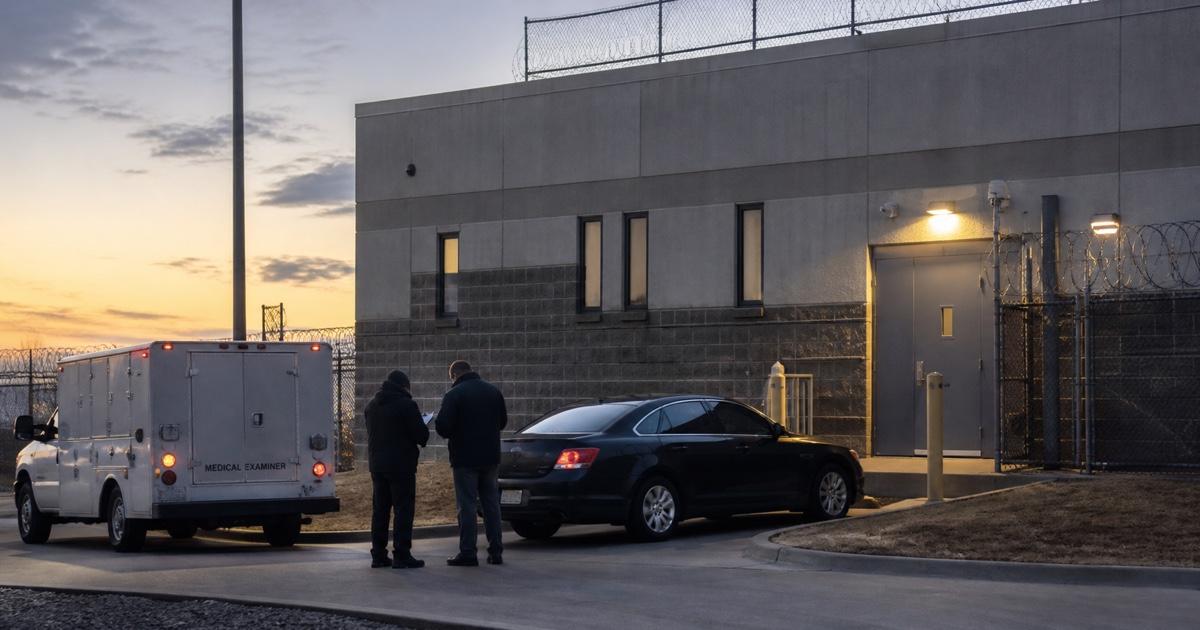
When someone dies in an Oklahoma jail, no single independent agency automatically takes over. The Office of the Chief Medical Examiner must investigate the death itself — that much is required by statute. But the criminal investigation usually starts with, or stays with, local law enforcement, sometimes the very sheriff's office that runs the jail where the death happened. The Oklahoma State Bureau of Investigation only gets involved if an authorized official asks it to. As a practical matter, the local district attorney decides whether anyone is charged. And none of those inquiries exists to answer the questions that matter most to a grieving family: what really happened, who is responsible, and what claims the family may have. This article walks through who investigates an Oklahoma jail death, what each investigator actually does, which records families can and cannot get, and why an independent investigation is not a luxury but a necessity.
This article is general legal information, not legal advice about any specific death. Jail-death cases are intensely fact-specific, and the framework below is a starting point, not a prediction.
The Medical Examiner: The One Investigation Required by Law
Oklahoma's death-investigation statute lists the categories of deaths that must be investigated, and deaths in custody are on the list by name. Under 63 O.S. § 938(A)(6), "[d]eaths of any persons detained or occurring in custody of the Department of Corrections or a county jail" shall be investigated as provided by law. Other categories in the same statute — violent deaths, and deaths "under suspicious, unusual or unnatural circumstances" — will often apply to a custody death as well, including deaths in municipal holding facilities.
The medical examiner's job is medical: determine the cause and manner of death. That finding matters enormously — whether a death is ruled a suicide, a homicide, an accident, or "natural" shapes everything that follows — but it is not an accountability determination. The medical examiner does not decide whether jail staff ignored warning signs, whether checks were actually performed, or whether anyone faces consequences.
Families have meaningful rights to the medical examiner's findings, and Oklahoma law gives extra protection to families when the death happened in custody. Our guide to getting an autopsy report in Oklahoma explains the summary report, the full autopsy report, who may request each, and the specific statutory language that keeps the government from indefinitely blocking a family's access when the person died in state custody or at the hands of law enforcement.
Who Runs the Criminal Investigation? Often, the Jail's Own Parent Agency
Here is the structural problem families run into. Under 57 O.S. § 47, the sheriff — or a person designated by law in the sheriff's place — "shall have charge of the county jail of his or her county and of all persons by law confined therein." In some Oklahoma counties, a jail trust or contractor operates the facility instead; our article on detention centers and the Open Records Act explains how those arrangements work and how they affect records requests.
When a death occurs, the initial investigation typically belongs to a law enforcement agency with jurisdiction. In some counties the sheriff or district attorney asks the OSBI to take the case; in others, the investigation stays with the sheriff's office that runs the jail — and nothing in Oklahoma law forces the choice. There is no statute that automatically hands every jail-death investigation to an independent outside investigator. Whether an outside agency investigates is a discretionary decision, made case by case.
That is not an accusation against any particular office. It is simply the structure the law creates, and it is the reason families should never assume that "there's an investigation" means "someone independent is looking out for us."
The OSBI: Involved Only When Asked
Many families assume the OSBI automatically investigates deaths in custody. It does not. The OSBI describes itself as an assisting agency, and the statutes bear that out. Under 74 O.S. § 150.2(A)(6), the Bureau assists the Chief Medical Examiner "and all law enforcement officers and district attorneys when such assistance is requested." A related statute, 74 O.S. § 150.5(A), lists additional officials who can initiate OSBI investigations, including the Governor and the Attorney General. The OSBI's own Investigative Services Division page confirms that it "can only respond to requests for investigations" from law enforcement, district attorneys, the Governor, the Attorney General, the Chief Medical Examiner, and a handful of other listed officials — and it lists homicide, suspicious deaths, and use-of-force cases among its most common assignments.
Two practical consequences follow. First, if the sheriff or district attorney never requests OSBI involvement, the OSBI will generally not be involved at all. Second, even when the OSBI does investigate, its file does not belong to the family. Under 74 O.S. § 150.5(D), all records relating to any OSBI investigation are confidential, with disclosure limited mostly to other law enforcement agencies and prosecutors. The statute does contain one provision families should know about: subsection (G) allows the OSBI Director to authorize release of information "for the purpose of advising crime victims or family representatives of homicide victims regarding the status of a pending investigation." That is a discretionary status update — not a right to the file. In practice, a family's most reliable path to the underlying evidence is civil litigation discovery — not because it opens the OSBI's file, but because it reaches the jail's own records and people directly: the video, the logs, the medical files, and sworn testimony from the staff who were there. Whether any of the OSBI's own file can be obtained in a civil case is a separate, case-by-case fight over privilege and protective orders, and families should not count on winning it.
The District Attorney, and the Grand Jury Option
When a criminal investigation of a jail death is completed, the file typically goes to the local district attorney, who decides whether anyone is charged. Criminal charges against jail staff are rare, and a declination is not a finding that nothing went wrong — it is a judgment that the office did not believe it could prove a crime beyond a reasonable doubt.
Oklahoma's Constitution preserves one accountability channel that citizens control directly. Under Article II, Section 18 of the Oklahoma Constitution, a grand jury shall be convened on a district judge's own motion, on the verified application of the Attorney General, or upon a petition signed by qualified electors of the county — with a minimum of 500 and a maximum of 5,000 required signatures, depending on the county. A petition drive is a heavy lift and no substitute for a civil case, but it exists, and families should know it exists.
Inspections and Reporting: What the State Sees Before and After
Two other systems touch jail deaths without investigating any individual death the way families expect.
The first is inspection. Under the Oklahoma Jail Standards Act, 74 O.S. § 192 (amended effective April 28, 2025), the State Department of Health must inspect every detention facility at least once each year for compliance with the Act's standards, and if an inspection reveals a crime in the operation of a facility, the Department has a duty to initiate a complaint with the district attorney. Inspection reports can be valuable evidence about what the state knew of a jail's conditions before a death — though the statute also limits inspections to the Act's specific requirements and allows facilities to seek waivers from some standards.
The second is reporting. The federal Death in Custody Reporting Act of 2013 (Public Law 113-242, codified at 34 U.S.C. § 60105) requires states receiving certain federal criminal-justice grant funds to report, quarterly, information about every death of a person who is detained, arrested, en route to incarceration, or incarcerated in a municipal or county jail or state facility — including the decedent's name, the date and location of death, the agency involved, and a brief description of the circumstances. Reporting is not investigation: the Act generates data, and the consequence for a state's noncompliance is a discretionary reduction in grant funds, not an independent inquiry into any particular death.
Why the Family's Own Investigation Is the One That Matters
Each system above answers a government question: what was the medical cause of death, was a crime provable, did the facility pass inspection. None of them exists to answer the family's questions or to preserve the family's civil claims. That work only happens if the family starts it.
Time matters more in jail-death cases than in almost any other kind of case. Surveillance video is routinely overwritten on short cycles. Cell checks, logs, shift rosters, medical requests, and grievances can be lost, altered, or simply become harder to reconstruct. A prompt written preservation demand from an attorney, followed by targeted records requests and, when a case is filed, subpoenas and depositions, is how the record actually gets built. Our articles on jail medical neglect and failure-to-protect claims describe the kinds of records that matter and the legal standards that apply.
The legal path for a family typically runs through a federal civil rights claim under 42 U.S.C. § 1983 and, in some circumstances, state-law claims governed by the Oklahoma Governmental Tort Claims Act. Both come with strict procedural requirements and unforgiving deadlines, and the state-law notice rules in particular trip up families who wait. Our guides to Section 1983 wrongful death claims in Oklahoma and the Governmental Tort Claims Act explain those frameworks. The short version: talk to a lawyer early, because some of the most important steps in a jail-death case have to happen long before a lawsuit is ever filed.
Lost Someone in an Oklahoma Jail?
The official investigations answer the government's questions, not yours. Video, logs, and medical records that explain what happened can disappear quickly — and some of the deadlines that protect your family's claims arrive sooner than you expect. We investigate jail deaths independently and move fast to preserve the record.
Talk to a Civil Rights LawyerFrequently Asked Questions
Does the OSBI automatically investigate every Oklahoma jail death?
No. The OSBI is an assisting agency. Under 74 O.S. § 150.2(A)(6), it assists law enforcement, district attorneys, and the Chief Medical Examiner when assistance is requested, and its own Investigative Services Division states that it can only respond to requests from specified officials. If no authorized official asks, the OSBI generally is not involved, and the investigation stays with a local agency — sometimes the same office that operates the jail.
Can my family get a copy of the OSBI's investigative file?
Generally not through a records request. 74 O.S. § 150.5(D) makes records of OSBI investigations confidential, with disclosure limited primarily to law enforcement and prosecutors. Subsection (G) permits the Director to authorize status updates to crime victims and family representatives of homicide victims, but that is discretionary and limited. In civil litigation, discovery can reach much of the underlying evidence — the jail's video, logs, and medical records, and depositions of the people involved — even where the OSBI's own file stays confidential or contested. That is one of several reasons families pursue a civil case even when they mainly want answers.
Who performs the autopsy after a jail death, and can the family see it?
The Office of the Chief Medical Examiner. Oklahoma law requires investigation of deaths of persons detained or in the custody of the Department of Corrections or a county jail (63 O.S. § 938(A)(6)). Close family members have specific statutory rights to the medical examiner's reports, and the law contains custody-death provisions that limit the government's ability to delay a family's access. Our autopsy report guide walks through exactly how to request the summary report and the full autopsy report.
If the district attorney does not charge anyone, can we still bring a civil case?
Yes. A prosecutor's decision not to file charges is a judgment about proving a crime beyond a reasonable doubt; it does not decide whether the jail or its staff violated your loved one's civil rights. Civil claims proceed under different legal standards and a lower burden of proof, in a separate system. Many successful jail-death civil cases follow investigations that produced no criminal charges. See our guide to Section 1983 wrongful death claims in Oklahoma for how those claims work.
A death in custody leaves a family with grief and a long list of unanswered questions, and the official machinery is not built to answer them. If you have lost someone in an Oklahoma jail, you are entitled to ask hard questions, to seek the records the law does make available, and to have someone investigate for your family rather than for an agency. We are glad to talk through what happened and what can still be preserved — contact our office any time.