
Key Takeaways
- Public-trust detention centers are not "law enforcement agencies" under the Open Records Act: The Oklahoma Supreme Court held in Lawson v. LeFlore County that a jail trust cannot use that classification to limit production to the narrower law-enforcement categories.
- The rule has now been applied twice: In Gray Media v. Comanche County, the Court applied Lawson to reverse a trial court that had treated a jail trust as a law-enforcement agency.
- Record-specific exemptions still matter: These opinions remove one broad denial theory for public-trust jails, but facilities may still assert specific Open Records Act exemptions or redactions on a record-by-record basis.
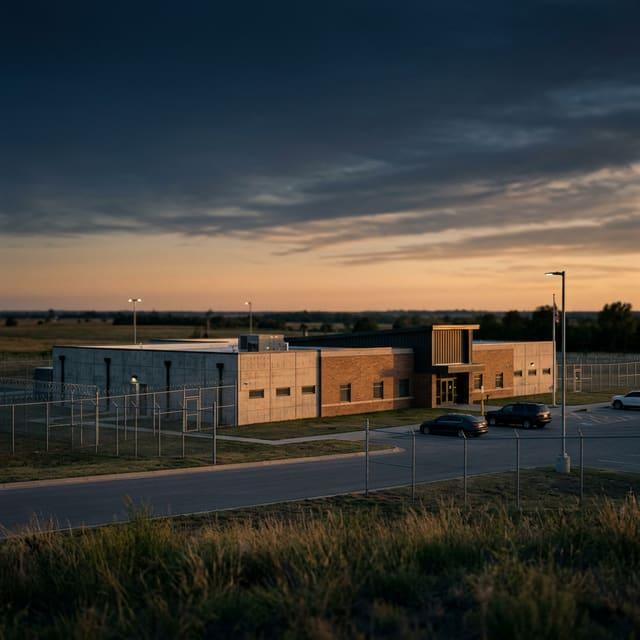
When someone dies in a county jail, the first question families ask is what happened. The second question — the one that determines whether they will ever get an answer — is whether the facility will hand over the evidence. For years, county detention centers operated by public trusts in Oklahoma claimed they were "law enforcement agencies" under the Open Records Act, which allowed them to limit production to a narrower set of law-enforcement records. Surveillance footage, internal communications, staffing records, and policy materials were often met with that threshold objection. The Oklahoma Supreme Court has now rejected that position twice: public-trust detention centers are not law-enforcement agencies, and they cannot rely on that classification alone to deny records requests.
The Statutory Framework
The Oklahoma Open Records Act, 51 O.S. § 24A.1 et seq., begins from a simple premise: records created by public bodies in the transaction of public business belong to the people of Oklahoma. Citizens have the right to inspect and copy those records, and public bodies have a corresponding duty to produce them promptly upon request.
The Act carves out limited exceptions. One of the most significant is the exception for "law enforcement agencies," which are permitted to withhold most records and are required to produce only specific categories — including crime summaries, certain booking information, and, more recently, body camera and dashcam footage subject to statutory redaction requirements. The rationale is that law enforcement agencies handle active investigations, confidential informants, and sensitive operational information that could be compromised by broad public disclosure.
The critical question in both Lawson and Gray Media was whether this exception applies to county detention centers operated by public trusts. The statute defines "law enforcement agency" as:
any public body charged with enforcing state or local criminal laws and initiating criminal prosecutions including, but not limited to, police departments, county sheriffs, the Department of Public Safety, the Oklahoma State Bureau of Narcotics and Dangerous Drugs Control, the Alcoholic Beverage Laws Enforcement Commission, and the Oklahoma State Bureau of Investigation.
The listed examples — police departments, sheriffs, DPS, OBNDD, ABLE Commission, OSBI — share a common function: they investigate crimes and initiate prosecutions. Detention centers, by contrast, hold people who have already been arrested and charged. The question was whether holding detainees is the same thing as "enforcing criminal laws and initiating criminal prosecutions."
Lawson v. LeFlore County Detention Center (2025 OK 87)
The first case to squarely address the question — as a matter of first impression — was Lawson v. LeFlore County Detention Center Public Trust Security Commission, decided November 25, 2025. The facts were straightforward. James Lawson, a bail bondsman, requested records from the LeFlore County Detention Center after an incident involving his ex-wife, Amber Lawson, who had gone to the facility to bond out two inmates. The process allegedly took an unusually long time, and when she asked the jailer about the delay, the jailer allegedly yelled at her and cursed at her. Lawson filed an ORA request the following day seeking audio and video footage of the incident, the detention center's policies and procedures, and the names of employees working during the relevant timeframe.
The Jail Trust — a public trust created under 60 O.S. § 176 et seq. and 19 O.S. §§ 904.2–904.10 — denied the request, claiming it was a "law enforcement agency" under 51 O.S. § 24A.3(5) and was therefore not required to produce the records. Lawson sued, and the district court granted summary judgment to the Jail Trust. The Supreme Court retained the case on its own motion and reversed.
Justice Combs, writing for the majority, applied a methodical three-part analysis of the statutory definition. To qualify as a "law enforcement agency," an entity must be: (1) a "public body," (2) "charged with enforcing state or local criminal laws," and (3) "charged with initiating criminal prosecutions." The Jail Trust satisfied the first element — the parties agreed it was a public body. But it failed both of the remaining elements.
On the second element, the Court found that the Jail Trust is not "charged with enforcing state or local criminal laws." Its statutory function is custodial — housing and guarding detainees and convicts. The Court traced the role back to common law, noting that a jailer was historically a servant of the sheriff responsible for "safely keeping people who were committed to him by lawful warrant," but the sheriff alone was answerable for law enforcement. The Court also pointed to a critical statutory provision: 19 O.S. § 513.2(D), which explicitly provides that nothing in the statute conferring the sheriff's jail-management duties on a public trust "operates to confer any peace-officer status on the trust." Every entity on the statute's illustrative list of law enforcement agencies — police departments, sheriffs, DPS, OBNDD, ABLE Commission, OSBI — employs peace officers. Jail trusts, by statute, do not have that status.
On the third element, the analysis was even more direct: the Jail Trust admitted in its own summary judgment briefing that it does not initiate criminal prosecutions. The Court defined "initiating criminal prosecutions" broadly — encompassing not just the filing of an information or indictment, but the investigation, fact-finding, and proposal of criminal charges that precede formal charging. Even under this expansive definition, the Jail Trust does not perform that function.
The vote was the same as it would later be in Gray Media: six justices in the majority (Rowe, Kuehn, Edmondson, Combs, Gurich, and Darby), with Winchester, Kane, and Jett dissenting.
Gray Media v. Comanche County (2026 OK 12)
The second case arose from a more visceral set of facts. A television station, KSWO-TV (operated by Gray Media Group), and reporter Seth Marsicano requested surveillance video from the Comanche County Detention Center capturing the moments before, during, and after a fatal assault on an inmate. The detention center — operated by the Comanche County Facilities Authority, another public trust created under 60 O.S. § 176 — denied the request, claiming it was a law enforcement agency exempt from producing the footage.
The Comanche County District Court sided with the detention center. After an evidentiary hearing, the trial court concluded that the Comanche County Facilities Authority was a "law enforcement agency" under the ORA and, further, that the public interest in seeing the video did not outweigh the reasons for denial under 51 O.S. § 24A.8(B).
The Oklahoma Supreme Court reversed. The Court retained the case and made it a companion to Lawson because both presented the same legal question. Justice Combs, writing for the majority, was direct: the holding in Lawson resolved this case. A public trust operating a county detention center does not satisfy the ORA's definition of "law enforcement agency." The trial court's order was reversed and remanded for further proceedings consistent with the opinion.
The vote was 6-3. Chief Justice Rowe and Justices Kuehn, Edmondson, Combs, Gurich, and Darby formed the majority. Justices Winchester, Kane, and Jett dissented.
The Dissent's Concerns
Justice Winchester, joined by Justices Kane and Jett, wrote a separate dissent raising practical and security-based objections.
The dissent's core argument was factual: in the very incident that gave rise to the records request, the Comanche County Detention Center performed functions that look a great deal like law enforcement. CLEET-certified officers supervised inmates and investigated the fatal assault. The facility collected evidence, interviewed witnesses, prepared reports, and presented the information to a district attorney for a charging decision. Those actions, the dissent argued, constitute "enforcing state or local criminal laws and initiating criminal prosecutions" — which is exactly what the statutory definition requires.
The dissent also raised security and privacy concerns specific to detention facilities. The surveillance video at issue depicted inmates in various states of undress, revealed blind spots in the facility's camera coverage that could be exploited in escape attempts, and showed the facility's response to the incident — including the separation of inmates who were presumably cooperating as informants. The dissent pointed out that even body camera and dashcam footage — records that law enforcement agencies are specifically required to disclose — are subject to statutory redaction requirements for footage depicting death, nudity, severe violence, or great bodily injury. Surveillance footage from jails, the dissent noted, was conspicuously excluded from the Legislature's disclosure requirements for video recordings, suggesting an intentional legislative choice to keep such footage confidential.
The dissent warned that the majority's holding would expose a range of sensitive law-enforcement-type records to disclosure — crime summaries, use-of-force videos, investigation files, informant-related materials — with no framework for protecting the security of the facilities or the residual privacy interests of incarcerated persons. Quoting the U.S. Supreme Court in Houchins v. KQED, Inc., 438 U.S. 1 (1978), the dissent observed that inmates "are not like animals in a zoo to be filmed and photographed by the public."
These are not trivial concerns. But the majority's response, expressed through Lawson, is that the statutory text is what it is. The Legislature defined "law enforcement agency" by reference to a specific function — investigating and prosecuting crime — and the listed examples all share that function. If the Legislature wants to extend law-enforcement-style protections to detention facilities, it can amend the statute. Courts are not authorized to rewrite the definition to address policy concerns that the Legislature has not chosen to address.
What This Means in Practice
The practical impact of Lawson and Gray Media is significant for families, journalists, and attorneys seeking records from Oklahoma detention facilities.
Detention centers operated by public trusts must now comply with the ORA as public bodies, not as law-enforcement agencies. They cannot limit their disclosures to the narrow categories that law-enforcement agencies are permitted to produce. Records that were previously withheld under that classification — surveillance footage, internal incident reports, staffing records, medical response documentation, policy manuals — must be evaluated under the public-body provisions and any specific exemption the facility actually invokes.
The "law enforcement agency" defense is no longer available for public-trust detention facilities. Any public-trust-operated detention center that attempts to deny a records request by claiming law enforcement status is now contradicting two Supreme Court opinions. A requester who receives such a denial has strong grounds for a district court enforcement action under 51 O.S. § 24A.17, which authorizes courts to compel production, award attorney fees, and impose civil penalties. Note that a county jail operated directly by a sheriff's office presents a different analysis — the sheriff's office itself is explicitly listed in the statute as a law enforcement agency.
Other exemptions may still apply. The ORA contains exemptions beyond the law enforcement classification — including exemptions for records related to ongoing criminal investigations, certain personnel evaluations, and attorney-client privileged communications (see NonDoc v. OU for the Supreme Court's recent treatment of that exemption). Detention facilities may still assert these exemptions on a record-by-record basis. But they can no longer invoke a blanket classification that shields entire categories of records from disclosure.
The balancing test under § 24A.8(B) may still be relevant. The trial court in Gray Media found that the public interest in seeing the requested video did not outweigh the reasons for denial. Because the Supreme Court reversed on the threshold "law enforcement agency" question, it did not reach the balancing test — and that issue will likely be addressed on remand. This means that even though detention centers cannot claim law enforcement status, individual records requests may still be subject to the Act's general balancing provision, which allows withholding when the interest in nondisclosure clearly outweighs the public interest.
For families investigating in-custody deaths or injuries, these decisions remove what had become a common barrier to obtaining critical evidence from public-trust facilities. Surveillance video, internal reports, and staffing records are often the only contemporaneous documentation of what happened inside a facility. The ability to seek these records through an open records request — without filing a lawsuit first — remains one of the most important investigative tools available.
Frequently Asked Questions
Can a county detention center deny my open records request by claiming it is a law enforcement agency?
No. The Oklahoma Supreme Court held in Lawson v. LeFlore County (2025 OK 87) and confirmed in Gray Media v. Comanche County (2026 OK 12) that public trusts operating county detention centers are not "law enforcement agencies" under the ORA's definition at 51 O.S. § 24A.3(5). If a detention center denies your request on this basis, it is contradicting settled Oklahoma Supreme Court precedent.
Does this mean I can get surveillance video from a county jail?
These decisions remove the "law enforcement agency" classification as a basis for denial. However, specific records may still be subject to other ORA exemptions — such as the exemption for records related to an ongoing criminal investigation, or the general balancing test under § 24A.8(B) that allows withholding when the interest in nondisclosure clearly outweighs the public interest. The key change is that the facility can no longer categorically exempt itself from the ORA's disclosure requirements.
What if the detention center employs CLEET-certified officers?
The Supreme Court's analysis focused on the facility's primary function, not the certifications held by its employees. Many entities employ CLEET-certified personnel without being "law enforcement agencies" under the ORA. The statutory definition requires that the entity be "charged with enforcing state or local criminal laws and initiating criminal prosecutions" — a function, not a staffing credential.
Does this apply to all jails in Oklahoma, or only those operated by public trusts?
Both Lawson and Gray Media involved detention centers operated by public trusts under 60 O.S. § 176 et seq. The Court's reasoning — that the statutory definition of "law enforcement agency" requires an entity charged with investigating crime and initiating prosecutions — would logically extend to any detention facility whose primary function is custodial rather than investigative, regardless of its organizational structure. However, a county jail operated directly by a sheriff's office presents a different analysis, because the sheriff's office itself is explicitly listed in the statute as a law enforcement agency.
What should I do if a detention center refuses to produce records?
First, send a written follow-up citing Lawson and Gray Media and the facility's obligation under the ORA. If the facility continues to refuse, you can file a district court action under 51 O.S. § 24A.17 to compel disclosure. Courts that find a violation can order production, award attorney fees, and impose civil penalties. An experienced attorney can help you evaluate your options and draft the enforcement action.
How do these cases affect pending litigation involving detention center records?
If you have a pending civil rights claim or wrongful death case involving events at a public-trust detention center, these decisions strengthen your ability to seek evidence through pre-suit open records requests — which are often more effective than formal discovery in the early stages of investigation. The rulings also provide additional authority for compelling production during litigation when the only stated basis for refusal is the now-rejected law-enforcement classification.
What was the vote in these cases?
In Gray Media, the Court voted 6-3. Chief Justice Rowe and Justices Kuehn, Edmondson, Combs, Gurich, and Darby formed the majority. Justices Winchester, Kane, and Jett dissented on the same grounds they dissented in Lawson.
The Oklahoma Supreme Court's decisions in Lawson and Gray Media represent a meaningful expansion of transparency for one of the most opaque categories of public institutions — public-trust county detention centers. For families seeking answers after an in-custody death, for journalists investigating conditions inside facilities, and for attorneys building cases against facilities that failed in their duty of care, these decisions remove a major blanket denial theory that had been used to keep records out of public view.
At Addison Law Firm, we regularly use open records requests as a core part of our investigation into jail deaths, excessive force, and other civil rights violations. We understand how to navigate the ORA's exemptions and how to hold facilities accountable when they resist disclosure.
Need Records from a Detention Center?
The Oklahoma Supreme Court has confirmed that public-trust detention centers cannot use the "law enforcement agency" classification as a blanket denial. If a facility is refusing to produce records, we can help evaluate the request and the stated exemption.
Schedule a Free Consultation →This article is for general information only and is not legal advice. The information reflects the law as of July 2026.