
Key Takeaways
- Oklahoma Does Not Pay Automatically: In Sullivant v. Oklahoma City, 1997 OK 68, the Oklahoma Supreme Court held that damage police cause while executing a valid search warrant is not a compensable taking under Article 2, Section 24 of the Oklahoma Constitution — even though that section promises compensation when property is "taken or damaged for public use."
- The Fourth Amendment Draws a Line at Excess: In United States v. Ramirez, 523 U.S. 65 (1998), a unanimous U.S. Supreme Court wrote that "excessive or unnecessary destruction of property in the course of a search may violate the Fourth Amendment" even when the entry itself is lawful. Destruction beyond what the operation reasonably required can support a federal civil rights claim.
- The Tort Claim Window Is One Year: A claim against an Oklahoma city, county, or the state for property damage runs through the Governmental Tort Claims Act, and 51 O.S. § 156(B) forever bars the claim unless written notice is presented within one year after the loss occurs. Statutory exemptions in 51 O.S. § 155 are the main battleground.
- The Law Here Is Being Fought Over Nationally: The Tenth Circuit rejected a federal takings claim for a destroyed home in Lech v. Jackson (10th Cir. 2019) (unpublished), and the Fifth Circuit did the same in Baker v. City of McKinney (5th Cir. 2023) — but two U.S. Supreme Court justices have publicly flagged the question as unresolved, and the homeowner in Baker ultimately kept a judgment under the Texas Constitution's own takings clause.
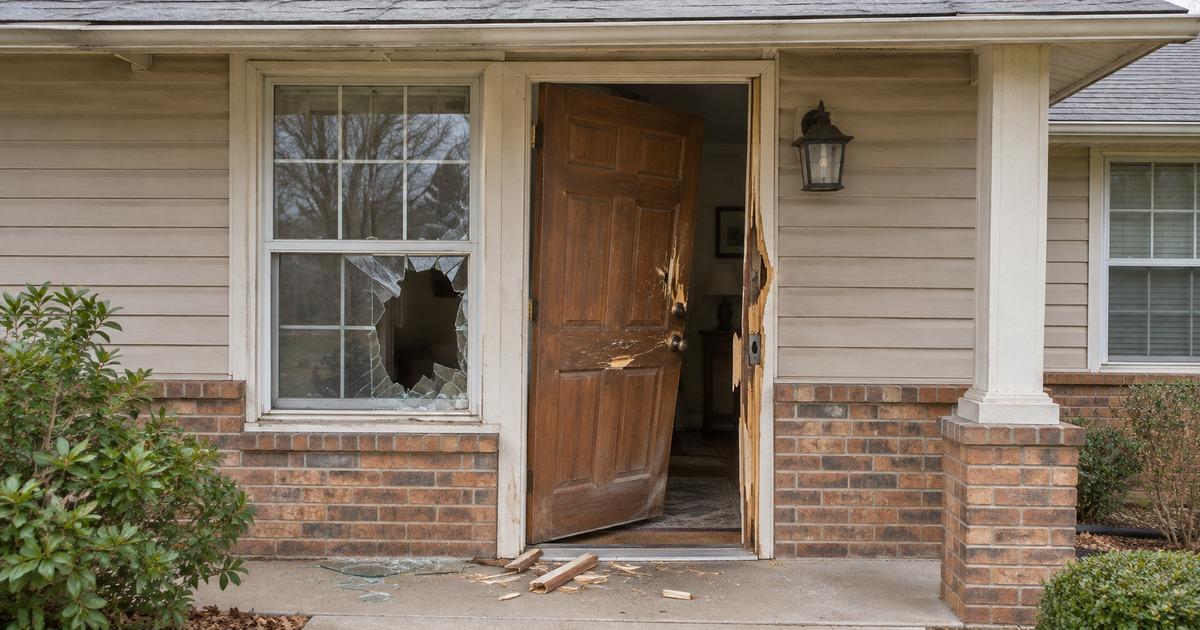
When a SWAT team tears open a wall to end a standoff, or officers break doors and windows executing a search warrant, the damage is real and the repair bill lands on whoever owns the property — often someone who was never accused of anything. The honest answer to "who pays?" in Oklahoma is: no one, automatically. There is no state fund that reimburses raid damage, and the Oklahoma Supreme Court has held that damage from executing a valid warrant is not a constitutional taking. What an innocent owner has instead is a set of narrower paths — a Governmental Tort Claims Act claim with a strict one-year notice deadline, a federal civil rights claim if the destruction went beyond what the operation reasonably required or the entry itself was unlawful, and the owner's own insurance. Which paths are open depends heavily on the facts, and the first deadline arrives quickly. This article maps the routes, the traps, and the national legal fight that may eventually change the answer.
This article is general legal information, not legal advice. Whether any claim is available for a specific incident depends on the facts — what the officers were doing, what authorized it, and what was destroyed — and on the current state of a genuinely contested area of law.
The Starting Point: There Is No Automatic Payment
People are often stunned to learn this. If a tornado damages your house, you call your insurer. If a drunk driver hits your fence, you pursue the driver. But when the government itself does the damage — to catch someone else — most courts have said the constitution does not require compensation merely because the damage happened, and Oklahoma has no statute that writes the check on its own. Some cities have an administrative claims process or offer limited help; others deny the claim outright. That denial is not the end of the road, but the routes that remain each have conditions attached, and the facts of the raid determine which ones fit.
It helps to separate three different questions that get blurred together: whether the entry and the operation were lawful, whether the destruction was reasonable in scope even if the entry was lawful, and whether the law requires payment for damage from a lawful, reasonable operation. Oklahoma law currently answers the third question mostly against the property owner — which makes the first two questions, where real claims live, matter all the more.
Oklahoma's Takings Clause and the Sullivant Decision
Article 2, Section 24 of the Oklahoma Constitution says private property "shall not be taken or damaged for public use without just compensation." Read literally, that sounds like it covers a wrecked door or a gas-filled living room: the property was damaged, and catching a fugitive is a public purpose. Oklahoma's inverse condemnation cases let owners pursue the government directly when it takes or damages property for public use — in Snow v. Town of Calumet, 2022 OK 63, for example, the Oklahoma Supreme Court held that landowners had standing to pursue an inverse condemnation claim over sewer lines left on their land and sent the case back for a jury trial.
But the court confronted police damage specifically in Sullivant v. Oklahoma City, 1997 OK 68, 940 P.2d 220, and drew a hard line. A landlord sued Oklahoma City and The Village after officers executing a valid drug search warrant damaged an outer door and two interior doors of his rental unit. On the constitutional theory, the landlord lost: the court held that damage caused by police executing a valid search warrant is not a compensable taking under Section 24, reasoning that the clause is about condemnation — property actually taken or damaged for public use — and that damage done in the exercise of the police power to protect public safety falls outside it. The court expressly declined to follow decisions from states that had allowed recovery.
Sullivant was not a total loss for the property owner, though, and the part he won is the part most people miss. The court reversed summary judgment on his Governmental Tort Claims Act theory because there was a disputed fact about whether officers complied with Oklahoma's knock-and-announce statute, 22 O.S. § 1228, before forcing entry. If the entry did not follow the law that authorized it, the cities could not hide behind the GTCA exemptions for executing court orders and lawfully authorized entries. In other words: in Oklahoma, the lawfulness of how the police got in can decide whether the government must answer for the damage at all.
The Fourth Amendment Line: Excessive or Unnecessary Destruction
Federal law supplies the second route. In United States v. Ramirez, 523 U.S. 65 (1998) — a unanimous decision reversing the Ninth Circuit in a criminal suppression case — the U.S. Supreme Court wrote that "excessive or unnecessary destruction of property in the course of a search may violate the Fourth Amendment," even though the entry itself was lawful in that case and the Court found no violation on those facts. That sentence is the anchor for civil claims: a search or seizure must be reasonable in its execution, not just its authorization.
What that means in practice: officers executing a warrant may force entry when the statute's conditions are met, and some damage is an expected cost of a lawful search. But destruction untethered from any legitimate need — wrecking rooms the warrant gave no reason to search that way, continuing demolition after the scene was secured, gratuitous damage to property of people not suspected of anything — can cross into a Fourth Amendment violation enforceable through a federal civil rights lawsuit under Section 1983. These cases are fact-intensive and run into the defenses that dominate police litigation: individual officers assert qualified immunity, and a city is liable only under the demanding municipal liability standard. If the entry itself was unlawful — a warrant obtained on false statements, or a raid at the wrong address — the damage claim travels with the unlawful-entry claim, which is usually the stronger vehicle.
The Tort Claims Act Route — and Its Traps
For damage by city, county, or state officers, the Oklahoma Governmental Tort Claims Act is the exclusive way to sue the government entity itself in tort, and it works nothing like an ordinary lawsuit. Our GTCA guide covers the framework in depth; three features matter most here.
First, the deadline. Under 51 O.S. § 156(B), a claim is "forever barred" unless written notice is presented to the government within one year after the loss occurs — and a lawsuit cannot be filed until the notice-and-denial process runs. Miss the notice, lose the claim. Our tort claim notice resource explains what the notice must contain.
Second, the exemptions. 51 O.S. § 155 lists dozens of categories where the government keeps its immunity, and several sit directly on top of raid-damage claims: enforcement of or failure to enforce a law, execution of lawful court orders, lawfully authorized entries, and the "method of providing police, law enforcement or fire protection." Sullivant shows how the exemptions work in practice: the cities could not rely on them at summary judgment because there was a disputed question whether officers had complied with the knock-and-announce statute, and the court did not decide what happens once an entry is shown to be lawful. Whether a particular raid fits an exemption is usually the whole case.
Third, the caps. The GTCA separately limits what a claimant can recover from the government entity for property loss arising from a single occurrence, 51 O.S. § 154 — and that limit is far below what it costs to repair a seriously damaged home. A family facing six figures of repair should not expect to recover it all from the entity under the GTCA, which is one more reason the federal claims and insurance coverage matter.
The National Fight Over Raid Damage
Oklahoma's rule is not an outlier, but it is under live attack nationally, and anyone with a serious loss should understand where the law is moving.
In Lech v. Jackson, police in Greenwood Village, Colorado destroyed much of a family's house during a 19-hour standoff with an armed fugitive who had fled inside. The family sued under the federal Takings Clause and Colorado's constitution. The Tenth Circuit — the federal appeals court whose decisions govern Oklahoma federal courts — affirmed summary judgment for the government in 2019, holding that actions under the police power are not takings. The decision is unpublished, so it is persuasive rather than binding precedent, but it signals how raid-damage takings claims have fared in this circuit. The U.S. Supreme Court declined to review it.
Texas homeowner Vicki Baker pushed the same question further. After McKinney police used explosives, tear gas, and an armored vehicle to end a standoff in her house, a jury awarded her roughly $60,000 — but the Fifth Circuit reversed in 2023, holding that the federal Takings Clause does not require compensation where destroying the property was objectively necessary to prevent imminent harm. When the Supreme Court declined to take her case in November 2024, Justice Sotomayor, joined by Justice Gorsuch, issued a statement calling the question serious and unresolved and inviting further development in the lower courts. The coda is instructive: back on remand, Baker re-elected her remedy under the Texas Constitution's takings clause — which Texas courts read more broadly than the federal one — and in 2026 the Fifth Circuit, in an unpublished decision, let that state-law judgment stand.
That is exactly the kind of argument Oklahoma's "taken or damaged" language invites, and Sullivant is the Oklahoma precedent standing in its way. A future Oklahoma case could ask the state's highest court to revisit that 1997 decision in light of the national debate. Until that happens, an Oklahoma owner's realistic paths remain the GTCA, the Fourth Amendment, and insurance — pursued on time.
What to Do in the First Weeks
Document everything before repairs begin: photographs and video of every damaged room and item, the warrant or incident number, the names of the agencies involved, and receipts for emergency board-up or temporary housing. Ask the police department and the city clerk, in writing, for the incident report and any damage-claim process the city offers — some municipalities pay small claims administratively. Notify your property insurer promptly and get its coverage position in writing; policies treat government action differently, and the answer depends on the actual policy language. And talk to a lawyer early, because the GTCA notice must be presented within one year of the loss, and preparing it properly — correct entity, correct contents, correct amount — determines whether the courthouse door stays open. If the entry itself may have been unlawful, the federal claims need their own evidence workup, including body camera footage that may be subject to short retention schedules.
Frequently Asked Questions
What if the police raided the wrong house entirely?
That is a different and often stronger case, though a reasonable mistake about the address does not by itself make the entry unconstitutional. Damage from executing a valid warrant at the right address runs into the barriers described above, but a raid at the wrong address raises Fourth Amendment claims about the entry itself — and the property damage becomes part of the harm from the unlawful search. Our guide to wrong-house raids in Oklahoma covers how those claims work, including the mistakes that defeat qualified immunity.
Does homeowner's insurance cover damage caused by police?
It depends entirely on the policy. Some property policies respond to this kind of loss and some exclude or limit damage arising from governmental action; the deductible and the cause-of-loss framing can also matter. Tender the claim promptly, get any denial in writing, and have a lawyer read the actual policy language rather than accepting a phone summary. Insurance recovery and legal claims against the government are not mutually exclusive, and an insurer that pays may pursue its own subrogation rights.
I am a landlord and the police were after my tenant. Can I recover for the damage?
You can pursue the same routes an owner-occupant can — the Sullivant plaintiff was a landlord whose tenants' apartment was the target. The GTCA claim turns on whether an exemption applies, which in Sullivant came down to whether officers followed the knock-and-announce statute before forcing entry. Depending on your lease, you may also have remedies against the tenant whose conduct brought the raid, and your landlord policy may respond. What you do not have is an automatic right to payment from the city.
What deadlines apply to these claims?
The first statutory deadline is usually the GTCA notice: written notice presented within one year after the loss, or the claim against the government entity is forever barred, with a lawsuit permitted only after the statutory notice process runs. Federal civil rights claims run on a different clock borrowed from state law — our guide to Section 1983 limitations explains the timing — and insurance policies impose their own prompt-notice conditions. Track the GTCA notice date, any federal filing deadline, and the policy's notice requirements separately; meeting one does not satisfy the others.
Deadlines Decide These Cases
Raid-damage law is unforgiving: the constitutional route is largely closed in Oklahoma for now, the statutory route is lost if notice is not presented within one year after the loss, and the federal route has its own filing deadline and depends on evidence — scene photos, body camera footage, dispatch records — that disappears quickly. Addison Law Firm's civil rights practice investigates how the entry was authorized, how the operation was carried out, and which doors the law leaves open. Contact us for a free, confidential consultation. This article is general information, not legal advice, and does not create an attorney-client relationship.
Police Damage Your Home or Business?
The tort claim notice deadline is one year, and the evidence that proves how the raid was conducted disappears faster. Contact Addison Law Firm to map your options.
Talk to a Civil Rights Lawyer