
Key Takeaways
- The Tow and the Search Need Separate Justification: South Dakota v. Opperman, 428 U.S. 364 (1976), permits a standardized inventory of a lawfully impounded vehicle for caretaking purposes. An arrest does not automatically justify towing every car or searching everything inside.
- Standard Procedures Limit the Search: Colorado v. Bertine, 479 U.S. 367 (1987), and Florida v. Wells, 495 U.S. 1 (1990), require standardized criteria or an established routine, including for opening containers. Request the written policy, but do not assume that the absence of a written document alone establishes a constitutional violation.
- Location and Caretaking Purpose Matter: United States v. Sanders, 796 F.3d 1241 (10th Cir. 2015), requires standardized policy and a reasonable, non-pretextual caretaking rationale for a private-property impoundment that does not address a traffic obstruction or imminent safety threat. Its five-factor test does not govern every tow. In United States v. Ulibarri (2025), the court upheld a public-street impoundment despite mixed investigative and caretaking motives.
- Oklahoma Cases Show Why Alternatives Matter: In United States v. Woodard, 5 F.4th 1148 (10th Cir. 2021), a Tulsa parking-lot impoundment failed both parts of the test. In United States v. Ramos, 88 F.4th 862 (10th Cir. 2023), the court rejected another Oklahoma impoundment as unreasonable without needing to decide pretext or policy compliance. Neither establishes an unlimited right to have police wait for another driver.
- Suppression Is Not a Damages Award: Excluding evidence in a criminal case and recovering compensation in a civil case require different showings. Get advice about the civil filing deadline promptly; a pending criminal case is not a reason to assume that clock has stopped.
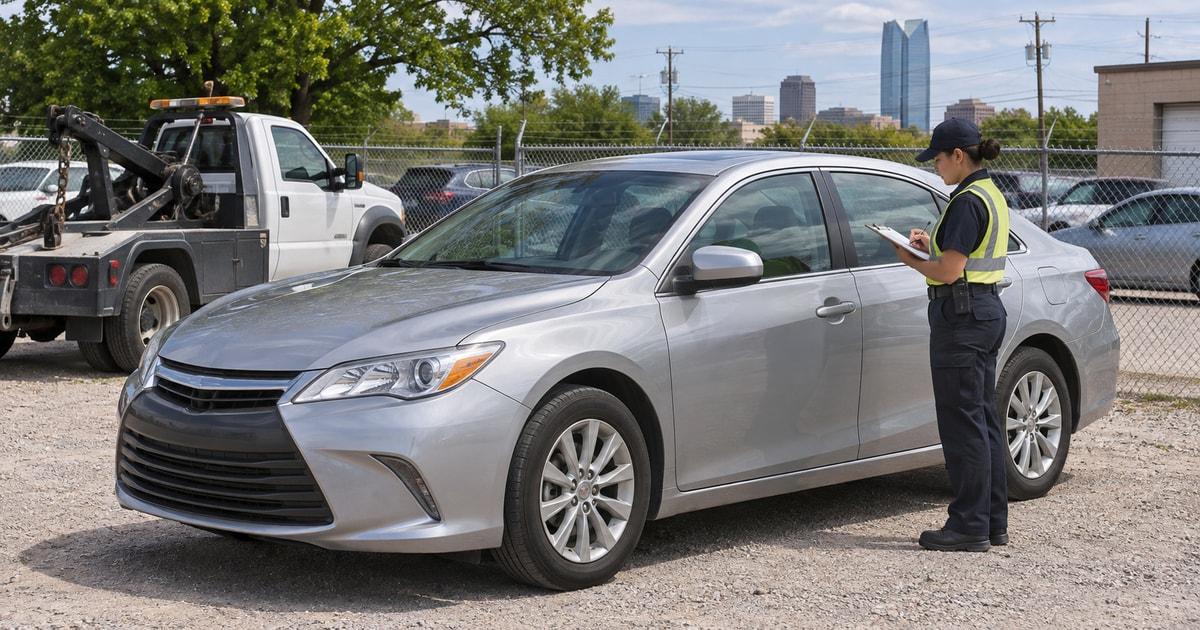
Police may inventory a lawfully impounded car without a warrant, but towing it does not by itself authorize the search. The tow must have a lawful basis, and the inventory must follow standardized criteria or an established routine serving a genuine caretaking purpose. Oklahoma parking-lot cases show why those are separate questions. Where the car was parked, whether it posed a hazard, what alternatives existed, and what officers actually did can change the answer.
This article is general legal information, not legal advice. It addresses police impoundments and inventory searches, not every other warrant exception or every private-property tow.
Why Police Are Allowed to Inventory a Car at All
In South Dakota v. Opperman, 428 U.S. 364 (1976), police towed a car after repeated parking violations. Following standard procedures, an officer inventoried it and found marijuana in the unlocked glove compartment. The trial court denied suppression and the defendant was convicted. The South Dakota Supreme Court reversed, but the U.S. Supreme Court reversed that judgment and remanded: this routine inventory was reasonable under the Fourth Amendment. The government prevailed on the federal search question.
The Court identified three caretaking interests: protecting the owner's property, protecting police against claims over missing property, and protecting against potential danger. Finding evidence is not itself the justification for an inventory. But discovering contraband during a lawful inventory does not automatically invalidate the search.
Other legal grounds, such as a warrant, consent, or another applicable warrant exception, require their own analysis. An invalid inventory theory does not establish that no other ground could support the search.
What Standard Procedures Must Control
A decade later, Colorado v. Bertine, 479 U.S. 367 (1987), upheld an inventory that included opening a backpack and containers after a drunk-driving arrest. The Supreme Court reversed the state court's suppression ruling. Standardized procedures required that inventory, and the record did not show bad faith or a sole investigative purpose. The Court permitted discretion guided by standard criteria and caretaking concerns; it did not require the least intrusive conceivable alternative.
In Florida v. Wells, 495 U.S. 1 (1990), the Florida Highway Patrol had no policy governing closed containers. A locked suitcase was forced open during the inventory. The Supreme Court affirmed suppression, explaining that standardized criteria or an established routine must regulate container searches. It warned that an inventory "must not be a ruse for a general rummaging in order to discover incriminating evidence." The Court did not require an all-containers-or-no-containers rule; controlled judgment can be permissible.
Request the written impoundment and inventory policies in force on the date of the encounter. Also ask whether an established routine existed and how officers followed it. What governed the decision to open a locked box or search the trunk? A departure from policy can be important evidence, but not every paperwork error automatically makes a search unconstitutional. The constitutional inquiry concerns the justification, scope, procedures, and purpose of the search.
In United States v. Ulibarri (10th Cir. 2025), discussed below, the Tenth Circuit also upheld an inventory that largely followed department policy despite omissions in the inventory record. Imperfect documentation and an inventory used solely as an investigative ruse are not the same thing.
Parking Lots Are Different: The Tenth Circuit's Rule
An impoundment is a seizure and needs its own justification. A vehicle blocking traffic or creating a safety hazard presents a different case from a car lawfully parked in a private lot. 47 O.S. § 955 authorizes removal from public roads and private parking lots accessible to the public on specified grounds. These include an arrest for an offense requiring the officer to take the person before a magistrate, certain licensing violations, and probable cause that the vehicle is uninsured. It does not make every arrest an automatic tow order. Nor does state-law authorization settle whether a particular seizure was reasonable under the Fourth Amendment.
In United States v. Sanders, 796 F.3d 1241 (10th Cir. 2015), officers arrested a woman on a warrant as she left a Goodwill store in Colorado and impounded her car from the store's lot, citing worries that it might be broken into. The government appealed after the district court suppressed the drugs found in the resulting inventory. The Tenth Circuit affirmed the suppression. Impounding a vehicle from private property that is neither obstructing traffic nor creating an imminent threat to public safety, the court held, is constitutional only if it is justified by both a standardized policy and a reasonable, non-pretextual community-caretaking rationale. The court listed non-exclusive factors for sniffing out pretext: whether the car is on public or private property; whether the property owner was consulted; whether an alternative to impoundment existed, especially another capable driver; whether the vehicle was implicated in a crime; and whether the owner or driver consented to the impoundment.
That is binding circuit law for federal courts in Oklahoma. The factors guide the overall inquiry; they are not a checklist under which one missing step always decides the case.
A Tulsa Arrest, a Refused Phone Call, and Suppressed Evidence
In United States v. Woodard, 5 F.4th 1148 (10th Cir. 2021), Tulsa police arrested a driver on an outstanding misdemeanor warrant after he pulled into a convenience-store parking lot. He asked whether someone could retrieve the car he was driving; an officer refused. The subsequent inventory found drugs, a scale, and a gun. The district court denied suppression, and the defendant was convicted after trial.
The Tenth Circuit reversed in a divided decision. The majority found the impoundment outside the department's policy and all five Sanders factors pointing toward pretext. Recorded statements about finding something to charge the driver with reinforced that conclusion. It reversed the suppression ruling and the convictions dependent on the search. The dissent would have upheld the impoundment; this was a criminal suppression decision, not a civil damages award.
Woodard expressly left open whether police have a duty to let an arrestee arrange another driver. It held that an available alternative mattered to the circumstances before it. Do not read the refused request as a universal rule that police must make a call or wait indefinitely. The majority also did not resolve every question about mixed investigative and caretaking motives.
Later Oklahoma Authority: Reasonableness Matters Even Without Pretext
In United States v. Ramos, 88 F.4th 862 (10th Cir. 2023), Frederick officers impounded a truck parked at a convenience store after an arrest unrelated to the truck. The driver's mother lived nearby and could retrieve it, but officers did not pursue that alternative or consult store personnel about leaving it there. The district court denied suppression, and the defendant entered a conditional guilty plea.
The Tenth Circuit reversed and remanded for suppression and further proceedings. It did not need to decide whether the officers acted with an investigative pretext or complied with department policy: the impoundment was unreasonable on the facts. A caretaking justification must be reasonable as well as non-pretextual. That distinction matters when an officer acted in good faith but the tow still lacked a sufficient basis.
A Public-Street Tow and Mixed Motives: Ulibarri
In United States v. Ulibarri, No. 24-2080 (10th Cir. Aug. 15, 2025), the court affirmed denial of suppression after officers arrested a driver on warrants and impounded a car straddling two metered spaces on a public street. The court accepted for purposes of the appeal that investigating other crimes partly motivated the officers, but found a valid caretaking reason to remove the illegally parked car. A family member did not arrive until the tow truck did; another driver was not readily available when the impoundment decision was made. The government prevailed.
The published decision permits mixed motives when the impoundment has a valid caretaking basis. It also explains that the five Sanders factors do not govern impoundments addressing public safety or impediments to traffic. Those categories do not depend solely on whether traffic had already stopped moving. Neither an investigative interest nor a department policy alone answers the constitutional question; the reason for taking that particular vehicle still matters.
Criminal Suppression and Civil Claims Are Different Tracks
If charges followed the search, discuss suppression promptly with your criminal defense lawyer. Sanders, Woodard, and Ramos concern criminal evidence. Suppression has its own procedural rules and exceptions; an unlawful search does not automatically end the prosecution.
A constitutional violation may also support a civil claim under 42 U.S.C. § 1983, whether or not charges were filed. A suppression victory alone does not establish entitlement to compensation. Qualified immunity can protect individual officers, and a city is not automatically liable merely because it employed them; municipal liability generally requires a causative policy or custom. A conviction can restrict a damages claim when success would necessarily imply that a still-valid conviction is invalid; not every search claim does so. Coordinate civil and criminal advice rather than assuming either case resolves the other. Our guide to suing police in Oklahoma explains the broader limits.
The same encounter often raises neighboring issues, each with its own analysis: a stop prolonged for a drug dog, a search of your phone, or — if the state tries to keep the car itself — civil asset forfeiture, which is a separate legal process with its own deadlines and is not the same thing as an ordinary impound.
Getting Your Car Back
Start with Service Oklahoma's impounded-vehicles page and vehicle identification number (VIN) lookup. Confirm which agency ordered the tow, where the car is held, and whether law enforcement placed a hold on it. The guidance calls for proof of ownership, photo identification, and insurance for that vehicle or a valid nonuse affidavit. A vehicle released on a nonuse affidavit cannot be driven from the lot. Someone collecting it for the owner needs a notarized authorization identifying the year, make, model, and VIN, along with the required supporting documents. Ask for an itemized towing and storage bill and confirm the release requirements before traveling to the lot.
The Oklahoma Corporation Commission establishes and enforces maximum nonconsensual towing rates and handles rate complaints. Its page directs other wrecker-service questions to the Department of Public Safety. A rate complaint, a law-enforcement hold, and a constitutional challenge to the tow are different issues; resolving one does not necessarily resolve the others.
Act promptly because storage charges can accrue while the dispute continues. Do not ignore a lien or sale notice; have its particular deadlines reviewed. Paying to recover your car and challenging an unlawful tow are separate decisions. If a law-enforcement hold prevents release, ask the ordering agency what process applies and get legal advice about contesting it.
What to Do if This Happened to You
Write down the details while they are fresh: where exactly the car was parked, whether it was blocking anything, what you asked the officers (especially whether you offered an alternative, like a licensed passenger or a family member coming to get it), and what they said. Request the tow record and ask which agency ordered the impound. Photograph the car and its contents when you recover it, and keep the inventory sheet, the citation or arrest paperwork, and every receipt from the wrecker yard. If a criminal case is pending, make sure your defense lawyer knows the full impoundment timeline. Ask about the civil deadline early rather than assuming the criminal case pauses it.
Do Not Wait for the Criminal Case to End Before Checking Deadlines
Oklahoma federal civil-rights claims generally borrow a two-year limitations period, but federal law determines when a particular claim accrues. A search or seizure claim generally begins when the person knows or should know of the alleged violation, often on the day of the encounter, not when the criminal case ends. Conviction-related restrictions and possible stays require a claim-specific analysis; do not assume that charges, an appeal, or a complaint to the agency stop the clock. Our Section 1983 limitations guide explains that distinction.
A separate state-law claim against a government entity can require written notice within one year under 51 O.S. § 156, followed by the denial and suit rules in § 157. Ordinarily, unresolved notice is deemed denied after 90 days, and suit must begin within 180 days after denial. These government tort notice requirements do not apply to a Section 1983 claim. Get each claim's recipient, deadline, and immunity checked rather than sending a general complaint and assuming it preserves everything.
Addison Law Firm's unlawful-search practice can review the encounter and available records.
Frequently Asked Questions
Can police search my car without a warrant just because it was towed?
Not simply because it was towed. Opperman permits a caretaking inventory of a lawfully impounded vehicle under standard procedures. Wells requires standardized criteria or an established routine regulating container searches. A written policy is important evidence, but writing is not itself a universal constitutional requirement. An imperfect inventory or an officer's hope of finding evidence does not alone invalidate an otherwise lawful inventory. The tow, the scope of the search, and any separate warrant exception must each be evaluated.
Can police impound my car from a parking lot after arresting me?
Not automatically. Oklahoma's 47 O.S. § 955 authorizes towing from lots accessible to the public on specified grounds, including certain arrests. Constitutional reasonableness remains a separate question. For a car on private property that neither obstructs traffic nor creates an imminent safety threat, Sanders requires standardized policy and a reasonable, non-pretextual caretaking rationale. Its five factors do not govern every street or safety-related impoundment. Woodard and Ramos rejected Oklahoma impoundments, but those cases do not require officers to wait indefinitely for another driver.
How do I get my car back from impound in Oklahoma?
Use Service Oklahoma's vehicle lookup and confirm any law-enforcement hold with the ordering agency. Its guidance calls for ownership documents, photo identification, and insurance for the vehicle or a valid nonuse affidavit; the affidavit does not permit driving the car away. An authorized person needs a notarized letter identifying the year, make, model, and VIN, plus the required supporting documents. Ask for an itemized bill. The Oklahoma Corporation Commission handles nonconsensual rate complaints, while other wrecker issues may belong with the Department of Public Safety.
Can I sue if an unlawful impound search violated my rights?
Possibly, but unlawful conduct and a recoverable damages claim are not the same finding. A Section 1983 claim requires a constitutional violation and must overcome applicable defenses, including qualified immunity; city liability requires its own basis. Oklahoma generally supplies a two-year limitations period. Federal accrual often starts the clock at the search or seizure, rather than the end of a criminal case. Separate state-law government claims can require notice within one year; that notice requirement does not apply to Section 1983. Get advice promptly even if charges are pending.
The Tow Does Not Answer the Question
An impound receipt does not answer whether the tow or search was lawful. That requires examining the location, reason for taking the car, applicable procedures, available alternatives, and search itself. Addison Law Firm's unlawful-search practice addresses these claims without assuming every tow was valid or every policy departure supports damages.
Car Towed and Searched Without a Warrant?
The reason for the tow, the agency's procedures, and the available records matter. Learn more about Addison Law Firm's unlawful-search practice, or contact the firm to discuss the encounter.
Contact Addison Law FirmThis article is general information, not legal advice, and does not create an attorney-client relationship.