
Key Takeaways
- A restraint chair is an emergency device, not a cell: Courts in the federal circuit covering Oklahoma have recognized that strapping a detainee into a restraint chair can be lawful when it serves a legitimate purpose — stopping active violence or self-harm — but using the chair without such a purpose can amount to unconstitutional punishment. In Blackmon v. Sutton, 734 F.3d 1237 (10th Cir. 2013), the Tenth Circuit refused to give qualified immunity to staff accused of using a restraint chair on a compliant juvenile detainee with no legitimate justification.
- Oklahoma has lived this problem: Garfield County paid a reported $12.5 million in 2019 to settle a federal lawsuit over the death of Anthony Huff, who — according to the lawsuit and published reporting — was left in a restraint chair at the county jail for roughly two days in June 2016 without his medications or regular hydration. The former jail administrator pleaded guilty to second-degree manslaughter.
- Two different legal standards apply: Claims that the chair itself was excessive force are judged by an objective standard under Kingsley v. Hendrickson, 576 U.S. 389 (2015). Claims about the medical neglect that often accompanies prolonged restraint face the tougher deliberate-indifference standard the Tenth Circuit reaffirmed in Strain v. Regalado, 977 F.3d 984 (10th Cir. 2020) — a demanding test that makes early legal help critical.
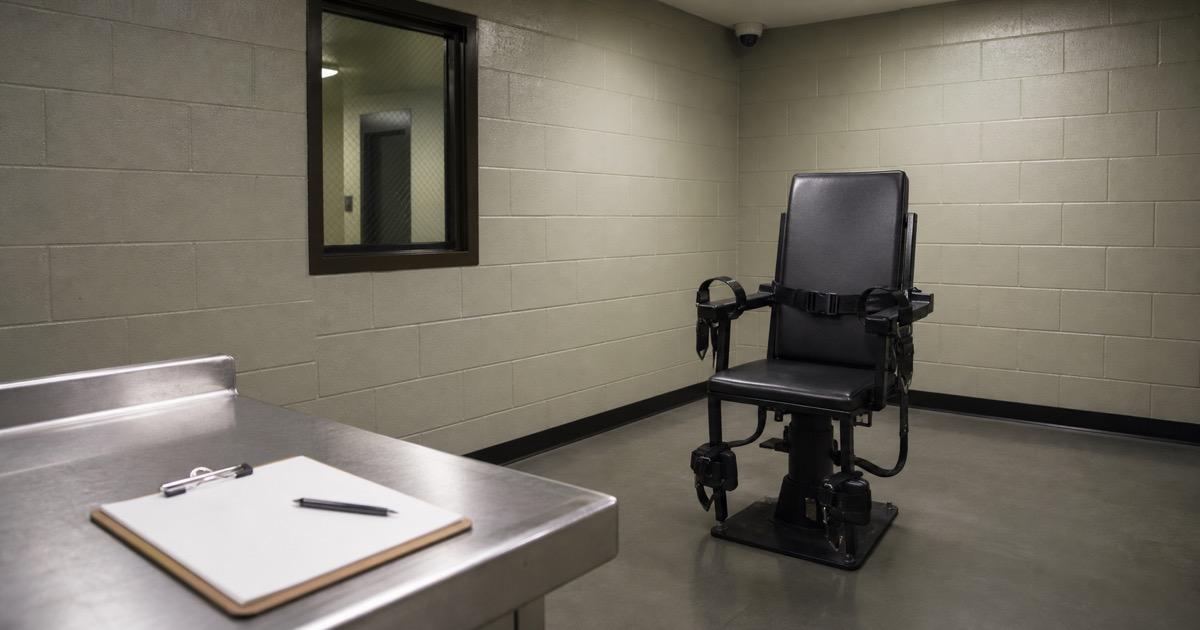
A restraint chair looks like something between an office chair and a medical gurney: straps for the wrists, waist, chest, and ankles, designed to immobilize a person completely. Oklahoma's jail standards expressly list restraint chairs as instruments of restraint and limit how they may be used. Used the way manufacturers and corrections standards intend — briefly, on an actively violent or self-harming detainee, with required supervision — it is a safety tool. Used as a substitute for medical care, a punishment for annoying the staff, or a place to park a detainee no one wants to deal with, it becomes something else entirely. Oklahoma knows the difference at a terrible cost: a reported $12.5 million Garfield County jail-death settlement involved a man who died after being strapped in a restraint chair for roughly two days. If someone you love was hurt or died in a restraint chair in an Oklahoma jail, this guide explains the legal framework that applies and the steps that protect a potential claim.
This is general information, not legal advice, and no article can substitute for a lawyer's review of the records in a specific case. Our jail death and injury team handles these cases across Oklahoma.
What restraint chairs are for — and what they are not for
Corrections practice treats the restraint chair as a temporary emergency measure: a way to immobilize a detainee who is actively assaulting staff, destroying property, or harming himself, until the emergency passes or medical or mental health staff can intervene. Oklahoma's city and county detention standards say restraint chairs and other instruments of restraint may not be applied longer than policy, procedure, and manufacturer specifications allow; restrained inmates may not be left without required supervision; and restraints are limited to transfer security, medical or mental-health reasons, or preventing self-injury, injury to others, or property damage. Facility policies and manufacturer rules often add the practical details — circulation checks, hydration, bathroom access, and range-of-motion relief — because total immobilization is dangerous for any sustained period, especially for people who are intoxicated, in withdrawal, mentally ill, or medically fragile.
That risk matters because people who are intoxicated, in withdrawal, mentally ill, or medically fragile are exactly the people for whom immobilization can mask a medical emergency. A detainee hallucinating from alcohol withdrawal is not misbehaving — he is having a medical emergency. Strapping him to a chair does not treat the emergency; it hides it. Several of the recurring problems we see in Oklahoma custody cases — untreated withdrawal, medical neglect, and understaffed jails skipping required checks — converge on the restraint chair.
The Garfield County case: what happened to Anthony Huff
The facts that follow come from the family's federal lawsuit and published news reporting, including Fox News and the Enid News & Eagle.
Anthony Huff was arrested for public intoxication on June 4, 2016, and taken to the Garfield County Jail in Enid. According to the reporting, after he began hallucinating — kicking doors and hitting his head, by a jail administrator's account — staff placed him in a restraint chair on June 6 without a medical recommendation. The lawsuit alleged that jail employees did not give him his blood pressure medication, did not check his blood pressure regularly, and did not provide hydration every two hours. He was found unresponsive in the chair on June 8 and declared dead that day.
The aftermath ran on two tracks. On the criminal side, a state grand jury indicted the county's sheriff and several jail employees; the manslaughter charge against the sheriff was later dismissed, and the former jail administrator, Jennifer Niles, pleaded guilty to second-degree manslaughter. On the civil side, Garfield County agreed in October 2019 to pay $12.5 million to settle the family's 2017 federal civil rights lawsuit — a settlement the county's board called "reasonable under the circumstances."
Two details deserve emphasis. First, the medical examiner initially attributed the death to natural causes related to chronic alcoholism — a reminder that an autopsy label of "natural" does not end the inquiry when the surrounding custody conditions are what they were. Families should obtain the full autopsy report and have it reviewed, not just accept the one-line conclusion. Second, the case settled without any court ruling that anyone violated the Constitution; a settlement is a compromise, not an adjudication. But the size of the settlement reflects how juries can be expected to react to a person dying over two days in a chair in the middle of a staffed jail.
The constitutional framework: force, punishment, and medical care
Most people in Oklahoma county jails are pretrial detainees — they have not been convicted of anything. Their treatment is governed by the Fourteenth Amendment's Due Process Clause, and the core rule is that a pretrial detainee may not be punished at all. Restraint chair cases in the Tenth Circuit, the federal appeals court covering Oklahoma, tend to sort into three claims.
Excessive force and unconstitutional punishment
In Blackmon v. Sutton, 734 F.3d 1237 (10th Cir. 2013), staff at a Kansas juvenile detention center repeatedly strapped an eleven-year-old, 96-pound pretrial detainee into a restraint chair. The defendants sought qualified immunity, and the district court refused. On appeal, the Tenth Circuit affirmed the denial of qualified immunity on the restraint-chair claims (while granting immunity to one defendant on a separate failure-to-transfer claim). The court's published opinion recognized that restraining a detainee can be justified by legitimate needs like preventing self-harm — but evidence suggested the chair was used on a compliant child without any such purpose, and using it that way could amount to punishment forbidden by the Fourteenth Amendment. The detainee won the right to take his restraint-chair claims forward.
Two years later, the Supreme Court held in Kingsley v. Hendrickson, 576 U.S. 389 (2015) — a case brought by a Wisconsin pretrial detainee — that a pretrial detainee claiming excessive force need only show the force was objectively unreasonable; he does not have to prove the officers subjectively intended to harm him. For restraint chair cases, that objective lens asks practical questions: Was the person still a threat when he was strapped down? How long was he kept there? Were checks and breaks provided? Was the chair a response to an emergency, or a convenience?
Medical neglect while restrained
The second claim is usually the deadlier one: not the strapping itself, but what staff failed to do while the person was immobilized — withheld medication, skipped monitoring, unrecognized withdrawal or cardiac distress. Here families need honest advice, because the Tenth Circuit applies a harder test. In Strain v. Regalado, 977 F.3d 984 (10th Cir. 2020), a case about a Tulsa County jail detainee whose alcohol withdrawal was treated ineffectively, the Tenth Circuit held that even after Kingsley, a pretrial detainee's medical claim requires proof of deliberate indifference — including a subjective component: that the defendant actually knew of and disregarded a serious risk. The court affirmed dismissal of the plaintiff's federal claims, stressing that mere negligence or a disagreement over the course of treatment is not a constitutional violation. Strain is a defense-friendly decision, and it means a viable jail medical case must be built on evidence that staff knew — from the detainee's condition, records, or their own observations — and did nothing.
Prolonged restraint can supply exactly that evidence. A person strapped in a chair is, by definition, under the jail's total control. Policy-required check logs either exist and show what staff observed, or they do not exist — and both are powerful facts.
County liability and the private medical contractor
Individual guards are rarely the only proper defendants. If the jail had a practice of using the chair as punishment, inadequate training on restraint monitoring, or a custom of ignoring its own check requirements, the county itself can be liable under Monell municipal liability. And because many Oklahoma jails outsource medical care, a private medical contractor may also be part of the case. Corporate contractors have different defenses than individual officers, and the federal claim still has to be tied to a policy, custom, or deliberately indifferent care. Our jail medical neglect guide explains that medical-care track.
Why these cases are usually federal cases
Oklahoma's Governmental Tort Claims Act shields counties from most state-law negligence claims arising out of the operation of a jail: 51 O.S. § 155(25) exempts the "provision, equipping, operation or maintenance" of prisons and jails from the state's waiver of sovereign immunity, as we explain in our guide to jail injuries and state immunity. That is why serious Oklahoma restraint-chair cases are typically brought as federal civil rights claims under 42 U.S.C. § 1983, where the GTCA's exemptions do not apply. When the detainee died, the claim proceeds through the framework covered in our guide to § 1983 wrongful death claims in Oklahoma.
Deadlines differ by track. Section 1983 claims filed in Oklahoma generally borrow the state's two-year personal injury limitations period under 12 O.S. § 95, as covered in our guide to § 1983 limitations. Any parallel state-law claim under the GTCA requires written notice to the government within one year under 51 O.S. § 156 — one of several traps discussed in our GTCA guide.
The evidence: what to preserve, immediately
Restraint chair cases are document cases. The most important records include the restraint log or observation sheets (what checks jail policy required, and whether they happened), booking and medical intake records, medication administration records, jail surveillance video of the cell or booking area where the chair sat, incident reports, and the autopsy and investigative file when someone died. Video retention periods can be short, so a preservation demand should go out fast. Our guides to detention center records requests and autopsy reports walk through what is obtainable and how.
One practical note: in Oklahoma, deaths in custody trigger investigations that generate records beyond the jail's own file — including OSBI investigative materials and medical examiner records. Which of those a family can obtain, and when, varies; an attorney can usually get further through litigation discovery than a family can through records requests alone.
Frequently asked questions
Is it ever legal to put someone in a restraint chair?
Yes. Courts recognize legitimate uses — stopping a detainee from hurting himself or others is the classic example. The constitutional problems arise when the chair is used without a legitimate purpose, for longer than the emergency justifies, or as a substitute for the medical or mental health care the person actually needed.
The jail says my family member was combative. Does that end the case?
No. Combativeness may justify placing someone in the chair; it does not justify leaving him there for hours or days, skipping required checks, or withholding medication and water. In Blackmon, the Tenth Circuit focused on whether any legitimate purpose continued to support the restraint — not just whether one existed at the start. And "combative" behavior is often itself a symptom of the medical crisis — withdrawal, psychosis, hypoxia — that the jail was obligated to address.
The autopsy says my loved one died of natural causes. Is there still a case?
Possibly. The Garfield County case shows why: the initial autopsy attributed Anthony Huff's death to natural causes related to chronic alcoholism, and the county still paid a reported $12.5 million to resolve the family's lawsuit. What matters legally is whether objectively unreasonable force or deliberate indifference to a known serious condition contributed to the death — questions the one-line cause of death does not answer. Independent medical review of the full autopsy and jail records is often essential.
Who can bring the claim after a death in a restraint chair?
That depends on the interaction between federal civil rights law and Oklahoma's wrongful death statutes, which we cover in our guide to § 1983 wrongful death claims. Getting the right plaintiff — usually the personal representative of the estate — appointed early avoids procedural problems later.
If someone you love was injured or died after being placed in a restraint chair in an Oklahoma jail, the evidence that will answer your questions is sitting in the jail's files right now — and some of it is on a deletion schedule. Our civil rights team can help you preserve it and understand your options. The consultation is free and confidential.
A Restraint Chair Injury or Death Needs Fast Evidence Work
Video, restraint logs, medical records, and jail policies can disappear quickly. We can help preserve the proof and give your family a straight answer.
Talk to a Civil Rights Lawyer