
Key Takeaways
- The doctrine is a duty rule: An owner generally has no duty to warn an invitee about a danger that is open and obvious. Oklahoma has not replaced that rule with a broad distraction exception.
- Visibility is not the whole test: A visible object is not necessarily an obvious danger. Courts examine the condition and the surrounding circumstances.
- Narrow exceptions require narrow facts: In Wood, the owner created the ice, knew the worker was coming, and could foresee that she had to cross it. The court stressed those peculiar facts.
If you've been injured in a slip and fall accident in Oklahoma, you may have already encountered the property owner's favorite defense: "The hazard was open and obvious — you should have seen it."
This defense can end a case because it goes to whether the property owner owed a duty in the first place. But the analysis concerns the danger, not simply whether an object or condition could be seen. Oklahoma courts examine the surrounding facts before deciding that a danger was open and obvious as a matter of law.
Short answer: an open-and-obvious danger generally eliminates the owner's duty to warn or protect an invitee from that danger. Two narrow lines of cases still require careful review: disputes about whether the danger itself was apparent, and the peculiar owner-created, required-encounter facts recognized in Wood. Photographs, surveillance footage, measurements, and witness accounts often decide which rule applies.
What "Open and Obvious" Actually Means in Oklahoma Law
The open and obvious doctrine holds that property owners don't have to warn visitors about hazards that are readily apparent. The theory is that if a reasonable person would recognize the danger, no warning is needed.
In Wood v. Mercedes-Benz of Oklahoma City, 2014 OK 68, the Oklahoma Supreme Court held that summary judgment was improper where a dealership's sprinklers created ice, the dealership knew catering employees were coming, and the plaintiff had to cross the condition to perform her work. The court described those facts as peculiar and did not abolish the open-and-obvious defense.
Zagal v. Truckstops Corp. of America, 1997 OK 75, addresses a different question. The plaintiff said a box was partly concealed beneath shelving and protruded into an aisle. The court held that an item's observability, by itself, did not make the danger open and obvious as a matter of law. The factual dispute belonged with the factfinder.
These decisions do not create a general exception whenever a customer was distracted, an owner created a condition, or the condition had happened before. Those facts can bear on visibility, notice, or foreseeability, but the duty question still must be analyzed under the governing cases.
Facts That Require Separate Analysis
The following fact patterns should not be collapsed into a slogan:
A required encounter with an owner-created danger
Wood involved more than owner creation or general foreseeability. The sprinklers created the ice, the dealership knew catering employees were coming, and the worker had to cross the condition to do her job. A routine claim involving a visible condition is not automatically a Wood case.
A visible item whose danger is disputed
Zagal teaches that visibility alone is not the test. A box allegedly partly concealed under shelving and extending into an aisle presented a fact question about whether the danger was open and obvious.
A condition obscured by its surroundings
Lighting, color contrast, shelving, pedestrian traffic, and the approach to the condition can affect whether the danger would have been apparent to a person using ordinary care. The evidence must show the actual scene, not a cleaner photograph taken later.
Prior incidents or recurring conditions
Prior complaints and recurring conditions can matter to notice and breach if a duty exists. Knowledge or recurrence, standing alone, does not turn an open-and-obvious danger into a hidden one.
When Comparative Fault Enters the Analysis
If the facts support a duty and breach, responsibility for noticing or avoiding the condition may still affect fault allocation. Oklahoma's comparative negligence rules can reduce recovery and, depending on the allocation of fault, can bar it.
For example:
- Jury finds total damages: $100,000
- Jury assigns you 30% fault for not watching your step
- You recover: $70,000
The example concerns fault allocation only after duty, breach, causation, and damages remain in the case.
Questions the Evidence Must Answer
A useful open-and-obvious analysis asks whether:
- The condition was visible to someone exercising ordinary care
- The danger itself was apparent, rather than merely the object or condition
- The visitor had a practical way to avoid the condition
- The evidence fits the narrow facts of a recognized exception, rather than a general claim of distraction or foreseeability
These are not standalone elements of a claim or defense. They are the factual questions that help counsel evaluate duty, breach, causation, and comparative fault. A genuine dispute about those facts can make early dismissal inappropriate.
Building Your Case Despite "Open and Obvious" Claims
When clients come to us after being told their case is "open and obvious," we investigate:
- Surveillance footage showing the hazard's true visibility
- Lighting conditions at the time of the fall
- Color contrast between the hazard and surrounding surfaces
- How long the hazard existed before you encountered it
- Prior complaints or incidents at the same location
- Store policies for inspections and hazard remediation
The appearance of a condition can look different once the contemporaneous evidence is assembled. Spoliation of evidence — such as deleting surveillance footage after notice of a claim — can create legal consequences for the property owner. A focused preservation letter can identify the video, inspection logs, incident reports, and maintenance records that should not be lost.
Common Locations and Hazards
Common slip-and-fall fact patterns involve:
- Grocery store spills and produce sections
- Restaurant kitchens and dining areas
- Retail store merchandise and displays
- Parking lots with potholes or ice
- Office buildings with worn carpeting
- Apartment complexes with inadequate lighting
- Hotels with wet pool areas
The Insurance Company Strategy
Adjusters may raise "open and obvious" before the scene evidence has been collected. Their characterization is not a substitute for applying the Oklahoma cases to the actual condition.
What an adjuster calls "obvious" may look different when the contemporaneous evidence shows:
- Witnesses describe the hazard differently
- Video or photographs show the approach to the condition
- Lighting, contrast, shelving, or traffic affected what was apparent
- Prior records bear on notice or recurrence after a duty is established
Free Case Evaluation
If you've been injured in a slip and fall and told your case is hopeless because the hazard was "open and obvious," get a second opinion. We'll review the actual facts and give you an honest assessment of whether Oklahoma law supports a claim.
Many premises-liability claims require this kind of evidence-based review. The law is more nuanced than an early insurance denial may suggest.
Frequently Asked Questions
Does "open and obvious" mean the property owner isn't liable?
Generally, an owner has no duty to warn or protect an invitee from an open-and-obvious danger. But a dispute may remain about whether the danger itself was apparent. Wood also recognized a duty on its peculiar facts: the owner created the ice, knew the worker was coming, and could foresee that she had to cross it. If duty and breach remain, comparative fault is a separate question.
What if I slipped on a wet floor with a "Caution: Wet Floor" sign?
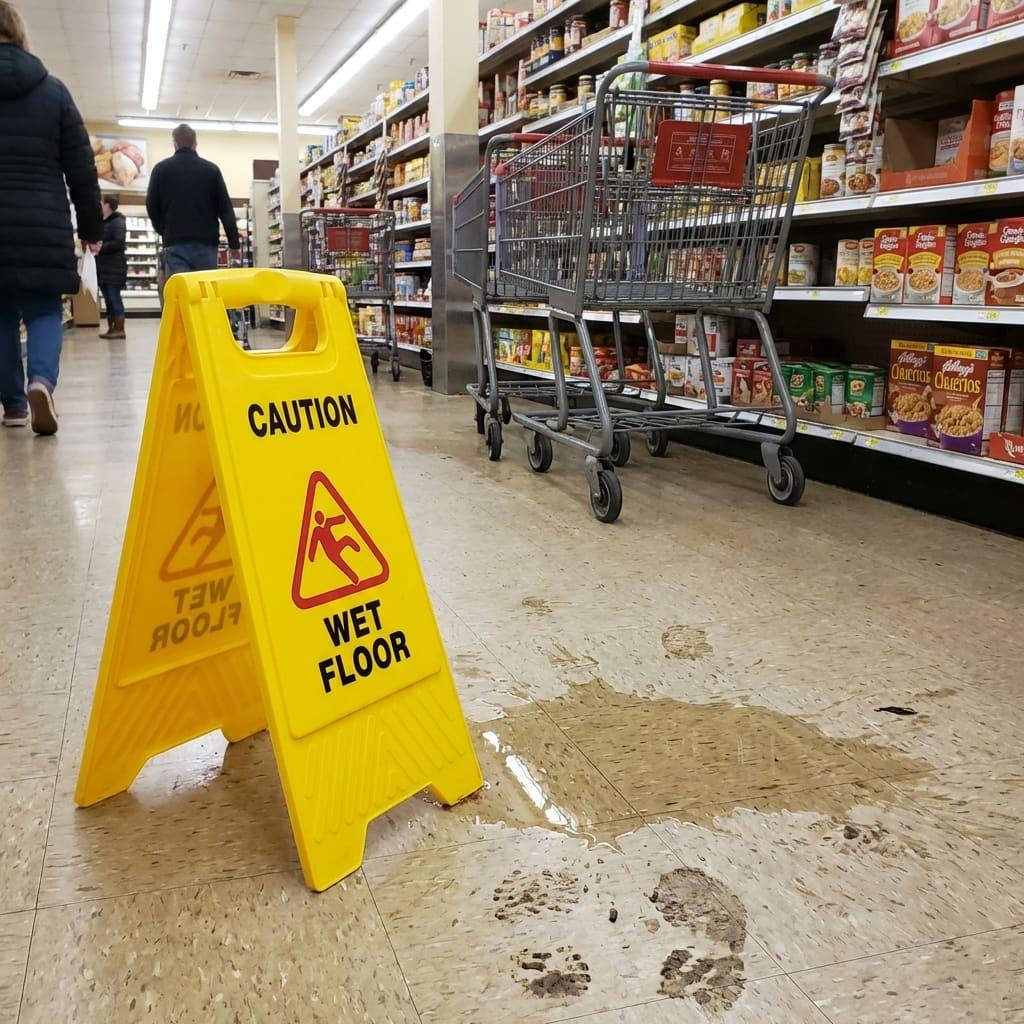
A warning sign is one fact in the duty analysis. Its placement, visibility, and wording can affect whether the danger was apparent. The remaining question is whether Oklahoma law imposed a duty on the owner under the full circumstances.
How long does a property owner have to fix a hazard before they're liable?
There is no fixed number of minutes. The analysis starts with whether the owner owed a duty under the circumstances. If a duty exists, the nature of the condition, how long it existed, traffic through the area, and reasonable inspection practices can bear on notice and breach.
What evidence should I gather after a slip and fall?
Photograph the hazard immediately, including the surrounding area, lighting conditions, and any warning signs (or lack thereof). Get the names and contact information of witnesses. Report the incident to management and ask for a copy of the incident report. Note what shoes you were wearing and any contributing conditions like wet weather.
Can I sue a property owner for falling on ice in a parking lot?
Yes, in some circumstances. Oklahoma courts treat naturally occurring ice and snow differently from hazards an owner creates or worsens. A stronger claim may exist when poor drainage, a downspout, sprinkler runoff, or a known recurring icy area creates an unnatural accumulation or a specific danger the owner should have addressed.
What is the statute of limitations for a slip and fall claim in Oklahoma?
Under 12 O.S. § 95, you generally have two years from the date of the fall to file a personal injury lawsuit. However, you should report the incident and consult an attorney as soon as possible because evidence can be lost or destroyed quickly, especially surveillance footage that may be overwritten on a short retention cycle.
Hurt in a Slip and Fall?
Property owners often claim the hazard was "open and obvious" to avoid responsibility. We know how to test that defense against the actual facts and Oklahoma law.
Get a Free Consultation →This article is for general information only and is not legal advice.