Key Takeaways
- Weather Doesn't Eliminate Liability: Drivers must adjust their behavior for conditions. Driving too fast for icy roads is negligence, even if the speed limit is higher.
- Other Parties May Be Responsible: Property owners, municipalities, trucking companies, and employers can all bear liability depending on the circumstances.
- Comparative Fault Applies: Oklahoma reduces your recovery if you're partly at fault—but you can still recover if you're 50% or less responsible.
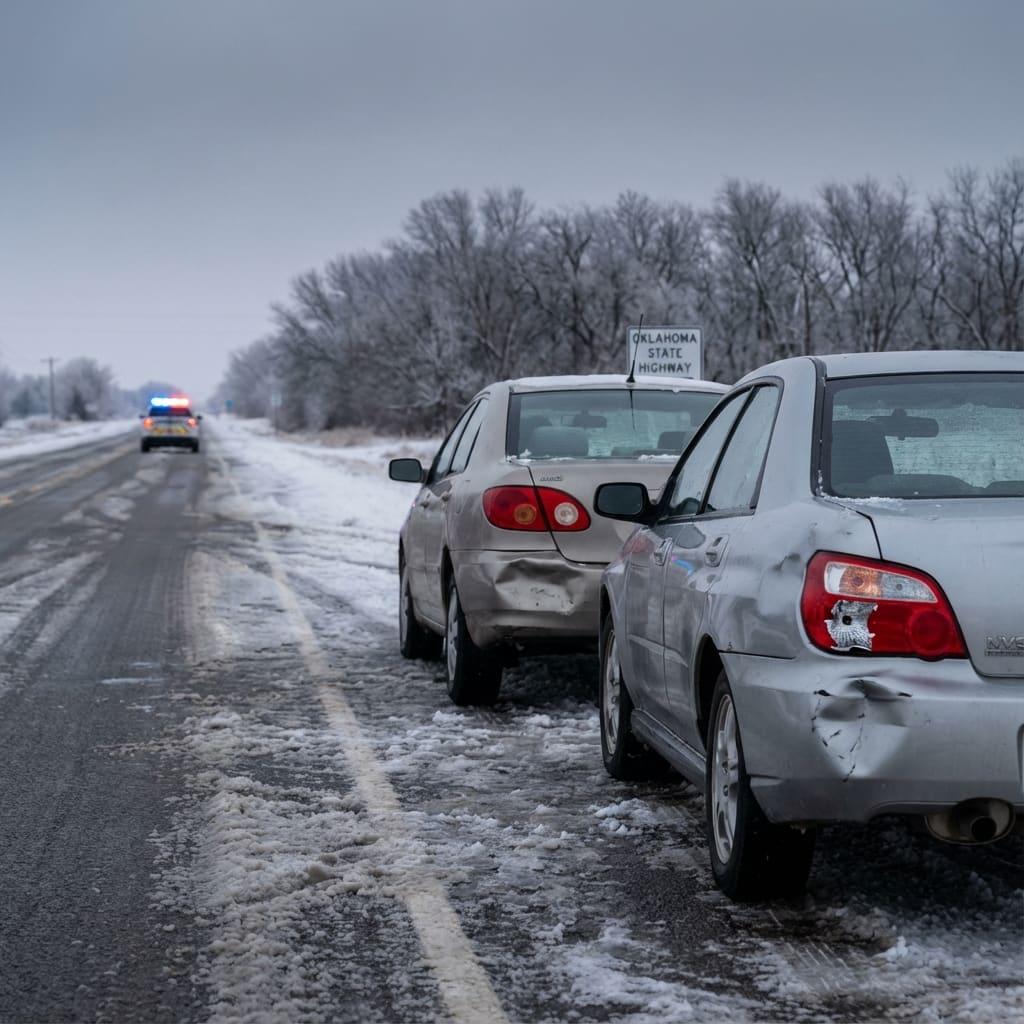
The forecast said "wintry mix" — that Oklahoma phrase for roads that can turn dangerous fast. You were driving carefully, but the car behind you wasn't. They hit a patch of black ice, lost control, and slammed into you. Now you're dealing with injuries, a totaled car, and an insurance company suggesting the weather was "an act of God" that no one could prevent.
That's not how it works. Winter weather changes the analysis, but it doesn't make accidents unavoidable or eliminate anyone's responsibility.
What Oklahoma Drivers Need to Know About Winter Crash Liability
Oklahoma's core speed rule still requires drivers to use a careful and prudent speed that is reasonable for traffic, road surface, width, and conditions. Under 47 O.S. § 11-801, special hazards from weather or highway conditions require a lower speed even when the posted speed limit is higher.
Oklahoma's comparative-negligence statute, 23 O.S. § 13, still bars recovery only when the plaintiff's negligence is greater than the defendant's negligence, or greater than the combined negligence of multiple defendants. In ordinary shorthand, a 50% responsible injured person may still recover a reduced award; a plaintiff more than 50% responsible is barred.
For evidence, use official road and weather sources quickly. ODOT publishes traffic cameras, advisories, and winter road-condition resources, the Oklahoma Mesonet archives weather data and National Weather Service winter advisories, and NHTSA's winter-driving guidance reinforces the basic safety points insurers often fight over: slow down, increase following distance, and plan for ice, snow, and sleet.
Drivers Must Adjust for Conditions
Oklahoma law requires all drivers to operate their vehicles at speeds that are reasonable and prudent given the conditions — not just the posted speed limit. Under 47 O.S. § 11-801, a driver must reduce speed when special hazards exist with respect to weather or highway conditions. This is an affirmative duty that applies regardless of what the speedometer says. When roads are icy, wet, or snow-covered, that means slowing down significantly.
A driver going 65 mph in a 65 zone is speeding if the roads are covered in ice. A reasonable driver would recognize the hazard and adjust accordingly. Failing to do so is negligence. Oklahoma's comparative negligence system means that even if you bear some responsibility for the crash, you can still recover damages as long as your fault is not greater than the defendant's fault, or greater than the combined fault of multiple defendants.
Common negligent behaviors in winter conditions include:
- Driving at normal speeds on icy roads
- Following too closely (stopping distances increase dramatically on ice)
- Failing to reduce speed before curves or hills
- Not using headlights in reduced visibility
- Ignoring weather warnings and driving when conditions are dangerous
If another driver caused your accident by failing to adjust to winter conditions, they may be liable even though the weather made the road dangerous.
When Other Parties Are Responsible
Property Owners
If you were injured on private property — a parking lot, a driveway, a business entrance — the property owner may be liable for failing to address ice and snow hazards, depending on notice, timing, visibility, and what a reasonable property owner could do under the conditions.
In Oklahoma, property owners owe a duty to keep their premises reasonably safe for visitors. Depending on the facts, reasonable steps may include:
- Treating icy walkways and parking lots with salt or sand
- Clearing snow from high-traffic areas when it can reasonably be done
- Warning visitors of hidden or unusually dangerous ice hazards
- Responding reasonably to changing conditions
What's "reasonable" depends on the circumstances. A property owner usually is not expected to eliminate every patch of ice during an active storm, and Oklahoma defendants may raise open-and-obvious or weather-related defenses. But they still need to act reasonably when they know or should know about a dangerous condition they can address.
Municipalities and Government Entities
Oklahoma cities, counties, and ODOT have responsibility for road maintenance, including winter treatment. When government negligence contributes to an accident, sovereign immunity rules apply and limit—but don't always eliminate—potential claims.
The Oklahoma Governmental Tort Claims Act allows certain claims against government entities, subject to notice requirements and damage caps. These cases are complex and have shorter deadlines than private claims.
Trucking Companies
Commercial trucks face heightened risks in winter weather due to their size, weight, and stopping distances. Trucking companies have responsibilities to:
- Monitor weather conditions along routes
- Adjust schedules rather than pushing drivers through dangerous conditions
- Ensure trucks are properly equipped (tires, chains, brakes)
- Train drivers on winter operation
When trucking companies pressure drivers to meet schedules despite hazardous conditions, and accidents result, the company may be liable.
Employers
If you were required to drive in dangerous conditions as part of your job, workers' compensation may cover the work injury regardless of fault. Employer decisions can also matter as background evidence, but a separate tort claim against the employer may be limited by workers' compensation exclusivity unless a recognized exception applies.
This is separate from third-party liability. You may have a workers' compensation claim for the job-related injury and a separate personal-injury claim against a negligent driver, trucking company, property owner, or other non-employer defendant.
Oklahoma's Comparative Fault System
Oklahoma follows modified comparative negligence. Both parties' fault is evaluated, and your recovery is reduced by your percentage of fault.
If you were 20% at fault and the other driver was 80% at fault, you recover 80% of your damages. But if you were 51% or more at fault, you recover nothing.
Winter accident cases often involve comparative fault arguments. The other side will claim you were driving too fast, should have stayed home, weren't maintaining proper distance, or otherwise contributed to the accident. Having evidence of your own reasonable behavior helps counter these arguments.
Proving Your Case
Evidence Collection
Just like any car accident, evidence matters:
- Photographs of the scene, vehicle damage, and road conditions
- Weather reports and forecasts from the day
- Witness statements
- Police report
- Your own account of what happened
Winter-specific evidence includes:
- Temperature records showing ice was likely
- ODOT road condition reports
- Oklahoma Mesonet and National Weather Service advisories
- Evidence of whether roads had been treated
- Evidence of the other driver's speed or behavior
Expert Testimony
Some winter accident cases require accident reconstruction experts to analyze:
- Vehicle speeds based on impact damage
- Stopping distances on ice
- Whether a driver behaved reasonably given conditions
- Road surface conditions at the time of the crash
Experts can establish what a reasonable driver would have done differently.
What to Do After a Winter Accident
The steps are familiar but worth emphasizing:
Stay safe. In winter conditions, additional accidents can happen in the same location. Move to safety if possible and be aware of ongoing hazards.
Call 911. Get a police report. The report documents conditions, statements, and the responding officer's observations.
Document conditions. Photograph the road surface, any ice or snow accumulation, and the vehicles before they're moved. Note the temperature and weather.
Get witness information. Other drivers or bystanders may have seen how the accident happened.
Seek medical attention. Cold conditions can mask pain, and adrenaline affects perception. Get checked out.
Don't admit fault. Weather may have contributed, but that doesn't mean the other driver wasn't negligent.
Insurance Issues in Winter Crashes
Insurance companies love blaming weather. They'll characterize accidents as "acts of God" or "unavoidable" and try to reduce or deny claims.
The counter-argument is simple: every driver has a duty to adjust for conditions. Weather doesn't relieve that duty—it increases it. A driver who ignores obvious hazards isn't a victim of circumstances; they're negligent.
If your insurance company or the other driver's insurer is giving you trouble after a winter accident, legal advice can help you understand your options.
Frequently Asked Questions
Can I file a claim if the weather caused the accident?
Weather does not automatically eliminate liability. If the other driver was going too fast for conditions, following too closely, ignoring visibility limits, or driving when they should have waited, they may be held liable despite the weather.
Who is responsible for ice on a parking lot or sidewalk?
Property owners and businesses have a duty to maintain their premises in a reasonably safe condition. This includes addressing known ice hazards. If a property owner knew about icy conditions and failed to treat or warn about them, they may be liable for slip-and-fall injuries.
Does Oklahoma's comparative negligence apply to winter accidents?
Yes. If you were also at fault — for example, driving faster than conditions warranted — your recovery is reduced by your percentage of fault. But as long as you were 50% or less at fault, you can still recover.
What evidence helps prove icy-road fault?
Photographs, dashcam video, police diagrams, witness statements, 911 logs, ODOT road-condition information, Oklahoma Mesonet weather data, National Weather Service advisories, and vehicle event data can all matter. Preserve what you can before it disappears; road conditions can change within minutes.
What should I do after a winter weather car accident?
Document conditions (take photos of ice, snow, road conditions), get a police report, seek medical attention, and contact an attorney before speaking with insurance adjusters. Be aware that some injury symptoms may be delayed — cold weather can mask pain. Evidence of road conditions at the time of the crash is critical to your case.
Injured in a Winter Crash?
Weather doesn't excuse negligence. We can help you understand your rights and build your case.
Get a Free Consultation →Learn more about our personal injury practice and Oklahoma car accident representation.
This article was materially updated on June 24, 2026, using Oklahoma's current speed and comparative-negligence statutes plus ODOT, Oklahoma Mesonet, National Weather Service, and NHTSA winter-driving resources. It is for general information only and is not legal advice.