
Key Takeaways
- Passengers have a door-opening duty too: Oklahoma's rule addresses any person opening a motor-vehicle door on the side available to moving traffic, not only the driver.
- A cyclist is not required to hug an unsafe curb: The riding-position statute allows reasonably necessary avoidance of parked vehicles and other hazards while exercising due care.
- The sequence decides the fault argument: Door movement, visibility, rider position, and available reaction time matter. A collision or a traffic ticket alone does not resolve the civil claim.
- Preserve video before it is overwritten: Identify nearby cameras and request preservation promptly. Keep the original footage and damaged bicycle for an investigation.
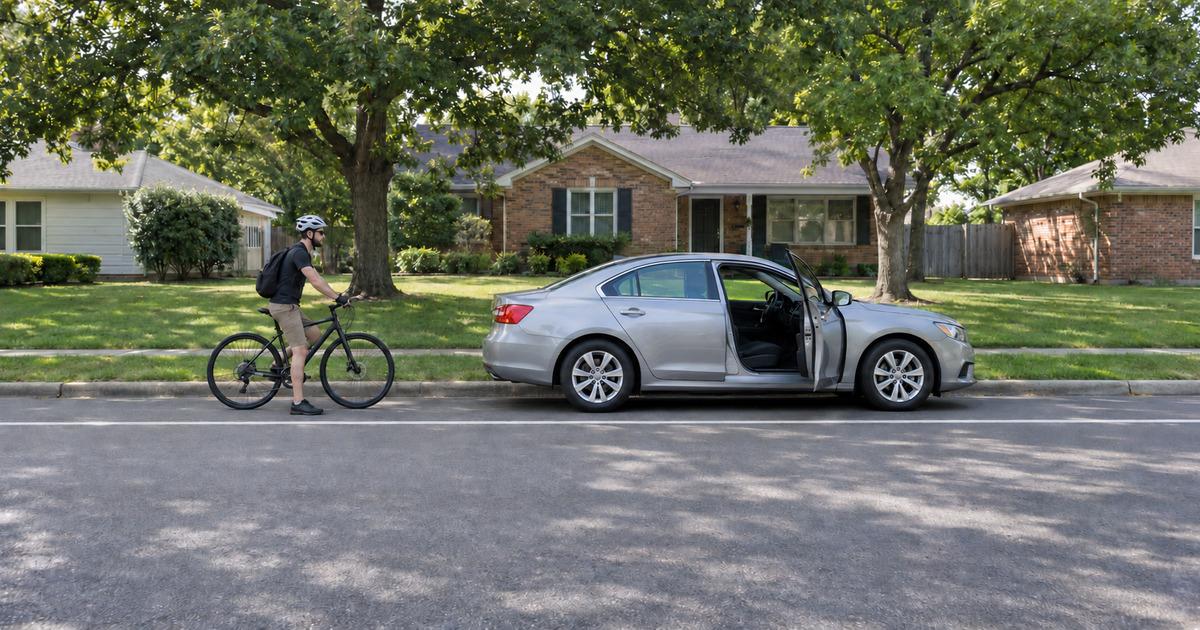
The person who opens a car door into a bicyclist's path may be responsible for the resulting injuries, even if the car never moved. Oklahoma requires a person to wait until opening a traffic-side door is reasonably safe. That duty applies to a passenger as well as a driver. But fault still depends on the evidence: where the bicycle was traveling, when the door opened, whether the rider had a reasonable chance to avoid it, and what caused the injury. Start by preserving that sequence, not accepting a quick fault percentage.
Oklahoma's Door-Opening Rule Has Two Parts
Under 47 O.S. § 11-1105, a person must not open a motor-vehicle door on the side available to moving traffic until it is reasonably safe. The statute also prohibits leaving a door open on that side longer than necessary to load or unload passengers.
That second duty matters when the argument is that the door was already open. A claim may concern an unsafe opening, an unnecessarily prolonged obstruction, or both. The fact that a car was lawfully parked does not itself establish that the occupant used its door safely.
The language is not limited to the driver's door. A rear-seat passenger opening toward a bicycle lane can create the same question. On a one-way street, a different side of the car may face moving traffic. Identify the actual door and traffic arrangement instead of assuming that only a left-side driver's door counts.
A statutory violation is not automatic civil liability. The injured rider still needs a supported connection between the unsafe conduct and the injury, and the parties may dispute the statute's application or the rider's own conduct. An officer's citation may identify an issue to investigate; it is not a substitute for proving the civil case.
Who May Be Responsible Besides the Person at the Door?
Start with the person who opened or left open the door. Obtain the names of the driver, that occupant, and the vehicle owner separately. In the confusion after a fall, a rider may exchange information only with the driver and later discover that someone else opened the door.
Whether the driver or another party also bears responsibility requires its own basis. Relevant questions include where the driver stopped, whether the stop was part of work, what the driver saw, and what the driver did during a passenger's exit. Vehicle ownership alone does not answer every liability question, and the driver is not automatically responsible for every adult passenger's act.
If the vehicle was carrying a delivery worker or a paying passenger, preserve facts about the trip and work assignment. A company name, app logo, or delivery bag identifies a possible lead, not a conclusion that a business must pay. Counsel needs to examine the person's role, conduct, and any legally relevant relationship.
The bicycle-accident practice page covers representation after a crash within personal injury law. A dooring investigation adds a narrower task: identifying the occupant who created the obstruction and any separate conduct that contributed to it.
Riding Near Parked Cars Does Not Mean Riding Against the Curb
47 O.S. § 11-1205(A) applies to a bicycle traveling on a roadway below normal traffic speed under the existing conditions. Its starting point is as close to the right curb or edge as is safe, not as close as physically possible.
The exceptions include passing another vehicle, preparing for a left turn, and riding in a right-turn-only lane. Another permits moving away when reasonably necessary to avoid conditions, including parked vehicles, moving objects, surface hazards, or an unsafe edge, while exercising due care. Subsection B permits a safe left-edge position on one-way streets or highways with at least two marked travel lanes.
That does not give a rider unlimited freedom to move suddenly into another vehicle's path. The statute retains due care and other restrictions, including a prohibition on passing vehicles between lanes traveling in the same direction. A bicycle lane beside parked cars is not automatically the same thing as that between-lanes maneuver. Photographs and measurements should establish the actual layout.
The useful question is whether the rider's position and movement were reasonable under the conditions. A narrow strip between parked cars and passing traffic may leave no safe path directly against the parked vehicles. Saying the cyclist should have been farther right does not answer the statute's safety requirement.
Where the Crash Happened Can Change the Legal Analysis
A public street, a sidewalk, a separated path, and a private parking aisle are not interchangeable. 47 O.S. § 11-101 generally confines the chapter's vehicle-operation provisions to highways, subject to stated exceptions. The bicycle article has its own applicability rule in § 11-1201(C), while § 11-1205 specifically addresses roadway travel.
Before applying a roadway rule to a parking-lot or sidewalk collision, verify the location's legal character and any applicable local ordinance. Private ownership, public access, maintenance, lane markings, and the rider's path may matter. A parking lot being open to customers does not mean every statewide roadway provision necessarily applies there.
That is not a declaration that a private-lot injury has no remedy. It means counsel must identify the correct duty rather than transplanting a street rule without checking its reach. Our general Oklahoma bicycle guide addresses broader road rights.
Preserve the Seconds Before the Door Opened
Get medical help and move out of danger before gathering evidence. Do not step back into traffic or ask someone to repeat the door movement. If you cannot document the scene, a companion or later investigator may be able to help.
- Photograph the car, plate, door, bicycle damage, lane markings, curb, and nearby parking signs from safe positions. Include wide views that show the relationship between them.
- Identify which occupant used the door. Save contact information for witnesses who saw the opening, not just the aftermath.
- Preserve original camera footage, ride recordings, and photographs with their timing information. Keep an untouched copy before making an annotated version.
- Identify nearby businesses, homes, buses, and vehicles with cameras. Ask promptly that relevant footage be preserved; recording systems may overwrite it.
- Keep the bicycle, damaged clothing, helmet, and loose components for inspection. Arrange documentation before repairs or replacement disposal.
Record what you remember while separating observation from inference. Did you see the door moving, hear it, or only encounter it after it opened? Did you brake or swerve? Was traffic blocking another path? Honest uncertainty is better than filling a gap with a guess.
An investigation should also test the other account. A door visible for a substantial distance presents different questions from one that swung out immediately before impact. A camera angle can hide an approaching bicycle. Ride-device data may help establish timing, but it should be checked against the scene rather than treated as an exact reconstruction by itself.
What If the Rider Swerved and Never Hit the Door?
Lack of contact does not by itself settle causation. A rider may fall while avoiding a door or move into the path of another vehicle. The claim then needs evidence connecting the door movement, the evasive action, and the resulting injury. There is no automatic rule that the opener pays whenever a cyclist falls nearby.
Preserve the entire sequence, including the second vehicle's movements if one was involved. Identify all witnesses and available video before a claim is reduced to a dispute about whether the bicycle left a mark on the door. A reconstruction may need to consider speed, sight lines, available space, and reaction time without assuming the rider had a safe escape route.
Shared Fault Can Reduce or Bar Recovery
23 O.S. § 13 bars negligence recovery when the injured person's negligence exceeds the negligence of the person causing the harm, or the combined negligence of the persons causing it. Under § 14, recoverable damages are reduced in proportion to the rider's negligence.
In a straightforward two-person allocation, 50% rider fault does not cross that bar; 51% does. A 20% allocation would reduce otherwise recoverable damages by 20%. Those examples explain the math, not a prediction about any dooring claim. With additional parties, the legally proper allocation and collection questions need separate analysis.
Possible disputes include visibility, speed, distraction, and whether the rider ignored an obstruction that could reasonably have been avoided. Neither party gets a fault percentage simply by stating an accusation. The rider must prove the claim; the door-opening statute does not reverse the entire burden of proof. Our comparative-negligence guide explains the broader framework.
The National Highway Traffic Safety Administration recommends helmets, visibility equipment, and predictable riding. Those recommendations should not be confused with a determination of Oklahoma civil fault. Riding without a helmet does not, by itself, prove who caused the crash, that a particular injury was made worse, or what insurance covers.
Document Losses and Check Coverage Separately
Keep treatment records, bills, missed-work documentation, and bicycle repair estimates. Describe actual limitations in daily activities and follow medical advice. Do not infer a diagnosis or permanent impairment from the force of the impact alone. Our medical-records guide explains how treatment documentation supports the injury claim.
A damages evaluation also needs to account for applicable law, including Oklahoma's noneconomic-damages limits and exceptions. A damaged bicycle, medical treatment, and pain are different parts of the loss; a property-damage payment should not be mistaken for resolution of bodily injuries.
Insurance requires its own review. Identify the relevant policies and obtain the actual coverage position. A stopped vehicle, passenger-operated door, unidentified occupant, or work-related trip can raise different questions. Liability and available coverage are separate issues. Do not assume uninsured-motorist benefits, a household policy, or a business policy necessarily covers the event without examining its terms and the law.
Dooring Claims Have Filing and Notice Deadlines
An ordinary adult negligence injury action generally has a two-year limitation period under 12 O.S. § 95(A)(3). Confirm accrual and any special rule for the actual claim. Reporting the crash or negotiating with an insurer is not a substitute for timely filing.
If a city, state agency, or other covered public entity may be responsible, the Governmental Tort Claims Act generally requires notice within one year after the loss under 51 O.S. § 156. Written notice goes to the Office of Management and Enterprise Services' Risk Management Administrator for a state claim, or the office of the clerk of the governing body for a political-subdivision claim. A police report or conversation with an adjuster should not be assumed to satisfy formal presentment.
After valid notice, 51 O.S. § 157(A)-(B) generally deems a claim denied if not approved in full within 90 days, unless denied or settled earlier. Suit cannot begin before denial and generally must be filed within 180 days after denial. If the entity fails to give required notice of an early denial, that filing clock does not begin until the 90-day approval period expires. Negotiations alone do not extend denial or filing dates. The parties may make statutory written extension agreements, but a suit extension cannot run beyond two years from the loss.
A child's ordinary private-party claim may receive protection under 12 O.S. § 96, but minority alone does not extend government notice timing. Do not apply the adult two-year rule or an adulthood-based date across every possible defendant. Get the responsible entities and deadlines checked while scene evidence remains available.
Frequently Asked Questions
Can a passenger be at fault for opening the door?
Yes. Section 11-1105 addresses any person opening the traffic-side door, not only the driver. Whether that passenger is liable still requires proof that the applicable duty was breached and caused injury. Identify the passenger separately from the vehicle's driver and owner.
Am I automatically at fault because I hit a door that was already open?
No. How long the door was open, why it remained open, visibility, and your opportunity to respond matter. The law addresses both unsafe opening and leaving the door open longer than necessary for passenger loading or unloading. It does not automatically resolve fault for either side.
Did I have to ride closer to the parked cars?
Not if that position was unsafe. Section 11-1205 uses a safety standard and allows reasonably necessary hazard avoidance with due care. That protection is not permission for every lane movement. The road layout, available space, and how you moved remain important.
Can I have a claim if I fell while avoiding the door?
Possibly. Physical contact with the door is not the only way an unsafe opening can cause injury. You still need evidence linking the opening to the fall or secondary collision. Witnesses and original video may be especially important when there is no contact damage.
Does the car's insurance automatically pay for a dooring injury?
No automatic payment follows from the presence of an insured car. Responsibility, policy language, the occupant's role, exclusions, and other coverage facts need review. Preserve the claim against the appropriate people while counsel determines what insurance may respond.
Injured by an Opening Car Door?
Addison Law Firm can review the door movement, road layout, injury evidence, and available insurance before you accept a fault allocation or sign a release.
Discuss Your Bicycle InjuryThis article provides general information about Oklahoma law, not legal advice, and does not create an attorney-client relationship. The facts, injury date, and applicable law control each claim.