
Key Takeaways
- Retention is not uniform statewide: Oklahoma body camera timelines often depend on agency policy, vendor systems, and whether the incident is classified as evidentiary.
- Preservation should come first: A litigation-hold letter should be sent before footage is overwritten, reclassified, or lost in an agency system.
- Open records and litigation are different tools: An Oklahoma Open Records Act request can seek access, while federal discovery may be needed if an agency refuses.
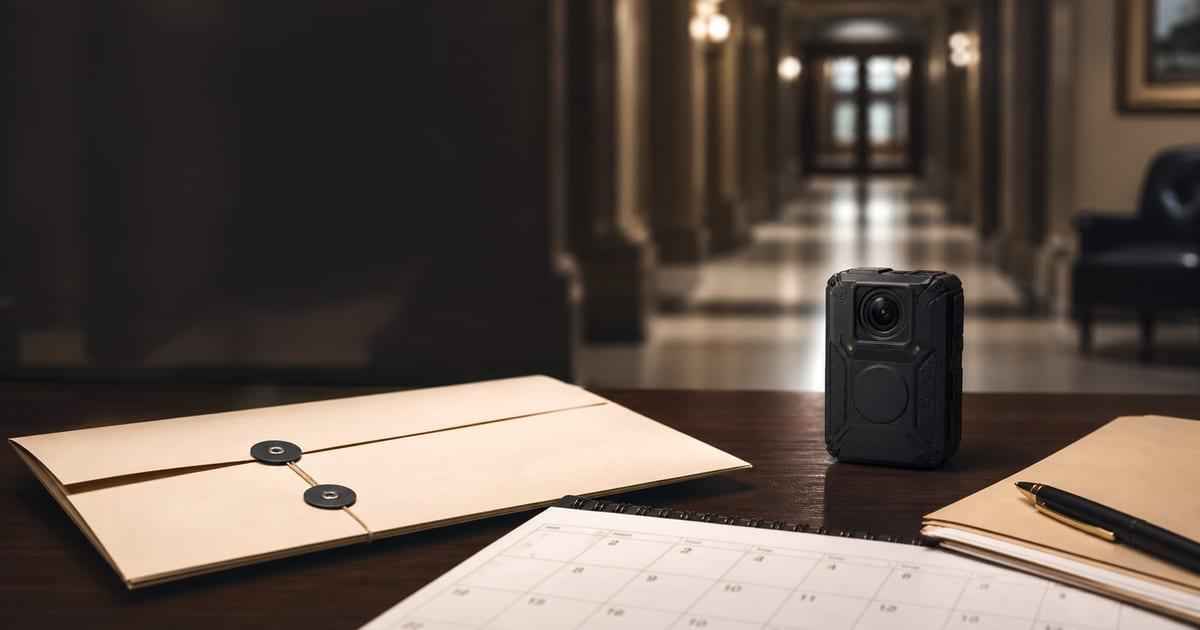
Body camera footage can be the clearest evidence in an Oklahoma civil rights case. It can show commands, timing, distance, warnings, force, medical distress, officer positioning, and what happened after the use of force. But the camera does not help if the footage is overwritten, withheld, or never requested. Families should treat body camera preservation as an emergency step.
This article updates the practical timeline from our guide on how to get police body camera footage in Oklahoma. It is especially relevant in police misconduct, excessive force, jail transport, and in-custody injury cases.
Oklahoma Does Not Have One Simple Retention Deadline
Oklahoma law addresses law-enforcement records and body camera handling, but retention timing is often driven by the agency's own policy, vendor system, and classification of the recording. That means one department may retain critical footage differently from another. A use-of-force recording, death investigation, arrest, complaint, or routine contact may each be categorized differently.
This creates risk. A family may assume that video from a serious incident will be kept indefinitely. The agency may classify it differently or rely on a shorter default retention category. The safest approach is to send a preservation demand immediately and identify every type of recording that may exist.
Send a Litigation-Hold Letter First
A litigation-hold letter should demand preservation of body-worn camera footage, dashboard camera footage, booking video, jail video, Sally port video, dispatch audio, radio traffic, computer-aided dispatch logs, incident reports, use-of-force reports, internal communications, officer notes, policies, and metadata.
Send it to the city, county, police department, sheriff's office, jail operator, public trust, or state agency involved. If individual officers are known, identify them. If not, describe the incident by date, time, location, call number, and involved units.
The point is not just to ask nicely. The point is to create written notice that litigation is reasonably anticipated. If evidence is later destroyed, the letter becomes part of the record on spoliation.
Use the Oklahoma Open Records Act, But Expect Resistance
The Oklahoma Open Records Act appears at 51 O.S. § 24A.1 et seq.. Law enforcement records are addressed in 51 O.S. § 24A.8. Agencies may disclose certain records but may also invoke law-enforcement exemptions, ongoing-investigation arguments, privacy concerns, or redactions.
That does not mean the request is pointless. It creates a paper trail, identifies the agency's position, and may produce records that help frame later litigation. The Oklahoma Attorney General's Public Access Counselor has also explained, in Opinion 2025-01, that deletion from a regular server is not always the end of the Open Records Act analysis if the video is retained elsewhere by the agency. But families should not confuse an open-records request with a complete civil-rights discovery plan.
Governmental Tort Claims Act Timing Is a Separate Trap
For state-law claims against Oklahoma governmental entities, the Governmental Tort Claims Act requires timely notice. 51 O.S. § 156 generally requires notice within one year of the loss. That deadline is longer than many video-retention risks. Waiting months to think about evidence can destroy the footage before the claim deadline even approaches.
Federal civil rights claims under 42 U.S.C. § 1983 have their own limitations analysis. Evidence preservation should happen long before either filing deadline.
What to Ask For
A targeted request should seek:
- Body-worn camera footage from every officer present
- Dashboard camera footage from every vehicle present
- Jail, booking, hallway, elevator, and Sally port video
- Dispatch audio and radio traffic
- Computer-aided dispatch logs
- Use-of-force reports and supervisor reviews
- Activation logs and audit trails
- Retention policies and camera policies in effect on the incident date
- Any deletion, redaction, or export logs
Metadata matters. A video export without audit logs may not show when the camera was activated, muted, tagged, viewed, redacted, or deleted.
Sample Wording for a Preservation Request
A preservation letter should be specific enough that the agency cannot pretend it did not know what was at issue. It can identify the incident date, approximate time, location, involved person, responding agency, call number if known, and all categories of video and digital evidence.
The request should say that litigation is reasonably anticipated and that the agency must preserve all recordings, metadata, audit logs, activation logs, deletion logs, exports, redaction history, dispatch audio, radio traffic, and written reports. It should also ask that any routine deletion, overwrite, or retention-cycle destruction be suspended.
Do not limit the letter to body camera footage. In custody and transport cases, body camera footage may be only one piece. Jail hallway video, booking-room video, Sally port cameras, transport-vehicle cameras, elevator cameras, and medical-observation cameras may show what body cameras missed.
When Federal Discovery Becomes Necessary
If an agency refuses an Oklahoma Open Records Act request, the family may still obtain the footage through litigation. In a federal civil rights case under 42 U.S.C. § 1983, discovery can include requests for production, subpoenas, depositions, and preservation orders. Federal discovery is not the same thing as public-records access.
The agency may still raise privilege, privacy, protective-order, or law-enforcement arguments. But litigation gives the court power to supervise production, require logs, resolve disputes, and sanction evidence destruction. That is why early preservation and later discovery should be planned together.
The worst outcome is waiting until the open-records dispute is over before preserving evidence. By then, the video may already be gone.
Do Not Forget Private and Third-Party Video
Civil rights incidents often happen near private cameras. Gas stations, apartment complexes, hospitals, stores, schools, neighboring homes, and private security systems may record parts of the encounter, pursuit, arrest, transport, or medical response. Those videos are not controlled by the police department, and they may have much shorter retention windows.
Families should write down nearby businesses and buildings as soon as possible. A lawyer can then send preservation letters to those entities and, when needed, subpoena footage. Private video can be especially important when officers fail to activate body cameras, when the body camera view is blocked, or when the incident begins before officers arrive.
Cellphone video from bystanders should also be identified early. Ask witnesses to preserve the original file, not just a compressed social-media upload.
Original files usually contain better timestamps, resolution, and metadata. A reposted clip may help orient the case, but it is rarely as useful as the source video.
For that reason, preservation should include phones, cloud backups, local business systems, and agency evidence platforms when each may hold a different copy.
Frequently Asked Questions
How long do Oklahoma agencies keep body camera footage?
There is no single statewide retention period that answers every agency and every category. Retention often depends on agency policy, vendor system settings, and incident classification. Send preservation demands quickly.
Should I send an Open Records Act request or a preservation letter first?
Send the preservation letter first if litigation is reasonably anticipated. Then send an Open Records Act request. The first protects against destruction; the second seeks access.
Can an agency refuse to release body camera footage?
Yes, agencies may assert law-enforcement, privacy, or ongoing-investigation grounds under the Oklahoma Open Records Act. Those positions can sometimes be challenged or bypassed later through litigation discovery.
What if the officer did not activate the camera?
Ask for the activation policy, device logs, audit trails, dispatch records, and any supervisor review. Failure to activate can itself become important evidence depending on the policy and facts.
Does this apply outside Oklahoma City?
Yes. The same preservation concern applies statewide, including Oklahoma City civil rights cases, Tulsa, Norman, Lawton, county jails, sheriff's offices, and smaller municipal departments.
Need Body Camera Footage Preserved?
We send preservation demands, open-records requests, and litigation discovery aimed at securing the video before it is lost.
Talk About a Civil Rights CaseLearn more about Oklahoma civil rights cases.
This article is for general information only and is not legal advice.