
Key Takeaways
- Body camera footage is often critical evidence in an excessive force or in-custody death case — but many Oklahoma agencies use short retention periods unless a preservation request is made.
- Send the request to the actual records custodian. The Oklahoma State Bureau of Investigation, a city police department, a sheriff, and a jail can each hold different records from the same incident.
- 51 O.S. § 24A.8 identifies many body-worn recordings as law enforcement records that must be made available if kept, subject to redaction and temporary withholding rules.
- A litigation hold letter sent immediately can prevent the agency from destroying the footage. Families should act within days of the incident — not weeks or months.
If you need Oklahoma police body camera footage, start with the agency that actually controls the recording. A city police department, county sheriff, jail trust, prosecutor, state agency, and outside task force may each hold different records from the same incident. If the Oklahoma State Bureau of Investigation assisted or investigated, send a request there too, but do not assume OSBI has the local officers' body-worn camera files.
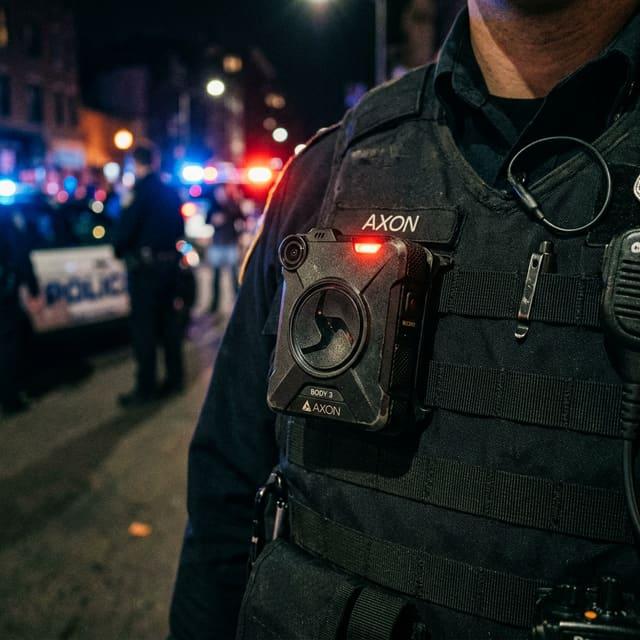
In the hours and days after a police shooting, a use-of-force incident, or a death in custody, one of the most important pieces of evidence is often the footage recorded by the officers' own body-worn cameras. Body camera video can capture what happened in real time — the officer's commands, the person's response, the positioning, the escalation, and sometimes the moments that show force was unnecessary or excessive.
But footage does not preserve itself. Oklahoma has no single statewide retention rule that guarantees body camera recordings will be kept long enough for a family to find them. Many departments set their own retention policies — often as short as 90 days for "non-evidentiary" recordings. If a department classifies a use-of-force incident as routine, the footage may be deleted before the family even knows it exists. And when families do request it, police departments frequently deny access, delay production, or claim exemptions under state law.
This guide explains how Oklahoma families can obtain and preserve body camera footage after a police encounter — and what to do when the agency refuses to cooperate.
Where to Send an Oklahoma Body Camera Request
There is not one statewide body camera portal that covers every Oklahoma police agency. The request should go to the public body that made, received, stored, or controls the recording.
- OSBI involved: If the Oklahoma State Bureau of Investigation investigated or assisted, use OSBI's Open Records Request Form and fee schedule. Still send a separate request to the local police department or sheriff if local officers wore the cameras.
- Local police, sheriff, or jail records: Send the request to that agency's own records custodian. Ask for the records custodian, city clerk, county clerk, sheriff's records division, jail trust, or legal department if the website is unclear.
- Multiple agencies involved: Send separate requests to each custodian. A city police department, county sheriff, jail trust, prosecutor, state agency, and outside task force may each control different records from the same event.
- Preservation demand: Send a separate preservation letter to every agency that may hold video, dispatch, reports, audit logs, metadata, or retention records. An Open Records Act request asks for access; a preservation letter tells the agency not to destroy evidence.
For body camera footage, ask for the body-worn camera video from every officer present, dashboard camera video, dispatch audio, computer-aided dispatch logs, incident reports, activation logs, audit/access logs, export and redaction logs, body camera policies, and deletion or retention records.
Oklahoma Body Camera Request Checklist
| Agency or custodian | Use this route | What to ask for |
|---|---|---|
| Local police department or sheriff | Send the request to the agency's records custodian, records division, city clerk, county clerk, or legal department. Use the agency's official records portal or published email if one exists. | Ask for body-worn camera footage from every officer present, dashboard camera video, dispatch audio, computer-aided dispatch logs, incident reports, arrest or citation records, activation logs, audit/access logs, export logs, redaction logs, and the body-camera retention policy. |
| Jail, detention center, or jail trust | Send the request to the jail administrator, jail trust records custodian, county clerk, sheriff, or public body's legal department, depending on who operates the facility. | Ask for booking video, hallway video, sally-port video, transport video, medical-unit video, officer body-camera footage, dispatch audio, use-of-force reports, incident reports, logs, and retention policies. |
| OSBI | Use the official OSBI Open Records Request Form. OSBI's fee schedule lists copying, storage-device, search, and legal-review/redaction fees. | Ask for OSBI investigative records, reports, audio/video records in OSBI's possession, communications with the local agency, evidence logs, and any retention or redaction records. Do not assume OSBI holds local officers' body-worn camera files just because OSBI investigated. |
| Multiple agencies | Send separate requests and preservation demands to each custodian. | Ask each agency to identify any other public body, vendor, prosecutor, sheriff, jail, or task force that received, stored, reviewed, or controls a copy of the video or related metadata. |
Sample wording:
Please preserve and produce all body-worn camera footage, dashboard camera footage, dispatch audio, computer-aided dispatch logs, incident reports, activation logs, audit/access logs, export logs, redaction logs, retention records, and policies for the incident on [date] at [location] involving [names/officers if known]. If you contend any portion may be withheld, please cite the exact statutory subsection and produce all reasonably segregable, redacted records.
What 51 O.S. § 24A.8 Says About Body Camera Video
The Oklahoma Department of Libraries lists 51 O.S. § 24A.8 as the Open Records Act section governing law enforcement agency records available for public inspection. The current statute does not simply say "police video is exempt." It identifies several categories of audio and video recordings from law enforcement vehicles or officer-worn equipment that must be made available if the agency keeps them.
Those categories include recordings depicting force, pursuits, traffic stops, arrests, citations, warnings, detentions, exercises of authority that deprive a person of liberty, actions that result in investigation or charges, recordings of public interest, and events immediately before or after those incidents. The statute also allows redaction or temporary withholding for listed reasons, including certain privacy, safety, undercover, confidential-source, and ongoing-investigation concerns. Some withholding grounds expire, and recordings withheld because an internal investigation is pending must be made available when the investigation concludes and final disciplinary action is decided.
That is why request wording matters. A request that asks only for a "police report" may miss the video, metadata, and retention records. A request that cites body-worn camera footage under 51 O.S. § 24A.8 and identifies the incident, officers, date, time, and location gives the custodian less room to treat the request as vague.
Why Body Camera Footage Matters in Civil Rights Cases
Body camera footage matters because it can reduce the he-said-she-said dynamic that historically favored police officers in excessive force cases. Before body cameras, juries often had to choose between the officer's testimony — supported by a police report the officer wrote — and the account of the victim or surviving witnesses, who may have been traumatized, inconsistent, or attacked with criminal-history evidence.
Body cameras changed the equation, but video is not perfect. It may not show the full scene, depth, peripheral movement, or what happened before activation. Even so, when footage clearly contradicts an officer's account, it can be powerful at summary judgment and in qualified immunity briefing. Courts do not have to accept a version of events that is flatly contradicted by reliable video. See Scott v. Harris, 550 U.S. 372 (2007).
Body camera footage also captures context that police reports routinely omit — the tone of the officer's voice, the lack of verbal warnings before force was used, the fact that the suspect was already on the ground and not resisting when additional force was applied, or the failure of other officers to intervene. These details are often decisive in establishing that force was objectively unreasonable under the Fourth Amendment.
Oklahoma Has No Statewide Retention Mandate
One of the most significant risks families face is that the footage will be destroyed before they can obtain it. Oklahoma has no statewide statute requiring police agencies to retain body camera recordings for a minimum period. Other states have adopted broader statewide body-camera retention rules for serious incidents, but Oklahoma leaves retention largely to individual departments.
The result is a patchwork of policies. Some agencies — including the Oklahoma City Police Department — have adopted internal policies requiring extended retention for use-of-force incidents. Others retain all footage for as little as 60 to 90 days before automatic deletion. Rural and smaller municipal departments may have even shorter retention periods or no formal policy at all.
This means that a family whose loved one was killed by police may have only weeks to act before evidence disappears under an agency retention schedule. Even when an agency has a longer retention policy, individual officers or supervisors may fail to activate their cameras, turn them off during critical moments, or later report technical problems. Each scenario creates its own evidentiary and legal issues.
How to Request Body Camera Footage
Step 1: Send a Litigation Hold Letter Immediately
Before filing any open records request, the first thing a family or their attorney should do is send a litigation hold letter — also called a preservation demand or spoliation letter — to the police department, the city or county, and the individual officers involved. This letter puts the agency on formal notice that litigation is anticipated and demands the immediate preservation of all evidence related to the incident, including:
- All body-worn camera footage from every officer present at the scene
- All dashboard camera footage from responding vehicles
- Dispatch audio recordings and CAD logs
- All communications (radio, text, email) between officers, supervisors, and the department related to the incident
- The agency's body camera policy and any internal directives regarding the incident
- Internal affairs investigation files, if any
The litigation hold letter does not guarantee preservation, but it creates a powerful foundation for a spoliation sanctions motion if the agency later claims the footage was deleted. Courts take evidence destruction seriously — particularly when it occurs after the agency had notice of potential litigation.
Send the letter within 48 hours of the incident if at all possible. Do not wait for a police report. Do not wait for a death certificate. Do not wait to retain an attorney. Every day of delay increases the risk that footage will be overwritten.
Step 2: File an Oklahoma Open Records Act Request
The Oklahoma Open Records Act (ORA), codified at 51 O.S. § 24A.1 et seq., establishes a broad right of public access to government records. For law enforcement agencies, 51 O.S. § 24A.8 specifically addresses audio and video from equipment attached to police vehicles or worn by officers, including many recordings involving force, stops, arrests, detentions, public-interest events, and related before-and-after context.
Your open records request should:
- Be in writing and directed to the records custodian of the specific law enforcement agency
- Identify the records with reasonable specificity — date of incident, location, officers involved (if known), and the type of records sought (body-worn camera footage, dashcam footage, dispatch recordings, activation logs, audit logs, incident reports)
- Cite the ORA and ask for prompt, reasonable access, plus a written statutory basis for any withholding or redaction
- Request the records in their native digital format — do not accept a printed transcript of video footage
- Request redacted production if the agency claims an exemption — agencies should not withhold an entire recording if a narrower redaction can address a legitimate privacy or safety issue
Under 51 O.S. § 24A.5, a public body must provide "prompt, reasonable access" to its records. The agency may charge reasonable copying costs and, for requests that require substantial staff time to fulfill, may also recover search fees — but the charges must be reasonable and cannot be used as a pretext to deter requests.
Step 3: Be Prepared for Denials
Police departments frequently deny body camera requests. The most common grounds include:
Overbroad "law enforcement record" denials — 51 O.S. § 24A.8 makes some law enforcement records available and allows other law enforcement records to be denied unless a court finds the public or individual interest outweighs the reason for denial. Agencies sometimes cite this section as if it automatically blocks all police video. That is too broad. The statute has specific rules for officer-worn and vehicle recordings, redactions, ongoing investigations, and recordings of public interest.
The "ongoing investigation" claim — Agencies sometimes claim that the footage cannot be released because a criminal investigation or internal affairs review is still open. That should not be treated as a permanent, generic denial. The statute has timing rules for specific ongoing-investigation withholding, including a district-court appeal path when no one has been charged within 120 days, so the agency should be pressed to cite the specific subsection and explain why redaction is not enough.
Privacy and personnel records — Some agencies claim that body camera footage constitutes personnel records of the officers depicted, or that the footage contains private information about third parties. These claims are often overbroad and can be challenged through redaction rather than wholesale withholding.
Step 4: Challenge the Denial Carefully
If the agency denies your request, the right next step depends on the reason given for the denial.
Demand the exact statutory basis. Ask the agency to identify the specific subsection it is relying on, whether it is withholding the entire recording or only specific portions, and whether redacted production is possible. Preserve the denial, the date of denial, and every response from the agency.
Use the body-camera timing rules when they apply. Section 24A.8 has special rules for officer-worn and vehicle recordings. If the agency withholds portions because release would materially compromise an ongoing criminal investigation or prosecution, the statute generally requires release of those portions ten days after formal arraignment or initial appearance unless a court extends withholding. If no one is charged within 120 days and the agency continues to withhold on that ground, the denial can be appealed to the appropriate district court. Court-ordered extensions are limited by the statute, and the temporary withholding option expires entirely four years after the recording was made.
Request Public Access Counselor review. Under 51 O.S. § 24A.40, a non-commercial requester whose request is denied may seek review from the Attorney General's Public Access Counselor within 30 calendar days of the denial. The process can also be used when a request is not returned in a prompt or reasonable manner. The request must include the records request and the public body's responses. If the requester files suit over the same denial while the review is pending, the Public Access Counselor process stops.
File a civil enforcement action. Under 51 O.S. § 24A.17, a person who requested and was denied access may bring a civil suit for declaratory or injunctive relief, limited to records requested and denied before suit. Before filing, the requester must give written notice of intent to sue to the public body or official and the Attorney General at least ten business days before filing. A successful requester is entitled to reasonable attorney fees.
Report a willful violation. Section 24A.17 also makes willful Open Records Act violations a misdemeanor. That is not an "appeal," and prosecution is rare, but a documented complaint to the Attorney General or the appropriate district attorney may matter when an agency is refusing to comply.
Obtain the footage through litigation discovery. If you file a § 1983 lawsuit, you can seek body camera footage through federal discovery, including Rule 34 requests for production and Rule 30(b)(6) depositions of the agency's records custodian. Discovery is governed by court rules and protective orders, not simply by the agency's Open Records Act position. This is often the most reliable path to obtaining footage that agencies refuse to produce voluntarily.
What to Do When Footage Is "Missing"
In a troubling number of cases, agencies claim that body camera footage does not exist — either because the officer's camera was not activated, malfunctioned, or because the footage was deleted pursuant to the agency's retention policy. Each of these scenarios has legal implications.
Camera not activated. If a department has a mandatory activation policy and the officer failed to turn on the camera during a use-of-force incident, that failure is itself evidence. It may support an inference that the officer knew the force about to be used would be unreasonable — and deliberately chose not to record it. Attorneys can subpoena the agency's activation policy, the officer's camera activation history, and any disciplinary records related to activation failures.
Technical malfunction. Agencies sometimes claim camera malfunctions to explain gaps in footage. These claims can be investigated through forensic analysis of the camera hardware and the department's digital storage system. Metadata from the camera — including activation logs, battery status, and storage capacity — can reveal whether a "malfunction" was genuine or manufactured.
Deleted pursuant to retention policy. If footage was deleted after the agency had a duty to preserve it, courts can impose spoliation sanctions. A litigation hold letter is the cleanest way to create that record, but the duty can also arise from the circumstances when litigation is reasonably anticipated. An Open Records Act request alone is not a magic phrase that guarantees sanctions; the key is proving notice, relevance, control, and prejudice. Depending on the facts and forum, sanctions may include evidence instructions, monetary sanctions, or other remedies. Oklahoma does not recognize a standalone "spoliation tort," but sanctions remain available in both state and federal litigation.
The GTCA Timeline Trap
Families pursuing claims against Oklahoma police agencies must also be aware of the Governmental Tort Claims Act (GTCA) notice requirement. Under 51 O.S. § 156(B), a written notice of tort claim must be filed within one year of the incident for any state-law claims against a city, county, or state entity. Federal § 1983 claims have a two-year statute of limitations.
The GTCA notice period matters for evidence preservation because it creates an artificial sense of time. Families may think they have a full year to investigate before taking action. But if the agency's body camera retention period is 90 days, the footage will be gone long before the GTCA deadline arrives — unless the family acts immediately to preserve it.
The critical lesson: the clock on evidence preservation is far shorter than the clock on filing a claim. Send the litigation hold letter and the open records request within 48 hours. File the GTCA notice when you are ready. But do not confuse the two timelines.
Frequently Asked Questions
How long do Oklahoma police departments keep body camera footage?
There is no single statewide body camera retention period that guarantees footage will be kept long enough for a civil rights investigation. Retention periods vary by agency and can range from 60 days to several years. Use-of-force incidents may have longer retention requirements under some departments' internal policies, but there is no guarantee. Always send a preservation demand immediately.
Can I get body camera footage through an open records request?
Often, yes. Body camera footage can be requested under the Oklahoma Open Records Act, and Section 24A.8 specifically addresses officer-worn and vehicle recordings. The statute also allows certain redactions and temporary withholding. If an agency denies the request, ask for the exact statutory subsection, demand redacted production where possible, and evaluate Public Access Counselor review, district-court enforcement, or litigation discovery.
What if the police say the body camera wasn't turned on?
If the agency has a mandatory activation policy and the officer failed to activate the camera during a use-of-force incident, that failure is itself relevant evidence. An attorney can subpoena the activation policy, the officer's camera history, and any disciplinary records. The failure to record may support an inference that the officer anticipated using unreasonable force.
What is a litigation hold letter and when should I send one?
A litigation hold letter is a formal demand to an agency to preserve all evidence related to an incident. It should be sent within 48 hours of the incident — before any open records request. If the agency destroys footage after receiving a hold letter, a court can impose spoliation sanctions, including adverse inference instructions to the jury.
Can I get body camera footage if there's an ongoing criminal investigation?
Agencies may deny or delay access during an active investigation in some circumstances, but the denial should be tied to a specific statutory basis and should not be treated as permanent. Section 24A.8 has specific timing rules for recordings withheld because release would materially compromise an ongoing criminal investigation or prosecution, including post-arraignment release rules, court-extension procedures, and a district-court appeal path if no one is charged within 120 days. If you file a federal § 1983 lawsuit, you can seek the footage through discovery, subject to court rules and protective orders.
What happens if the footage was already deleted?
If footage was destroyed after the agency had a duty to preserve it, you may have a spoliation argument. The analysis depends on notice, control, relevance, fault, and prejudice. A litigation hold letter is stronger than a bare open-records request because it expressly tells the agency litigation is anticipated and identifies the evidence to preserve. Courts may impose sanctions, but the remedy depends on the facts and the forum.
Do I need a lawyer to get body camera footage?
You can file an open records request without an attorney. However, if the agency denies your request — which is common in use-of-force cases — an attorney can preserve the claim, evaluate Public Access Counselor review, send the required ten-business-day pre-suit notice for an ORA enforcement action, file in district court if needed, or obtain the footage through litigation discovery. Given the short retention periods, consulting an attorney immediately is strongly recommended.
Need Help Obtaining Body Camera Footage?
If your family member was killed or injured by police in Oklahoma, body camera footage may be critical evidence — and it may be at risk of deletion. We can send a preservation demand, file open records requests, and pursue federal discovery to obtain the evidence you need.
Schedule a Free Consultation →At Addison Law, we handle police misconduct and civil rights cases throughout Oklahoma, including evidence preservation and open records enforcement.
This article provides general legal information about obtaining police body camera footage in Oklahoma. It does not constitute legal advice. If you need body camera footage preserved or obtained, consult an attorney immediately — retention periods may be as short as 60 to 90 days.