
Key Takeaways
- The Shooter's "It Was an Accident" Is Not a Defense: A hunting accident case is an ordinary negligence case. The question is not whether the shooter meant to cause harm — almost none do — but whether a reasonably careful hunter would have identified the target and what lay beyond it, tracked the line of fire, and held the shot. Safety rules the state itself publishes frame what careful hunting looks like.
- Hunter Orange Is a Statutory Duty: Under 29 O.S. § 5-205, no one may hunt deer or elk with firearms without conspicuous daylight fluorescent orange — a head covering and an outer garment above the waistline totaling at least 500 square inches of clothing, of which at least 400 square inches is daylight fluorescent orange. The Wildlife Department's current regulations extend orange requirements to most other hunters afield during big-game firearms seasons, on private land as well as public.
- The Landowner Shield Has a Hunting-Specific Twist: Oklahoma's recreational land use statute, 76 O.S. § 10.1, lists hunting first among the protected recreational uses and sharply limits a landowner's duties to people allowed on land for free — and its definition of a disqualifying "charge" expressly excludes hunting and fishing leases, so paying for a deer lease does not automatically strip the landowner's protection.
Who is legally responsible after an Oklahoma hunting accident usually comes down to three candidates: the hunter who fired the shot or set the hazard, the owner or operator of the land where it happened, and — less often — an outfitter, guide service, or equipment manufacturer. The shooter's liability is measured by ordinary negligence: whether a reasonably careful hunter would have positively identified the target, known the line of fire, and accounted for everyone else in the field. The landowner's liability runs through one of Oklahoma's most misunderstood statutes, a recreational-use law that protects owners who open land for free — with a definition quirk that keeps the protection alive even on many paid hunting leases. This article walks through each layer as dove season opens September 1 and the fall big-game seasons follow.
This article is general legal information about Oklahoma law, not legal advice about any specific incident. Hunting accident cases are heavily fact-driven, and the criminal or game-warden investigation that often follows a shooting is separate from any civil claim.
The Shooter: Ordinary Negligence, Measured Against the Rules of the Field
Oklahoma does not need a special "hunting liability" statute to make a careless shooter responsible; the ordinary rules of negligence do that work. A hunter owes the same duty everyone owes — reasonable care under the circumstances — and the circumstances include carrying a weapon capable of killing at long range. What a jury hears in these cases is a comparison between what the defendant did and what careful hunting demands: positively identifying the target and what is behind it before firing, knowing where every member of the party is, treating every firearm as loaded, and never swinging a muzzle through another person. Those are not a lawyer's inventions; they are the safety fundamentals the state teaches in its own hunter education program, which Oklahoma generally requires of licensed hunters age thirty and younger under 29 O.S. § 4-112A, subject to its apprentice and other exemptions.
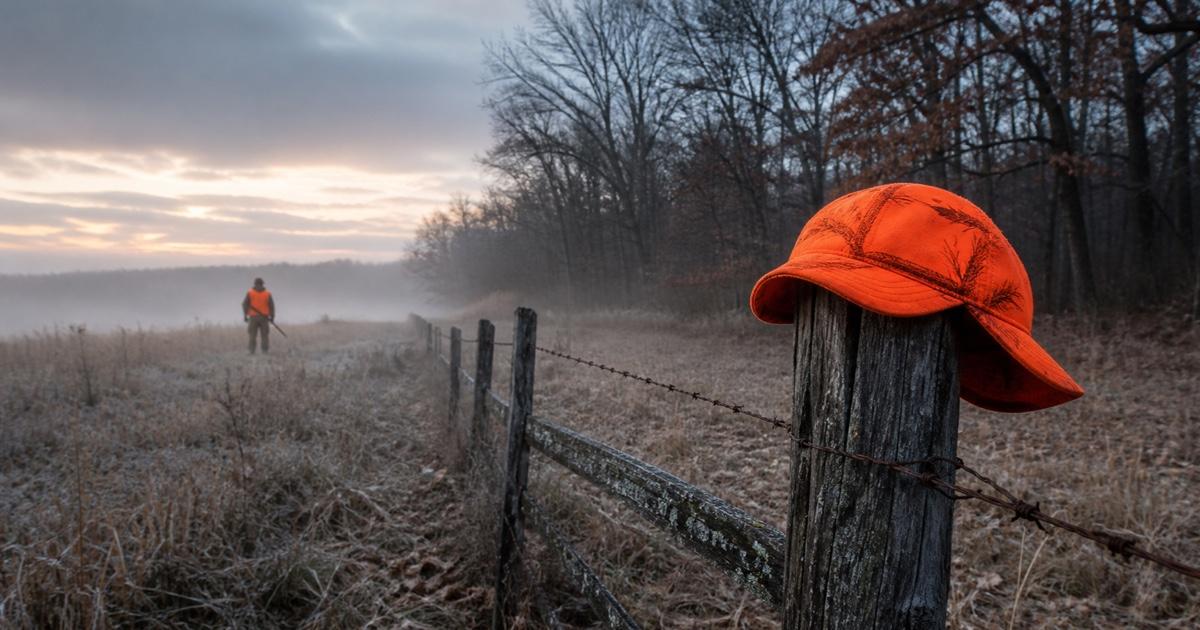
Statutory and regulatory violations sharpen the picture. The clearest example is hunter orange. Under 29 O.S. § 5-205, no person may hunt deer or elk with legal firearms unless wearing a head covering and an outer garment above the waistline, together totaling at least 500 square inches of clothing of which no less than 400 square inches is daylight fluorescent orange, worn conspicuously. The criminal fine is modest — $25 to $50 — but its civil significance is larger than the fine: it is the Legislature putting a number on how visible a deer or elk firearms hunter is supposed to make himself, and juries hear that number. The Wildlife Department's current big-game regulations go further, requiring orange of firearms hunters in all antelope, bear, deer, and elk seasons on both public and private land, and requiring at least an orange cap or upper garment of most other hunters afield during those seasons (waterfowl, crow, crane, and dove hunters, and night furbearer hunters, are excepted). The underlying rule is OAC 800:25-7-3(c). The Department's guide says it "is not a legal document" but an interpretive summary of Title 29 and Title 800, so in litigation the current guide should be read against the rule text, not substituted for it.
Oklahoma does not leave that translation to instinct. A statutory or regulatory violation can support negligence per se only when the violation caused the injury, the injury is the type the rule was written to prevent, and the injured person belongs to the class the rule was written to protect. That framework does uneven work in hunting cases, and the orange statute is the clearest illustration: it governs what a hunter puts on his own body, so a shooter's bare failure to wear orange is not what injured someone else. That is why the orange question usually surfaces on the other side of the ledger. The rules of the field still give both sides their vocabulary: a shooter who fired at movement without identifying the target has violated the most basic rule the state teaches, and a victim who was hard to see because he wore no orange during a rifle season will hear about it under Oklahoma's comparative negligence framework.
Carrying or using a shotgun, rifle, or pistol while under the influence is a crime in Oklahoma under 21 O.S. § 1289.9. In a civil case, the same conduct can help support the reckless-disregard finding required for punitive damages under 23 O.S. § 9.1.
The Landowner: A Liability Shield With Hunting Written Into It
Most Oklahoma hunting happens on private land, and injured hunters are often surprised by what the law says about the landowner. Oklahoma's recreational land use statute, 76 O.S. § 10.1, was written to encourage owners to open land to the public for outdoor recreation — and hunting is the first activity on its list of protected recreational purposes. An owner who provides land to the public for those purposes free of charge owes no duty to keep the land safe for entry or use, or to warn of hazardous conditions, structures, or activities — and that is true whether the injured person would otherwise count as an invitee, licensee, or trespasser.
Three features of the statute matter enormously in hunting cases:
The "charge" exception has a hunting-shaped hole — but a narrow one. The shield generally disappears when a charge is made for entry or use of the land, or when a commercial or other activity for profit directly related to that use is conducted on it. The statute defines "charge" to exclude hunting and fishing leases, along with hunting and fishing license and permit fees. The practical upshot: a hunter who paid for a season deer lease cannot assume that payment alone converted the landowner into a paying-customer premises defendant. Two limits matter just as much. The lease carve-out applies to the definition of "charge"; it does not erase the separate commercial-activity clause, so a fee-per-gun operation or guide business is different from a passive pasture lease. And the protection is written for an owner who provides the public with land for recreation. A tract leased to a closed group may fall outside that threshold before the charge analysis is ever reached. The lease documents and the way the land was actually used therefore matter from the start.
Farm and ranch land is carved out entirely. Section 10.1 does not apply to land used primarily for farming or ranching activities. That land is governed by the Oklahoma Limitation of Liability for Farming and Ranching Land Act, 2 O.S. §§ 16-71.1 through 16-71.7. That act also lists hunting among its protected recreational purposes, but its terms differ: it has no charge or commercial-activity exception, and its release provision applies regardless of the amount charged per acre. Its limits also preserve liability for a failure to guard or warn against a dangerous condition in specified circumstances. Since much Oklahoma hunting happens on working agricultural land, which statute governs the property is often the first question in the case — and neither act defines what "used primarily" for farming or ranching means.
The shield is not absolute. The statute contains its own limiting language addressing want of ordinary care and deliberate, willful, or malicious injury, and it does not shield an owner's liability for the operation and maintenance of structures the owner affixed for use by the general public. Where the recreational-use statute does not control, the ordinary rules we cover in our premises liability guide do.
Outfitters, Guides, and Waivers
Commercial hunt operations — guided hunts, fee-per-gun preserves, corporate lodge weekends — are businesses, and a business conducting a for-profit activity on the land is what the recreational-use statute's commercial exception describes. That is why nearly every outfitter requires a signed release. Oklahoma enforces exculpatory releases only within strict limits and they cannot excuse willful or grossly negligent conduct; our article on when liability waivers hold up in Oklahoma explains the three-part test. On farming and ranching land, 2 O.S. § 16-71.6 addresses releases directly: a signed release binds the signer regardless of the amount charged per acre, but it does not limit a landowner's liability for willful or wanton acts of negligence or gross negligence. A guide who places clients in crossing fields of fire, or a preserve that mixes hunting parties without communication, presents an operational-negligence question that no signature necessarily forecloses.
Tree Stands and Equipment
Falls from tree stands are among the most common serious hunting injuries, and they raise a different set of defendants: the manufacturer of a defective stand, strap, or harness, and sometimes the landowner or outfitter who supplied or maintained a permanent stand. If equipment failed, the single most important early step is preservation — keep the stand, straps, harness, and packaging unaltered, photograph the tree and anchor points, and do not return anything to a retailer. The same evidence discipline applies to a firearm alleged to have discharged defectively.
If a Child Was Involved
Youth seasons put young hunters in the field, and Oklahoma law puts corresponding weight on the adults who arm and supervise them. An adult who hands a rifle to a child without adequate training or supervision faces the same kind of entrustment reasoning Oklahoma applies when an owner lends a car to an incompetent driver — the claim targets the adult's own judgment, not just the child's conduct. The handoff itself is not unlawful: 21 O.S. § 1273 expressly allows a parent, guardian, or someone acting with permission to give a child a firearm for hunting, training, and sporting events. The legal question is the adult's judgment, instruction, and supervision. A parent's pre-injury waiver also does not necessarily dispose of the child's own claim, as our Oklahoma liability-waiver guide explains. And any settlement of an injured minor's claim generally requires court approval, a process we cover in our guide to minor settlements in Oklahoma.
Practical Steps After a Hunting Accident
Get medical care and let the game warden investigation happen — but preserve your own record too: the clothing everyone was wearing (orange or not), photographs of positions and sight lines, the names of every member of both parties, and any lease or permission documents for the land. Watch the clock while you do it: most Oklahoma injury claims must be filed within two years, a fatal accident carries its own two-year deadline, and an incident on a wildlife management area or other state-managed ground may trigger separate government-claim notice requirements. Our Oklahoma statutes-of-limitations guide explains why the correct deadline depends on the claim and defendant. Insurance is the quiet battleground in these cases: the shooter's homeowners policy is often the realistic source of recovery, coverage positions vary with policy language, and an early denial is not the final word. Identify every potentially applicable policy — shooter, landowner, outfitter, umbrella — before anyone's carrier frames the story.
Hurt in an Oklahoma Hunting Accident?
Whose land it was, what the lease said, whether anyone was wearing orange, and which policy covers the shot are usually answered by documents and photographs that can disappear quickly. If you or a family member was seriously hurt in the field, our personal injury team can sort out which rules governed that ground, whose conduct fell short, and what insurance may apply.
Talk to an Injury LawyerFrequently Asked Questions
Can I sue someone who shot me in a hunting accident if it was unintentional?
Yes. Civil liability does not require intent — it requires negligence. A hunter who fires without positively identifying the target, shoots toward an area he cannot see, or does not know where his party members are has a negligence problem regardless of his intentions. The investigation that follows a hunting shooting (game wardens work these incidents) often produces the factual record — positions, distances, sight lines, sobriety — that a civil case is built on.
Is the landowner responsible if I was hurt hunting on their property?
Often not, but it depends on the arrangement. Under 76 O.S. § 10.1, an owner who lets people hunt on the land for free owes no duty to keep the land safe or warn of hazards, and the statute's definition of a disqualifying "charge" excludes hunting leases — so even some paid arrangements leave the shield intact. But the statute does not apply to land used primarily for farming or ranching (a separate act governs that land), does not protect for-profit commercial hunting operations under its commercial-activity exception, and has limiting language for willful or malicious conduct. Which category your situation falls into is a legal question worth an early answer.
Does it hurt my case if I was not wearing hunter orange?
It can affect it, but it does not end it. Oklahoma law requires deer and elk firearms hunters to wear conspicuous hunter orange under 29 O.S. § 5-205, and Wildlife Department regulations extend orange requirements to most hunters afield during big-game firearms seasons. A defendant will argue that a hunter who should have worn orange shares fault. Oklahoma's comparative-negligence rule still permits recovery when the injured person's fault is 50% or less, reduced by that percentage; only a share greater than the other side's bars recovery entirely. The shooter's independent duty to identify the target before firing does not disappear because the target was hard to see.
I signed a waiver at a guided hunt. Can the outfitter still be liable?
Possibly. Oklahoma enforces liability waivers only within strict limits, and no waiver excuses willful or grossly negligent conduct. Whether a particular release covers a particular failure — a guide's decision to place shooters in crossing lanes of fire, for example — depends on the release's language and the conduct involved. Bring the signed paperwork to any consultation; it is the first document a lawyer will want to read.