
Key Takeaways
- Reservations confirmed, not created: The Supreme Court's McGirt decision (2020) confirmed that the Muscogee (Creek) Nation's reservation was never legally dissolved.
- Later cases recognized other reservations: Oklahoma courts applied similar reasoning to the Cherokee, Chickasaw, Choctaw, Seminole, and Quapaw reservations.
- Not every tribe qualifies: Reservation status depends on the tribe-specific treaties, statutes, and congressional acts. Some Oklahoma reservations have been held disestablished.
- Broad practical impact: Reservation status can affect criminal jurisdiction, taxation, regulation, and business licensing, but the answer depends on the people, land, and claim involved.
- Recognition, not expansion: The decision recognized authority that legally existed all along but had been ignored for over a century.
In 2020, the U.S. Supreme Court issued one of the most significant Indian law decisions in decades: McGirt v. Oklahoma. The ruling sent shockwaves through Oklahoma's legal system—but most people still don't fully understand what happened or why it matters.
Here's the plain-English version: The Court held that the Muscogee (Creek) Nation's reservation was never legally dissolved. It still exists.
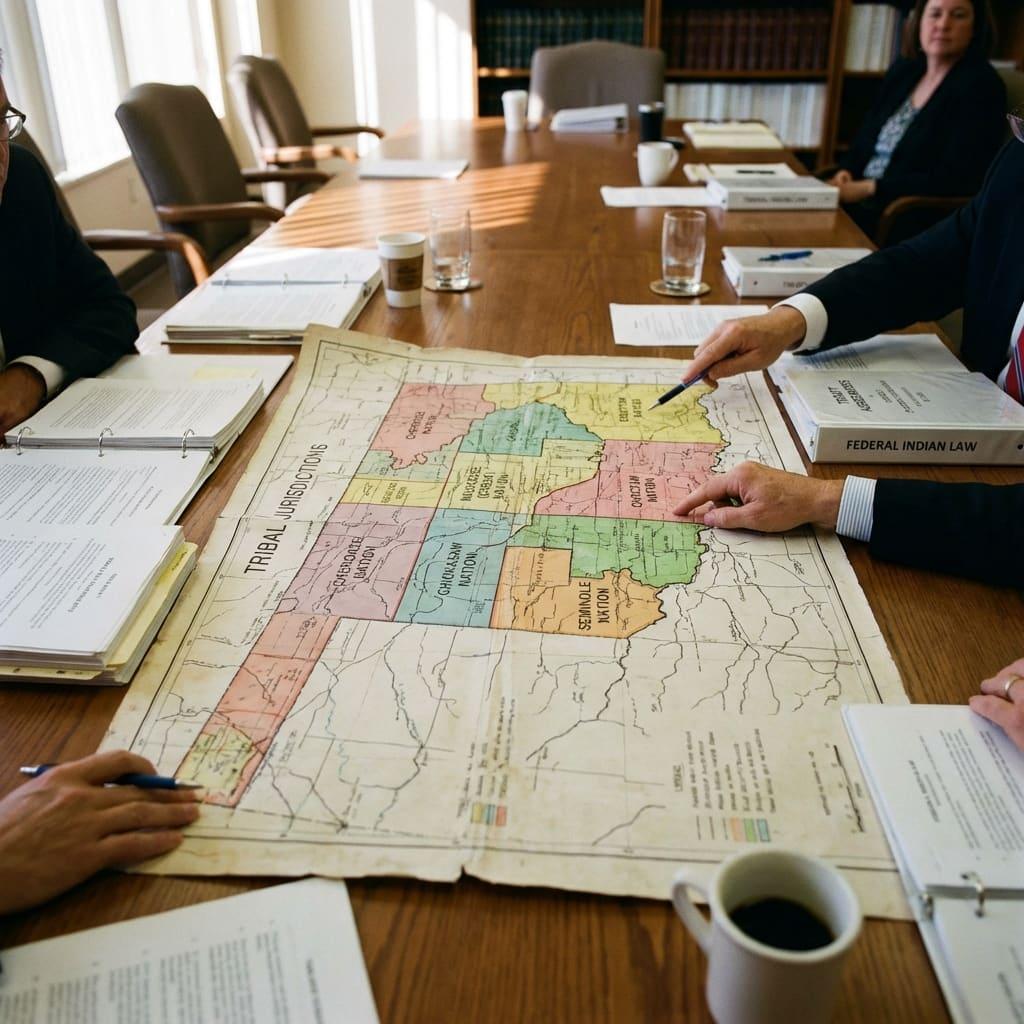
Since then, Oklahoma appellate courts have applied similar reasoning to the Cherokee, Chickasaw, Choctaw, Seminole, and Quapaw reservations. That means much of eastern Oklahoma, including most of Tulsa, is legally "Indian Country" for many federal-law purposes. The implications extend beyond criminal cases and can affect business operations, taxation, regulation, and civil jurisdiction across the region.
But here's the part that confuses people: Not every tribe in Oklahoma has a reservation. So what's the difference?
What "Reservation" Actually Means
A reservation is land set aside by the federal government for a tribe's use. Reservations are created by treaties, statutes, or executive orders. They carry broad legal significance, affecting everything from criminal jurisdiction to taxation to regulatory authority over the land and people within their boundaries.
When Oklahoma became a state in 1907, the prevailing (and incorrect) assumption was that the tribal reservations in what had been "Indian Territory" were dissolved—absorbed into the new state. For over a century, Oklahoma operated as if those reservations no longer existed.
McGirt said that assumption was wrong. Congress never passed legislation disestablishing the Creek reservation. And under federal Indian law, if Congress didn't explicitly terminate a reservation, it still exists. This principle — that only Congress can disestablish a reservation, and must do so with clear language — is the foundation of the entire McGirt analysis and everything that has followed from it.
The "Five Tribes" and Their Treaty Reservations
The McGirt decision specifically addressed the Muscogee (Creek) Reservation. Afterward, Oklahoma courts applied similar treaty-and-statute analysis to the other Five Tribes: the Cherokee, Chickasaw, Choctaw, and Seminole Nations.
These tribes were forcibly relocated to Indian Territory (present-day Oklahoma) in the 1830s and 1840s via the Trail of Tears. They were promised their new lands "in perpetuity" through treaties with the United States. Those treaties created reservations with defined boundaries — and the question at the heart of McGirt was whether those boundaries still mean anything.
After McGirt, Oklahoma appellate decisions recognized that the other Five Tribes' reservations also remain intact for federal criminal-jurisdiction purposes. Together, those reservations cover a large portion of eastern Oklahoma.
What About Other Oklahoma Tribes?
Oklahoma has 39 federally recognized tribes—not just the Five Tribes. Why doesn't McGirt apply to all of them?
Different Legal Status
Not all tribes have reservations. The legal status of a tribe's land depends on the specific treaties, statutes, and executive orders that apply to that tribe.
Some examples:
Tribes with Recognized Reservations
- The Muscogee (Creek), Cherokee, Chickasaw, Choctaw, and Seminole reservations have been recognized in the post-McGirt criminal-jurisdiction cases
- The Quapaw Nation's reservation was also confirmed post-McGirt
Tribes Without Traditional Reservations Many western Oklahoma tribes—like the Comanche, Kiowa, and Cheyenne-Arapaho—had their reservations allotted and opened to non-Indian settlement under the Dawes Act and related legislation. Courts have found these reservations were disestablished (legally dissolved) by Congress.
Tribes with Trust Land Only Some tribes have "trust land" (land held by the federal government for the tribe) but not a reservation in the traditional sense. Trust land is still "Indian Country" under federal law, but it is usually tied to specific parcels rather than a continuous reservation boundary.
The Disestablishment Analysis
Whether a reservation still exists depends on what Congress did. McGirt emphasized that only Congress can disestablish a reservation and that courts should start with the statutory text. Older Solem v. Bartlett factors still inform the analysis, but history and demographics cannot substitute for clear congressional language:
- Statutory Language: Did Congress explicitly terminate the reservation?
- Historical Context: What was Congress's intent at the time?
- Demographics and Jurisdiction: How has the land been treated since then?
For the Muscogee (Creek) Reservation, the Supreme Court found no clear disestablishment language. Oklahoma courts later reached similar conclusions for several other reservations and different conclusions for some others. The critical distinction is between allotment, which divided tribal land into individual parcels but does not by itself terminate a reservation, and disestablishment, which requires congressional action ending reservation boundaries. Many people confuse the two, but McGirt made clear they are legally distinct concepts.
Practical Differences: Reservation vs. Non-Reservation Status
Criminal Jurisdiction
This was the issue in McGirt itself. Under the Major Crimes Act (18 U.S.C. § 1153), on reservation land:
- Major crimes involving tribal members are prosecuted in federal court, not state court
- The Supreme Court's 2022 decision in Oklahoma v. Castro-Huerta held that Oklahoma has concurrent jurisdiction to prosecute non-Indians who commit crimes against Indians in Indian Country
- This shift has implications for cross-commissioned officers who operate under both tribal and state authority
For tribes without reservations, state courts typically have broader criminal jurisdiction.
Civil and Regulatory Jurisdiction
Reservation status affects which government—tribal, state, or federal—has authority over:
- Taxation
- Environmental regulation
- Business licensing
- Family law matters
- Civil disputes
Even on non-reservation land, tribes may exercise jurisdiction over trust land and tribal members.
Practical Impact for Residents
If you live in Tulsa, your exact location may fall within the Muscogee (Creek) or Cherokee reservation boundaries. That does not mean tribal law governs your daily life if you are not a tribal member, but it can affect which court handles certain crimes, how some businesses are taxed, and how the state and tribes interact.
If you live in Lawton (near the Comanche, Kiowa, and Apache tribes), the situation is different. Those tribes have trust land and jurisdiction within it, but broader reservation boundaries don't apply in the same way. The practical difference is that jurisdictional questions in eastern Oklahoma arise across entire geographic regions, while in western Oklahoma they tend to arise only when specific trust land parcels are involved.
Why This Matters
McGirt wasn't about creating new tribal authority. It was about recognizing authority that legally existed all along but had been ignored. The decision didn't expand tribal power — it acknowledged power that the treaties had always conferred.
For the tribes whose reservations were confirmed, it means:
- Greater criminal jurisdiction
- Stronger regulatory authority
- A more powerful position in negotiations with the state
- Federal funding that applies to "reservation" tribes
For tribes whose reservations have been finally held disestablished, trust land may still remain Indian Country even though the broader reservation boundary is not recognized.
For tribes with unclear status, more litigation may be coming. The McGirt framework provides the analytical tools, but each tribe's land history must be evaluated individually, and some of those evaluations remain unresolved.
The Big Picture
Oklahoma has a unique history. It was literally "Indian Territory"—land promised to tribes after removal. The legal status of that land has always been complicated, and McGirt forced everyone to confront that complexity. Understanding tribal law and sovereignty is essential for anyone living, working, or doing business in Oklahoma.
Some tribes have reservations. Some don't. The difference comes down to what Congress did—or didn't do—over the past 150 years.
Frequently Asked Questions
Does McGirt mean I live on a reservation?
If you live in eastern Oklahoma within the boundaries of the Muscogee (Creek), Cherokee, Chickasaw, Choctaw, or Seminole Nations, yes — you may live within a recognized reservation. However, this primarily affects criminal jurisdiction and certain regulatory matters, not your daily life if you are not a tribal member.
Did McGirt create new tribal authority?
No. McGirt recognized authority that legally existed all along but had been ignored. The Court found that Congress never passed legislation disestablishing these reservations, so they remained legally intact the entire time.
Why don't western Oklahoma tribes have reservations?
Many western Oklahoma tribes had reservations that were later allotted, opened to non-Indian settlement, or otherwise addressed by different congressional acts. Courts have held some of those reservations disestablished, unlike the post-McGirt holdings for the Five Tribes.
How does McGirt affect businesses in eastern Oklahoma?
Businesses operating within reservation boundaries may face questions about which government has regulatory and taxing authority. The practical impact depends on the specific business, its location, and whether tribal members are involved. For detailed guidance on navigating these issues, see our article on McGirt's business implications.
Did Castro-Huerta reverse McGirt?
No. Oklahoma v. Castro-Huerta (2022) addressed criminal jurisdiction, holding that Oklahoma has concurrent jurisdiction to prosecute non-Indians who commit crimes against Indians in Indian Country. It did not reverse McGirt's core holding that the Muscogee (Creek) Reservation was never disestablished. Reservation status, civil jurisdiction, and regulatory authority remain separate questions.
What is "Indian Country" under federal law?
Federal law defines "Indian Country" at 18 U.S.C. § 1151 to include all land within a reservation (regardless of ownership), dependent Indian communities, and allotments still held in trust. The definition applies for criminal and some civil purposes. McGirt confirmed the Muscogee (Creek) Reservation for Major Crimes Act purposes, and later Oklahoma cases recognized several other reservation boundaries.
Can tribal courts hear cases involving non-Indians?
Tribal court jurisdiction over non-Indians is limited. Under Montana v. United States (1981), tribes generally cannot exercise civil jurisdiction over non-Indians on fee land within a reservation, with two exceptions: (1) when the non-Indian has entered a consensual relationship with the tribe (such as a contract), or (2) when the non-Indian's conduct threatens the political integrity, economic security, or health and welfare of the tribe. These exceptions are interpreted narrowly.
Questions About Tribal Jurisdiction?
Whether it's a criminal case, business dispute, or regulatory question, we help tribal governments and individuals navigate the complex jurisdictional landscape post-McGirt.
Contact Us Today →This article is for general information only and is not legal advice.