
Key Takeaways
- Oklahoma Has a Specific Statute for Questioning Kids: Under 10A O.S. § 2-2-301, information gained by the custodial interrogation of a child — and evidence derived from it — is generally not admissible against the child unless the questioning happened in the presence of a parent, guardian, attorney, adult relative, adult caretaker, or legal custodian. The statute also says the questioning may not begin until both the child and that adult have been fully advised of the child's rights, including the right to counsel.
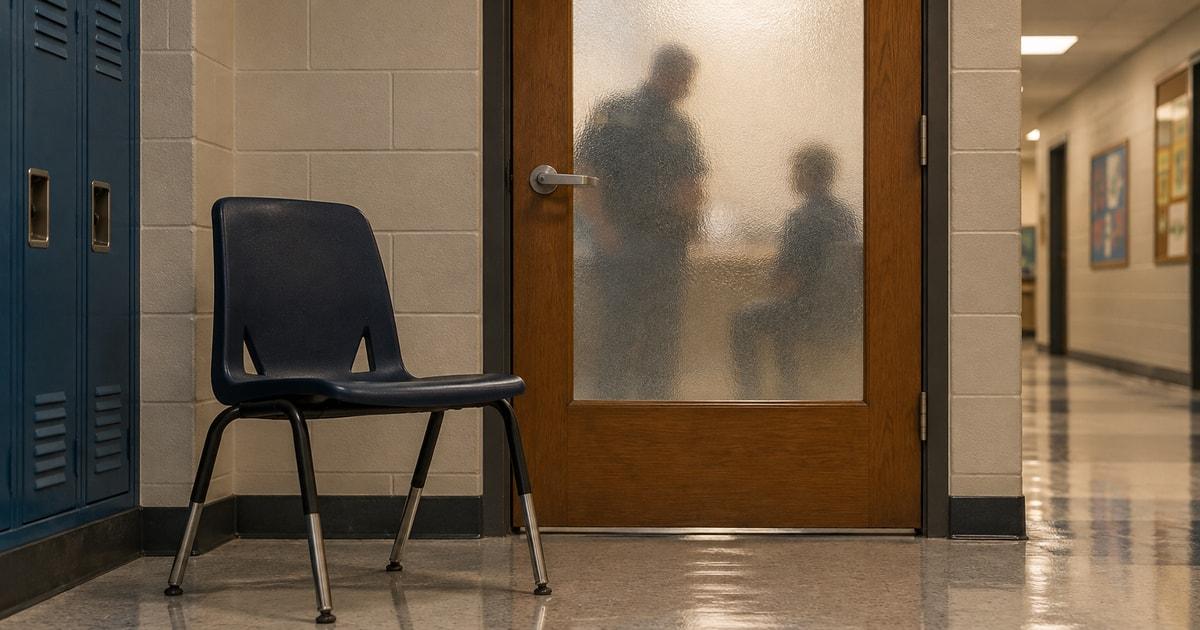
- Age Is Part of the 'Custody' Test: In J.D.B. v. North Carolina, the U.S. Supreme Court held that a child's age properly informs the Miranda custody analysis. The case arose from a school: a 13-year-old pulled out of class by a uniformed officer and questioned behind a closed door. The Court reversed the North Carolina Supreme Court, which had declined to consider his age, and sent the case back to decide whether he was in custody.
- The Principal's Own Questions Are Different: The statute carves out questioning done by a public school administrator or teacher acting on their own. That is not "custodial interrogation" under § 2-2-301. The carve-out disappears when the school official is questioning the student on behalf of law enforcement, a court employee, or the Office of Juvenile Affairs — and if the student is in custody, the statute's protections can then apply.
- Older Teens Sit on a Contested Line: The statute applies only adult interrogation rules to a youthful offender over sixteen. And in A.M.C. v. State, a divided Oklahoma Court of Criminal Appeals held in 2021 that a 17-year-old questioned about a first-degree murder — an offense Oklahoma law treats as an adult charge at that age — fell outside the parent-presence rule, even though he was never charged with the murder. The 2022 amendment to § 2-2-301 left those interrogation rules unchanged, and how far A.M.C. reaches beyond murder investigations is a question for a lawyer.
If a police officer wants to question your child at school in Oklahoma, the short answer is that the conversation can happen — but what comes out of it may be unusable against your child if the rules were broken. Oklahoma law does not give parents an absolute veto over every chat between an officer and a student. What it does, through 10A O.S. § 2-2-301, is make the product of a custodial interrogation of a child generally inadmissible against the child unless a parent, guardian, attorney, or another adult listed in the statute was actually in the room — and it says the questioning may not begin until both the child and that adult have been told the child's rights. Whether a given school interview was "custodial" is exactly where the fights happen — and the U.S. Supreme Court has said a child's age is part of that analysis. This article walks through what the statute requires, what the school's own staff can do, where the line blurs for older teenagers, and what to do if it has already happened to your family.
This article is general legal information, not legal advice. Whether a particular interview was custodial, whether a particular statement is admissible, and whether anyone's rights were violated are fact-specific questions that depend on exactly what happened in that room.
What Oklahoma's Statute Actually Requires
Oklahoma's juvenile code treats the questioning of children differently from the questioning of adults. Under 10A O.S. § 2-2-301, no information gained by the custodial interrogation of a child — or of a youthful offender under sixteen — and no evidence derived from that information, may be admitted against the child unless the questioning took place in the presence of the child's parents, guardian, attorney, adult relative, adult caretaker, or legal custodian. The statute adds a timing rule: no such interrogation may begin until both the child and that adult have been fully advised of the child's constitutional and legal rights, including the right to be represented by counsel at every stage of the proceedings and the right to appointed counsel if the family cannot afford one.
The statute also says what "custodial interrogation" means in this context: questioning while the child is in the custody of law enforcement, or otherwise deprived of freedom in any significant way, by a law enforcement officer, a court employee, or an employee of the Office of Juvenile Affairs. A custodial interrogation of a child must also meet all the requirements that apply to the interrogation of an adult — the familiar Miranda framework sits underneath the statute, not in place of it.
For purposes of the juvenile code, a "child" is generally any person under eighteen, with exceptions the code itself spells out — for example, a youth who has been convicted of a Youthful Offender Act offense, or who was certified as an adult and then convicted, or who received a deferred sentence in either situation. The definition lives at 10A O.S. § 2-1-103.
Notice what the statute is and is not. It is an evidence rule with teeth: a statement taken the wrong way, and the evidence that flows from it, is generally off the table. It is not a blanket requirement that officers notify parents before ever speaking to a student, and it does not make a noncustodial conversation unlawful or attach a criminal penalty. That distinction matters when you are deciding what to do next.
When Is a School Interview "Custodial"? Age Counts.
Most school questioning disputes come down to one word: custody. An officer who casually asks a student a question in a hallway is in very different legal territory from an officer who has a student brought to a closed office and questioned at length. The test is objective. Courts look at how a reasonable person in the student's position would have understood the situation: whether they would have felt free to end the questioning and leave and, ultimately, whether the restraint was of the kind associated with a formal arrest. Feeling unable to walk away is necessary for custody, but it is not always enough.
The U.S. Supreme Court answered a crucial piece of that question in J.D.B. v. North Carolina, 564 U.S. 261 (2011) — a case that began in a seventh-grade classroom. A uniformed school resource officer removed a 13-year-old from class and took him to a closed-door conference room, where — with that officer, a police investigator, the assistant principal, and an administrative intern present — he was questioned for 30 to 45 minutes about two home break-ins. No Miranda warnings were given before he confessed. Neither the police nor the school contacted his grandmother, who was his legal guardian. The trial court found he was not in custody, and the North Carolina Supreme Court affirmed after declining to consider his age as part of the custody test. The Supreme Court reversed and remanded, holding that a child's age properly informs the Miranda custody analysis, so long as the child's age was known to the officer or would have been objectively apparent to a reasonable officer. As the Court recognized, children will often feel bound to submit to police questioning in circumstances where an adult would feel free to walk away — and a schoolhouse, where attendance is compelled by law and disobedience is punished, amplifies that pressure.
J.D.B. did not hold that every school interview is custodial. Its reasoning is that courts cannot pretend a 13-year-old experiences a closed-door police interview the way a 35-year-old would. For Oklahoma parents, the practical upshot is that the same facts — pulled from class, door closed, uniformed officer, no one told they could leave — can weigh more heavily toward custody when the person in the chair is a child. The Court did not decide whether J.D.B. was in custody; it sent the case back, and it cautioned that a child's age will not be 'a determinative, or even a significant, factor in every case.'
The School-Official Carve-Out
Section 2-2-301 draws a line between police questioning and the school's own discipline process. Questioning by a public school administrator or teacher is not "custodial interrogation" under the statute — unless the administrator or teacher is acting on behalf of law enforcement, a court employee, or the Office of Juvenile Affairs. The statute also provides that information a student gives in noncustodial questioning by school officials about a wrongful act on school property is admissible.
In plain terms: a principal investigating a cafeteria fight can question students without a parent present, and what a student says can be used. But the carve-out has its own limit, and it is an important one. When school staff become the questioning arm of the police — gathering statements at an officer's request, for an officer's case — the carve-out no longer applies, and if the student is in custody, the statute's protections can apply. Whether that happened in a given case is a fact question about who was really running the interview, which is one of the first things a lawyer will want to reconstruct.
Older Teens and the A.M.C. Problem
Parents of older teenagers should know that the statute's protection has limits. Section 2-2-301 itself draws one age line: its parent-presence rule covers a "child" and a youthful offender under sixteen, while the custodial interrogation of a youthful offender over sixteen only has to meet the requirements for interrogating an adult.
The courts have drawn a second line. In A.M.C. v. State, 2021 OK CR 20, Oklahoma City homicide detectives arrested a 17-year-old on a juvenile probation-violation warrant and questioned him about a fatal shooting. A detective read him his Miranda rights, but no parent, attorney, or other adult was present. He denied killing anyone but admitted having and firing a gun. He was booked on a probable-cause affidavit listing first-degree murder, but the State never charged him with the murder; it filed a juvenile delinquency petition for possessing a firearm after a prior juvenile adjudication, and his statement was used to adjudicate him delinquent. The trial court refused to suppress the statement, and a divided Oklahoma Court of Criminal Appeals affirmed, 3-2, in 2021. The majority relied on 10A O.S. § 2-5-205(B), under which a 15-, 16-, or 17-year-old "charged with murder in the first degree" is held accountable as an adult, and read "charged" to turn on the offense under investigation rather than on formal charges. It held that the custodial interrogation of a 17-year-old for first-degree murder is governed by Miranda and voluntariness requirements, not by § 2-2-301. Presiding Judge Kuehn and Judge Lewis dissented, each joining the other's opinion: in their view, A.M.C. was still legally a child when he was questioned, and his statement should have been suppressed.
The Legislature amended § 2-2-301 effective July 1, 2022, the year after A.M.C., but that amendment left subsections A and B — the interrogation rules the court interpreted — unchanged. Section 2-5-205, which has itself been amended since A.M.C., also lists other serious offenses, such as second-degree murder and first-degree robbery, for which 15- to 17-year-olds can be prosecuted as youthful offenders. A.M.C. decided only the first-degree murder situation, and whether its reasoning reaches questioning about those other offenses is a question for a lawyer looking at the specific facts. The practical takeaway for parents: a 16- or 17-year-old questioned in custody about ordinary delinquent conduct is generally still a "child" covered by the parent-presence rule; a 17-year-old questioned about a first-degree murder falls under A.M.C.; and for a teen questioned about another serious offense, the answer depends on facts a lawyer should review — which is exactly when getting counsel involved early matters most.
What Parents Can Do — Before and After
Nothing in the statute prevents a family from being proactive. A child can be taught, calmly and in advance, that if an officer ever wants to question them, they should say clearly that they want their parent and a lawyer and do not want to answer questions, and then stop talking. Asking for counsel is not an admission of anything. Children have the same constitutional right to remain silent that adults have — J.D.B.'s whole premise is that children need its protection more, not less.
If questioning has already happened, start assembling the record while it is fresh. Write down what your child remembers: who was in the room, who asked the questions, whether the door was closed, whether anyone said they could leave, how long it lasted, and what was said. Ask the school, in writing, for its account of the interview and for any incident report. If a school resource officer was involved, body-camera and surveillance footage may exist, and it does not last forever — our guide to police body camera footage in Oklahoma explains how retention and requests work. If the encounter went beyond questioning into force or restraint, that is a different and more serious problem, covered in our guides to school resource officer excessive force and restraint and seclusion in Oklahoma schools.
When Does This Become a Civil Rights Case?
Most violations of § 2-2-301 are fought where the statute puts them: in the juvenile or criminal case, as suppression — the State loses the statement and the evidence derived from it. A statutory violation, by itself, is not automatically a federal lawsuit.
But school questioning can cross constitutional lines that do support a civil claim under Section 1983. An officer who detains a student without adequate justification may violate the Fourth Amendment. Questioning that becomes coercive — threats, manufactured evidence, exploitation of a child's disability — raises due-process concerns, and a statement procured that way can do lasting damage if it drives charges, detention, or expulsion. Whether facts like those support a claim against the officer, and in rare cases the district, is an evaluation our police misconduct practice makes case by case; the time limits that govern such claims are covered in our guide to Section 1983 limitations periods. The honest framing for parents: suppression is the ordinary remedy, and the civil path exists for the cases where something more than a statutory violation happened to your child.
Frequently Asked Questions
Does my child have to answer police questions at school?
No. A child has the same constitutional right to remain silent that an adult has, and a child who is in custody has the right to ask for a lawyer before answering. The safest approach is for the child to say clearly, "I want my parent and a lawyer, and I don't want to answer questions," and then stop talking — simply staying quiet without saying so may not be enough to protect the right. Separately, under 10A O.S. § 2-2-301, what a child says in a custodial interrogation generally cannot be used against the child unless a parent or another listed adult was present.
Can the principal question my child without calling me first?
Generally yes, for the school's own purposes. The statute excludes questioning by a public school administrator or teacher from the definition of custodial interrogation, and what a student says in noncustodial questioning by school staff about a wrongful act on public school property is admissible. That exclusion does not apply when school staff are questioning the student on behalf of law enforcement, a court employee, or the Office of Juvenile Affairs — and if the student is in custody, the statute's protections can then apply.
What happens if police questioned my child in custody without a parent present?
Under § 2-2-301, information gained from the custodial interrogation of a child — and evidence derived from it — generally cannot be used against the child unless a parent, guardian, attorney, adult relative, adult caretaker, or legal custodian was present, and the statute says the questioning may not begin until both the child and that adult have been advised of the child's rights. Different rules can apply to a 16- or 17-year-old who is being treated as a youthful offender or who is questioned about a first-degree murder. The usual remedy is suppression in the juvenile or criminal case. Whether the facts also support a civil claim depends on what else happened during the encounter, and is worth a consultation.
My teenager is 17. Do these protections still apply?
Often, but not always. A 17-year-old is generally still a "child" under Oklahoma's juvenile code, and § 2-2-301's parent-presence rule covers a child questioned in custody about ordinary delinquent conduct. Two situations fall outside it. The statute itself applies only adult interrogation rules to a youthful offender over sixteen. And in A.M.C. v. State (2021), a divided Oklahoma Court of Criminal Appeals held that the custodial interrogation of a 17-year-old about a first-degree murder was governed by adult Miranda and voluntariness rules instead — even though he was never charged with the murder and his statement was used in a juvenile firearm case. The 2022 amendment to § 2-2-301 did not change those interrogation rules. For a teen questioned about another serious offense, a lawyer should look at the specific facts before anyone assumes the statement is admissible or inadmissible.
Talk to an Oklahoma Civil Rights Lawyer
A police interview at school can raise questions about custody, who was present, and what the child was told. The law gives families real protections, but they depend on facts that fade fast — who was in the room, what was said, and who was really directing the questions. Addison Law Firm's police misconduct practice evaluates school questioning cases, and our guide to suing the police in Oklahoma explains how these claims work more broadly.
Contact us for a free consultation
This article is general information, not legal advice, and does not create an attorney-client relationship.