Key Takeaways
- Being in a Crowd Is Not Probable Cause: In Fogarty v. Gallegos (10th Cir. 2008), the federal appeals court that covers Oklahoma held that the Fourth Amendment requires probable cause to arrest each protester as an individual — not, in the court's words, as "a member of a large basket containing a few bad eggs."
- A Targeted Round Can Be a Seizure Without an Arrest: In Epps v. Christian (10th Cir. 2026), the court affirmed a jury verdict for a peaceful demonstrator who was deliberately shot with a pepperball but never arrested. The Fourth Amendment can apply when an officer intentionally uses force to control a particular person.
- The Practical Traps Decide These Cases: Short deadlines, unidentified officers, and qualified immunity sink more protest-injury claims than the underlying law does. In Fogarty, no officer ever admitted making the arrest — the riot-gear uniforms had no name tags and no arrest report was filed.
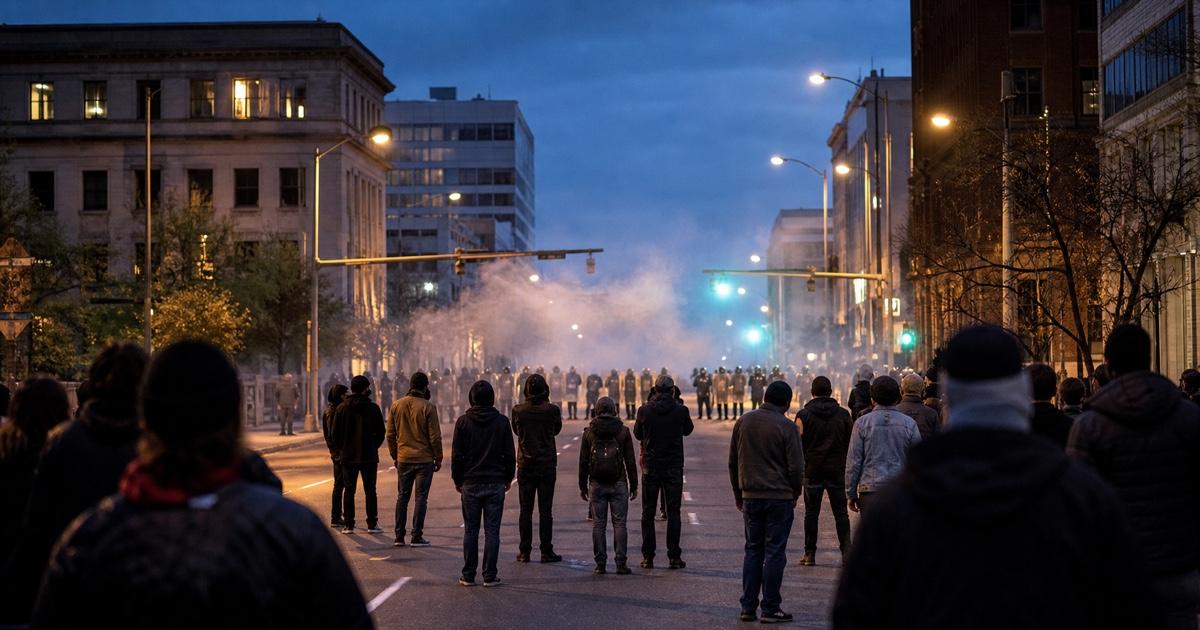
Going to a protest does not suspend your constitutional rights, and it does not suspend the police department's obligations either. Oklahoma officers can lawfully order a crowd out of a street, and clearing a street is something officers can lawfully direct — but under binding Tenth Circuit precedent, an arrest still requires probable cause particular to you, and any force used against you still has to be objectively reasonable under the circumstances. The federal appeals court that governs Oklahoma has allowed civil rights claims to move forward where officers fired pepper balls at a seated, unthreatening demonstrator, tear-gassed compliant protesters, and injured an arrestee who was not resisting. If you were hurt by police at a demonstration in Oklahoma — struck by a projectile, gassed, trampled, or injured during an arrest — this article explains where the real legal lines are, who can be sued, and why the first weeks after the injury matter far more than most people expect.
This article is general legal information, not legal advice. Protest cases are unusually fact-dependent, and several of the doctrines below are contested territory where the details of your situation control.
Yes, Police Can Order a Crowd to Disperse
Start with what the law allows, because credibility matters in these cases. Oklahoma defines a riot narrowly — under 21 O.S. § 1311, it takes three or more people actually using force or violence, or threatening it with the immediate ability to follow through. Courts have read that definition to require willful conduct and a shared intent among at least three people, not merely presence nearby. The Legislature also added a street-obstruction penalty in 2021. 21 O.S. § 1312(5) punishes unlawfully obstructing a public street, highway, or road while participating in a riot as a misdemeanor carrying up to a year in county jail and a fine of $100 to $5,000, plus civil liability for resulting damage. But the Oklahoma Court of Criminal Appeals has held that the provision "applies only to individuals who are guilty of participating in a riot and who unlawfully obstruct a roadway while participating in such riot." O'Connor v. Oklahoma State Conference of the NAACP, 2022 OK CR 21. Standing in a street during a peaceful demonstration is not, by itself, a § 1312(5) offense; the State must prove participation in a riot first. The same 2021 law added 21 O.S. § 1320.11, which shields a driver from criminal and civil liability for unintentionally injuring or killing someone — but only if the driver was fleeing an actual riot as defined above, reasonably believed fleeing was necessary to avoid serious injury or death, and exercised due care. Those conditions are strict, and whether they are met in any real collision is a litigated question, not a given.
So a lawful dispersal order, a street-clearing operation, or even your own arrest is not automatically a civil rights violation. The constitutional questions are narrower and sharper: did officers have probable cause to arrest you, and was the force used against you reasonable?
The Arrest: Probable Cause Has to Be Individual
The leading case comes from inside this federal circuit. In Fogarty v. Gallegos, 523 F.3d 1147 (10th Cir. 2008), a physician joined a drum circle at a 2003 antiwar protest near a university campus. Police — who had closed the surrounding streets — eventually deployed tear gas, moved in, and arrested him. He was shot with a projectile, forcibly taken down while suffering an asthma attack, and left with a torn wrist tendon. He was never charged with any crime.
The officers argued they had probable cause because the protest as a whole was disorderly. The Tenth Circuit — the federal appeals court whose decisions bind Oklahoma federal courts — rejected that framing. Probable cause must attach to the individual: participating in a protest where "some individuals may have broken the law" does not justify arresting everyone present. On the plaintiff's version of the facts, playing a drum at a reasonable volume was not disorderly conduct, and the arrest was unsupported by probable cause. The court affirmed the denial of qualified immunity to four of the officers.
Two important honesty notes. First, Fogarty was an interlocutory appeal — a ruling that the case could proceed to trial on the plaintiff's version of the facts, not a final judgment that the officers violated the Constitution. The court itself stressed that if the officers proved at trial that they reasonably believed the drumming was inciting the crowd, they might still win. Second, one supervisor with no proven connection to the arrest won his appeal and was granted immunity on the federal claims. Courts take individualized proof seriously in both directions.
The companion case, Buck v. City of Albuquerque, 549 F.3d 1269 (10th Cir. 2008), arose from the same protest and reached the commander who ran the police response. The court held that the incident commander — who ordered arrests, authorized pepper ball rounds, and personally deployed tear gas — was personally involved enough to stay in the case for the arrests and force he directed, even though he never touched anyone. Chanting "shame" at officers, standing on a sidewalk making peace signs, and ringing a cowbell did not, on the plaintiffs' facts, amount to probable cause for anything. Supervisory liability now requires proof of the supervisor's own conduct and state of mind, not a general failure to supervise. But where an officer fires a munition on someone else's direct order, the order-giver can be a proper defendant too.
The Force: Pepper Balls and Tear Gas Get No Special Pass
Force claims at protests are judged by the same Fourth Amendment "objective reasonableness" standard as any other police excessive force claim: the severity of the suspected crime, whether the person posed an immediate threat, and whether they were resisting or fleeing. Applied to a typical protest injury, that framework is often favorable. In Fogarty, the suspected offense — disorderly conduct — was a petty misdemeanor, the least serious category of offense; the plaintiff was kneeling, unarmed, and not resisting; and the court held that on his version of events the force used against him was unreasonable, and that a reasonable officer would already have known the constitutional analysis applies to "less lethal" weapons.
Buck is even more vivid. One plaintiff sat down in the street as a sign of protest; while she was seated and posing no threat, officers gassed her and then shot her repeatedly with pepper ball rounds — and kept shooting after she lay down to make plain she was not a threat. Another was kneed in the back and pressed onto a police car hood during an arrest he did not resist, then locked in a police van as tear gas seeped in. A third was struck repeatedly by a police horse and pinned between two mounted officers. The Tenth Circuit let those claims go forward, holding that the law was clearly established — quoting its own precedent that force is "least justified against nonviolent misdemeanants who do not flee or actively resist arrest" — and that the commander's personal involvement was enough to keep him in the case. It did not decide whether each use of force was in fact unconstitutional; on that interlocutory appeal, the court said it lacked jurisdiction to weigh the sufficiency of the evidence. Winning a qualified-immunity appeal is not the same as winning the case.
One more wrinkle deserves candor. If you were arrested, you were plainly "seized" and the Fourth Amendment applies. If you were hit by a projectile or gassed while dispersing — and never arrested — the first legal question is whether a seizure happened at all. In Torres v. Madrid, 592 U.S. 306 (2021), the Supreme Court held that applying physical force to a person with intent to restrain is a seizure even if the person gets away — but it also said force applied for "some other purpose" is not. The Tenth Circuit has already applied that rule to protesters. In Packard v. Budaj, 86 F.4th 859 (10th Cir. 2023), reviewing less-lethal rounds fired at two men who were never arrested, the court found it "difficult to imagine" that they were not seized. In Epps v. Christian (10th Cir. 2026), it affirmed a jury verdict for a demonstrator deliberately shot with a pepperball and never arrested. The harder case is diffuse force — gas or munitions released at a crowd generally, aimed at no one in particular. If there was no seizure, a claim generally falls under the Fourteenth Amendment's much tougher "shocks the conscience" standard. Which side of that line your case falls on depends on what the officer was objectively trying to do, which is why these cases need experienced counsel rather than a form complaint.
Who You Sue, and the Traps That Kill These Cases
A protest-injury lawsuit under Section 1983 can name the individual officers who used the force, supervisors who ordered or stood by during it, and — where an official policy or decision caused the violation — the city or county itself under the doctrine explained in our municipal liability guide. Each path has different proof requirements. Claims against officers personally also face qualified immunity, a defense that protects officers unless the right they violated was clearly established — a hurdle that Fogarty and Buck help with, but never guarantee past. Cities and counties do not receive qualified immunity; municipal liability instead turns on the policy-or-custom requirements described above.
The practical traps are just as dangerous as the doctrine:
Identifying the officer. In Fogarty, the arresting officers wore riot gear with no name tags or badge numbers, and no one filed an arrest report; despite 30 depositions, no witness could say who made the arrest. Photograph everything at the scene if you safely can, note unit markings and vehicle numbers, and act quickly — body camera and dispatch records that could identify officers are governed by retention schedules discussed in our body camera footage guide, and requests should go out early.
Deadlines. Federal civil rights claims borrow Oklahoma's two-year limitations period, with nuances covered in our Section 1983 deadlines guide. If your claim includes state-law theories against a city or county — assault, battery, negligence — the Governmental Tort Claims Act imposes a separate, much shorter notice regime that forfeits the claim if missed. Which deadlines apply to your situation needs to be calculated by a lawyer against your actual dates, not assumed from an article.
Your own criminal case. If you were charged, the criminal case comes first and its outcome shapes the civil one. When Buck was decided in 2008, two plaintiffs lost their malicious prosecution claims because their charges were dismissed only after they completed a one-day alternative sentencing program. That favorable-termination rule has since changed. In Thompson v. Clark, 596 U.S. 36 (2022), the Supreme Court held that a plaintiff "need only show that his prosecution ended without a conviction," and the Tenth Circuit responded in Shrum v. Cooke (10th Cir. 2023) that its older precedents applying the element "are no longer good law." A particular diversion, deferred arrangement, or negotiated disposition still requires careful analysis of what legally resulted. Before resolving any protest-related charge, talk to a civil rights lawyer about what that specific resolution does to your civil claims.
Hurt by Police at a Demonstration?
Whether crowd-control force crossed the constitutional line depends on what you were doing, what the officers knew, and what the video shows — facts that disappear fast. Our firm handles excessive force cases and civil rights litigation throughout Oklahoma.
Frequently Asked Questions
The police ordered the crowd to leave and I never heard it. Can they arrest me anyway?
An audible, understandable dispersal order matters, but the deeper requirement is individualized probable cause. In Fogarty, the announcements were "garbled and unintelligible" — possibly because of a malfunctioning speaker system — and the court still analyzed the arrest by asking whether the plaintiff himself committed an offense, not whether the crowd ignored an order. Refusing a lawful order can carry real exposure under municipal ordinances or other state offenses, and if the State can prove participation in an actual riot under 21 O.S. § 1311, the street-obstruction penalty in § 1312(5) can apply too. Whether an arrest in the confusion of a dispersal was lawful is a fact question that deserves case-specific review.
My charges were dropped. Do I still have a civil case?
Possibly — and dropped charges can help. The Fogarty plaintiff was never charged at all, and his claims proceeded. How the charges ended still matters for a malicious prosecution claim, but the rule has moved in plaintiffs' favor. In Thompson v. Clark, 596 U.S. 36 (2022), the Supreme Court held that a plaintiff need only show the prosecution ended without a conviction, not with an affirmative sign of innocence. The Tenth Circuit has since said its older favorable-termination precedents are no longer good law. A diversion, deferred arrangement, or alternative sentencing program still needs case-specific analysis because the exact legal disposition matters. Get civil rights advice before accepting any plea, diversion, or deferred arrangement arising from a protest arrest.
I was hit by a rubber bullet but never arrested. Can I sue?
Often, yes — and in this circuit the law is better than most people assume. Under Torres v. Madrid, force applied with intent to restrain you is a Fourth Amendment seizure even if you were never taken into custody. The Tenth Circuit applied that rule in Packard v. Budaj (2023), involving two men shot with less-lethal rounds and never arrested, and in Epps v. Christian (2026), which upheld a jury verdict for a demonstrator deliberately shot with a pepperball. The harder case is force released at a crowd generally rather than aimed at you. If no seizure occurred, the fallback is the much tougher Fourteenth Amendment "shocks the conscience" standard. Video, dispersal-order timing, and command records can show which side of that line a case falls on. Do not assume the absence of an arrest means the absence of a case; have it evaluated.
Is blocking a street really a crime in Oklahoma?
Not by itself under Oklahoma's riot statute, and the distinction matters. Section 1312(5) sits inside a statute titled "Punishment for riot," and the Oklahoma Court of Criminal Appeals has held it applies only to someone who is guilty of participating in a riot and obstructs a roadway while doing so. Riot under 21 O.S. § 1311 requires at least three people acting together with force or violence — or a threat backed by the immediate power to carry it out — plus willful conduct and shared intent. Standing in a street during a peaceful demonstration is therefore not automatically a § 1312(5) offense, though municipal ordinances or other charges may apply. And none of it licenses unconstitutional force: the Tenth Circuit treats the lawfulness of an arrest and the reasonableness of the force as separate questions, so even a valid arrest can still involve excessive force.
The Constitution Goes Where You Go
Oklahoma can and does regulate what happens in its streets, and this firm will not tell you otherwise. But decades of federal civil rights law — enforced by the very appellate court that reviews Oklahoma cases — say the government does not get to answer peaceful assembly with indiscriminate arrests or casual violence, and that "everyone was ordered to leave" is not a defense to shooting a compliant person with pepper balls. If you or a family member was seriously injured by police at an Oklahoma demonstration, contact Addison Law Firm for a free, confidential consultation. Deadlines in these cases are short, evidence decays quickly, and there is no fee to find out where you stand.