
Key Takeaways
- The Warning Sign Is Not the End of Your Case: Oklahoma's Agritourism Activities Liability Limitations Act, 2 O.S. § 5-16, shields a farm attraction only from injuries "resulting exclusively from" the inherent risks of the activity. By the statute's own text, the shield does not apply when the operator's negligence — or a known dangerous condition the operator failed to point out — proximately caused the injury.
- The Shield Has Strict Conditions: The Act protects an "agritourism professional," a term 2 O.S. § 5-15 defines to include only providers whose activity is registered with the Oklahoma Department of Agriculture, Food, and Forestry. And under 2 O.S. § 5-17(C), an operator who fails to post and maintain the statutory warning signs — at the entrance and at the activity site, in black letters at least one inch tall — "shall" be prevented from invoking the Act's immunity at all.
- Ordinary Injury Law Fills the Gaps: Where the Act does not apply — an unregistered operator, missing signs, or an injury caused by negligence rather than an inherent risk — the claim proceeds under Oklahoma's ordinary premises liability and negligence rules, generally subject to the two-year limitation period in 12 O.S. § 95(A)(3).
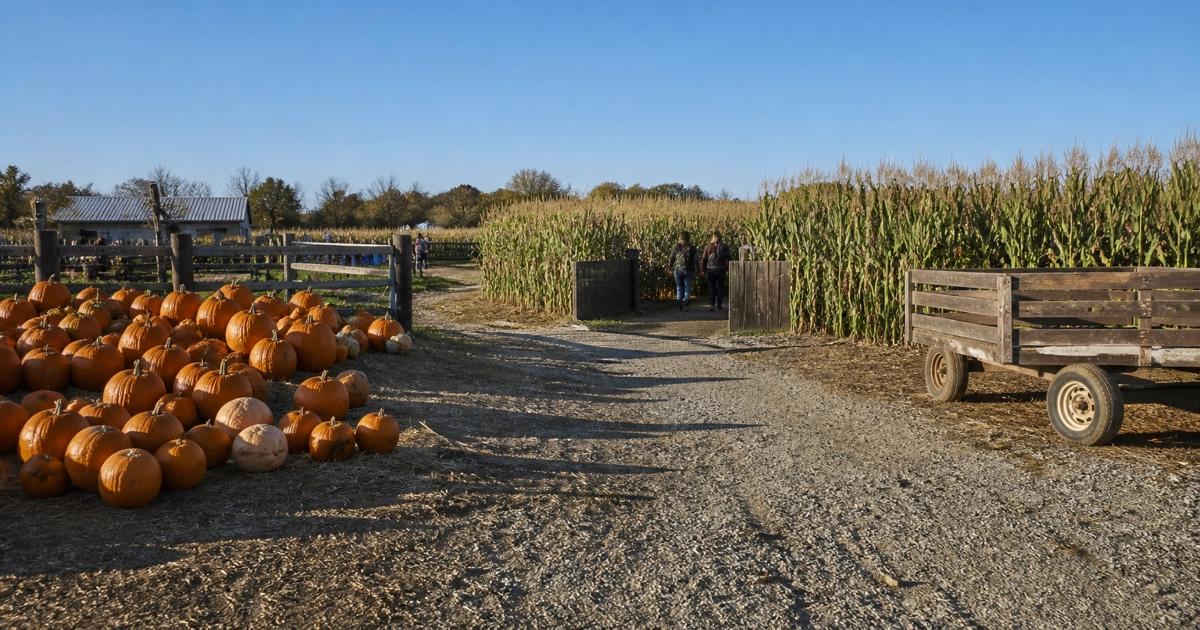
If you or your child was hurt at an Oklahoma pumpkin patch, corn maze, u-pick orchard, or other farm attraction, the sign at the front gate probably told you the operator is not liable for your injury. That sign quotes a real statute — but it does not say what many visitors assume it says. Oklahoma's Agritourism Activities Liability Limitations Act protects a registered farm attraction from claims based on the inherent risks of being on a working farm: uneven ground, natural conditions, the ordinary behavior of animals. It does not protect an operator whose own negligence caused the injury, and it does not protect an operator who never satisfied the statute's registration and warning-sign conditions in the first place. Whether an agritourism injury claim survives almost always comes down to which side of those lines the facts fall on.
This article is general legal information, not legal advice about any specific incident. Whether the Act applies to a particular attraction and a particular injury depends on facts — registration, signage, and how the injury happened — that need individual review.
What Counts as an "Agritourism Activity" in Oklahoma
The Act, adopted in 2013 as 2 O.S. §§ 5-14 through 5-17, defines its terms broadly. Under § 5-15, an "agritourism activity" is any activity carried out on a farm or ranch that lets members of the general public, for recreational, entertainment, or educational purposes, "view or enjoy rural activities" — the statute lists farming, ranching, historic, cultural, harvest-your-own, and natural activities and attractions. Pumpkin patches, corn mazes, u-pick berry farms, hayrides, farm tours, and on-farm festivals fit comfortably within that language, and the statute applies whether or not the visitor paid to participate.
Two other definitions do real work. A "participant" is anyone who engages in an agritourism activity. And the "inherent risks" of agritourism are the dangers that are "an integral part" of the activity — the statute names surface and subsurface conditions, natural conditions of land, vegetation, and water, the behavior of wild or domestic animals, and the "ordinary dangers of structures or equipment ordinarily used in farming and ranching operations." The definition also folds in the participant's own potential negligence, such as ignoring the operator's instructions. Tripping on a naturally uneven field while picking a pumpkin is the kind of risk this language was written for. A collapsing viewing platform, an unguarded auger, or a hayride driver who takes a slope too fast is a different conversation entirely.
The Conditions: Registration and the Warning Sign
The Act does not protect every farm that opens its gates. It protects an "agritourism professional" — and § 5-15 defines that term to mean a provider of agritourism activities "whose agritourism activity is registered with the Oklahoma Department of Agriculture, Food, and Forestry." The Department runs a formal Oklahoma Agritourism program, which states that destinations "are only covered by the law after a state inspection by a state agritourism coordinator," and which supplies compliant warning signs to registered operators. Whether the attraction where you were hurt was registered on the date of your injury is a concrete, checkable fact — and one of the first things to investigate. The Department's own rules confirm the gate is real: under OAC 35:40-17-3, an agritourism activity "shall be evaluated by the Department prior to registration," and the Department may refuse or revoke registration when an activity fails to meet the program's standards.
The second condition is the warning itself. Under 2 O.S. § 5-17, every agritourism professional must post and maintain signs containing the exact statutory warning language, placed "in a clearly visible location at the entrance to the agritourism location and at the site of the agritourism activity," in black letters at least one inch high. Written contracts for professional services, instruction, or equipment rental must carry the same notice in clearly readable print. The consequence of noncompliance is written into the statute: under § 5-17(C), failure to comply with the warning-sign requirements "shall prevent an agritourism professional from invoking the privileges of immunity" under the Act. Photographs of the entrance and the activity area, taken before anything changes, can matter as much in these cases as photographs of the hazard itself.
What the Act Does Not Excuse
Even for a registered, properly posted operator, the immunity in 2 O.S. § 5-16 is narrower than the sign suggests. Subsection A bars recovery for injury or death "resulting exclusively from any of the inherent risks of agritourism activities." Subsection B then removes the shield entirely where the operator:
- Commits negligence or acts with willful or wanton disregard for the participant's safety, and that act or omission proximately causes the injury — § 5-16(B)(1); or
- Knew or reasonably should have known of a dangerous condition on the land, facilities, or equipment used in the activity — or the dangerous propensity of a particular animal — and failed to make the danger known to the participant, with the danger proximately causing the injury — § 5-16(B)(2).
Read together, those provisions leave the operator responsible for the things injury law has always made businesses responsible for: maintaining structures and equipment, supervising activities it runs, warning about dangers it knows about, and not creating hazards through carelessness. The statute also contains a procedural detail worth knowing: § 5-16(A) requires the operator to plead assumption of the risk as an affirmative defense in any lawsuit. That choice of words matters in Oklahoma, because Article 23, Section 6 of the Oklahoma Constitution provides that the defense of assumption of risk "shall, in all cases whatsoever, be a question of fact, and shall, at all times, be left to the jury." The Act is a defense to be raised and established, not an automatic barrier at the courthouse door.
Where the Act does not control, the ordinary framework does. A paying visitor to a commercial farm attraction is an invitee under Oklahoma premises liability law, owed reasonable care to keep the premises safe and to warn of hidden dangers. Oklahoma's comparative negligence rules handle any argument that the visitor contributed to the injury. And if the operator asked you to sign a release, that document raises separate questions — Oklahoma enforces some waivers and refuses others, as our guide to liability waivers in Oklahoma explains. A waiver analysis and an Agritourism Act analysis can both be in play in the same case.
Pony Rides, Petting Barns, and Mechanical Attractions
Farm attractions often bundle several activities with different legal rules. If the injury involved livestock — a pony ride, a petting barn, a trail ride sold to fall visitors — Oklahoma's separate Livestock Activities Liability Limitation Act also comes into play. Since a 2013 amendment, it expressly covers agritourism involving livestock, and the Agritourism Act says its own protection is "in addition to" any other limitation the law provides, so a registered farm may be able to raise both. The Livestock Act has its own definitions and list of exceptions — faulty tack, a mismatched animal, a known hazard on the land, willful or wanton conduct — and, unlike the Agritourism Act, it contains no warning-sign requirement. Our article on horseback riding injuries in Oklahoma covers it in detail.
If the injury happened on a mechanical ride — an inflatable, a barrel train, or a carnival-style attraction set up for the season — Oklahoma's amusement ride statutes expressly cover commercial inflatables but exclude ordinary farm implements used in the agricultural operation. Depending on the attraction, those statutes may impose inspection, insurance, operator-training, and record-keeping duties on whoever runs the ride. Our guide to amusement ride injuries in Oklahoma walks through that framework. An outside vendor that brings its own ride or attraction may also stand outside the farm's registration and statutory shield, so the vendor's identity, contracts, insurance, and role need separate investigation. Sorting out which statutes reach which part of a farm attraction — sometimes more than one — is one of the first legal tasks in these cases, and the answer changes both the defenses available and the evidence that matters.
After an Injury: Deadlines and Practical Steps
Most Oklahoma injury claims against a private farm attraction are governed by the two-year limitation period of 12 O.S. § 95(A)(3), though the correct deadline always depends on the specific claim and defendant, and different rules can apply when the injured person is a child — our overview of Oklahoma statutes of limitations explains the framework. Because many agritourism injuries happen to children, it is also worth knowing that Oklahoma generally requires court involvement before a minor's injury claim can be settled, a process covered in our guide to minor settlements in Oklahoma.
The evidence in these cases is seasonal and perishable. A corn maze is cut down after Halloween; a vendor's inflatable leaves with the vendor; the hay wagon gets repaired; the warning signs get moved. Photographs of the scene, the equipment, and the signage, the names of employees and witnesses, incident reports if the operator prepared one, and medical records documenting the injury from the first visit forward are the practical foundation of any later claim.
Hurt at a Farm Attraction?
Whether Oklahoma's agritourism law protects the operator depends on registration, signage, and how the injury actually happened — facts that can be checked. Our firm handles premises liability claims and serious injury cases across Oklahoma.
Frequently Asked Questions
I saw the warning sign at the entrance. Does that mean I can't sue?
No. The sign recites the warning required by 2 O.S. § 5-17, and the immunity it describes covers only injuries resulting exclusively from the inherent risks of the activity — natural conditions, ordinary farm structures and equipment, animal behavior. Under § 5-16(B), the operator remains liable if its negligence or willful conduct proximately caused the injury, or if it knew of a dangerous condition and failed to make the danger known. The sign is the beginning of the analysis, not the end.
What if the farm was never registered with the state?
The Act's protections belong to an "agritourism professional," and 2 O.S. § 5-15 defines that term to include only providers whose activity is registered with the Oklahoma Department of Agriculture, Food, and Forestry. The state's agritourism program also describes a site inspection as part of the process, and it supplies the compliant signs. An operator who never registered — or who failed to post and maintain the required signs — has a serious problem invoking the Act, because § 5-17(C) expressly prevents a noncompliant operator from claiming its immunity. The claim would then be evaluated under ordinary premises liability principles.
My child was hurt at a pumpkin patch. Is the analysis different?
The Act's warning language tells participants they are "assuming the risk" of the activity, and its definition of inherent risks includes a participant's own failure to follow instructions or exercise reasonable caution. How those concepts apply to a young child — who cannot read a warning sign or appreciate a farm's dangers the way an adult can — is exactly the kind of question that needs case-specific legal analysis. Oklahoma law also treats children differently on deadlines and generally requires court involvement before resolving a minor's injury claim. If a child was seriously hurt, have the specific facts reviewed rather than assuming the sign controls.
How long do I have to bring a claim after a farm attraction injury?
For most negligence claims against a private Oklahoma business, the limitation period is two years under 12 O.S. § 95(A)(3). The correct deadline for any particular case depends on the claim, the defendant, and the injured person — special rules can apply to minors, and shorter procedures apply if a governmental entity is somehow involved. The safe course is to get a deadline calculated by a lawyer early, while the seasonal evidence still exists.
The Sign Is a Defense, Not a Verdict
Oklahoma wants farm attractions to exist — that is what its agritourism program and the Agritourism Activities Liability Limitations Act are for — but the Legislature wrote real limits into the protection it created. Registration, posted warnings, and the negligence exceptions in § 5-16(B) all mean that a serious injury at a pumpkin patch, corn maze, or u-pick farm deserves an actual legal evaluation, not a shrug at the front-gate sign. If you or your child was seriously hurt at an Oklahoma farm attraction, contact Addison Law Firm for a free consultation. There is no fee to ask the question, and no obligation.