Key Takeaways
- Aggressive Driving Can Support an Injury Claim: Tailgating, cutting off and brake-checking can supply evidence of unsafe driving. A claimant still must establish the applicable claim and causation. Oklahoma separately prohibits reckless driving under 47 O.S. § 11-901. The label road rage does not decide civil liability.
- Deliberate Conduct Can Put You on a One-Year Clock: 12 O.S. § 95(A)(3) and (A)(4) generally give injury claims two years but assault and battery one year. Courts look at the substance of the claim, not just its name. If the driver hit you on purpose or attacked you, get legal advice well inside the first year. Other supported claims may have different periods; do not wait on the criminal case.
- Punitive Damages Require Additional Proof: 23 O.S. § 9.1 sets separate findings, procedures and limits for punitive damages. Reckless disregard or intentional malice can matter, but an angry encounter does not automatically entitle an injured person to a punitive award.
- Two Policies, Two Different Questions: The other driver's liability insurer may deny coverage for deliberate conduct. Your own uninsured/underinsured motorist coverage is analyzed from your side under an objective accident standard, so another driver's deliberate act does not automatically defeat it. The injury also needs a causal connection to the uninsured vehicle's transportation use. Have every policy read before accepting an insurer's answer.
A driver who injures someone in an Oklahoma road rage encounter can face a civil claim. Who pays is a separate question: the driver may dispute fault, an insurer may dispute coverage, and deliberate conduct may require a different legal theory from a careless collision. Dashcam footage, witness accounts and a timely 911 recording can help establish what happened. The first steps are to preserve that evidence and identify the claims and policies, without assuming anger alone proves liability or guarantees insurance.
This article is general legal information, not legal advice about any specific crash. How a particular incident is classified — negligent, reckless, or intentional — depends on the facts and can change both the deadline and the available insurance, so case-specific advice matters early.
Aggressive Driving Is Common. Road Rage Is Its Violent Edge.
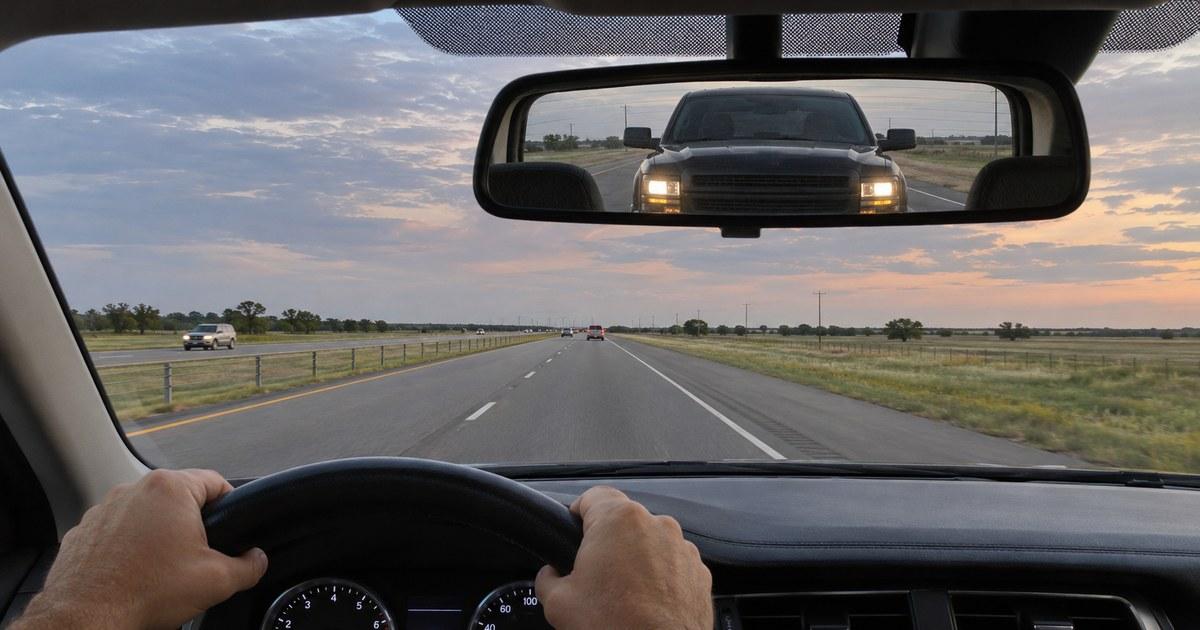
The AAA Foundation for Traffic Safety's September 2025 research on aggressive driving and road rage found that 96% of surveyed drivers reported engaging in aggressive driving or road rage behaviors at least once in the previous year, and 11% reported engaging in violent behaviors. Unsafe behavior such as speeding, tailgating and cutting other vehicles off can cause crashes. Deliberately ramming another car, running someone off the road or leaving the vehicle to attack a driver can turn a traffic dispute into an assault. The survey figures describe reported behavior, not how many crashes it caused.
Existing traffic and tort law can apply to these encounters. On the criminal side, 47 O.S. § 11-901 prohibits driving "in a careless or wanton manner without regard for the safety of persons or property" and also addresses violations of § 11-801's conditions. A first reckless-driving conviction carries five to ninety days in jail, a fine of $100 to $500, or both. A civil injury claim requires its own analysis; a criminal label does not by itself prove that claim.
One Crash, Two Legal Theories — and Two Different Deadlines
A negligence claim asks whether the driver failed to use the required care and caused the injury. Oklahoma personal-injury negligence claims generally fall under the two-year provision in 12 O.S. § 95(A)(3). Our guide to Oklahoma statutes of limitations explains other filing issues.
The same statute lists assault and battery in its one-year provision, § 95(A)(4). In Thomas v. Casford, 1961 OK 158, a petition describing an unjustified beating stated assault and battery, and the Supreme Court affirmed its dismissal under the one-year period. Calling the claim something else did not change its substance. But one encounter can support more than one theory: in Chandler v. Denton, 1987 OK 38, ¶¶ 14–15, assault and battery were time-barred while other theories governed by two years could proceed under the savings statute. Neither case classified deliberate vehicle contact. The facts must support each theory; a negligence label alone does not buy another year.
Have the incident evaluated well inside the first year, rather than planning around two years. That is a reason to act early, not a calculation of your filing date: accrual and special rules still matter. Under § 95(A)(7), certain intentional-conduct claims for injuries from criminal acts may be brought against an incarcerated or supervised offender during incarceration for the offense at issue, or within five years after release if the defendant was serving time for that offense. A pending prosecution alone does not establish that provision applies. A child's claim, a government defendant and a death can bring other rules into play.
When Punitive Damages May Be Available
Compensatory damages address proven losses such as medical bills, lost income and pain. Punitive damages serve a different purpose: punishment and example.
Compensation also has a separate statutory limit to check. For injuries on or after September 1, 2025, 23 O.S. § 61.3 generally caps noneconomic damages at $500,000, with exceptions and a different limit for certain permanent mental injuries. Subsection E removes the limit if the judge and jury make specified clear-and-convincing findings, including reckless disregard, gross negligence, fraud, or intentional or malicious conduct, but describes an injury resulting from negligence. How that language applies to a separate intentional-tort claim needs case-specific legal analysis. Do not assume that the road rage label either imposes or removes the cap; it is distinct from the punitive-damages rules below.
Under 23 O.S. § 9.1, punitive damages require additional findings and a separate proceeding after actual damages. The driver-related categories include:
- Reckless disregard. If the jury finds by clear and convincing evidence that the defendant was guilty of reckless disregard for the rights of others, it may award up to the greater of $100,000 or the amount of actual damages.
- Intentional and malicious conduct. If the jury finds by clear and convincing evidence that the defendant acted intentionally and with malice toward others, the statutory ceiling is the greatest of $500,000, twice the actual damages, or the increased financial benefit derived directly from the conduct causing injury to the plaintiff and others. The financial-benefit measure has a statutory reduction for amounts paid on prior punitive verdicts entered in an Oklahoma court for the same conduct.
- Category III. The statute requires the jury's clear-and-convincing finding of intentional malice, plus the court's finding, on the record and outside the jury's presence, of evidence beyond a reasonable doubt of intentional malice and life-threatening conduct. After actual damages, a separate proceeding may produce an award without the numerical limits in Categories I and II. That is not a promise that any amount will withstand legal review.
Deliberate use of a vehicle can make the driver's state of mind important, but each statutory finding still requires proof. Section 9.1 also lists factors for deciding an award, including the hazard, duration, awareness and financial condition. Our guide to punitive damages in DUI crash cases discusses the same statute in a different setting.
An award and a source of payment are different things. Aetna Casualty & Surety Co. v. Craig, 1989 OK 43, bars shifting punitive damages assessed against an uninsured driver to the injured person's UM carrier. That is not a ruling on a separate claim for an insurer's own bad faith, which requires its own facts and law. Whether a liability policy can pay a particular punitive award is another policy and public-policy question.
Insurance Coverage and Deliberate Conduct
Liability and insurance coverage are different questions. In Equity Insurance Co. v. Garrett, 2008 OK CIV APP 23, the Court of Civil Appeals upheld no coverage under a policy requiring an auto accident after its insured admitted deliberately driving into a pedestrian, despite denying that she meant to injure him. The policy also excluded intentionally caused injury. The coverage decision did not decide her tort liability or eliminate her defenses. A denial letter is not a ruling on your claim; if liability is established but insurance is unavailable, collecting from the driver can become a practical problem.
Your own uninsured/underinsured motorist coverage works differently. In Willard v. Kelley, 1990 OK 127, the Supreme Court evaluated whether the injury was an accident from the injured insured's standpoint under an objective standard. Another driver's deliberate act does not automatically defeat that inquiry, but foreseeability from the insured's side still matters. The court reversed summary judgment for the insureds and sent the disputed questions back for trial; it did not award coverage.
There must also be a causal connection to the uninsured vehicle's transportation use, as Mayer v. State Farm, 1997 OK 67, explains. A persuasive Court of Civil Appeals decision, Stucky v. Long, 1989 OK CIV APP 75, illustrates the limit: hostile driving over several miles ended in a beating after both men left their cars, and the court denied UM coverage because the injuries lacked the required vehicle-use connection. That does not mean every injury outside a car is excluded. Where and how the injury happened matters, along with insured status and the policy. Our guide to the Oklahoma UM/UIM offer and rejection rules addresses whether coverage was offered and rejected. Preserve denial letters, endorsements and the declarations page.
Brake-Checking and the Blame War
The driver who slammed on the brakes may say you were tailgating; you may say the stop was deliberate intimidation. On a negligence claim, 23 O.S. §§ 13 and 14 provide for reduction by the injured person's negligence and a bar when it exceeds the combined negligence of those causing the damage. Our guide to Oklahoma comparative negligence explains that rule.
There is an important limit. In Graham v. Keuchel, 1993 OK 6, ¶¶ 49–52, the Supreme Court explained that a plaintiff's ordinary negligence is not compared against conduct found to be willful and wanton or intentional. It distinguished gross negligence, which can be compared. This was guidance for retrial in a medical-malpractice case, not a road rage holding or the dispositive ground of the appeal. An accusation of anger does not establish willful or intentional misconduct; the evidence and findings matter. Nor does the rule dispense with proof that the defendant caused the injury.
A rear-end impact does not explain by itself why the lead driver stopped or what the following driver could have done. Preserve the sequence, not just the moment of impact: video, witness accounts, 911 recordings, damage and the road conditions. Our guide to rear-end crashes in Oklahoma covers that broader crash question. If accounts conflict, the article on what to do when the other driver lies explains evidence-preservation issues.
The Criminal Case Is Not Your Civil Case
Depending on the conduct, an encounter may produce reckless-driving or assault-related charges. The criminal case belongs to the State and follows its own process. A civil injury claim has separate requirements, deadlines and evidence needs. Report the incident and seek advice about the civil claim promptly rather than waiting to see how a prosecution ends. Neither the existence nor the absence of charges answers every civil claim or coverage question.
What to Do During — and After — a Road Rage Encounter
During the encounter, the goal is distance, not victory: do not retaliate, stop to confront, or drive home with the aggressor following. Call 911 if you safely can; a recording may preserve a contemporaneous account. After a collision, seek medical care and document the scene when safe. Keep photographs, witness contact details and original messages. Export your dashcam file before it overwrites, and ask counsel promptly about preserving available 911 audio and other recordings. Witnesses who saw the driving before impact may have information that a damage photograph cannot supply. Keep those records without editing them to fit a theory of the case.
Frequently Asked Questions
Can I sue a road rage driver in Oklahoma?
Yes, if the facts support a claim. You still must prove fault, causation and damages. Deliberate conduct may support assault or battery, with a one-year period under 12 O.S. § 95(A)(4), rather than the usual two-year injury period. Other supported theories can have different periods, so get advice well inside the first year without waiting on a criminal case. Insurance is a separate question. Punitive damages are possible under 23 O.S. § 9.1 but require additional findings.
What if the driver got out of the car and attacked me?
Get safe, get medical care and talk to a lawyer soon. Assault and battery claims have a one-year period under 12 O.S. § 95(A)(4). An attack may also support other claims, but do not count on a longer period or wait on the criminal case. Ask counsel about accrual, special rules, coverage and available assets. In the persuasive decision Stucky v. Long, an Oklahoma court denied uninsured motorist coverage for a beating after both drivers left their cars because the injuries lacked the required connection to vehicle use. That does not decide every injury outside a car.
Will the other driver's insurance pay if they hit me on purpose?
It may deny coverage. An Oklahoma appellate court upheld no coverage under one liability policy after the insured deliberately drove into a pedestrian, despite denying intent to injure. Your own uninsured/underinsured motorist claim is different: accident is evaluated objectively from the injured insured's standpoint, so another driver's deliberate act does not automatically defeat it. The injury still needs a causal connection to the uninsured vehicle's transportation use. UM coverage does not pay punitive damages assessed against the other driver. Have every policy read; none of these rules guarantees payment or decides the driver's tort liability.
What if I honked or yelled first — can they blame me?
They can dispute your conduct, but an accusation is not a finding. On a negligence claim, Oklahoma reduces recovery by the injured person's negligence and bars it if that negligence exceeds the combined negligence of those causing the harm. In Graham v. Keuchel, 1993 OK 6, the Supreme Court explained in retrial guidance that ordinary negligence is not compared against conduct found to be willful and wanton or intentional; gross negligence is different. Preserve the whole encounter so counsel can assess the supported claims, causation and defenses.
Is brake-checking automatically the brake-checker's fault?
The label alone does not decide liability. Evidence of deliberate braking, following distance, speed, road conditions and the sequence before impact matters. Counsel must identify the supported claims before applying a negligence or intentional-tort analysis. Our guide to rear-end crashes in Oklahoma addresses the related rear-end question.
Talk to Someone Before the Insurer Labels Your Case
How the incident is classified can affect the claim, deadline and coverage analysis. Preserve the records and get advice promptly. Addison Law Firm's car accident practice addresses injury claims. Contact the firm to discuss the facts and timing. This article is general information, not legal advice, and does not create an attorney-client relationship.
Hurt by an Aggressive Driver?
Bring a timeline, photographs, messages and any coverage letters. The claims, deadlines and available insurance need prompt review.
Contact Addison Law Firm