
Key Takeaways
- Different Systems, Different Records: An engine control module (ECM), event data recorder, electronic logging device (ELD), telematics platform, and camera system are not interchangeable. Each may hold a different part of the crash timeline.
- Preservation Is Critical: ECM, ELD, telematics, and camera data can be overwritten or lost. Preservation demands should go out as soon as possible.
- Technical Interpretation Often Matters: A qualified technician may be needed to extract the record, and a reconstructionist may be needed to explain it. Admissibility still depends on foundation, reliability, relevance, and the governing evidence rules.
After a serious trucking accident, witnesses may disagree about speed, braking, and timing. Electronic records can test those accounts. The truck's engine control module may hold operational or event data, while separate logging, telematics, and camera systems may show driving time, location, or video. What exists depends on the vehicle, components, software, configuration, and event.
What Is an Electronic Control Module?
An ECM is a computer that controls and monitors a truck's engine and drivetrain. It is not the same thing as an aviation recorder, and it should not be confused with every other electronic system on the truck. A separate event record may be created by an engine, brake, restraint, or other vehicle controller. An ELD records duty-status information for hours-of-service compliance. Telematics and camera platforms may be hosted by the carrier or a third-party provider.
The available ECM or event record may include speed, engine speed, throttle, brake-switch status, cruise-control status, fault codes, or other parameters. It may include only some of those items—or none of them. The recording interval, trigger, number of stored events, and overwrite behavior are manufacturer- and system-specific. Hours since a driver's last rest period usually comes from ELD and supporting records, not simply from the ECM.
Federal Motor Carrier Safety Administration guidance explains that many drivers who must prepare records of duty status must use compliant ELDs, subject to regulatory exceptions. 49 C.F.R. Part 395 governs that obligation; it is not a simple rule based on the truck's model year.
How ECM Data Can Inform Liability
The most fundamental question in many trucking accidents is how fast the truck was traveling at the time of the collision. ECM data may answer this question with objective speed readings in the moments leading up to impact. When a driver claims he was traveling at 55 miles per hour when he crested a hill and encountered stopped traffic, but the ECM data shows 72 miles per hour three seconds before impact, the gap between the driver's account and the electronic record can become powerful liability evidence.
Braking-related data may also help, but the available parameters vary. A record might show a brake-switch change, deceleration, wheel-speed information, or another event marker. It may not show brake pressure or identify why the driver reacted when they did. A reconstructionist must compare the electronic record with physical evidence, video, sight distance, and witness accounts before drawing conclusions about attention or reaction time.
Electronic logging devices are required for many commercial drivers who must keep records of duty status. Their records may show a driving-time or duty-status violation. They do not, by themselves, prove that a driver was fatigued or that fatigue caused the crash. That conclusion requires the log, supporting records, driver history, timeline, and other evidence. Our guide on the critical steps after a truck accident explains why preserving these sources early matters.
Some ECM events include fault codes or system-status information. A code can help identify what to investigate, but it does not alone prove a defect or show that the carrier or a third-party maintenance company knew about it. Inspection records, dashboard alerts, prior downloads, repair orders, driver reports, and notice evidence are needed to address condition and knowledge.
Why ECM Preservation Is Urgent
Electronic truck data can be lost through later events, normal retention settings, repair, component replacement, account changes, or disposal of the vehicle. There is no universal "days or weeks" retention rule for ECM data. Because the storage and overwrite rules vary, the safe course is to identify every likely custodian and preserve the vehicle and hosted data promptly.
The essential tool for protecting this evidence is the spoliation letter — a legal demand to preserve all evidence relevant to the accident, sent to the carrier, broker, insurer, telematics provider, and any other entities that may control relevant data. In trucking cases, this letter should be sent as soon as possible, and it should demand preservation of ECM data, ELD driver logs, driver qualification files, maintenance records, dispatch and internal communications, dashcam and trailer camera footage, and GPS tracking data. Failure to preserve evidence after notice can result in serious legal consequences, including sanctions or adverse-inference instructions when the legal standard is met.
How ECM Data Is Recovered and Analyzed
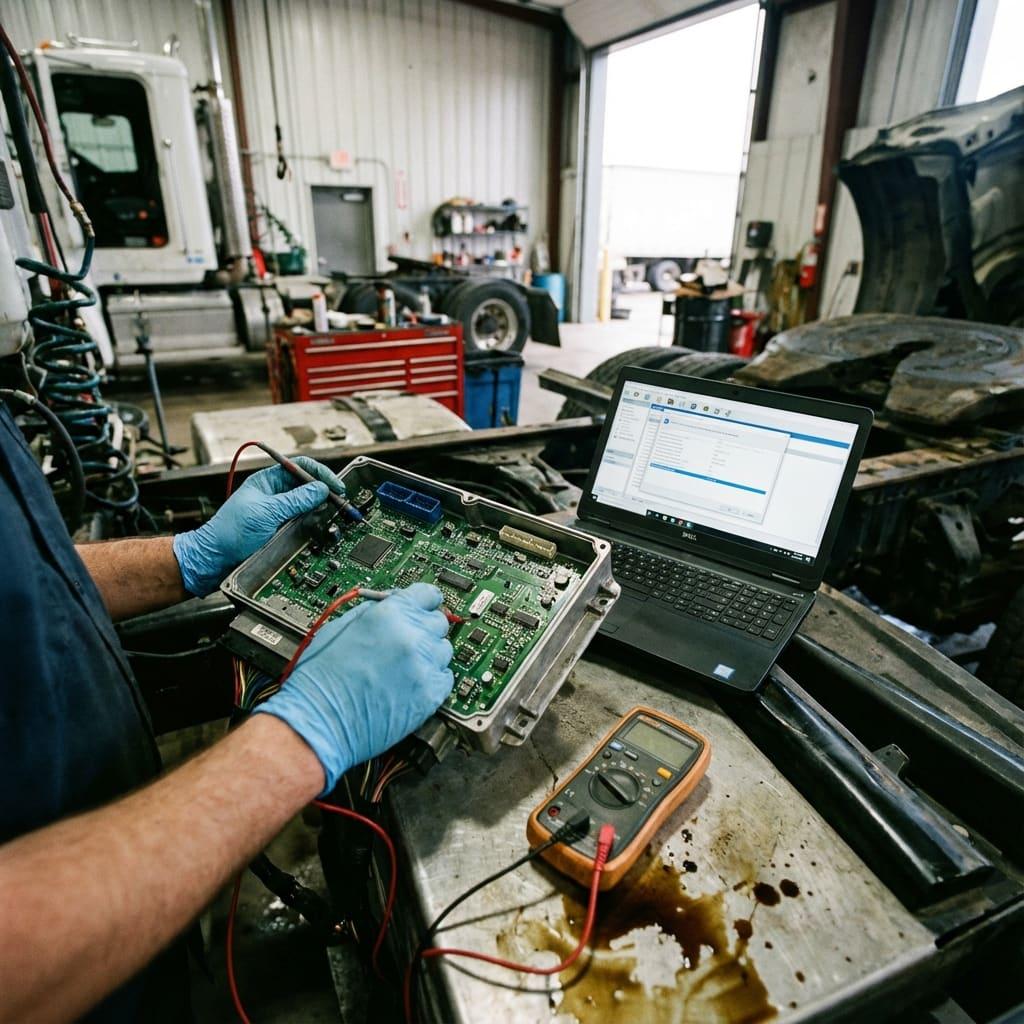
Recovering ECM or event data may require physical access, a compatible diagnostic adapter, manufacturer-specific software, and a trained technician. Hosted ELD, telematics, and video records may require separate exports from the carrier or vendor. The technician should document the vehicle, hardware identifiers, tool and software version, extraction method, original files, and chain of custody.
ECM and event files can be technical. A trained analyst often helps identify the parameters, units, trigger, timing, and system limits, while a reconstructionist may compare those records with physical evidence and witness accounts. Some records can be understood without expert testimony; others cannot. Expert involvement does not itself make a record admissible—the proponent still needs an adequate foundation and must satisfy the applicable evidence rules. Properly interpreted electronic data can test disputed accounts without overstating what the system recorded.
Why Independent Preservation Matters
Sophisticated trucking companies and their insurers understand ECM evidence better than most plaintiffs, and they act quickly after major crashes. Carriers may download ECM data immediately for their own internal files without voluntarily sharing it with the injured party. They may send the truck for repair before the opposing party has an opportunity to request a download, or they may argue that the ECM data is proprietary or difficult to retrieve. Early counsel can reduce those risks.
Early counsel can send focused preservation demands, identify third-party data vendors, seek court protection when the facts justify it, and arrange an inspection protocol that lets both sides document the download. The point is to preserve the original evidence and a reproducible copy—not to assume that every missing record was intentionally destroyed.
Modern Telematics and Advanced Data Sources
Beyond traditional ECMs, modern commercial trucks may use telematics systems that track location, speed, or operational status and cameras that record the roadway or cab. Phone records and device metadata may help show calls, application activity, or data use near the crash time, but metadata does not necessarily reveal message content or prove who was using the device. Hosted records may be held by the carrier or third-party provider, so the preservation plan should identify each custodian.
ECM Evidence Combined with Other Data
ECM data is most useful when compared with other sources: passenger-vehicle event data, GPS or telematics, video, phone metadata, weather, roadway evidence, and a reconstructionist's measurements. Those sources may corroborate or contradict one another; none should be described as proving distraction or reconstructing the crash with perfect precision before the actual data is reviewed.
When multiple independent data sources corroborate one another, the case can shift from a "he said/she said" liability dispute to a focused evaluation of fault and damages. The truck driver's version of events can be tested against what the electronic record actually shows, and major discrepancies between the driver's account and the data can reshape settlement leverage.
Frequently Asked Questions
Do all commercial trucks have black boxes?
Most modern commercial trucks use electronic engine controls, but the crash-relevant data varies by engine, vehicle, component, and configuration. ELD coverage is a separate question: many drivers who must keep records of duty status must use an ELD, but federal rules include exceptions and are not triggered by a simple truck model-year cutoff.
Can trucking companies refuse to provide ECM data?
They can attempt to delay or resist production, but discovery rules in civil litigation allow plaintiffs to seek orders compelling relevant evidence. If the carrier destroyed or failed to preserve ECM data after notice, courts can impose sanctions when the facts and legal standard support it.
How long does ECM data remain available?
There is no reliable universal retention window. Some controllers retain event records until another qualifying event, a reset, repair, or a system-specific limit; hosted telematics or video may follow a vendor's retention policy. Prompt preservation is important precisely because the answer cannot be assumed without identifying the system.
Who pays for ECM download and analysis?
Who initially pays depends on the case, agreement, and court orders. A qualified analyst can preserve the files, explain their limitations, and compare them with the other evidence. Not every download will establish fault, but a sound extraction can prevent later disputes about what the system contained.
Can ECM data be manipulated or altered?
While theoretical tampering is possible, qualified analysts can often evaluate whether data is complete, consistent, and extracted using proper tools. Chain-of-custody documentation from the moment of extraction is critical because defense experts will scrutinize how the data was preserved and handled.
What if the trucking company claims the ECM was damaged in the crash?
This claim should be scrutinized carefully. ECM hardware may be damaged in a severe crash, but an independent expert should examine the module and determine whether data recovery is still possible through manufacturer tools or forensic methods.
How does ECM data relate to hours-of-service violations?
ECM and ELD data can show when the engine was running, when the vehicle was in motion, and what the driver's duty status records showed before the crash. This data can be compared against federal hours-of-service regulations to determine whether the driver or carrier violated safety rules.
ECM evidence has changed trucking accident litigation. Facts that used to be uncertain may now be reconstructed from electronic data. But this evidence is fragile, and delay can make it disappear.
Need Truck Black Box Data Preserved?
ECM, ELD, telematics, and camera evidence can disappear quickly. We move fast to preserve and inspect the data.
Schedule a Free Consultation →This article is for general information only and is not legal advice. Federal source status checked July 13, 2026.