Key Takeaways
- The First 72 Hours Are Critical: The steps you take immediately after a motorcycle crash — seeking medical care, preserving evidence, and avoiding recorded statements — directly determine the strength of your claim.
- Motorcycle Gear Is Evidence: Your helmet, jacket, gloves, and boots preserve impact evidence that accident reconstruction experts use to establish collision forces. Never repair, clean, or discard damaged gear.
- Insurance adjusters contact riders fast for a reason: Quick settlement offers may arrive before riders understand the full extent of their injuries. Oklahoma law generally gives you two years to file a personal injury lawsuit, so there is usually time to get medical and legal advice before signing a release.
A motorcycle accident changes everything in a matter of seconds. One moment you are riding through an Oklahoma intersection, and the next you are on the pavement, trying to process what just happened. The adrenaline is overwhelming, the pain may not have fully registered, and the decisions you make in the minutes, hours, and days that follow will shape every aspect of your legal claim. Riders face unique challenges that car accident victims never encounter — from evidence that disappears when gear is cleaned or discarded, to insurance adjusters who exploit anti-rider bias to pressure fast, low settlements. This guide walks through what to do after a motorcycle crash in Oklahoma to protect your health, preserve evidence, and protect your right to pursue compensation.
At the Scene: Immediate Steps That Protect Your Claim
The moments after a motorcycle crash are chaotic. Your body is flooded with adrenaline, bystanders may be crowding the scene, and the other driver may already be constructing a version of events that minimizes their responsibility. Despite the confusion, the steps you take at the scene create the foundation for everything that follows.
First and most importantly, do not leave the scene. Oklahoma law under 47 O.S. § 10-102 requires drivers involved in accidents resulting in injury to stop immediately at the scene. The companion provisions in 47 O.S. § 10-104 further require drivers to render reasonable assistance and exchange identifying information. Leaving the scene of an injury accident is a felony in Oklahoma, regardless of who caused the collision. Even if you believe you are uninjured, stay and wait for law enforcement to arrive.
Call 911 immediately. A police report is one of the most important documents in any motorcycle accident claim. The responding officer will document the scene, interview witnesses, and create an official record of the collision. Without a police report, insurance companies will aggressively dispute liability — and the lack of contemporaneous documentation makes it far harder to prove what happened. When speaking with the officer, describe what occurred factually and precisely. Do not speculate about your own speed, do not admit fault, and do not minimize your injuries. Statements like "I'm fine" or "it was probably my fault too" appear in police reports and are used against riders in settlement negotiations and at trial.
If you are physically able to do so, document the scene with photographs. Use your phone to capture the positions of all vehicles before they are moved, damage to your motorcycle, damage to the other vehicle, the condition of the road surface including any debris or hazards, traffic signals and signs, skid marks or gouge marks on the pavement, and your visible injuries. Photograph from multiple angles and distances. These images become critical evidence if the other driver later changes their account of how the accident happened — which occurs more often than most people expect.
Collect contact information from every witness at the scene. Independent eyewitnesses who saw the other driver's negligence — running a red light, failing to yield, crossing into your lane — are enormously valuable. Witnesses leave, and once they are gone, finding them again can be extremely difficult. Get names, phone numbers, and email addresses before anyone departs.
Get Medical Attention Immediately — Even If You Feel Fine
This is one of the most important steps riders skip. Adrenaline is a powerful analgesic. It can mask pain from fractures, internal bleeding, soft tissue damage, and even traumatic brain injuries. Riders sometimes walk away from crashes that caused injuries they will not feel for hours or even days. Delayed injury symptoms are especially common in motorcycle accidents because the forces involved can be severe and the body's shock response is intense.
Go to an emergency room or urgent care facility on the day of the accident. Tell the treating physician that you were in a motorcycle crash and describe every area of discomfort, no matter how minor it seems. Medical records created on the day of the accident establish a direct connection between the collision and your injuries. If you wait three days, a week, or two weeks to seek treatment, the insurance company will argue that your injuries either were not caused by the crash or are not as serious as you claim. This "gap in treatment" argument is one of the most effective tools insurance adjusters use to reduce the value of motorcycle claims.
Request diagnostic imaging — X-rays, CT scans, or MRIs — for any area of concern. Motorcycle crashes frequently cause injuries that are not visible externally: herniated discs, hairline fractures, internal organ contusions, and mild traumatic brain injuries that may present as nothing more than a headache or fogginess in the immediate aftermath. Early imaging creates objective medical evidence of these injuries.
Follow every treatment recommendation your doctor provides. If they prescribe physical therapy, attend every session. If they refer you to a specialist, schedule the appointment promptly. If they restrict your activity, follow those restrictions. Insurance companies build their defense around gaps and inconsistencies in treatment records. Consistent, documented treatment is the strongest evidence that your injuries are real, ongoing, and directly related to the motorcycle accident.
Preserve Your Motorcycle and Riding Gear
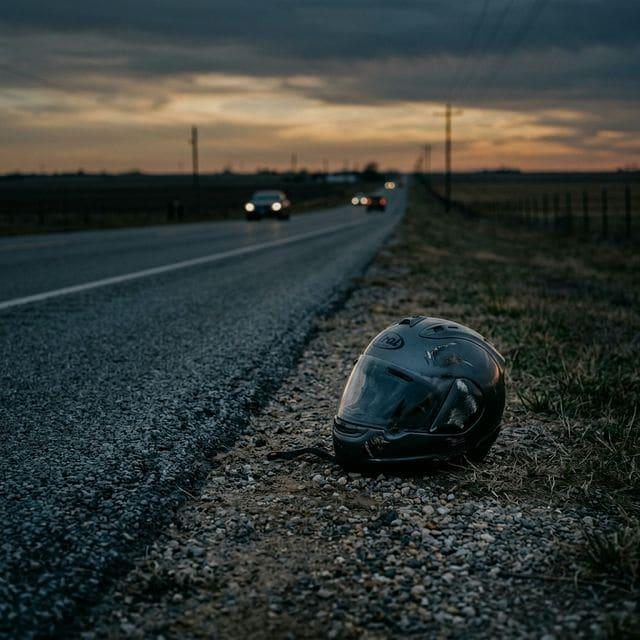
One of the most important pieces of evidence in a motorcycle accident case is something riders often overlook: the gear you were wearing at the time of the crash. Your helmet, jacket, gloves, boots, and riding pants tell a story about the forces involved in the collision. Scuff patterns on a helmet reveal the angle and severity of head impact. Road rash damage to a jacket or pants shows the distance your body traveled on the pavement after being thrown from the motorcycle. Damage to boots and gloves can establish how you landed and what parts of your body absorbed the primary impact.
Do not clean, repair, or discard any gear you were wearing during the crash. Place each item in a separate bag and store it in a safe location. An accident reconstruction expert may examine these items to establish the speed and forces involved in the collision — information that directly affects the value of your claim and can contradict the other driver's version of events.
The same principle applies to your motorcycle. Do not authorize repairs until your attorney has had the opportunity to inspect and photograph the damage. If the motorcycle has been towed to a repair shop or impound lot, instruct them not to begin any work. The damage to the frame, wheels, handlebars, and body panels provides physical evidence of how the collision occurred, from what direction the impact came, and at what approximate speed. Once repairs are made, this evidence may be lost — a form of spoliation that can severely undermine your case.
Do Not Give a Recorded Statement to the Other Driver's Insurance Company
Within days of a motorcycle accident — sometimes within hours — the at-fault driver's insurance company will contact you. The adjuster will sound sympathetic and reasonable. They will express concern about your well-being and explain that they "just need to get your side of the story" so they can "process your claim quickly." This is a carefully designed strategy to collect information that will be used to minimize or deny your claim.
Recorded statements are a common trap riders face after an accident. The adjuster's questions may elicit concessions you do not realize you are making. Questions like "Were you wearing a helmet?" can introduce the helmet defense even in jurisdictions where helmets are not required for adults. "How fast were you going?" invites you to estimate a speed that the adjuster may later argue was excessive. "How are you feeling today?" encourages you to say "I'm doing okay" — words that may appear in the claim file as evidence that your injuries are minor.
You are not legally required to give a recorded statement to the other driver's insurance company. You are only obligated to cooperate with your own insurer under the terms of your policy. Politely decline the recorded statement and direct the adjuster to your attorney. This single decision can significantly affect the value of your claim.
Understanding the Oklahoma Statute of Limitations and Filing Deadlines
Oklahoma's statute of limitations for personal injury claims is two years from the date of the accident under 12 O.S. § 95(A)(3). If you fail to file a lawsuit within this window, your claim is permanently barred regardless of how strong your evidence is or how severe your injuries are.
Two years may sound like a long time, but motorcycle accident cases involve complex evidence that degrades quickly. Surveillance camera footage from nearby businesses may be overwritten in as little as 30 days, depending on the system. Witness memories fade. Medical records become harder to connect to the crash as time passes. Road conditions change. The motorcycle may be repaired or scrapped. An experienced personal injury attorney will send preservation letters immediately to ensure that critical evidence — including the at-fault driver's cell phone records and their vehicle's event data recorder — is not destroyed.
If the at-fault driver was a government employee acting in the scope of their duties — a city bus driver, a state DOT vehicle, a law enforcement vehicle — the timeline is dramatically shorter. Under the Oklahoma Governmental Tort Claims Act (51 O.S. § 156), you must file a written notice of tort claim within one year of the accident. After filing, the government entity has 90 days to approve or deny the claim; if it does not respond within 90 days, the claim is deemed denied. You then have 180 days from the date of denial to file suit under 51 O.S. § 157. Missing any of these deadlines eliminates your right to sue the government entity entirely, no matter how clear the liability or how catastrophic the injuries. Consult an attorney immediately if any government vehicle or employee was involved in your crash.
How Comparative Negligence Affects Motorcycle Claims
Oklahoma follows a modified comparative negligence system that allows injured riders to recover damages even if they were partially at fault — provided their share of fault does not exceed 50 percent. Your total recovery is reduced proportionally by your percentage of responsibility. If a jury determines that the other driver was 75 percent at fault and you were 25 percent at fault, you recover 75 percent of your total damages.
Insurance adjusters exploit this system aggressively in motorcycle cases. They assign inflated fault percentages to riders based on stereotypes rather than evidence — claiming the rider was speeding without physical proof, arguing the rider should have been "more visible" or should have taken "evasive action," or pointing to helmet choice as evidence of recklessness. Each percentage point of fault they successfully attribute to you directly reduces the amount they have to pay. Fighting these inflated fault allegations requires physical evidence, accident reconstruction analysis, and an attorney who is specifically experienced with the tactics used against riders. The difference between a 0 percent fault finding and a 25 percent fault finding on a $400,000 claim is $100,000 — making this one of the highest-stakes battles in any motorcycle case.
What Full Compensation Looks Like in a Motorcycle Case
Motorcycle accident injuries tend to be significantly more severe than comparable car accident injuries because riders have no structural protection — no airbags, no crumple zones, no steel frame absorbing impact energy. This means that damages in motorcycle cases are often substantially higher than in car accident cases involving similar collision forces. Full compensation in a motorcycle accident case typically includes several categories.
Medical expenses encompass emergency room treatment, hospitalization, surgeries, follow-up appointments, prescription medications, physical therapy, occupational therapy, and any future medical care your injuries will require. Motorcycle crash injuries frequently involve multiple surgeries and months or years of rehabilitation, particularly for spinal cord injuries, traumatic brain injuries, and complex fractures requiring hardware placement.
Lost income covers wages you have already lost due to your inability to work, as well as future lost earning capacity if your injuries prevent you from returning to your previous occupation or from working at the same level. A construction worker who suffers a permanent leg injury, for example, may never return to physical labor — and the difference between their pre-injury earning capacity and their post-injury capacity represents a loss that can span decades.
Pain and suffering damages compensate for the physical pain and emotional distress caused by both the accident and the recovery process. For injuries occurring on or after September 1, 2025, Oklahoma's 23 O.S. § 61.3 generally caps noneconomic damages unless a statutory exception applies, including certain permanent severe injuries and heightened misconduct. In severe motorcycle injury cases — multiple surgeries, chronic pain, permanent disability, disfigurement — proof of economic damages and any cap exception becomes especially important.
Frequently Asked Questions
What should I do first after a motorcycle accident in Oklahoma?
Stay at the scene, call 911, and seek medical attention immediately. Do not admit fault or give recorded statements to anyone other than law enforcement. If physically able, photograph the scene, document vehicle positions and damage, and collect witness contact information. Your immediate actions form the foundation of your entire claim.
How long do I have to file a motorcycle accident lawsuit in Oklahoma?
Oklahoma's statute of limitations under 12 O.S. § 95(A)(3) gives you two years from the date of the accident to file a personal injury lawsuit. Claims against government entities require written notice within one year under the Governmental Tort Claims Act. Do not wait until near the deadline — critical evidence like surveillance footage and witness memories degrade rapidly.
Should I accept the insurance company's first settlement offer?
Be very careful. First offers from insurance companies are often calculated to close the claim before you understand the full extent of your injuries. Motorcycle injuries frequently involve conditions that worsen or reveal themselves over weeks and months — herniated discs, traumatic brain injury symptoms, and internal damage that requires additional care. Accepting an early offer usually requires signing a release, which can waive your right to seek additional compensation later.
Can I still recover damages if I was not wearing a helmet?
Yes. Oklahoma does not require helmets for riders over 18 under 47 O.S. § 12-609. Importantly, Oklahoma courts have held that evidence of helmet nonuse is generally inadmissible — the Court of Civil Appeals ruled in Johnston v. Stacy, 2016 OK CIV APP 56, that a rider's decision not to wear a helmet is not admissible to reduce damages absent further authority establishing its relevance. Insurance companies may still try to raise the issue, but an experienced attorney can invoke this precedent to keep helmet choice out of the case entirely.
Why do insurance adjusters contact motorcycle accident victims so quickly?
Speed is often deliberate. Adjusters contact riders within hours or days because they want to secure a recorded statement and settle the claim before the rider understands the injuries, consults an attorney, or obtains a full medical diagnosis. A quick settlement can benefit the insurance company by locking in a payment before the true cost of the injuries is known.
What evidence is most important to preserve after a motorcycle crash?
Beyond the police report and medical records, the most frequently overlooked evidence includes your riding gear (helmet, jacket, gloves, boots), which preserves impact force evidence; your motorcycle itself before any repairs are made; surveillance footage from nearby businesses; the at-fault driver's cell phone records and vehicle event data recorder; and photographs of the scene taken immediately after the crash. An attorney can send formal preservation letters to prevent this evidence from being destroyed.
How does Oklahoma's comparative negligence law affect my motorcycle crash claim?
Oklahoma allows you to recover damages even if you were partially at fault, as long as your fault does not exceed 50 percent. Your compensation is reduced by your fault percentage. Insurance companies aggressively inflate rider fault percentages using stereotypes about motorcyclists — claiming excessive speed without evidence, arguing the rider should have avoided the collision, or pointing to helmet choice. Every percentage point directly reduces your recovery, making fault attribution one of the most consequential battles in a motorcycle case.
Injured in a Motorcycle Accident?
The decisions you make in the first days after a crash affect the value of your claim. We help Oklahoma riders preserve evidence, document injuries, and deal with insurance pressure.
Get a Free Consultation →This article is for general information only and is not legal advice.