
Key Takeaways
- You Do Not Have to Prove Carelessness: Since Kirkland v. General Motors Corp., 1974 OK 52, Oklahoma has recognized "manufacturers' products liability" — a strict liability claim. If a product left the manufacturer with a defect that made it unreasonably dangerous and that defect injured you, the manufacturer can be liable even if it exercised all possible care.
- The Retailer Is Usually Not the Target: A 2014 statute, 76 O.S. § 57.2, shields sellers and distributors who merely passed the product along. With limited exceptions, the claim runs against the manufacturer — which is why identifying the right defendant early matters.
- Get the Deadline and Accrual Date Checked Early: Manufacturers' products liability generally uses a two-year limitations period, but the starting date cannot always be assumed from the accident date alone. In Daugherty v. Farmers Co-op. Ass'n, 1984 OK 72, the Oklahoma Supreme Court approved a diligence-limited discovery rule. A separate Uniform Commercial Code warranty claim needs its own analysis; do not assume every product-related claim has the same clock.
If a defective product hurt you in Oklahoma — a tool that shattered, a tire that came apart, an appliance that caught fire, a vehicle part that failed — you can generally sue the manufacturer without proving the company was careless. Oklahoma adopted strict products liability in Kirkland v. General Motors Corp., 1974 OK 52, and calls it "manufacturers' products liability." To win, you must prove three things: the product caused your injury, the defect existed when the product left the manufacturer's control, and the defect made the product unreasonably dangerous. This article walks through what each element means in practice, who can actually be sued after a 2014 statute narrowed seller liability, what defenses to expect, and the deadline that governs these claims.
This article is general legal information, not legal advice. Whether a particular injury supports a product claim depends on its specific facts and requires case-specific review.
Where Oklahoma Products Liability Comes From
Oklahoma's rule comes from a case about a car seat. In Kirkland, the plaintiff alleged that the driver's seat back of a 1969 Opel suddenly collapsed on I-44 in Tulsa County, leaving her unable to control the car before a head-on collision. She lost at trial, and the Oklahoma Supreme Court affirmed the defense verdict — the evidence of her intoxication supported a misuse defense. But the Court used the case to adopt, prospectively, the strict liability rule of Restatement (Second) of Torts § 402A: one who sells a product in a defective condition unreasonably dangerous to the user or consumer is liable for the physical harm it causes, without regard to negligence or any contract between the parties.
The Court was explicit that this new theory replaced the old ones for injury cases. Breach of implied warranty was "merged into" manufacturers' products liability except where the Uniform Commercial Code applies, and while an injured person may still plead ordinary negligence, the strict liability claim makes that largely unnecessary. The Court also defined "manufacturer" broadly, to include processors, assemblers, and others similarly situated in processing and distribution.
Two things about Kirkland matter for anyone evaluating a claim today. First, strict liability is not absolute liability — the Court said plainly that manufacturers are not "absolute insurers" of everyone who uses their products. Second, the injured person carries a real burden of proof, which the Court itself described as "a large and heavy one."
The Three Elements You Must Prove
Kirkland sets out three elements, and each one is a battleground in real litigation.
The product caused the injury. A mere possibility is not enough. The fact that a crash, fire, or malfunction happened does not by itself prove the product was defective — the Court expressly rejected the idea that an injury raises any presumption of a defect. Alternative explanations, including the injured person's own conduct, have to be run down and eliminated.
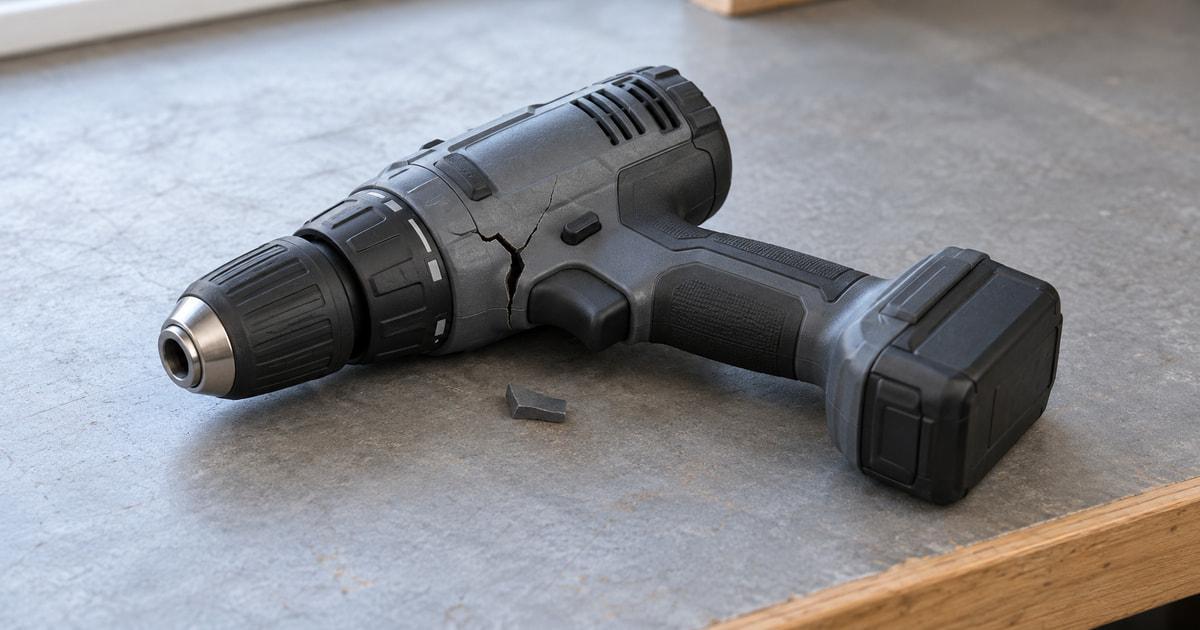
The defect existed when the product left the defendant's control. If the claim is against the manufacturer, you must show the defect was present when the product left the manufacturer's possession — not introduced later by a repair shop, a prior owner, years of hard use, or a modification. This is where preservation of the product itself becomes decisive: the failed part is usually the single most important piece of evidence in the case, and losing it can sink the claim. Our article on spoliation of evidence in Oklahoma explains what happens when key evidence disappears, and why preservation letters go out early.
The defect made the product unreasonably dangerous. Following § 402A, Kirkland defines this from the consumer's point of view: the product must be dangerous beyond what an ordinary consumer who purchases it would contemplate, with the ordinary knowledge common to the community. A sharp kitchen knife is dangerous but not defective. A knife whose blade separates from the handle under normal cutting force is another matter.
Helpfully for injured people, Kirkland recognized that direct proof of a defect is often locked inside the defendant's own knowledge, and it allows the case to be proven by circumstantial evidence and reasonable inferences. In practice that means expert engineering analysis of the failed product, similar-incident evidence, and careful reconstruction — the same investigative posture we describe in tire failure cases like tread separation claims.
Who Can Be Sued: The 2014 Seller Statute Changed the Map
Kirkland spoke of manufacturers, assemblers, and suppliers, and for decades injured plaintiffs often named everyone in the chain of distribution. In 2014 the Legislature narrowed that practice. Under 76 O.S. § 57.2(E), effective November 1, 2014, no product liability action may be asserted against a seller or distributor other than the manufacturer unless one of six exceptions applies — including where the seller exercised substantial control over the design, testing, manufacture, packaging, or labeling that caused the harm; altered or modified the product in a way that substantially caused the harm; made its own independent express warranty; or where the manufacturer cannot be identified, is not subject to service of process in Oklahoma, or a judgment against it would be unenforceable.
The statute adds two more wrinkles worth knowing. Discovery against a seller is initially limited to whether one of those exceptions applies. And a non-manufacturer seller can still be liable in ordinary negligence under § 57.2(G) — for example, if it failed to use reasonable care in assembling, inspecting, or maintaining the product, or in passing along the manufacturer's warnings and instructions, and that failure caused the harm.
The same statute gives manufacturers a defense tool: a rebuttable presumption of non-liability for design, formulation, or labeling claims where the product complied with applicable mandatory federal safety standards, or went through federal premarket approval. The presumption can be rebutted — for instance, by showing the federal standards were inadequate or that the manufacturer withheld or misrepresented material information — and by its own terms it does not extend to manufacturing flaws or to products that become the subject of a recall. But it means "we complied with the federal standard" is now a codified opening move in Oklahoma design-defect litigation, and answering it is expert-intensive work.
Sorting out the right defendants is not busywork. Kirkland defined "manufacturer" broadly enough to reach processors, assemblers, and others similarly situated in processing and distribution — but § 57.2 now requires a statutory basis before a mere seller stays in the case. Vehicle-related product claims add another layer, because a crash case can involve both a negligent driver and a defective component; our overview of black box data in car and truck cases shows how electronic evidence helps separate driver fault from product failure.
The Defenses You Should Expect
Kirkland identified the defenses that fit this strict liability framework, and they remain the ones defendants reach for first.
Your conduct, not the product, caused the injury. Causation is the plaintiff's burden, and the defense will look hard for an alternative cause — speed, inattention, intoxication, bad maintenance. In Kirkland itself, evidence that the plaintiff had been drinking supported the defense verdict.
Abnormal use or misuse. Using a product for a purpose it was not intended for, in a way the manufacturer could not expect, defeats the claim. The fights here are about what uses are foreseeable — manufacturers are expected to anticipate the ways real people actually use their products, and the line between "misuse" and "foreseeable use" is heavily litigated.
Voluntary use of a known defect. A plaintiff who knew about an unreasonably dangerous defect and voluntarily used the product anyway is barred from recovery. Knowledge of the specific defect is the key — general awareness that a product category has risks is not the same as knowing your unit is defective.
One caution: Kirkland also stated that Oklahoma's then-new comparative negligence statutes did not apply to products liability claims, because the action is not a negligence action. How the strict liability defenses interact with Oklahoma's modern comparative-fault system in a case with multiple defendants is a technical question that depends on current case law and the specific claims pleaded — it is exactly the kind of issue to have analyzed by counsel rather than assumed from a 1974 opinion. For the general framework in negligence cases, see our guide to comparative negligence in Oklahoma.
The Deadline: Check the Claim and the Accrual Date
Kirkland applied the two-year tort limitations period to manufacturers' products liability. In the later case Daugherty v. Farmers Co-op. Ass'n, 1984 OK 72, 689 P.2d 947, the Oklahoma Supreme Court approved a discovery rule but required reasonable diligence: sufficient information that would lead to the claim if investigated can start the clock, without a final diagnosis or certainty. The court affirmed the limitations ruling on the tort claim in that case, yet reversed summary judgment on the separate UCC warranty claim, which it held was governed by the five-year limitations period in 12A O.S. § 2-725. That does not promise five years for every product injury; it means the particular claim, accrual facts and available warranty theory require separate analysis.
Two years is short when the case requires locating the product, preserving it, identifying a manufacturer that may be overseas, and completing an engineering analysis. Special circumstances — claims for minors, wrongful death claims, discovery-rule questions — have their own rules and should be evaluated individually; our overview of Oklahoma statutes of limitations explains why deadline questions deserve a specific answer rather than a general one. If a defective product caused a death, the claim structure changes as well, as we explain in our article on who may file a wrongful death claim in Oklahoma.
What to Do If You Suspect a Product Failure
The practical steps matter as much as the legal theory:
- Keep the product. Do not return it, discard it, let an insurer take it, or allow it to be repaired. The failed unit, in its post-failure condition, is the core evidence.
- Keep the packaging, manuals, and receipts if you have them — they establish the model, date of purchase, and warnings actually provided.
- Photograph everything: the product, the scene, and the injuries.
- Check for recalls, but do not assume a recall makes or breaks the case. Under § 57.2(D), a recall bears on the manufacturer's federal-compliance presumption, and recall status is evidence — not a verdict either way.
- Move quickly. The applicable filing deadline and the risk of evidence loss make early investigation important.
Serious product-failure injuries — burns, amputations, spinal and brain injuries — are the cases where this investment of investigative effort makes sense, and they frequently overlap with the catastrophic injury work described on our catastrophic injury page.
Frequently Asked Questions
Do I have to prove the manufacturer was negligent?
No. Under Kirkland v. General Motors Corp., 1974 OK 52, Oklahoma applies strict liability: proof that a defect existed when the product left the manufacturer's control, that it made the product unreasonably dangerous, and that it caused your injury is enough, even if the manufacturer exercised all possible care. The manufacturer's due care and quality control can come in as rebuttal evidence, but negligence is not an element you must establish.
Can I sue the store that sold me the product?
Usually not on a strict liability theory. Since November 1, 2014, 76 O.S. § 57.2(E) bars product liability actions against non-manufacturer sellers and distributors unless a listed exception applies — for example, the seller controlled part of the design or labeling, modified the product, gave its own express warranty, or the manufacturer cannot be identified or reached in Oklahoma. A seller can still be liable for its own negligence, such as botched assembly or failing to pass along the manufacturer's warnings.
What counts as "unreasonably dangerous"?
Oklahoma uses the consumer-expectations formulation from Restatement § 402A: the product must be dangerous beyond what an ordinary consumer who purchases it, with the ordinary knowledge common to the community, would contemplate. Obvious, inherent dangers of a product category generally do not qualify; hidden defects that make the product fail under ordinary use are the heart of these cases.
What if I was partly at fault?
Carelessness that merely contributes to an injury does not by itself bar manufacturers' products liability. In Treadway v. Uniroyal Tire Co., 1988 OK 37, 766 P.2d 938, the Oklahoma Supreme Court distinguished careless use for a proper purpose from abnormal use. A claimant must still prove that a defect caused the injury; abnormal use and voluntary exposure to a known defect raise separate defenses. Allocation among multiple defendants and different pleaded theories requires its own analysis rather than an assumption that all fault either disappears or automatically defeats recovery.
How long do I have to file a product liability claim in Oklahoma?
Manufacturers' products liability generally uses a two-year limitations period, but the accrual date and any discovery or tolling rule must be checked against the facts. A separate UCC warranty claim may involve a different statute. In Daugherty v. Farmers Co-op. Ass'n, the Oklahoma Supreme Court approved a diligence-limited discovery rule and allowed the separate warranty claim to continue even though the tort claim was untimely. Have the claims and deadlines assessed early; do not wait for certainty or assume a longer warranty period applies.
Talk to Us Before the Product Disappears
Important evidence in a product case can disappear in the first weeks after an injury: the failed product, its maintenance history, purchase records, and the condition of the scene. If a defective product seriously injured you or a family member in Oklahoma, contact us for a free consultation. This article is general information, not legal advice, and does not create an attorney-client relationship.
Injured by a Product That Failed?
The failed product may be the most important evidence. Before anyone repairs it, returns it, or hauls it away, find out what your claim requires — have the filing deadline checked promptly and preserve the evidence now.
Talk to a Personal Injury Lawyer