
Key Takeaways
- Criminal Charges and Compensation Are Separate: Drivers involved in injury crashes must stop and fulfill their information-and-aid duties. Unlawfully fleeing can be a felony under 47 O.S. § 10-102. An injury claim does not require a criminal conviction, but fault, damages, and any insurance coverage still must be established.
- Check Your Uninsured Motorist Coverage: Oklahoma's uninsured motorist (UM) statute, 36 O.S. § 3636, includes bodily injury caused by hit-and-run motor vehicles. A valid written rejection by a named insured can remove that coverage. Obtain the full policy and any rejection form.
- Vehicle Damage Can Support Treble Damages: 47 O.S. § 10-103 allows a claim for three times the vehicle damage when its requirements are met. An accompanying injury does not bar that remedy. But the multiplier is punitive, liability insurance may exclude it, and a one-year filing limit could apply.
- Preserve Evidence Early: Camera footage, paint transfer, debris, and witnesses may help identify the vehicle. Footage can be overwritten and physical evidence can be lost during repairs. Document what you can safely and request preservation promptly.
You may be able to recover compensation after a hit-and-run in Oklahoma even if the other driver is never identified. Call 911, get needed medical care, and record what you remember about the vehicle without chasing it. If the driver is found, a claim may reach that driver's insurance or assets. If not, uninsured motorist coverage under your own or an applicable household policy may cover bodily injury. Criminal charges and compensation are separate questions. Leaving the scene does not, by itself, prove who caused the collision.
This article is general legal information, not legal advice. Hit-and-run claims turn on the specific policies in the household, the notice each policy requires, and what the investigation turns up, and nothing here substitutes for case-specific review.
What Oklahoma Law Required That Driver to Do
Oklahoma's stop-and-render-aid statutes impose specific duties. Under 47 O.S. § 10-102, the driver of any vehicle involved in a crash resulting in nonfatal injury must immediately stop at the scene or as close to it as possible, return to the scene, and remain until the information-and-aid duties are fulfilled. The stop must not obstruct traffic more than necessary. 47 O.S. § 10-102.1 imposes the same duties when a crash results in death, and 47 O.S. § 10-103 addresses damage to a vehicle that is driven or attended by someone.
What must a driver actually do at the scene? 47 O.S. § 10-104 requires a correct name, address, and vehicle registration number; a driver license and security verification (insurance) form on request; and reasonable assistance to anyone injured, including arranging medical transportation when apparently necessary or requested. Intentionally inaccurate required information subjects the driver to § 10-103, not automatically to the felony penalties for an injury crash. Even striking a parked, unattended vehicle triggers duties: under 47 O.S. § 10-105, the driver must stop and either locate and notify the operator or owner, or leave the required written notice conspicuously in the struck vehicle. The notice must give the driver's and owner's names and addresses, insurance verification information, and the circumstances.
The Penalties a Fleeing Driver Faces
The criminal exposure escalates with the harm. Sections 10-102 and 10-102.1 address willful, malicious, or felonious failures to stop to avoid detection or prosecution, or to comply with the required duties. The nonfatal-injury offense is Class B5 under the labels effective January 1, 2026, punishable by ten days to two years of imprisonment, a $50 to $1,000 fine, or both. The fatal-crash offense is Class B4, punishable by one to ten years of imprisonment, a $1,000 to $10,000 fine, or both. Both statutes require license revocation upon conviction.
Leaving the scene of a crash involving only damage to an attended vehicle is a misdemeanor under 47 O.S. § 10-103, punishable by a fine of up to five hundred dollars, up to one year in county jail, or both. Civil remedies are a separate part of that section.
A criminal conviction is not a prerequisite for an insurance claim or a civil lawsuit. The investigation may still produce useful evidence: the crash report, witness accounts, and identification of the vehicle. Cooperate with investigators and keep the report number.
Treble Vehicle Damages, Even When Someone Was Hurt
Section 10-103 permits recovery of three times the vehicle damage under its civil provision. In McIntosh v. Watkins, 2019 OK 6, 441 P.3d 1094, the Oklahoma Supreme Court rejected the argument that a victim loses this remedy by also suffering bodily injury. It reversed summary judgment for the fleeing driver and remanded; it did not award a final dollar amount.
The claim concerns damage to a driven or attended vehicle and the responsible driver's failure to fulfill the required duties. It is not a rule tripling medical bills or every hit-and-run loss, and the separate unattended-vehicle statute does not provide this remedy.
Insurance is a separate obstacle. In Progressive Direct Insurance Co. v. Pope, 2022 OK 4, the Oklahoma Supreme Court held that these treble damages are punitive and were excluded by the fleeing driver's liability policy. It affirmed the judgment in the insurer's favor. The enhanced recovery may have to come from the driver personally. A possible one-year filing limit also deserves immediate attention, as explained below.
When the Driver Is Never Found: Your UM Coverage
An unidentified driver does not necessarily leave you without a claim. Under 36 O.S. § 3636, Oklahoma auto policies generally must include UM protection unless a named insured rejects it in writing. It protects insured people legally entitled to recover for bodily injury, sickness, disease, or resulting death caused by uninsured and hit-and-run motorists. Minimum bodily-injury limits are $25,000 per person and $50,000 per occurrence. Higher limits must be offered up to the policy's bodily-injury liability limits.
Physical contact with the unidentified vehicle is not required for hit-and-run UM protection. Hulsey v. Mid-America Preferred Insurance Co., 1989 OK 107, 777 P.2d 932, states that rule at paragraph 9. The court reversed a pleading-based judgment for the insurer, not a final denial after trial, and left ultimate coverage unresolved. You still need to prove causation, damages, and coverage under the applicable policy.
Start with the rejection form and the policy history. Under § 3636(G), a valid written rejection generally remains effective through renewals, reinstatements, replacements, and changes to the same policy for the same named insured with the same insurer or an affiliate. Those changes do not require a new form. The rejection applies to everyone insured under the policy unless a named insured requests UM coverage in writing. Obtain declarations, endorsements, applications, and UM selection or rejection forms to check whether the rejection is valid and applies to the policy at issue. Our guides to uninsured and underinsured motorist coverage and Oklahoma's UM rejection rules explain the coverage review. Policies issued, renewed, or reinstated after November 1, 2014 generally do not stack limits unless the carrier expressly provides for it; see our UM stacking guide.
Section 3636's required UM coverage addresses bodily injury, not repairs to your car. Vehicle damage may fall under collision coverage, subject to the policy and deductible, or a claim against an identified responsible driver. The treble vehicle-damage remedy described above is not an automatic benefit under your collision or UM policy.
UM claims also come with policy obligations — notice provisions, cooperation duties, and proof requirements that vary by insurer. Report the crash to your own carrier promptly, and be careful with recorded statements even to your own insurer before you understand the coverage picture. Our uninsured-driver action guide walks through the step-by-step process of locating every policy that might apply.
Evidence That Finds Fleeing Drivers
Evidence can identify a driver or support a claim even when the driver remains unknown. Start with what can be collected safely:
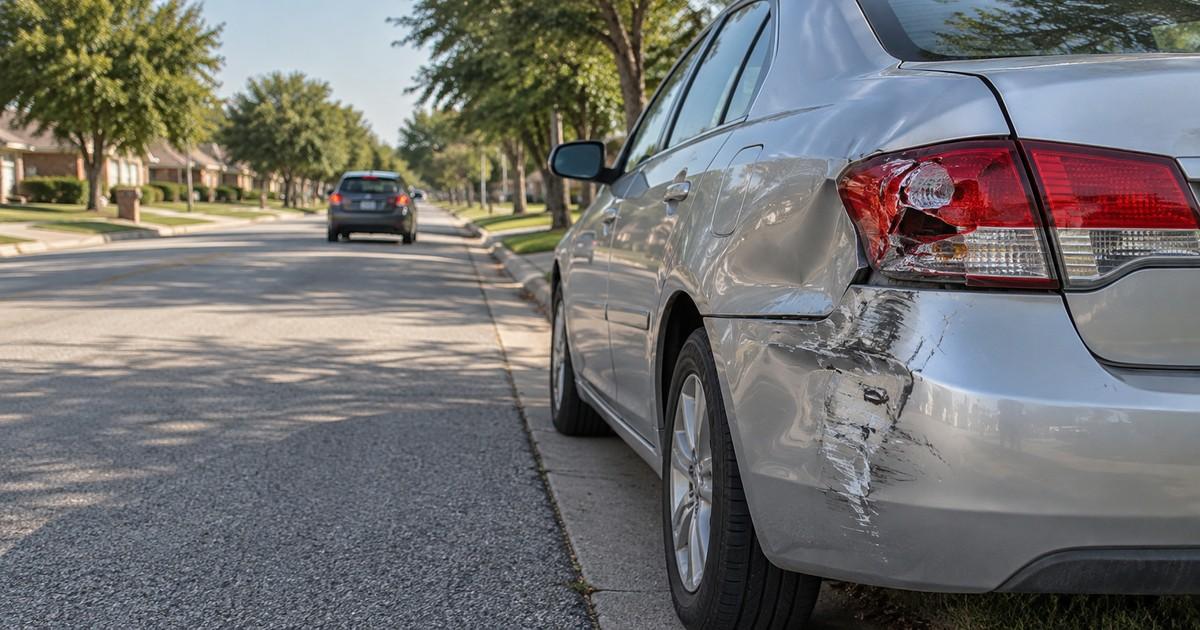
At the scene: call 911 and report it as a hit-and-run immediately; write down everything you remember about the vehicle — color, type, damage, direction of travel, any partial plate — before the details fade; photograph your vehicle, the roadway, debris, and any paint transfer, which may help investigators narrow down the striking vehicle; and get contact information from every witness before they leave.
In the following days: identify possible cameras. Nearby businesses, homes, buses, or delivery vehicles may have captured the crash or the fleeing vehicle. Not every traffic camera records, and retention periods vary. Ask that relevant recordings be preserved promptly. Do not trespass, confront a suspected driver, or delay care to gather evidence. Our guide to the first 72 hours after a car accident covers the broader evidence checklist.
If the crash happened in the metro, our Oklahoma City car accident page discusses local evidence sources, including cameras along busy corridors.
The Deadlines
An ordinary negligence lawsuit against the responsible driver generally has a two-year limitations period from accrual under 12 O.S. § 95(A)(3). Do not assume a police investigation pauses it.
Do not count on two years for treble damages. Section 95(A)(4) sets a one-year limit for statutory penalties. Because Pope calls § 10-103 damages punitive, a defendant could argue that this shorter period applies. Pope decided insurance coverage, not that limitations question. Have the claim reviewed well before the first anniversary of the crash. If the claim is treated as a penalty, the disability extension in 12 O.S. § 96 would not apply, including its protection for minors.
A claim for UM benefits follows a different clock. In Wille v. GEICO Casualty Co., 2000 OK 10, 2 P.3d 888, the Oklahoma Supreme Court answered a certified question by holding that the five-year written-contract period begins when the insurer breaches the policy, not on the crash date. Check for an enforceable policy provision shortening that period; 36 O.S. § 3617 generally prohibits a UM suit limitation shorter than two years from accrual. Policy notice, cooperation, and proof duties are separate and may require action sooner.
A government driver, a death, or an injured child can change the deadline analysis. A claim against an Oklahoma state or local government generally requires written notice within one year under 51 O.S. § 156(B), followed by separate suit deadlines. Do not wait for the criminal investigation or assume every claim receives the same extension.
Frequently Asked Questions
Is a hit-and-run a felony in Oklahoma?
It depends on the harm and the statutory elements. The nonfatal-injury offense under 47 O.S. § 10-102 is Class B5; the fatal-crash offense under § 10-102.1 is Class B4. Both address willful, malicious, or felonious failures to stop or comply with the required duties, and both require license revocation upon conviction. A violation involving only damage to an attended vehicle is a misdemeanor under § 10-103. Civil liability is a separate question.
Can I recover compensation if the driver is never identified?
Possibly. Oklahoma's UM statute, 36 O.S. § 3636, includes bodily injury caused by hit-and-run motor vehicles. Recovery depends on the facts, applicable policies, insured status, and any valid written rejection. Review the full policy file, not just the declarations page. Policy notice and proof requirements still apply.
What if the hit-and-run only damaged my car?
Required UM coverage addresses bodily injury. Collision coverage may pay vehicle damage subject to the policy and deductible. An identified responsible driver may face treble vehicle damages for leaving after damaging a driven or attended vehicle without fulfilling the required duties. This remedy does not extend to an unattended parked car. Under Pope, the multiplier is punitive and may be excluded by liability insurance, leaving collection against the driver personally. A one-year filing limit could apply to the treble claim.
How long do I have to bring a hit-and-run injury claim?
An ordinary negligence lawsuit against the driver generally must be filed within two years of accrual. A treble-damages claim could face the one-year statutory-penalty limit; do not wait two years to address it. A UM benefits suit generally has a five-year period starting at the insurer's breach, subject to any enforceable shorter policy period and separate notice and proof duties. Government claims generally require notice within one year. A death or an injured child requires additional review. Have each deadline checked promptly rather than waiting for the criminal investigation.
Should I chase the fleeing driver?
No. Stay at or near the scene in a safe spot, call 911, and note everything you can: a partial plate, vehicle description, and direction of travel. Do not put yourself or others at risk by pursuing the driver. Your health and the report come first.
Get the Evidence and Policies Reviewed
You do not need to wait for an arrest to ask about an injury claim. Keep the report number, photographs, witness information, medical records, and policy documents together. Addison Law Firm handles car accident claims across Oklahoma. This article is general information, not legal advice, and does not create an attorney-client relationship.
Injured by a Driver Who Left?
We can review the available evidence and insurance policies, explain possible claims, and identify deadlines that need attention.
Discuss Your Hit-and-Run Claim