
Key Takeaways
- Separate Sovereigns: Tribal courts are courts of sovereign nations, not extensions of state or federal systems. They operate under tribal law, which may differ substantially from what you're used to.
- Exhaustion Is Generally Required: Federal courts typically require parties to exhaust tribal-court remedies before seeking federal review, subject to narrow exceptions such as bad faith, an express jurisdictional prohibition, or no adequate opportunity to challenge jurisdiction.
- Preserve Objections Without Defaulting: A party can meet deadlines and build the tribal-court record while preserving a jurisdictional challenge for the forum's appellate process and any later federal review.
Receiving an Oklahoma tribal-court summons does not by itself prove or defeat jurisdiction. Start with the specific tribe's code and court rules, the parties' citizenship and status, the land and conduct involved, the source of the claim, any forum or consent provision, and the available tribal appellate process. Preserve jurisdictional objections while meeting the tribal court's deadlines.
Before filing, confirm admission requirements, service, response time, governing law, available motions, discovery rules, and the route for appeal. Tribal courts are courts of separate sovereigns; state-court habits are not a substitute for the forum's own law.
Why Tribal Courts Are Different
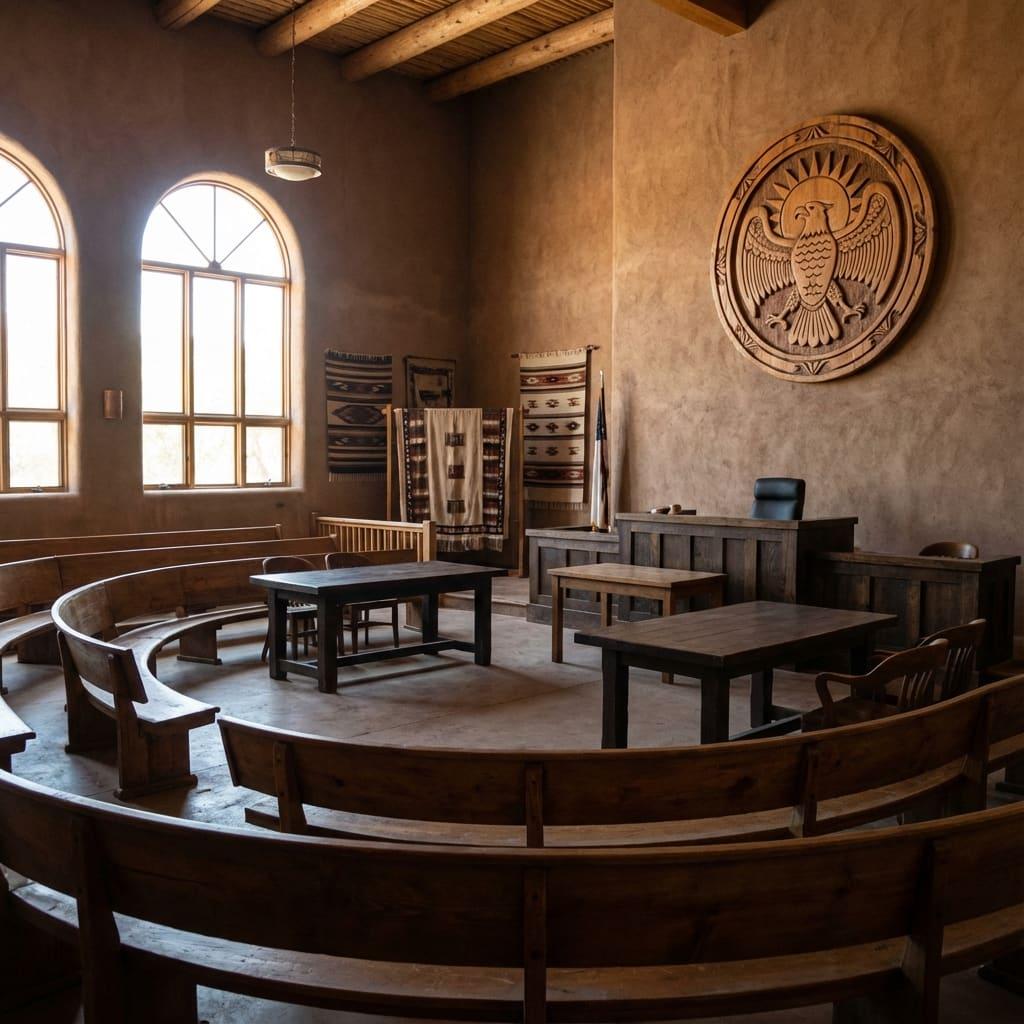
Tribal courts exercise the judicial authority of sovereign nations. The source of jurisdiction, governing law, admission rules, procedure, and appellate path therefore must be identified for the particular forum.
Tribal courts apply tribal law, which may be found in constitutions, codes, court rules, precedent, and in some systems customary law. Federal law may control particular questions, and tribal law or an enforceable agreement may incorporate state-law rules. Do not assume a state rule applies merely because it is familiar. For example, the Indian Child Welfare Act, 25 U.S.C. § 1911, expressly addresses tribal-court jurisdiction in covered child-custody proceedings.
Procedural rules vary by tribe. Some tribal courts have adopted rules closely tracking federal or state civil procedure; others have developed their own approaches. Discovery may be more limited. Evidentiary standards may differ. Jury composition, if jury trials are available, follows tribal rather than state practice.
The practical rule is simple: obtain the controlling tribal sources and do not fill gaps with state procedure unless tribal law authorizes it.
Jurisdiction: When Tribal Court Applies
Nonmember jurisdiction is a federal Indian-law question, not a zip-code shortcut. The analysis may include the parties' status, land status, where the conduct occurred, the claim, treaty or statutory rules, consent, and the relationship to tribal self-government. For a broader forum-selection overview, see our guide to tribal, state, and federal jurisdiction in Oklahoma.
Consent and contract terms. A valid forum-selection, arbitration, or consent provision may materially affect the analysis. Read the entire agreement, including definitions, governing law, dispute procedures, exhaustion language, and any limited waiver. A tribal-law clause and a tribal-court clause are not necessarily the same thing.
Land, conduct, and parties. Conduct in Indian country, tribal ownership or membership, and the effect on tribal interests can matter, but none should be used alone to assume civil jurisdiction over a nonmember. McGirt addressed reservation status in a criminal-jurisdiction case; it did not supply a universal answer to civil tribal-court jurisdiction.
Federal limits and tribal self-government. Nonmember civil jurisdiction is constrained by federal law and depends on the particular relationship and conduct. Commercial dealings, consensual relationships, threats to tribal integrity or welfare, and other facts require claim-specific analysis rather than a broad “tribal interest” label.
Jurisdictional challenges are possible, and in some nonmember cases they matter a great deal. But they must be raised strategically. Litigation over jurisdiction can delay resolution while increasing costs, and the exhaustion doctrine may require the tribal court system to address the issue first. For many clients, engaging with the tribal court process while preserving objections is more efficient than refusing to participate.
The Exhaustion Doctrine
Federal courts generally require tribal-court remedies to be exhausted before federal review of tribal-court jurisdiction. National Farmers Union Insurance Cos. v. Crow Tribe of Indians and Iowa Mutual Insurance Co. v. LaPlante explain the comity and self-government principles behind that rule. Recognized exceptions may apply where jurisdiction is asserted in bad faith or for harassment, the action plainly violates an express jurisdictional prohibition, or exhaustion would be futile because there is no adequate opportunity to challenge jurisdiction. The exception and its factual basis should be analyzed precisely.
The doctrine gives the tribal court the first opportunity to evaluate its jurisdiction and develop the record, subject to the recognized exceptions.
Practically, this means tribal court proceedings matter even when you intend to seek federal review later. The record you build in tribal court shapes what federal courts will consider. Default judgment because you refused to appear is a poor foundation for later arguing that jurisdiction was improper.
Practicing Effectively
Use a court-specific intake checklist:
- Confirm the court, case number, assigned judge, clerk contact, service date, and response deadline.
- Obtain the current constitution, judicial code, civil rules, evidence rules, local orders, fee schedule, and appellate rules.
- Complete tribal-bar admission or a permitted pro hac vice process before appearing.
- Identify the jurisdictional basis, preserve objections in the form and time the tribal rules require, and request a ruling suitable for appellate review.
- Calendar rehearing, interlocutory-review, final-judgment, bond, and appeal requirements under tribal law.
- Determine whether the forum offers mediation or another resolution process and whether participation affects deadlines.
The broader Oklahoma context may also matter. Tribal sovereignty, state authority, federal Indian law, and issues such as law-enforcement cross-commissioning can intersect, but each issue should be tied to the particular claim and source of law.
Working With Tribal Court Judgments
Tribal judgments can have consequences outside the issuing court. Oklahoma has a specific recognition framework in 12 O.S. § 728 and Rule 30 of the Rules for District Courts.
Rule 30 addresses reciprocity, authentication, notice, finality, jurisdiction, due process, fraud, public policy, and other recognition questions. It also provides that a tribal judgment receives no greater effect than a comparable sister-state judgment. The party seeking or opposing recognition should use the rule's actual filing and objection procedure rather than treating domestication as automatic.
Before judgment, identify where enforcement may be needed and whether the tribal court can grant the requested relief. After judgment, obtain the final judgment, proof of service, appellate disposition, authentication, and any tribal-law material needed for Rule 30.
Building Tribal Court Competence
Maintain a source file for each tribal court in which you appear: current codes and rules, amendment dates, admission status, clerk instructions, filing method, fee schedule, appellate path, and controlling decisions. Recheck it at the start of each matter. A saved rule from another tribe—or an older version from the same tribe—is not controlling.
Substantive tribal law also requires independent research. Contract, tort, property, family, employment, and governmental claims may use tribal causes of action, defenses, remedies, and limitations periods. The forum's own law comes first.
Frequently Asked Questions
Can any attorney practice in tribal court?
Not automatically. Most tribal courts require attorneys to be admitted to the tribal bar, which may involve a separate application, background check, and sometimes a tribal law exam. Requirements vary by tribe.
Is tribal court law different from state or federal law?
Yes. Tribal constitutions, codes, court rules, precedent, and in some systems customary law may control. Federal law can limit or direct particular questions, and tribal law may incorporate another sovereign's rule. Check the source used by the specific court.
Can tribal court decisions be appealed to federal court?
Generally, no. Tribal court decisions are appealed within the tribal appellate system. Federal courts typically require exhaustion of tribal remedies before considering any review, and that review is limited to specific jurisdictional questions.
Do tribal courts follow the same procedural rules as state courts?
Not necessarily. While some tribal courts follow rules similar to state or federal procedure, others have their own procedural frameworks. Attorneys should review the specific tribe's court rules and procedures before filing.
Are tribal court judgments enforceable in Oklahoma state courts?
Potentially. Oklahoma district courts apply 12 O.S. § 728 and Rule 30, including reciprocity and specified recognition standards. Jurisdiction, due process, finality, authentication, notice, fraud, and public policy may be disputed. Use the rule's procedure for the particular judgment.
Do I need a separate license to practice in tribal court?
Yes. Most Oklahoma tribal courts require separate bar admission — some through tribal bar examinations, some through reciprocity or pro hac vice procedures. Your Oklahoma state bar license does not automatically entitle you to appear in tribal court.
What is the tribal exhaustion doctrine and does it have exceptions?
It generally requires the tribal court system to have the first opportunity to evaluate its jurisdiction before federal review. Exceptions exist, but they are not a substitute for appearing, preserving objections, and building a record. Whether an exception applies depends on the precise jurisdictional prohibition, alleged bad faith, and availability of a meaningful tribal-court challenge.
Facing Tribal Court Litigation?
Tribal courts have their own law and procedure. We practice regularly across Oklahoma's tribal courts.
Schedule a Consultation →This article is for general information only and is not legal advice. Source status checked July 13, 2026 against 25 U.S.C. § 1911, National Farmers Union, Iowa Mutual, 12 O.S. § 728, and Oklahoma District Court Rule 30.