Key Takeaways
- A Judge's Signature Does Not Launder a Lie: Under Franks v. Delaware, a warrant affidavit that includes a false statement made knowingly, intentionally, or with reckless disregard for the truth violates the Fourth Amendment if the false statement was necessary to the finding of probable cause.
- The Tenth Circuit Applies This Rule in Civil Suits: In Wolford v. Lasater, the federal appeals court covering Oklahoma confirmed that both false statements in a warrant affidavit and reckless omissions of information that would have defeated probable cause can violate the Fourth Amendment — the foundation for a civil rights claim under 42 U.S.C. § 1983.
- Materiality Decides These Cases: Courts strike the false material, add back what was omitted, and ask whether the modified affidavit still supports probable cause. If it does, the claim usually fails — even where a court finds an officer actually gave false testimony, as happened in Wolford itself.
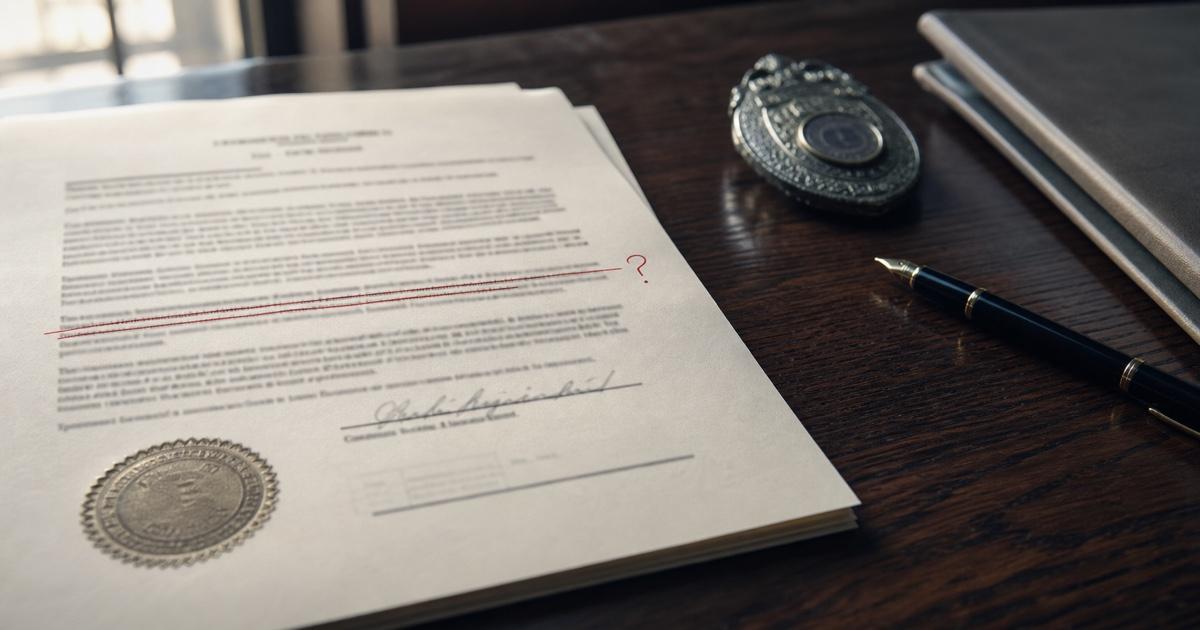
The affidavit is where a warrant lives or dies. A judge almost never watches the traffic stop, interviews the informant, or visits the house — the judge reads a sworn narrative written by an officer and decides whether it adds up to probable cause. That design only works if the narrative is honest. When an officer swears to things that are not true, or leaves out the facts that would have changed the judge's mind, the Fourth Amendment has something to say about it — and so does federal civil rights law.
Yes, you can sue when police lie to get a warrant — but the claim has specific, demanding elements. You must show the officer made a false statement knowingly or with reckless disregard for the truth (or recklessly omitted critical facts), and that the lie or omission actually mattered to the probable cause finding. An honest mistake is not enough, and a lie that changes nothing is not enough. This article explains where the rule comes from, how the Tenth Circuit — the federal appeals court that hears Oklahoma cases — applies it, and why the materiality requirement is where most of these cases are won or lost. It is general information, not legal advice about any specific case.
The Rule Comes From Franks v. Delaware
In Franks v. Delaware, decided in 1978, the U.S. Supreme Court confronted a state rule that flatly prohibited criminal defendants from ever challenging the truthfulness of a sworn warrant affidavit. The Court reversed the Delaware Supreme Court and held that the Fourth Amendment requires a hearing when a defendant makes a substantial preliminary showing that the affiant included a false statement knowingly and intentionally, or with reckless disregard for the truth, and that the false statement was necessary to the finding of probable cause. If perjury or reckless disregard is proven at that hearing and the affidavit's remaining content cannot support probable cause on its own, the warrant must be voided and the evidence excluded.
Franks was a criminal case about suppressing evidence, not a lawsuit for damages. But the constitutional principle it announced — that deliberate or reckless falsehood in a warrant affidavit violates the Fourth Amendment — is the foundation on which civil claims are built. Two limits in the opinion matter for anyone thinking about a case. First, the Court was explicit that "allegations of negligence or innocent mistake are insufficient." Sloppy police work is not the same thing as deception. Second, the deliberate falsity or reckless disregard that counts is "only that of the affiant, not of any nongovernmental informant." If an informant lied to an honest officer who reasonably repeated it, the affidavit problem is the informant's dishonesty, not the officer's — a distinction that can be fatal to a claim.
How the Tenth Circuit Applies It to Civil Cases
The Tenth Circuit — whose published decisions bind federal courts in Oklahoma — addressed the civil side directly in Wolford v. Lasater (10th Cir. 1996). Teresa Wolford, a former sheriff's office secretary in New Mexico, was charged with forgery and embezzlement, acquitted at trial, and then sued under 42 U.S.C. § 1983, claiming her arrest and prosecution were built on a defective affidavit and false grand jury testimony.
The court stated the governing rule plainly: it is a violation of the Fourth Amendment for an arrest warrant affiant to knowingly, or with reckless disregard for the truth, include false statements in the affidavit — and it is equally a violation to knowingly or recklessly omit information which, if included, would have vitiated probable cause. That second half matters. Officers rarely invent facts out of whole cloth; more often, the affidavit is technically accurate sentence by sentence but leaves out the exculpatory facts that would have given the judge serious pause. The Tenth Circuit treats reckless omissions as potential constitutional violations too.
Then comes the test that decides most of these cases. For false statements, the court sets the false information aside and reviews what remains. For omissions, the court reads the affidavit as if the omitted information had been included and asks whether it would still have established probable cause. Lawyers call this the "modified affidavit" analysis — the Tenth Circuit's own phrase — and it is unsentimental: the question is never just whether the officer was dishonest, but whether the dishonesty changed the outcome.
Wolford itself shows how demanding that standard is. The district court found that a detective actually gave false and embellished testimony to the grand jury — and the plaintiff still lost. The Tenth Circuit affirmed summary judgment for the officers because the unchallenged facts, standing alone, were enough to establish probable cause for the forgery and embezzlement charges. Proven dishonesty, no liability. Anyone evaluating a warrant-lies case has to start with that sobering math.
The framework remains current. In Kapinski v. City of Albuquerque (10th Cir. 2020), a man acquitted of murder on self-defense grounds sued the detective who had omitted surveillance video from her arrest-warrant affidavit. The Tenth Circuit affirmed summary judgment for the detective: attaching the ambiguous video would not have defeated probable cause, nothing suggested recklessness — the affidavit itself included witness statements favorable to self-defense — and, critically, the court explained that while its precedent "clearly establishes that lying in a warrant affidavit is unconstitutional," a claim built on a reckless omission generally requires a factually analogous earlier case before qualified immunity gives way. Outright lies and quiet omissions both violate the Fourth Amendment, but they are not treated the same at the immunity stage. Later Tenth Circuit decisions — the unpublished, nonprecedential order in Montoya v. Vigil (10th Cir. 2022) and the published decision in Morphew v. Chaffee County (10th Cir. 2026) — continued to apply the same materiality inquiry to alleged warrant-affidavit falsehoods and omissions.
An Oklahoma Case Where the Claim Survived
The claim is hard, not hopeless — and one of the Tenth Circuit's most significant decisions in this area arose from an Oklahoma prosecution. In Pierce v. Gilchrist (10th Cir. 2004), Jeffrey Todd Pierce alleged that he spent fifteen years in an Oklahoma prison for a rape he did not commit, until DNA analysis showed he could not have been the source of the physical evidence. His civil suit alleged that a forensic chemist for the Oklahoma City Police Department fabricated inculpatory evidence and disregarded exculpatory evidence, propelling a prosecution that never should have happened.
The chemist and the district attorney asked the court to dismiss the claims against them on immunity grounds. The district court dismissed some claims but denied immunity on others. The Tenth Circuit affirmed the denials presented on appeal, allowing those claims to proceed past the pleading stage. The court emphasized that for a right to be clearly established, an official need not have had the exact conduct declared unlawful before — it is enough that, in light of pre-existing law, the unlawfulness was apparent. Two honest caveats: Pierce involved allegations of fabricated forensic evidence feeding a prosecution, a close cousin of the classic false-affidavit claim rather than its twin, and the decision came at the motion-to-dismiss stage, where the court assumes the plaintiff's allegations are true. It did not decide what actually happened. But it stands for something important in this circuit: deliberately falsifying the evidentiary basis for someone's arrest and prosecution is not conduct qualified immunity was designed to protect.
What You Would Have to Prove
Assembled from these cases, a Fourth Amendment judicial-deception claim in the Tenth Circuit generally requires proof of three things. First, a false statement in — or a critical omission from — the warrant affidavit. Second, a culpable state of mind: the officer acted knowingly, intentionally, or with reckless disregard for the truth, not merely carelessly. Third, materiality: under the modified-affidavit analysis, probable cause evaporates once the lie is removed or the omitted facts are restored.
Each element has its own proof problems. Affidavits are the government's documents, and the underlying investigative file — what the officer actually knew and when — usually has to be pried loose in discovery. State of mind is rarely admitted; it gets built from contradictions between the affidavit and the reports, recordings, and dispatch logs the officer had at the time. And materiality is a legal battleground where the government will argue that even a modified affidavit clears the relatively low bar of probable cause. These claims also frequently travel alongside false arrest and malicious prosecution claims, which have their own distinct elements, accrual rules, and defenses. For a Fourth Amendment malicious-prosecution claim, favorable termination means the prosecution ended without a conviction. That rule comes from Thompson v. Clark, 596 U.S. 36 (2022).
The practical takeaway: preserve everything, early. The charging documents, the affidavit itself (your criminal defense lawyer may already have it), body camera and dash camera footage, and every police report. If the warrant led to a search of your home, our discussion of wrong-house police raids covers related Fourth Amendment ground. And because Section 1983 claims filed in Oklahoma generally borrow the state's two-year personal-injury limitations period under Okla. Stat. tit. 12, § 95(A)(3), the window to investigate and file is shorter than most people assume. The Tenth Circuit applied that two-year period in Pemberton v. Patton, and our guide to Section 1983 time limits explains why the accrual date still depends on the particular claim.
Frequently Asked Questions
Does this rule cover search warrants, arrest warrants, or both?
Both. Franks v. Delaware itself involved a search warrant, and the Tenth Circuit in Wolford v. Lasater applied the same framework to an arrest warrant affidavit. The constitutional logic is identical: a judge's probable cause determination is only as good as the sworn information supporting it, whichever kind of warrant is at issue.
What if the officer didn't lie, but left out facts that would have changed the judge's mind?
Omissions can violate the Fourth Amendment too. Under Wolford, knowingly or recklessly omitting information which, if included, would have vitiated probable cause is treated as a violation just like an affirmative false statement. The court then reads the affidavit as though the omitted facts were in it and asks whether probable cause survives. The omission has to be more than an editing choice — it must be material, and it must have been made knowingly or recklessly. One candid caveat: omission-based claims face a steeper qualified-immunity climb than outright lies. In Kapinski v. City of Albuquerque (10th Cir. 2020), the court affirmed judgment for a detective who omitted surveillance video from a murder-warrant affidavit, explaining that reckless-omission claims generally require a factually similar precedent, while deliberate lying in an affidavit is clearly established as unconstitutional across the board.
Can I sue if an informant lied to the police?
Generally not on this theory. The Supreme Court in Franks limited the doctrine to the deliberate falsity or reckless disregard of the affiant — the officer who swore out the affidavit — "not of any nongovernmental informant." If the officer honestly and reasonably repeated what an informant said, the officer's affidavit is not a Franks problem, though serious questions about whether the officer should have believed or corroborated the informant can still factor into the recklessness analysis. This is a fact-intensive area where the details matter enormously.
What if I was convicted in the criminal case?
A conviction significantly complicates a civil claim attacking the basis for your arrest or prosecution, but it does not automatically bar every Fourth Amendment claim. Under Heck v. Humphrey, 512 U.S. 477 (1994), a claim cannot proceed while the conviction stands when winning the civil case would necessarily imply that the conviction is invalid. A claim that would not necessarily undermine the conviction — some unlawful-search claims, for example — may proceed despite it. Pierce illustrates the first situation: his conviction was vacated after DNA testing, and the civil suit followed. If your criminal case is still open or ended in a conviction, talk to a lawyer about sequencing before assuming a civil claim is available — our post on false arrest and malicious prosecution explains the favorable-termination concept in more detail.
How long do I have to file?
Section 1983 claims filed in Oklahoma generally borrow the state's two-year limitations period, but when the clock starts can vary by claim type — false arrest, malicious prosecution, and unlawful search claims can accrue at different times. Our guide to Section 1983 time limits walks through the framework. Treat the deadline as case-specific and get advice early.
The Affidavit Is Where the Case Starts
A warrant-based arrest or search feels unassailable to most people — a judge signed it, after all. But the signature is only as honest as the sworn statement beneath it. Franks has supplied the constitutional rule against deliberate or reckless material falsehoods in warrant affidavits since 1978, and 42 U.S.C. § 1983 can provide a civil remedy when its requirements are met. These cases are demanding: the state-of-mind and materiality requirements defeat many claims, and immunity doctrines add another layer. That is exactly why the affidavit, the investigative file, and the timeline deserve a careful look by someone who handles civil rights litigation in Oklahoma and the Tenth Circuit. If you believe a warrant in your case was built on false statements or critical omissions, contact us for a confidential consultation. This article is general information, not legal advice, and does not create an attorney-client relationship.
Was the Warrant in Your Case Built on a Lie?
A judge's signature does not immunize a false affidavit. The Fourth Amendment has prohibited deliberate deception in warrant applications for nearly fifty years — and the documents that prove it usually already exist. Let us examine yours.
Talk to a Civil Rights Lawyer