
Key Takeaways
- A covered lease can carry public responsibility: A carrier can answer to an injured motorist for an owner-operator's negligent driving even though the driver owns the tractor and works under an independent-contractor agreement.
- Identify the actual leasing arrangement: A carrier leasing a truck and driving services is different from a broker hiring a separate carrier to move freight. The lease, authority, and equipment records help tell them apart.
- Employment status is a separate question: The federal rule preserves the employee/independent-contractor distinction. That does not itself eliminate the carrier's responsibility to people injured by a leased truck.
- Preserve the records for the crash-time trip: The active lease, transfer documents, messages, freight papers, and electronic trip history can show which arrangement was actually in effect.
A trucking company can be responsible to an injured motorist for a leased-truck driver's negligence even when the driver owns the tractor and signed an independent-contractor agreement. The leased owner-operator rules protect the public by placing responsibility with the carrier in covered arrangements. The important questions are which carrier leased the equipment, whether that arrangement covered the crash, and how the driver's conduct caused the injury. Start with the lease and trip records, not just the name on the truck's title.
A leased-truck arrangement is one part of the trucking liability chain. Truck insurance and federal financial responsibility require a separate coverage inquiry, including the actual policies and the truck's use when the crash occurred.
What Was Actually Leased?
An owner-operator may own a tractor and supply driving services to a carrier under a lease. Another owner may supply the truck but employ someone else to drive it. A carrier may rent equipment without a driver from a rental business. A driver may instead operate as a carrier under separate authority. Those arrangements should not all receive the same answer.
Under 49 C.F.R. § 376.2(e), a lease in this framework grants equipment use, with or without a driver, to an authorized carrier for compensated use in regulated property transportation. The owner, lessor, lessee, driver, and employer may be different people or entities.
Match names with the actual tractor and trailer. Photograph identifying numbers and markings when it is safe, and preserve the crash report. A tractor's title, a trailer's registration, and a driver's business name answer different questions. If the driver uses a limited liability company, identify that entity accurately rather than assuming its name and the driver's personal name are interchangeable.
When the Federal Leasing Requirements Apply
49 C.F.R. § 376.1 addresses specified leasing and interchange actions by registered property motor carriers performing transportation regulated by the Secretary. The familiar owner-operator arrangement in interstate authorized carriage can fall within that framework. It is not a universal rule for every borrowed truck, private business fleet, or solely intrastate arrangement.
Coverage requires checking the carrier's authority, the transportation, and exemptions. Section 376.21 preserves equipment-identification requirements but exempts specified arrangements from the leasing regulations. Examples include equipment leased without drivers from a business principally engaged in that activity and a trailer not drawn by a power unit leased from the same lessor. It also addresses commercial-zone transportation and substituted motor-for-rail service.
Other provisions govern particular arrangements between carriers or with agents. The existence of an exemption from these leasing provisions is not a finding that no safety rule or negligence duty applies. It means the investigation must identify the correct rule instead of borrowing a convenient paragraph from a different operation.
When the Carrier Answers for an Owner-Operator
For a covered lease, 49 C.F.R. § 376.12(c)(1) requires provisions placing exclusive possession, control, and use of the equipment, and complete operational responsibility, with the authorized carrier during the lease. Paragraph (c)(3) permits a particular time limitation for household-goods leases.
In Rodriguez v. Ager, 705 F.2d 1229 (10th Cir. 1983), the Tenth Circuit held the carrier responsible as a matter of law for injuries caused by the leased-truck driver. The lease remained effective and the carrier's insignia was still on the tractor, but the driver was on a trip arranged by the truck's owner rather than for the carrier, without the carrier's knowledge. The court rejected limiting the carrier's responsibility to an ordinary employer-employee relationship. The decision applied older leasing regulations, but its central distinction matters: responsibility to the injured public reaches beyond who signed the driver's paycheck.
Oklahoma's Court of Civil Appeals described that leased owner-operator statutory-employer doctrine in Le v. Total Quality Logistics, LLC, 2018 OK CIV APP 71, ¶¶ 15-17. In this context, statutory employer means a carrier that can be held responsible for the operator's negligence under the leasing rules. The court distinguished the broker before it because there was no evidence the driver was an owner-operator who leased equipment to that broker. It affirmed judgment for the broker; it did not reject the doctrine for an actual carrier-lessee.
What the Independent-Contractor Clause Does
Paragraph (c)(4) of § 376.12 says the required equipment-control provision is not intended to determine whether the lessor or driver is an employee or independent contractor. The parties can have an independent-contractor relationship while complying with the leasing rules. Employment classification and responsibility to an injured motorist are different questions. The paragraph does not itself say whether a carrier is responsible to an injured motorist, and courts have disagreed about how it affects the older public-liability doctrine described above.
Courts also distinguish injuries to the public from losses to freight. In Mercer Transportation Co. v. Greentree Transportation Co., 341 F.3d 1192 (10th Cir. 2003), the Tenth Circuit declined to extend Rodriguez to cargo claims under the Carmack Amendment. Footnote 4 expressly left undecided whether regulatory amendments undermined Rodriguez. It did not decide that those amendments ended carrier responsibility to injured motorists. That question has produced differing lower-court approaches, so the applicable law and the particular leasing arrangement still need review.
Separate the Driver's Negligence From Company Responsibility
First determine what caused the collision. Was the driver following too closely, making an unsafe turn, or operating equipment with a known defect? Oklahoma's ordinary-care statute, 76 O.S. § 5, addresses injury caused by a lack of ordinary care or skill. The crash investigation must connect the unsafe conduct to the injury.
Holding a carrier responsible for the driver's negligence is different from proving that the company itself made a negligent decision. A claim based on the company's own conduct calls for evidence of that decision and how it contributed to the crash. Both questions may matter in the same case.
For example, a carrier's messages might show that it learned of a steering problem and directed the truck to continue. That would call for investigation of who received the warning, who made the decision, what repair options existed, and whether the steering problem caused the collision. The lease's maintenance language matters, but it does not replace the communications and mechanical proof.
A different record might show that an equipment owner failed to perform an assigned repair or that another business employed the driver. Deciding who may be sued after an Oklahoma truck wreck requires identifying each party's role, the applicable responsibility, and the evidence connecting that party to the harm.
Reconstruct the Arrangement at the Moment of the Crash
Request the complete lease, signed addenda, equipment schedules, and documents showing when possession began or ended. For covered arrangements, 49 C.F.R. § 376.11 addresses written leases, possession receipts, equipment identification, and trip documents. Its treatment of a receipt at the end of possession depends on the lease terms; do not assume every termination produces the same paperwork.
Compare the documents with dispatch messages, pickup and delivery appointments, bills of lading, payment records, fuel purchases, and available electronic location history. A master agreement may establish a continuing relationship, while a particular trip record identifies whose freight was being moved. A document signed after the crash should not silently be treated as evidence that it was effective earlier.
An empty trailer or a tractor traveling without a trailer does not answer whose business the driver was serving. Ask where the last delivery ended, whether another assignment had been accepted, why the driver was traveling to the next location, and who instructed that movement. A personal errand, a return to an assigned terminal, and a trip to collect another load may have different legal and coverage consequences.
If the carrier says the lease ended before the wreck, preserve the termination notice, transfer records, dispatch shutdown, payment history, and communications with the driver. If the driver says it was still active, preserve the evidence supporting that account too. The date on a single form should be tested against the surrounding records, not accepted because it favors one side.
What the Name on the Door Can Establish
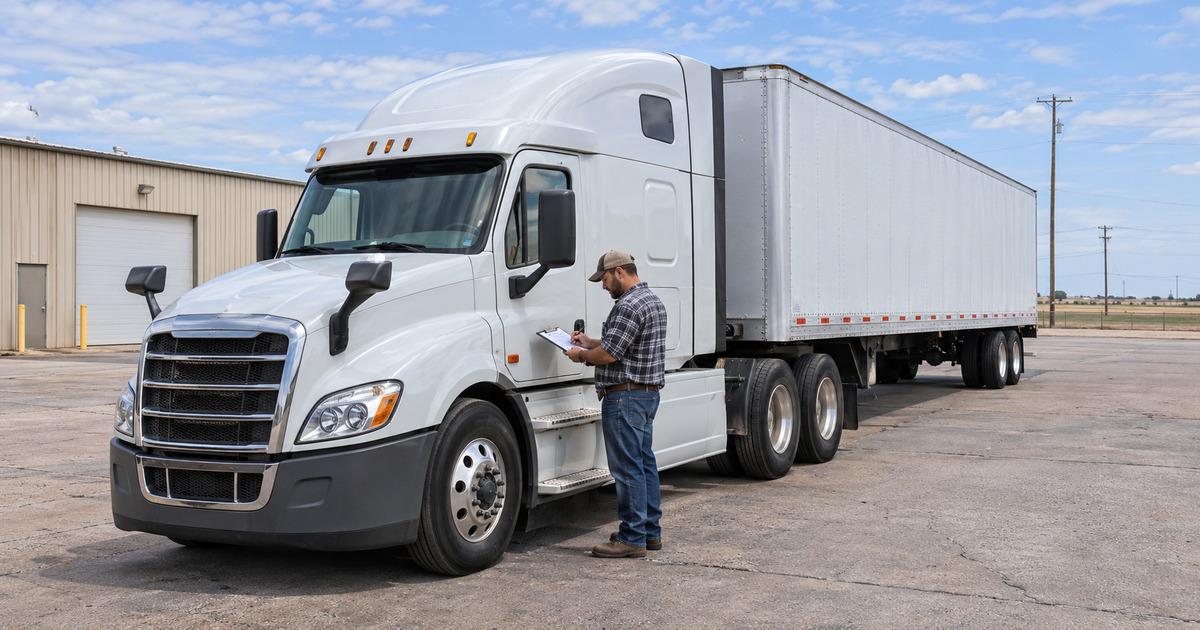
Photographs of a carrier's name and identifying number can help find the correct company and compare its account with the truck's condition at the scene. Section 376.11 contains identification requirements for covered equipment. Preserve photographs of the markings along with the lease, possession records, and trip documents.
A truck still carrying an old logo after a lease genuinely ended presents a different question from one operating under an active covered lease. The historical placard rule should not become a blanket modern rule that every displayed logo establishes liability. Removing a logo is not proof by itself that a lease ended, either. The termination paperwork and actual transfer of possession can show whether the carrier's account matches what happened.
Keep Liability and Insurance Questions Separate
Obtain the policies and endorsements that may cover the carrier, owner-operator, equipment owner, and trip. Non-trucking or bobtail coverage labels do not resolve coverage without reading the actual terms and determining the truck's use at the time. The existence of a lease does not establish an available policy limit or make an insurer's payment obligation automatic.
The lease may help locate insurance records and explain who agreed to obtain particular coverage. It does not replace the policy. Coverage disputes and reimbursement terms between companies should not distract from preserving evidence of the crash and identifying the people whose conduct caused it.
Partial Fault and Filing Time Still Matter
The leasing arrangement does not change the ordinary comparative-negligence framework. Under 23 O.S. §§ 13 and 14, an injured person's fault bars recovery when it exceeds the combined fault of the others causing the harm; otherwise, the recovery is reduced proportionately. The driver owning the truck does not shift the burden of proving the crash claim.
An ordinary Oklahoma negligence injury suit generally has a two-year limitation under 12 O.S. § 95(A)(3), subject to accrual and applicable exceptions. Do not wait for companies to agree on who operated the truck before checking the deadline or seeking advice. Evidence preservation may need immediate attention, but a preservation request does not file a lawsuit or extend the limitation period.
Frequently Asked Questions
Can I bring a claim against a carrier if the driver owned the truck?
Yes. Driver ownership does not prevent a claim against the carrier that leased the truck. The statutory-employer doctrine can make a covered carrier responsible to an injured motorist for the operator's negligence. Identify the lease and whether it covered the operation when the crash occurred.
Does an independent-contractor agreement protect the trucking company?
Not by itself. A carrier's responsibility to injured motorists under a covered lease can extend to an owner-operator even when the parties chose an independent-contractor agreement. Courts have disagreed about how the amended leasing rules affect that responsibility, so current authority in the court where suit would be filed matters.
Does the carrier's logo make it legally responsible?
The photograph is useful evidence of the carrier identity displayed on the truck. Compare it with the active lease or termination records and operating authority. That comparison helps distinguish a covered leasing arrangement from an old marking left on equipment.
What if the driver was empty or heading home?
An empty or off-dispatch trip does not by itself answer the carrier's public-liability responsibility. Preserve the lease, dispatch, last delivery, next assignment, and destination. Those facts can establish the arrangement in effect and separately help evaluate the insurance covering that use.
Which lease documents should be preserved?
Preserve the signed agreement, amendments, equipment schedules, possession and termination documents, dispatch, freight papers, and trip payment records. Preserve relevant electronic messages and location records as well. Keep original files and their timing information where available, not just selected screenshots.
Discuss a Leased-Truck Crash in Oklahoma
The lease and trip records can help identify the operation behind the truck. Contact Addison Law Firm about the crash or learn about our Oklahoma trucking accident practice.
Discuss Your Trucking AccidentThis article is general information, not legal advice, and does not create an attorney-client relationship.