
Key Takeaways
- Federal Rules Govern How Commercial Trailers Are Coupled: Under 49 C.F.R. § 393.70, every fifth wheel assembly must be securely mounted, must include a device "for positively preventing" the lower half from shifting on the frame, and must have a locking mechanism that keeps the halves from separating unless a positive manual release is activated. Full trailers and converter dollies must also be coupled with one or more safety devices, such as chains or cables, with an ultimate strength of "not less than the gross weight of the vehicle or vehicles being towed." That safety-device rule does not apply to a semitrailer riding on a fifth wheel.
- Oklahoma Has Its Own Coupling and Safety-Chain Rules: Under 47 O.S. § 14-106 and its companion, 47 O.S. § 12-405.1, a trailer or semitrailer must have a coupling device that keeps it following "substantially in the path of the vehicle drawing it without whipping or swerving from side to side." Most must also be coupled with stay chains or cables, or under § 12-405.1 an equivalent safety device, strong enough to prevent separation if the regular coupling breaks or disengages. That backup requirement does not apply to a semitrailer drawn by a truck-tractor designed to draw or support its front end, the standard fifth-wheel rig. The coupling-device requirement still does.
- Inspection Duties Sit With Both Driver and Carrier: Under 49 C.F.R. § 392.7, a commercial motor vehicle may not be driven unless the driver is satisfied that listed parts are in good working order, and "coupling devices" are on the list. 49 C.F.R. § 396.3(a)(1) separately requires the motor carrier to systematically inspect, repair, and maintain vehicles subject to its control so that parts and accessories are "in safe and proper operating condition at all times." Neither rule makes a separation proof of a violation by itself.
- The Company's Own Conduct Can Matter, Within Limits: In Fox v. Mize, 2018 OK 75, the Oklahoma Supreme Court held that an employer's stipulation that its driver was acting in the course and scope of employment does not, as a matter of law, bar a negligent entrustment claim, which it called "a separate and distinct theory of liability." Fox involved a driver alleged to be unfit, not a coupling failure, and it did not decide whether other direct-negligence claims, such as negligent hiring, survive the same stipulation.
A trailer that separates from its tow vehicle on I-35, I-40, or a two-lane state highway can put an uncontrolled trailer in the path of other traffic. Federal and Oklahoma law regulate that connection in layers: how the coupling must be built and locked, when a backup chain, cable, or safety device is required, what a commercial driver must be satisfied of before driving, how a motor carrier must maintain its equipment, and when a trailer's brakes must apply automatically if it breaks away. A separation does not by itself prove that anyone broke those rules or was negligent. It does raise specific questions: which requirements applied to this vehicle combination, whether each was met, and whether a failure to meet one caused the crash.
This article is general legal information, not legal advice. Which rules apply, and what the coupling evidence shows, depends on the specific vehicles and facts involved.
How a Trailer Is Supposed to Stay Attached
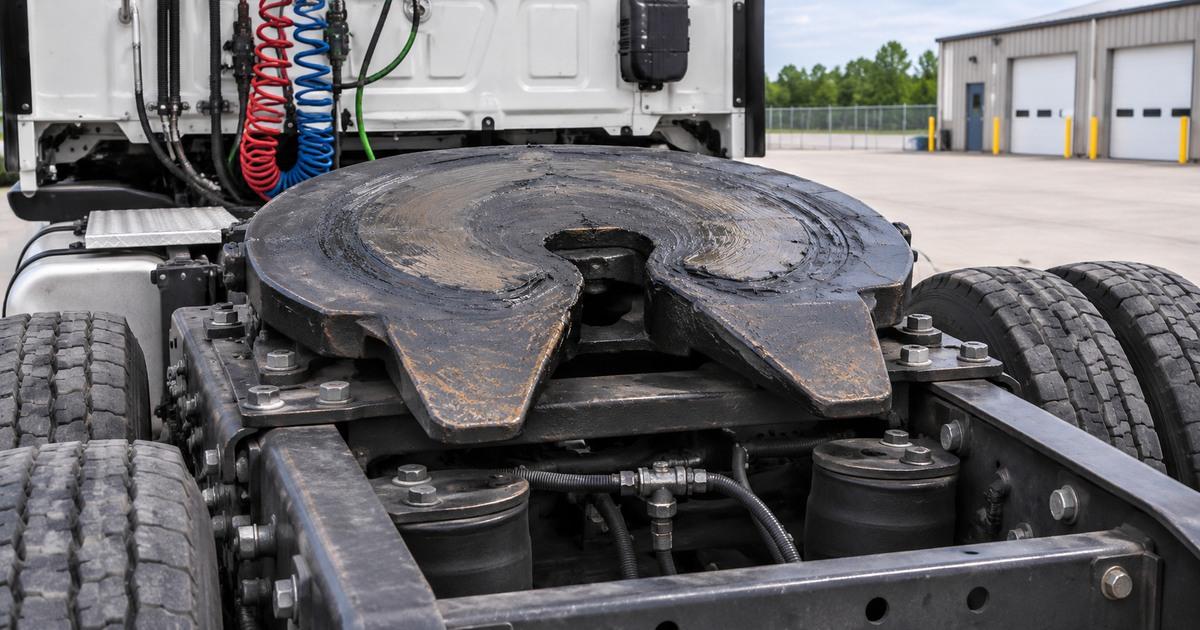
For a tractor-semitrailer, the connection is the fifth wheel: the horseshoe-shaped plate on the tractor frame whose jaws close around the trailer's kingpin. Federal equipment regulations treat that connection as safety-critical hardware. Under 49 C.F.R. § 393.70(b), the lower half of the fifth wheel must be secured to the frame with properly designed brackets and properly tightened bolts, installed so the frame is not cracked, warped, or deformed, and fitted with a device "for positively preventing" the fifth wheel from shifting. The locking mechanism must prevent the upper and lower halves from separating unless a positive manual release is activated, and on readily separable designs the lock must apply automatically on coupling.
Full trailers, the kind towed behind a truck on a tow-bar, often by way of a converter dolly, get a second line of defense. Section 393.70(d) requires full trailers and converter dollies used to convert semitrailers to full trailers to be coupled with one or more safety devices. If chains or cables are used, the rule generally calls for two or a bridle arrangement of a single chain or cable; a qualifying solid-tongue converter dolly may use a single chain or cable alone. Other safety devices must provide at least equivalent strength, attachment security, and directional stability. The devices must have no more slack than turning requires, must keep the tow-bar from dropping to the ground if it fails or becomes disconnected, and must have an ultimate strength of "not less than the gross weight of the vehicle or vehicles being towed." The regulation also specifies attachment points. These tow-bar backup requirements are distinct from the fifth-wheel connection between a tractor and its semitrailer. Section 393.70 as a whole excepts driveaway-towaway operations.
A separate federal rule addresses what happens after a separation. Under 49 C.F.R. § 393.43(d), every trailer required to be equipped with brakes must have brakes that "apply automatically and immediately upon breakaway from the towing vehicle" and that remain applied for at least 15 minutes, again with a driveaway-towaway exception. Whether the breakaway brakes worked is one of the first things to examine.
Oklahoma law runs alongside the federal rules and is not limited to commercial rigs. 47 O.S. § 14-106 requires every trailer or semitrailer to have a coupling device designed and constructed so that it follows "substantially in the path of the vehicle drawing it without whipping or swerving from side to side." It then requires every such trailer or semitrailer, other than a semitrailer drawn by a truck-tractor designed to draw or support the semitrailer's front end, to be coupled with stay chains or cables "of sufficient size and strength to prevent parting from the drawing vehicle should the regular coupling device break or become otherwise disengaged." The exception removes only the stay-chain requirement. The coupling-device requirement has no exception.
A newer companion statute, 47 O.S. § 12-405.1, repeats both duties and extends them to manufactured homes and towed motor vehicles. It allows a safety device in place of chains or cables if the device provides equal or greater strength, security of attachment, and directional stability. It bars towing a vehicle by chain, cable, or rope alone. And it states that it does not excuse commercial vehicles from the federal coupling rules. For a fifth-wheel semi, then, neither Oklahoma statute nor § 393.70(d) requires a chain. The federal fifth-wheel mounting and locking rules, together with Oklahoma's general coupling-device requirement, are the applicable standards.
The practical point for an injured person: whatever came loose, there is usually a written standard for how it was supposed to be attached. If a pickup was towing a trailer with no chains, cables, or equivalent safety device where Oklahoma law required one, that is evidence to examine, along with whether the missing backup connection is what allowed the trailer to get away.
The Inspections the Rules Require
Couplings can fail after a history of wear. Fifth-wheel jaws wear, locking mechanisms go out of adjustment, kingpins deform, hitch balls are mismatched to couplers, and chains rust or get replaced with lighter ones. The regulations assign inspection and maintenance duties to more than one party.
The driver comes first. Under 49 C.F.R. § 392.7, a commercial motor vehicle may not be driven unless the driver is satisfied that listed parts and accessories are in good working order, and the list includes "coupling devices." Section 396.13 adds that, before driving, the driver must be satisfied the vehicle is in safe operating condition. Neither rule spells out a particular method, so what the driver actually did to check the connection, and whether that was reasonable, is a question of evidence.
The carrier's duty is broader. Under 49 C.F.R. § 396.3(a)(1), every motor carrier must systematically inspect, repair, and maintain the vehicles subject to its control, with parts and accessories "in safe and proper operating condition at all times." Section 396.3 does not prescribe a separate service interval for couplings; other inspection requirements still apply. Its recordkeeping provision covers each vehicle the carrier controls for 30 consecutive days. Those records must show the nature and due date of inspection and maintenance operations, and the inspections, repairs, and maintenance performed. Under subsection (c), they must be retained where the vehicle is housed or maintained for one year, and for six months after the vehicle leaves the carrier's control. Section 396.17 separately requires covered vehicles to pass a periodic inspection at least once during the preceding 12 months. Our article on negligent maintenance claims explains how the systematic-maintenance duty is used in a claim against a carrier; the same duty covers coupling hardware.
Those records are why timing matters in a detachment case. After a crash, the maintenance file, inspection history, and coupling hardware may be held by the carrier, equipment owner, repair shop, or their insurers. A crash does not restart or extend the retention periods in § 396.3. Regulatory minimums also do not settle a party's separate obligation to preserve evidence for litigation. A prompt preservation letter asking that the tractor, trailer, fifth wheel or hitch assembly, and maintenance and inspection records be held puts the recipient on notice. It does not guarantee the evidence will be kept, and whether a court will remedy lost evidence depends on the circumstances. Our guide to trucking evidence preservation explains what to request.
A Detached Trailer Is Not a Cargo Spill
One distinction keeps cases on the right track. When lumber, pipe, gravel, or other freight falls off a truck, the claim runs through the load-securement rules; our article on fallen cargo and road debris crashes covers that territory. In a detachment case, the trailer itself came loose. The coupling, kingpin, hitch, and backup connections need examination. Different equipment rules apply, and different parties may be responsible. The two can overlap in one wreck, but they are proven with different evidence, so it matters to establish early whether freight or the trailer caused the crash.
Who May Be Responsible
Detachment cases can involve more potential defendants than the driver whose trailer came loose. Our overview of who can be sued after an Oklahoma truck wreck maps the possibilities; in coupling cases, several roles are worth examining. Each claim needs evidence supporting its legal elements and connecting that party's conduct or product to the crash.
The driver, who under § 392.7 had to be satisfied the coupling devices were in good working order before driving. The motor carrier, which owes the systematic inspection and maintenance duty for vehicles subject to its control. The trailer's owner, which is not always the tractor's owner: interchanged and leased trailers move between companies, and responsibility for maintaining a trailer's kingpin or a converter dolly may rest with a company that never employed the driver, depending on the lease or interchange terms and who actually controlled the equipment. An outside maintenance vendor, if a shop serviced or inspected the coupling and the evidence shows it failed to use reasonable care. And where the evidence points to a defect in the hardware itself rather than wear, misuse, or maintenance, a product-liability claim against the manufacturer may be available, with its own elements and defenses.
One Oklahoma decision affects how claims against an employer are framed. In Fox v. Mize, 2018 OK 75, 428 P.3d 314, a motorcyclist was killed in a July 2015 collision with a tractor-trailer in Norman. The driver's employer stipulated that he was acting in the course and scope of employment and argued that the stipulation made the estate's direct claims against it unnecessary. The Cleveland County district court dismissed the negligent hiring claim but refused to dismiss the negligent entrustment claim. On review of that certified interlocutory order, the Oklahoma Supreme Court affirmed: negligent entrustment is "a separate and distinct theory of liability," and the stipulation "does not, as a matter of law, bar a negligent entrustment claim." The dismissal of the hiring claim was not appealed, and the court did not decide whether negligent hiring should be treated the same way.
Fox concerned entrusting a vehicle to a driver alleged to be unfit. It was not a trailer-separation case, and it did not address negligent maintenance, defective equipment, trailer owners, or outside vendors. In a detachment case it matters mainly where the evidence suggests the carrier knew or should have known its driver was unfit to operate the combination; our article on negligent entrustment covers those elements. Claims about how the equipment was maintained rest on the maintenance duties described above, not on Fox.
Oklahoma's Court of Civil Appeals has addressed a separated trailer directly. In Murry v. Advanced Asphalt Co., 1987 OK CIV APP 88, 751 P.2d 209, a trailer came loose from a dump truck, crossed the center line, and struck an oncoming car. The evidence conflicted over whether the hitch latch had been secured and the safety chains attached, and a jury found for the defendants. The appellate court reversed and ordered a new trial. It held that towing without the safety chains § 14-106 required, resulting in injury when the trailer detached, was negligence per se. The court also held that the jury instruction did not adequately define the parties' burdens of proof, including the defendants' burden to show an excuse once a plaintiff makes a prima facie showing of negligence per se. The decision did not hold that a separation alone proves liability. It also predates § 12-405.1's equivalent-safety-device provision, so its chain analysis should not be read to outlaw a device that current law permits. Whether a particular rule supports negligence per se still requires attention to its terms, causation, and any legally recognized excuse.
Common Defense Arguments
Expect the argument that the failure was sudden and could not have been detected: the coupling "just broke," and no reasonable inspection would have caught it. Sometimes that is true. A hidden defect that reasonable inspection would not reveal can defeat a negligence claim against the driver or carrier, though it may point toward the manufacturer. Whether it is true in a given case is tested against the hardware, the maintenance and inspection records, and expert examination, and the injured person carries the burden of proving negligence and causation; after a prima facie showing of negligence per se, the defendant may bear the burden of proving an excuse. Expect the driver, the carrier, the trailer owner, and the repair shop to point at one another; working out who controlled and maintained the equipment is part of the early investigation. And expect a comparative-fault argument that you could have avoided the trailer. In a negligence claim, Oklahoma's comparative negligence system reduces recovery in proportion to your negligence under 23 O.S. § 14. Section 13 bars recovery if your negligence exceeds the combined negligence of the persons or companies causing the harm. Product-liability claims have separate rules.
One more wrinkle: if the tow vehicle kept going after its trailer separated, identity and insurance questions follow the pattern of our hit-and-run claims guide, and a trailer left at the scene may help identify its owner.
What to Do After a Runaway Trailer Crash
Get medical care first. Then, if you can do so safely, photograph the scene, including the tow vehicle's hitch, the trailer's coupler or kingpin, and any chains or cables, and get the investigating officer's report number. Note the company names and U.S. Department of Transportation numbers on the tractor and trailer. The trailer, coupling, and tow vehicle may be moved, repaired, or scrapped, so written preservation requests should go out early; our truck crash evidence matrix lists what to ask for and who typically holds it.
Deadlines also need early attention. Most Oklahoma injury claims have a two-year filing period under 12 O.S. § 95(A)(3). If a city, county, state agency, or other governmental entity may be responsible, for example because it owned the truck or trailer, the Governmental Tort Claims Act generally requires written notice within one year of the loss under 51 O.S. § 156. A claim generally is deemed denied if not approved in full within 90 days, and suit generally must be filed within 180 days after denial under § 157. Earlier denial, notice of that denial, and written extensions can affect those dates. Different rules can apply, including for death claims and claims against the federal government, so have an Oklahoma attorney confirm the deadlines for your specific defendants. Our statutes of limitations guide explains the general framework.
Frequently Asked Questions
Who is liable when a trailer comes off a truck and hits my car in Oklahoma?
Potentially more than one party, depending on what the evidence shows: the driver, who had to be satisfied the coupling devices were in good working order before driving a commercial vehicle; the motor carrier responsible for systematically inspecting and maintaining the equipment under its control; the trailer's owner or lessor, if a different company was responsible for the trailer; an outside shop that serviced or inspected the coupling; and, where the hardware itself was defective, its manufacturer. None of them is liable simply because the trailer separated. Liability depends on proof of why the connection failed, who was responsible for that failure, and whether it caused the crash.
Are safety chains legally required on trailers in Oklahoma?
Usually, yes. 47 O.S. § 14-106 and § 12-405.1 require a trailer or semitrailer to be coupled to the towing vehicle with stay chains or cables strong enough to prevent separation if the regular coupling breaks or disengages, and § 12-405.1 also allows a safety device that provides equal or greater strength, security of attachment, and directional stability. The requirement does not apply to a semitrailer drawn by a truck-tractor designed to draw or support its front end, the standard fifth-wheel semi. For commercial full trailers and converter dollies, 49 C.F.R. § 393.70(d) adds safety-device requirements of its own. Whether a missing or inadequate chain makes someone liable for a crash depends on whether it caused the harm.
Does it matter that it was a pickup pulling a utility trailer rather than a semi?
It changes which rules apply. Oklahoma's coupling and stay-chain statutes are not limited to commercial trucks. The federal equipment and inspection rules discussed above cover commercial operations subject to those rules and their exceptions; a pickup-and-trailer combination used in business can qualify. A purely personal-use combination may fall outside the federal rules, but state coupling requirements and ordinary negligence still matter. Coverage depends on the operation and vehicle combination, not simply whether the tow vehicle looks like a commercial truck. In either case the hitch, coupler, and any chains or alternative safety device are important physical evidence.
The trucking company says the trailer separation was a freak mechanical failure. Is that the end of it?
No. It is a factual claim that can be tested. Coupling devices are among the parts a commercial driver must be satisfied are in good working order before driving, and a motor carrier must systematically inspect and maintain equipment subject to its control. Section 396.3's maintenance-record requirement applies to vehicles controlled for 30 consecutive days. Those records, periodic inspection reports, and the hardware can help show whether wear or misadjustment was present and whether a reasonable inspection would have detected it. If a properly maintained coupling failed without detectable warning, the defense may be right as to the carrier, and the inquiry may shift to a product defect. Missing records are not automatic proof of liability. A negligence claim still requires proof of breach and causation; a product claim has its own elements and defenses.
After a Trailer Separation, the Hardware and Records Matter
A runaway-trailer claim turns on the coupling hardware, the inspection and maintenance records, and which company was responsible for each. Addison Law Firm's trucking accident practice can evaluate a potential claim. Contact us to discuss the crash and the deadlines that may apply. This article is general information, not legal advice, and does not create an attorney-client relationship.
Questions After a Trailer Separation Crash?
Coupling hardware can be repaired or replaced, and inspection records can be lost or discarded. Addison Law Firm's trucking accident practice can review what happened and which deadlines may apply.
Contact Addison Law Firm