
Key Takeaways
- The Defendant Is Usually a Company, Not Just a Driver: Ready-mix concrete is delivered by businesses — ready-mix suppliers, batch plants, and construction contractors — that are generally responsible for their drivers' on-the-job negligence. Separate claims about the company's own hiring, training, and supervision can be limited once it admits the driver was on the job, so which claims survive is a case-specific question.
- Mixer Drivers Get Special Hours-of-Service Treatment: Federal rules name ready-mixed concrete delivery vehicles specifically: under 49 C.F.R. § 395.1(t), a mixer driver subject to the federal 30-minute break rule may count waiting time at a job site as that break, and construction-materials drivers can qualify for a shorter 24-hour restart under § 395.1(m). Which rulebook actually governed the driver is a case question, not an assumption.
- Oklahoma's Intrastate Rules Differ From the Federal Ones: For trucks operating solely inside Oklahoma, 47 O.S. § 230.15(D) directs a 12-hour driving limit for qualifying non-hazmat intrastate work and bars state rules that would enforce the federal rest-break rule against purely intrastate drivers — so the fatigue analysis depends on sorting interstate from intrastate first.
- Delivery Pressure Is Part of the Case: Wet concrete is perishable. The delivery window between batching and placement creates schedule pressure an ordinary freight run does not have, and dispatch records, batch tickets, and delivery logs showing how a company managed that pressure are evidence a prompt preservation demand can keep from disappearing.
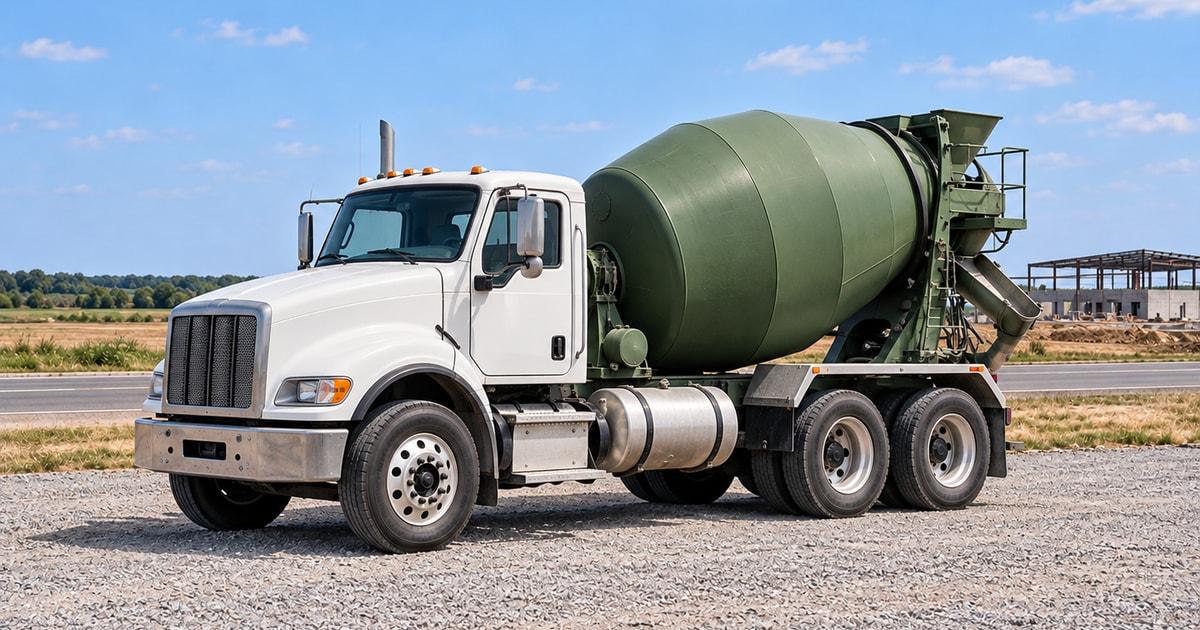
Who is liable after a concrete mixer truck accident in Oklahoma is generally the ready-mix company whose business the truck was serving — responsible for its driver's negligence on the road and for its own decisions about hiring, training, dispatch, and maintenance — and sometimes also a contractor or site operator who controlled how trucks moved through a pour. Cement trucks are heavy commercial vehicles that spend their working day cycling between batch plants and active job sites, under a delivery clock set by the concrete itself, and federal and Oklahoma law treat them distinctly enough that the rules that applied to your crash have to be sorted, not assumed. This article explains who the defendants usually are, which safety rulebook governed the driver, what happens when the injured person was working on the site, and the deadlines that apply.
This article is general legal information, not legal advice. Which rules, parties, and deadlines govern a particular crash are fact-specific questions that need review by an attorney on your actual facts.
Why Mixer Truck Crashes Are Different
A ready-mix truck is not a long-haul freight truck. Its working day is a loop: load at a batch plant, drive city streets and highway segments to a job site, maneuver and often back into position among workers and equipment, discharge, wash out, and return — then do it again. That duty cycle concentrates the truck's time in exactly the places where crashes hurt people: intersections, work zones, residential streets, and the aprons and approaches of active construction sites.
The load adds its own problems. Wet concrete is heavy, it is carried high in a rotating drum, and it is perishable — it must be placed within a limited window after batching or it is wasted. None of that excuses a crash, but it explains the recurring patterns: a loaded mixer that cannot stop in time, a turn or ramp taken too fast with a shifting load, a backing movement at a site that struck a worker or a pedestrian, and concrete or washout slurry escaping onto a roadway. The general physics the Federal Motor Carrier Safety Administration warns every driver about — large blind spots, stopping distances of up to two football fields, and wide turns — apply with full force, and the schedule pressure of a perishable load is a reason to look hard at dispatch and delivery records, not a defense.
If debris, spilled concrete, or washout water from a mixer caused your wreck, the load-escape rules and cases are collected in our guide to fallen cargo and road debris crashes. If the crash happened in or near a work zone, our article on construction zone accidents in Oklahoma covers the site-control side.
Which Safety Rulebook Applied: Interstate, Intrastate, and the Concrete Exceptions
Whether the Federal Motor Carrier Safety Regulations governed the driver depends on the operation, not the paint on the truck. A mixer over the federal weight threshold operating in interstate commerce is generally covered; under the definitions in 49 C.F.R. § 390.5T, even a haul that never leaves Oklahoma can be interstate commerce if it is one leg of trade that began or will end out of state. Much ready-mix delivery, though, is genuinely local — plant to pour and back — and for operations solely in intrastate commerce, Oklahoma's own rules take over. Our guide to who can be sued after an Oklahoma truck wreck walks through that sorting in detail.
The concrete industry then gets named exceptions inside the federal rulebook itself. Under 49 C.F.R. § 395.1(t), a driver of a ready-mixed concrete delivery vehicle who is subject to the federal 30-minute rest-break requirement may use thirty minutes or more spent waiting with the truck at a job site or terminal to satisfy that break, provided the driver performs no other work during it. (Under the current general rule, any 30 consecutive minutes of off-duty, sleeper-berth, or on-duty non-driving time also counts, and drivers using the short-haul exceptions are not subject to the break at all, § 395.3(a)(3)(ii).) Drivers used primarily to haul construction materials and equipment to or from an active construction site within 75 air miles of their normal work reporting location may also qualify for a shorter weekly restart — any period of seven or eight consecutive days may end with 24 or more consecutive hours off duty — under § 395.1(m) and the definition in § 395.2, and qualifying short-haul drivers who stay within a 150 air-mile radius and are released within 14 hours can run without the usual logging rules under § 395.1(e)(1), though their employers must still keep accurate time records.
For purely intrastate Oklahoma operations, 47 O.S. § 230.15(D) directs the Department of Public Safety to set driving-hours limits consistent with the federal rules but allows up to twelve hours of driving in a work period for qualifying vehicles engaged solely in intrastate commerce and not hauling hazardous materials, and it bars adopting any rule that enforces the federal rest-break requirement in 49 C.F.R. § 395.3(a)(3)(ii) against solely intrastate drivers and carriers. Driving may not begin on less than eight consecutive hours off duty.
None of this means mixer drivers are unregulated — it means a fatigue case has to be built on the rulebook that actually applied. The driving limit might be the federal 11 hours, the qualifying Oklahoma 12, or shaped by an exception, and the records proving compliance or violation — time records, dispatch logs, batch tickets — differ accordingly. What a typical mixer does not escape is commercial licensing: under the classification rule in 49 C.F.R. § 383.91, a single vehicle with a gross vehicle weight rating of 26,001 pounds or more falls in Group B, so a full-size mixer ordinarily requires a commercial driver's license, with the medical certification and drug-and-alcohol testing obligations that follow it.
Who Can Be Sued After a Mixer Truck Crash
The defendant list usually starts with the driver and the ready-mix company, which is generally responsible for its driver's on-the-job negligence and may also face claims about its own conduct — the corporate-conduct theories covered in our guides to negligent hiring in trucking and who can be sued after an Oklahoma truck wreck. Oklahoma limits that second track in one important way: when the company admits the driver was acting within the scope of employment, separate negligent hiring and retention claims have been treated as unnecessary, Jordan v. Cates, 1997 OK 9, 935 P.2d 289, while a negligent entrustment claim is not barred by that admission, Fox v. Mize, 2018 OK 75, 428 P.3d 314. Federal courts in Oklahoma have disagreed about how far Jordan still reaches after Fox. Dispatch deserves particular attention in this industry: how many loads a driver was assigned, how delivery windows were set, and what the company's own records say about schedule pressure on the day of the crash are discoverable facts, not speculation.
The site side can add defendants. A general contractor or site operator may share responsibility for how mixer trucks were routed, staged, flagged, and backed on a pour — subject to defenses, including the workers' compensation immunity discussed below. And ownership is not always what it appears: some mixers are owned or leased through arrangements that add parties to investigate. Sorting that out takes contracts, dispatch records, and insurance documents, which is one reason a prompt preservation demand matters; our guide to preserving trucking evidence explains how to send one before records are overwritten. Federal minimum financial-responsibility rules apply to for-hire interstate carriers and to hazardous-materials carriers, 49 C.F.R. § 387.3, as explained in our MCS-90 and trucking insurance guide. A ready-mix company hauling its own concrete is often a private carrier outside those federal minimums, so the policies that actually apply to a local ready-mix operation need case-specific confirmation.
If You Were Working on the Site When It Happened
Construction workers are among the people most often around mixer trucks, and a worker struck during a pour faces a two-track system. Against the worker's own employer, Oklahoma's workers' compensation system is generally the exclusive remedy under 85A O.S. § 5, with narrow exceptions. But exclusivity protects the employer and those the statute extends it to — such as a prime contractor of the employer or an intermediate or principal employer on the same job — not a separate ready-mix company, its driver, or other third parties whose negligence caused the injury. A worker hit by another company's mixer can generally pursue a third-party negligence claim alongside the comp claim, a structure our workers' comp exclusivity article explains in detail, including how the two recoveries interact. Which entities count as the employer or its statutory extensions on a multi-employer site is exactly the kind of question that should be answered by counsel early, not guessed.
Deadlines, Fault Arguments, and the Evidence That Decides It
Most Oklahoma injury claims against a private ready-mix company carry a two-year limitations period under 12 O.S. § 95(A)(3), with exceptions and traps — wrongful death, minors, and more — collected in our statutes of limitations guide. If a government entity's own truck or conduct is genuinely in play — a government-owned truck, for example — the Governmental Tort Claims Act requires written notice within one year of the loss, 51 O.S. § 156(B), followed by short post-denial deadlines to sue, so the operator question should be answered early.
Expect comparative-fault arguments: you were in the mixer's blind spot, you cut off a loaded truck, you walked behind a backing vehicle. Oklahoma weighs those under its comparative negligence system, where recovery is reduced by the claimant's share of fault and barred only if that share exceeds the combined fault of the other parties — explained in our guide to Oklahoma's 51 percent bar. The counterweight is the paper trail a regulated delivery business generates: driver qualification and time records, dispatch and delivery logs, batch tickets with their timestamps, maintenance files, and any camera or telematics data the truck carried. The first days after a serious truck crash matter most for locking that material down; our guide to the first 72 hours after a semi-truck crash applies to mixer wrecks with equal force.
Frequently Asked Questions
Who is liable if a cement truck hits my car in Oklahoma?
Generally the driver and the ready-mix or construction company whose business the truck was serving. The company is ordinarily responsible for its driver's on-the-job negligence, and depending on the facts it can face claims about its own conduct, such as negligent entrustment; if it admits the driver was on the job, Oklahoma law can limit separate negligent hiring and training claims. Depending on the facts, a contractor controlling the job site or additional owners and lessors of the truck can also belong on the defendant list. The claim ordinarily carries Oklahoma's two-year limitations period, but the deadline and the right defendants should be confirmed by an attorney on your facts.
Are concrete mixer drivers exempt from trucking safety rules?
No — but the rules that apply are sorted differently than for long-haul freight. Federal regulations name ready-mixed concrete vehicles specifically, letting a covered driver count qualifying job-site waiting time as the required 30-minute break, and qualifying construction-materials drivers working near an active site can use a shorter 24-hour weekly restart. Purely intrastate Oklahoma operations fall under state rules directed by 47 O.S. § 230.15(D), which allows up to 12 driving hours for qualifying non-hazmat work and does not enforce the federal rest-break rule intrastate. A full-size mixer still ordinarily requires a commercial driver's license with its testing and medical-certification obligations. Which rulebook governed your crash is a fact question an investigation answers.
I was hurt by a mixer truck while working construction. Can I still sue?
Often yes, depending on who employed you and whose truck it was. Workers' compensation is generally the exclusive remedy against your own employer under 85A O.S. § 5, but that immunity does not extend to a separate ready-mix company, its driver, or other third parties whose negligence injured you. Many site injuries support a third-party negligence claim running alongside the comp claim. Multi-employer sites raise genuine questions about who counts as an immune employer, so have counsel sort the parties before any deadline runs.
What evidence matters most after a concrete truck accident?
The company's own operational records: driver qualification files, time and dispatch records, delivery logs and batch tickets with their timestamps, maintenance and inspection files, and any dash-camera or telematics data. Batch tickets are distinctive to this industry — they time-stamp the load and frame the delivery window the driver was working under. Much of this material is routinely overwritten or discarded in the ordinary course of business, so a prompt written preservation demand — sent before the company has any reason to think litigation is coming — can be the difference between proof and speculation.
Talk to an Oklahoma Truck Accident Lawyer
A mixer truck case is a commercial vehicle case with an industry twist: a heavy, regulated truck operating on a perishable-load clock, around workers and traffic, for a company whose own records usually tell the story. Addison Law Firm's trucking accident practice can evaluate the operator, applicable safety rules, and available dispatch logs, batch tickets, and camera data.
Contact us for a free consultation.
This article is general information, not legal advice, and does not create an attorney-client relationship.