
Key Takeaways
- Towing Is a Licensed Industry: Oklahoma regulates wrecker services through the Department of Public Safety under 47 O.S. § 952, with rules on equipment, operators, and insurance in OAC Title 595, Chapter 25. Licensing, training, inspection and insurance records can add important evidence to a tow-truck investigation.
- Check Both the Insurance Requirements and the Policy: DPS's wrecker rules require liability coverage, on-hook or in-tow coverage for the towed vehicle, and garagekeeper's coverage for stored vehicles, with class and storage exceptions. The last version published in the administrative code is OAC 595:25-5-4, but DPS's rulemaking replaces that section with a new insurance rule, so confirm the rule in force on the crash date and then obtain the actual policy; a licensing requirement does not establish coverage for a particular crash.
- A Police-Requested Tow Is Still Usually a Private Company: When troopers or local police call a wrecker to a crash scene, the company generally comes off a rotation log of licensed private operators — it does not become a government agency. The claim generally proceeds against the company under ordinary negligence law, not through the Governmental Tort Claims Act.
- The Crash Patterns Are Distinctive: Tow trucks share the physics the Federal Motor Carrier Safety Administration warns about — large blind spots, long stopping distances, and wide turns — and add hazards of their own: a towed vehicle that can come loose or swing, and work performed on live shoulders where Oklahoma's move-over law, 47 O.S. § 11-314, expressly names licensed wreckers.
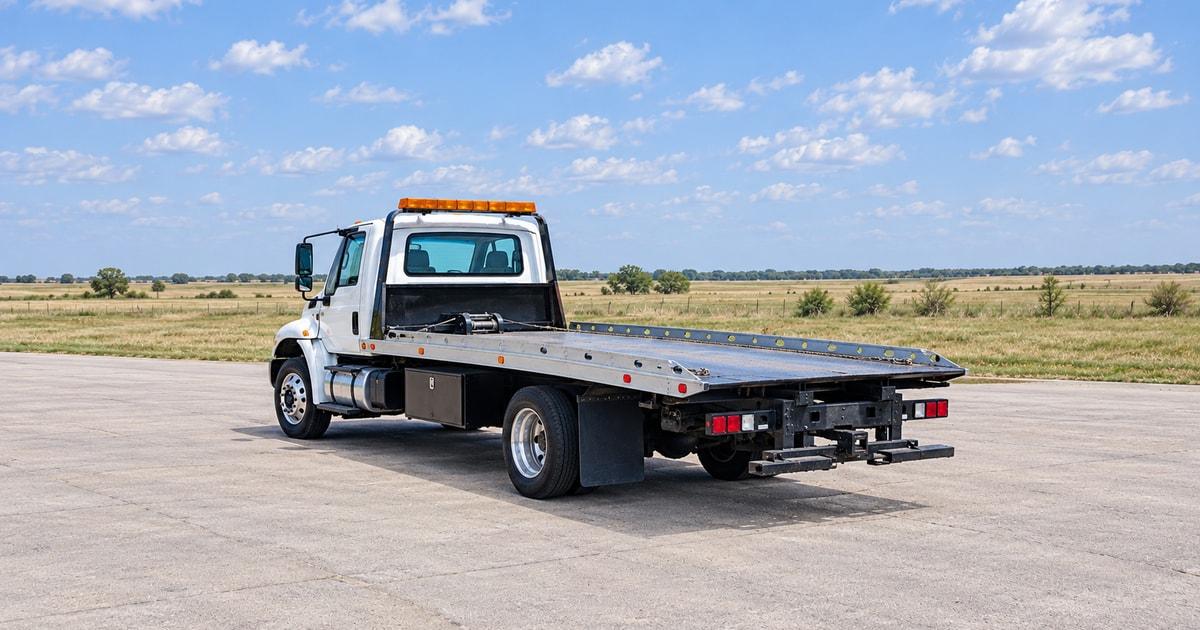
After a tow-truck crash in Oklahoma, identify the operator, its licensing status, and the insurance that may apply. Wreckers are licensed and supervised by the Oklahoma Department of Public Safety, bound by administrative rules on their equipment, their operators, and the insurance they must carry, and — when police call them to a scene — dispatched from official rotation logs of approved companies. When a wrecker rear-ends stopped traffic, when a towed car comes off the hook or swings across the centerline, or when someone is hurt during a roadside hookup, the responsible company is generally a regulated private operator whose insurance requirements and actual policies should be checked. This article explains who the defendants are, what the licensing system contributes to the proof, and the deadlines that apply.
This article is general legal information, not legal advice. Which rules, coverage, and deadlines govern a particular crash are fact-specific questions that need review by an attorney on your actual facts.
Towing Is a Licensed, Regulated Business in Oklahoma
Oklahoma regulates wreckers by statute. Under 47 O.S. § 952, the Department of Public Safety has "the power and authority necessary to license, supervise, govern and control wrecker vehicles," and the statute directs DPS to adopt rules covering business facilities, vehicle storage, towing equipment, operator records, and liability insurance. The same section builds the rotation-log system: wrecker services must meet Oklahoma residency and registration requirements before they can be placed on an official rotation log, and the Highway Patrol maintains its own log of qualifying Class AA services. Rates for nonconsensual tows are set separately by the Oklahoma Corporation Commission.
Oklahoma Administrative Code Title 595, Chapter 25 addresses wrecker licensing, operator and equipment requirements, insurance, and the Highway Patrol rotation log. DPS has been rewriting the chapter and says newer permanent rules have passed but are not yet posted on the state's administrative-rules site, so section numbers in the published code may not match the rules DPS now applies. The Department of Public Safety's wrecker services program and wrecker-service FAQs describe licensing, training, renewal and inspection requirements. Confirm the rule and requirements applicable to the operator and date at issue rather than assuming every operator qualified through the same path. DPS cites 47 O.S. §§ 951–964 as its statutory authority; nonconsensual-tow rates are handled by the Corporation Commission under the Nonconsensual Towing Act of 2011, 47 O.S. § 966.
Licensing requirements can help identify useful evidence. A company may have applications and renewal records, operator qualifications, training or screening documentation, inspection history, and insurance filings. Determine which records exist and what the applicable requirements called for, then compare the company's conduct with those duties. How to demand and preserve company records before they disappear is covered in our guide to preserving trucking evidence.
Three Ways Tow Truck Crashes Happen
A wrecker in transit hits you. Loaded or empty, a tow truck is usually a heavy commercial vehicle, and the Federal Motor Carrier Safety Administration's guidance on sharing the road applies to it as to any large truck: large blind spots, long stopping distances, and wide turns. A flatbed carrying one car or a wrecker towing another may also cross commercial licensing thresholds. Under the CDL classification rule at 49 C.F.R. § 383.91, a single vehicle with a GVWR of 26,001 pounds or more is Group B, and a combination with a gross combination weight rating of 26,001 pounds or more towing a unit over 10,000 pounds GVWR is Group A. Whether a particular driver needed a commercial license, and which state or federal safety rulebook governed the operation, are case-specific questions — the same interstate, intrastate, and exemption sorting that comes up with construction hauling, which our dump truck accidents guide explains.
The towed vehicle comes loose or swings. This is the crash pattern unique to towing: a car that separates from the truck, drags, or swings wide in a turn or a lane change becomes an unguided hazard for everyone behind and beside it. Hookup and securement are the wrecker operator's core professional task and the equipment used, the attachment points chosen, and the speed driven with that load are all operator decisions. The applicable insurance requirements and any policy and endorsements in force should be checked separately. When a detached or swinging load causes a wreck, the investigation centers on the hookup — who performed it, how they were trained, what the equipment's condition was, and what the company's procedures required.
Someone is hurt at the roadside. Towing work happens on live shoulders, at night, around disabled vehicles and the people who were in them. Oklahoma's move-over law, 47 O.S. § 11-314, expressly covers a licensed wrecker displaying flashing lights, requiring approaching drivers on multilane highways to change lanes when possible and safe or to slow down and proceed with caution. A passing motorist who plows into a tow scene faces that statute; a wrecker operator whose own scene setup, lighting, or positioning contributed to a crash faces scrutiny too, and the statute itself says the move-over duty does not excuse a stopped wrecker's operator from the consequences of reckless disregard for the safety of others. Our move-over law guide walks through the statute's coverage, its drafting quirks, and how violations figure in civil cases.
Who Can Be Sued After a Tow Truck Accident
The defendant list in a tow truck case usually starts with the driver and the towing company. The company is generally responsible for its driver's on-the-job negligence. Separate claims for the company's own negligent hiring, training, supervision, or retention can be limited if it admits the driver was acting within the scope of employment: under Jordan v. Cates, 1997 OK 9, 935 P.2d 289, such claims may be treated as superfluous, and federal courts in Oklahoma have divided over how far that rule reaches. Negligent entrustment survives such an admission under Fox v. Mize, 2018 OK 75, 428 P.3d 314, and claims about the company's own equipment maintenance and dispatch decisions need separate analysis. Our guides to negligent hiring in trucking and who can be sued after an Oklahoma truck wreck cover these theories.
One recurring question deserves a direct answer: it generally does not matter that the police called the tow. When a trooper or local officer requests a wrecker for a crashed or disabled vehicle, the company generally comes off a rotation log kept by DPS or a local government under 47 O.S. § 952 — a list of licensed private businesses taking turns — or is called under a local towing contract. Being dispatched that way does not convert the company into a government entity, and the claim generally proceeds against the company under ordinary negligence law rather than through the Governmental Tort Claims Act's notice deadlines and damage caps. Borderline arrangements exist and the operator's identity should be confirmed early, but the usual tow truck case is a case against a private, state-licensed business whose actual insurance must be confirmed.
The Insurance a Licensed Wrecker Must Carry
DPS treats insurance as part of wrecker licensing: proof of required insurance is part of every new and renewal application, according to the agency's wrecker-service FAQs. The last version of the insurance rule published in the administrative code, OAC 595:25-5-4 (last amended effective September 12, 2014), sets separate liability, on-hook or in-tow, and garagekeeper's requirements by license class, and exempts General-class services without storage facilities from the garagekeeper's requirement. That rule is being replaced. DPS's wrecker-services page says new permanent Chapter 25 rules have passed but are not yet posted on the state's administrative-rules site, and the agency's published rulemaking revokes § 595:25-5-4 and adds a new insurance section, 595:25-5-23, that keeps the same three coverage types. Check the rule in force on the relevant date, the operator's license class and storage arrangements, and the complete insurance policy and endorsements. A requirement to carry insurance does not establish that a policy was in force or that it covers a particular injury or property loss.
Towing damage and storage damage raise different coverage questions. Check the policy and endorsements in force, the operator's role, and how the damage occurred before assuming that either coverage will pay. Property-damage and injury claims may need to be assessed together. What a totaled or damaged car is actually worth — and the diminished value a repaired car may still claim — are covered in our total loss guide and diminished value guide.
Deadlines, Fault Arguments, and the Evidence That Decides It
Most Oklahoma injury claims against a private towing company carry a two-year limitations period under 12 O.S. § 95(A)(3), with exceptions and traps — wrongful death, minors, and more — collected in our statutes of limitations guide. If any government entity's conduct is genuinely in play, the Governmental Tort Claims Act requires written notice within one year of the loss and imposes short post-denial deadlines to sue (51 O.S. §§ 156–157), which is one more reason to have the operator question answered by counsel early rather than assumed.
Expect comparative-fault arguments: you were following too closely behind the tow, you tried to pass a working wrecker, you were in the blind spot. Oklahoma weighs those arguments under its comparative negligence system, where recovery is reduced by the claimant's share of fault and barred only if that share exceeds the combined fault of the other parties — explained in our guide to Oklahoma's 51 percent bar. The counterweight is the operator's own paper trail: the license file, training and drug-screening records, equipment inspection history, dispatch and rotation records, and any camera or telematics data the truck carried. Determine which records exist and what duties govern them, then preserve them promptly.
Frequently Asked Questions
Who is liable if a tow truck hits my car in Oklahoma?
Generally the tow truck driver and the towing company, which is responsible for its driver's on-the-job negligence. Direct claims such as negligent hiring or training may be limited if the company admits the driver was on the job (Jordan v. Cates), while negligent entrustment can still proceed (Fox v. Mize). The licensing rules and the company's actual insurance are separate parts of the investigation: obtain the policy and endorsements rather than assuming a required minimum establishes available coverage. The claim ordinarily carries Oklahoma's two-year limitations period for injury claims, but the deadline and the right defendants should be confirmed by an attorney on your facts.
A car came off a tow truck and caused my wreck. What does that mean for my case?
The investigation should focus on the hookup and the load. Identify who secured the towed vehicle, their qualifications and training, the condition of the straps, chains or wheel-lift equipment, and the speed and route driven with that load. Determine which company and equipment records exist and preserve them promptly. Any insurance coverage for the collision must be checked against the policy and endorsements in force.
Does it matter that the police called the tow truck?
Generally no. Law enforcement requests tows from rotation logs of licensed private companies under 47 O.S. § 952, and taking a turn on that list does not make the company a government agency. The claim generally proceeds against the private company under ordinary negligence law — without the Governmental Tort Claims Act's notice procedure or its damage caps, though Oklahoma's general cap on noneconomic damages in 23 O.S. § 61.3 can apply. The exception worth checking is any claim aimed at a government entity's own conduct, which requires written notice within one year and has short post-denial deadlines to sue; an attorney should sort the defendants early so no clock runs out.
What if the tow company damaged my car while towing or storing it?
The published rules distinguish on-hook or in-tow coverage from garagekeeper's coverage, with requirements and exceptions tied to the operator's class and storage arrangements. Whether insurance will cover damage during towing or storage depends on the applicable rule, the actual policy and endorsements, and what happened. Document the damage immediately and obtain the company's insurance information. A property claim is separate from any injury claim; if the car is a total loss or worth less after repair, our total loss and diminished value guides explain how those amounts are measured.
Talk to an Oklahoma Truck Accident Lawyer
Licensing, training, insurance and equipment records can be important in a tow-truck case. Addison Law Firm's trucking accident practice can help identify the operator, request the license and training records, and send prompt preservation letters.
Contact us for a free consultation.
This article is general information, not legal advice, and does not create an attorney-client relationship.