
Key Takeaways
- The location changes the legal analysis: Oklahoma's street-and-highway backing statute is not a general loading-dock rule. Identify where the truck started, traveled, and struck the person or vehicle.
- A blind spot does not decide fault: The evidence must show what precautions were reasonable, what the driver did, and how the backing movement caused the injury. The injured person still must prove the claim.
- A license is not proof of safe backing: Federal commercial-license standards address backing knowledge and skills. They do not certify that a particular maneuver complied with the law.
- Preserve the whole maneuver: Dock video, truck cameras, witness positions, and the approach before reverse began can matter more than a photograph of the final impact.
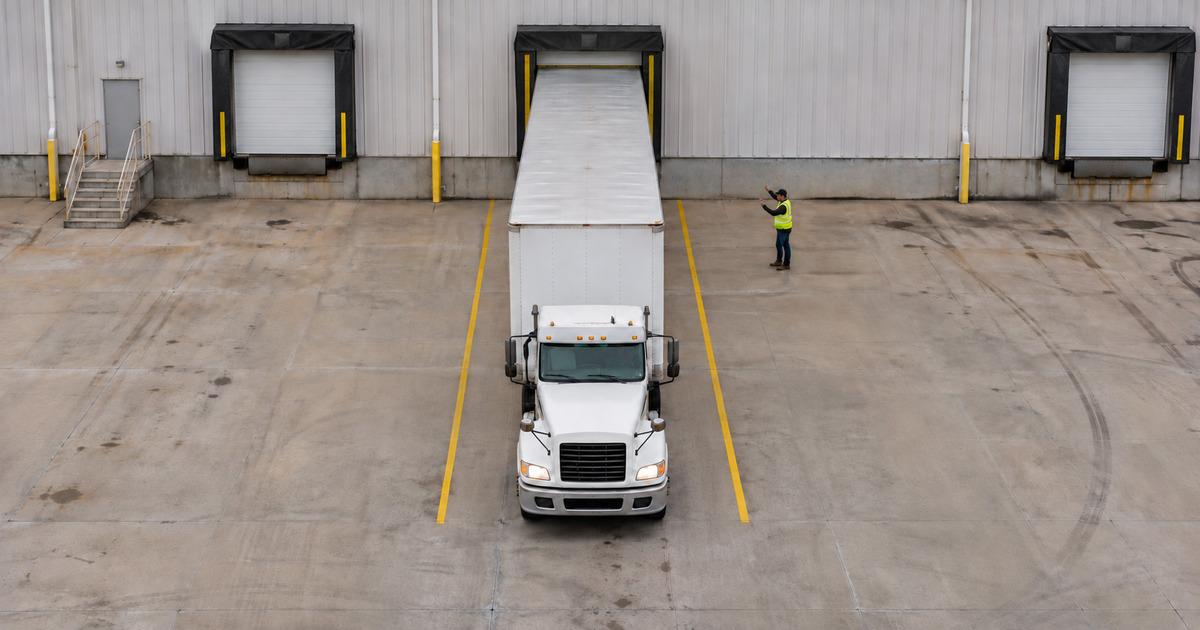
A truck driver can be liable for backing into a car or pedestrian in Oklahoma, and the driver's employer or another negligent party may also be responsible. But the truck being in reverse does not automatically establish fault. The first questions are where the maneuver happened, why the driver backed, what the driver could see, and what precautions could have prevented the impact. A semi reversing across a street into a warehouse presents a different case from a truck moving entirely inside a private loading yard.
Backing into a dock, leaving a delivery space, and reversing toward traffic raise different questions from a blind-spot lane change. A garbage-truck accident can add collection-route hazards and public-operator issues. The reverse path still needs its own investigation.
What Oklahoma's Backing Statute Actually Says
47 O.S. § 11-1102 limits backing on a street or highway to the distance necessary to enter the proper driving lane from a parked position. Before that movement, the driver must ascertain that it can be made without endangering other traffic. That is narrower than a general permission to reverse whenever the driver considers it safe.
For example, reversing down a street because a driver missed a delivery entrance is not the parked-position maneuver described by the statute. Whether that provision governs a particular movement depends on the actual location and sequence, not a shorthand description in a crash report.
The chapter's geographic limits matter too. 47 O.S. § 11-101 generally limits its vehicle-operation provisions to highways, with specified exceptions. Its public-parking-lot extension for Chapter 10 and Article IX does not simply extend every traffic rule to every lot. Do not assume § 11-1102 governs an enclosed private dock. Nor does private ownership alone settle whether a particular access road falls within the applicable highway definitions.
Start with a site plan and photographs showing the street boundary, driveway, sidewalk, gate, dock apron, and point of contact. A trailer can strike someone on private property while the tractor remains in the street. That mixed location deserves analysis rather than an automatic public-road or private-property label.
A Private Loading Dock Still Calls for Ordinary Care
The absence of a directly applicable backing statute does not eliminate a negligence claim. Oklahoma's ordinary-care provision, 76 O.S. § 5, addresses injuries caused by a person's lack of ordinary care or skill in managing person or property. A private-yard case still asks what reasonable care required under the circumstances and whether a failure caused the injury.
Consider a warehouse where employees must cross behind trailers to reach a time clock. Relevant questions include whether that crossing was visible, whether drivers received instructions, whether someone controlled the crossing during backing, and whether the driver stopped when a person entered the path. A painted pedestrian route or a dock assignment can help explain the risk. Neither proves liability by itself.
The facility's conduct may need investigation as well. Who assigned a blind-side approach? Who moved a barrier? Did a dock employee wave the truck back without checking the crossing? A claim against the property operator requires its own duty, negligent conduct, and causal connection. Owning the building is not enough.
If you were hurt while working, first identify your employer. Under 85A O.S. § 5, workers' compensation is generally the exclusive remedy against your own employer and coemployees. The protection can also cover your employer's prime contractor, a general contractor providing qualifying subcontractor coverage, and other parties identified by the statute. A different company at the site is not automatically immune or automatically subject to suit; intermediate or principal-employer relationships matter. The statute has exceptions, including failure to secure required compensation and narrowly defined intentional torts. Being denied benefits does not itself remove immunity.
Federal coverage also needs a separate check. The general safety rules address interstate commercial operations and contain exceptions under 49 C.F.R. § 390.3T. Commercial-license rules have their own coverage provisions. Neither a private dock nor a large truck alone answers which federal requirements apply; the vehicle, operation, particular rule, and applicable Oklahoma requirements must be identified.
Backing Skills and Safety Advice Are Different Sources
The federal commercial driver's license framework treats backing as a professional skill. 49 C.F.R. § 383.111(a)(6) addresses backing principles and maneuvers. Section 383.113(b)(4) and (7) addresses straight-line backing, checking path and clearance while backing, and backing along a curved path.
Those provisions help identify relevant knowledge, testing, and training records. They are not a certification that a license holder backed safely on the day of the crash, and a collision does not itself prove a licensing violation. Part 383 also has its own applicability and exceptions; it should not be applied to every delivery vehicle simply because it is called a truck.
The Service Oklahoma commercial driver manual, § 2.2.4, advises drivers to avoid unnecessary backing, inspect the path, use mirrors, back slowly, favor the driver's side when possible, and use a helper when available. It also discusses getting out to check uncertain clearance and agreeing on signals with a helper.
That is driving instruction, not the text of § 11-1102 and not a universal statutory spotter requirement. It can guide questions about the driver's choices without replacing the legal analysis. Company policies and site instructions should likewise be identified as policies and instructions, not silently presented as statutes.
When the Driver Was Using a Spotter
A spotter can help explain how the maneuver was supposed to work. Identify who selected that person, where the person stood, what signals were agreed on, and whether the driver could actually see them. Ask whether the spotter watched the trailer corner, the pedestrian crossing, or only the dock opening. Those are not necessarily the same view.
Suppose a warehouse employee gives a backing signal while a delivery worker walks behind the trailer. Video may show that the employee never had a view of the crossing, or that the truck continued moving after the employee stepped out of sight. Each version points to different conduct and different possible defendants.
Using a helper does not automatically excuse the driver. The helper's involvement also does not automatically make the warehouse responsible. The proof must connect each person's role and actions to the impact. A useful witness interview records what the witness saw, not merely the conclusion that someone was directing the truck.
The Evidence That Shows the Reverse Path
Preserve video from before the truck stopped to set up the maneuver through the aftermath. A short impact clip may omit an earlier clearance check, a changed dock assignment, or a pedestrian entering the area. Request the original recording and its timing information, not only a phone recording of a monitor. Preserving trucking evidence starts with identifying who holds it.
Document the equipment as it existed at the time. Mirror positions, camera placement, a blocked lens, trailer doors, cargo, and parked equipment can affect visibility. Photograph the driver's sightlines and the trailer's corners. Do not recreate a dangerous maneuver or enter the yard without permission to obtain those photographs.
Electronic evidence depends on the truck and installed systems. An electronic logging record is not a continuous video of the reverse path. A low-speed contact may not trigger an engine event record. Identify the actual module and available truck engine data before anyone promises a reconstruction from a black box.
Preserve dock assignments, yard maps, dispatch messages, check-in records, backing policies, training materials, inspection complaints, and any report about cameras or warning devices. An expert may need measurements of the travel path and available sight distance. No single document substitutes for reconstructing who moved, who could see whom, and when stopping was still possible.
Fault Does Not Automatically Shift to Either Side
The injured person must prove the negligence claim. Reverse movement, a blind spot, or a missing spotter does not shift that burden to the driver. Nor does the driver's statement that the person should have stayed clear establish comparative fault.
The Federal Motor Carrier Safety Administration's passenger-driver guidance advises motorists to avoid lingering in blind spots. That is safety advice, not a rule making every person behind a truck responsible for being struck. The timing matters: was the car already stopped when the truck began backing, or did it enter an obvious moving path?
Under 23 O.S. § 13, an injured person's negligence bars recovery when it exceeds the combined negligence of the other people or entities causing the harm. Section 14 reduces an otherwise recoverable award in proportion to the injured person's negligence. Under that comparative-fault framework, equal fault is not the same as fault exceeding the combined share.
Identify the Operator and Check the Deadline Early
For a private operator, an ordinary Oklahoma negligence injury suit generally has a two-year limitation under 12 O.S. § 95(A)(3), subject to the claim's accrual and applicable exceptions. That period is not an evidence-retention period. Camera footage may be overwritten long before a filing deadline.
If an Oklahoma state or local government entity operated the truck, investigate the Governmental Tort Claims Act immediately. 51 O.S. §§ 156 and 157 generally require claim presentation within one year of loss, denial before suit, and suit within 180 days after denial. A claim not approved in full within 90 days is generally deemed denied, even without a rejection letter. Written extensions and statutory details can change the calculation. Calling the driver's insurer does not substitute for proper claim presentation. Public ownership, employee status, scope of employment, the proper recipient, and applicable exceptions require verification.
Frequently Asked Questions
Is the backing truck always at fault?
No. The reverse path and precautions matter, but the injured person still must prove negligent conduct and causation. Video, witness positions, sightlines, and the other person's movements can support or undermine that proof.
Can a truck back from the street into a loading dock?
Do not assume that a customary delivery maneuver is legally permitted. Section 11-1102 restricts backing on streets and highways to a specific parked-position movement. The exact route, location, and applicable rules need review, including where part of the maneuver occurred on private property.
Does every backing truck need a spotter?
The commercial driver manual recommends a helper when possible; that is not a universal statutory requirement. A particular operation may have additional rules or site procedures. Whether reasonable care required a helper in the circumstances is a separate question.
What if the crash happened inside a warehouse yard?
A private-yard location does not eliminate an ordinary-negligence claim or automatically bring the public-road backing statute into play. If you were hurt at work, workers' compensation immunity may protect your own employer, coemployees, qualifying prime or general contractors, and other protected parties. The facility's conduct, employment and contracting relationships, and statutory exceptions need review before deciding whom you can sue.
What should I preserve after a backing accident?
Keep photographs, witness contact information, the crash report, and messages about the incident. Identify cameras and their owners promptly. Preserve available footage covering the setup and reverse movement, along with the equipment configuration and dock instructions. Get medical attention first and avoid returning to an unsafe area.
Talk About an Oklahoma Truck Backing Crash
The truck's path, the driver's view, and the dock or street layout deserve a close look. Contact Addison Law Firm about the crash or learn about our Oklahoma trucking accident practice.
Discuss Your Trucking AccidentThis article is general information, not legal advice, and does not create an attorney-client relationship.