
Key Takeaways
- The Crash Does Not Prove Fault: Speed, steering, load placement, equipment condition, weather, and other traffic all need investigation. Historical tanker statistics cannot establish what caused your wreck.
- Match the Rule to the Facts: Federal cargo rules address stability and securement. Hazardous-condition rules and Oklahoma's speed statute may also matter. The applicable duty, violation, and connection to the injury must be established.
- Look Beyond the Driver: Depending on the evidence, the carrier, loader, or maintenance provider may share responsibility. Preserve available electronic data, load records, inspection documents, and the truck itself.
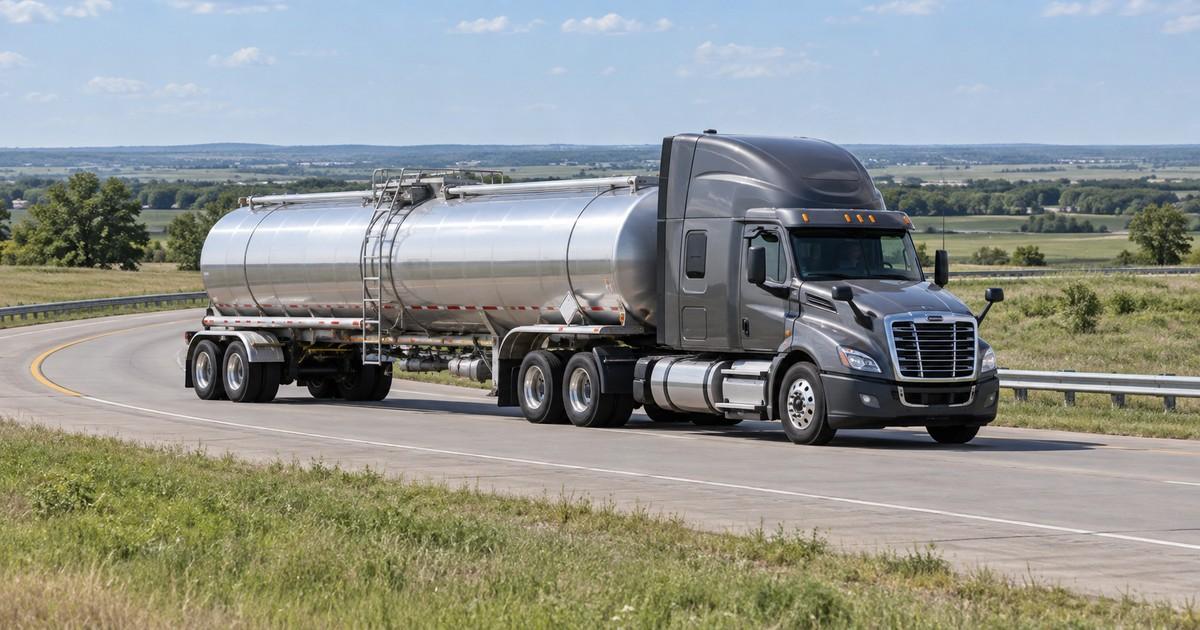
A truck rollover can support an injury claim against the driver, carrier, or another responsible party, but the fact that a truck tipped over does not establish negligence. The investigation has to explain why it rolled and how that failure caused the injury. Speed, a steering correction, shifting cargo, equipment defects, and road or weather conditions can all matter. If a rolled truck struck your vehicle or spilled cargo into your path, preserving the truck and its records can help distinguish those causes before evidence disappears.
This article is general legal information, not legal advice. Every rollover has its own physics and its own paper trail, and what follows can't substitute for case-specific analysis.
Why a Semi Rolls Over When a Car Wouldn't
A tall or uneven load can raise a truck's center of gravity and reduce its stability. A curve, abrupt steering correction, or wheel dropping onto a soft shoulder can contribute to a rollover. The load's height and distribution matter alongside speed, road geometry, suspension, and tires. A reconstruction must account for the particular vehicle rather than assume that every semi responds the same way.
The Federal Motor Carrier Safety Regulations address load stability, not just cargo falling onto the road. Investigators may need to trace decisions made before the trip: how the trailer was loaded, whether reported defects were addressed, and what the driver knew about the load and route.
What the Tanker Research Can Tell You
The Federal Motor Carrier Safety Administration's (FMCSA) cargo tank rollover fact sheet identifies driver error, drowsiness and inattention, vehicle condition, and movement of liquid in partially filled tanks as concerns. Its statistical footnote points to the 2007 Cargo Tank Roll Stability Study. Those historical figures should not be presented as today's crash rates or the odds that a particular driver was negligent.
The useful questions are specific: Did the truck leave the pavement before tipping? Was there an abrupt correction? How full was the tank, and what internal compartments or baffles did it have? Did a defect contribute, rather than merely exist? Cargo-tank findings also should not be treated as a statistical description of every box trailer, flatbed, or other truck.
Our guide to oilfield truck accidents addresses a related setting when the truck was hauling crude or produced water.
Federal Rules That May Matter
Which rules apply depends on the vehicle, cargo, and operation. A regulatory violation is not established merely because a truck rolled over, and the injured person still needs to connect the alleged failure to the harm.
Oklahoma also adopts federal motor-carrier rules, including Parts 392 and 393. For an Oklahoma-only trip, state applicability rules and exceptions must be checked rather than assuming every federal requirement applies.
Cargo securement. 49 CFR 393.100 addresses loss of cargo and shifting that adversely affects stability or maneuverability. Section 393.102 sets separate breaking-strength and working-load-limit criteria for tiedowns and other fastening devices. For example, its breaking-strength conditions include 0.8 g forward deceleration and 0.5 g lateral acceleration, applied separately. The working-load-limit criteria use different values; the numbers are not interchangeable.
Do not apply a tiedown rule mechanically to liquid inside a tanker. Section 393.106(a) excludes certain bulk commodities, including liquids carried in structural tanks, from that section's article-securement requirements. That does not exempt a tanker from every safety rule. It means the investigation must identify the applicable loading, containment, and equipment duties. Our unsecured cargo guide and overloading article address related issues.
Speed and conditions. 49 CFR 392.14 requires extreme caution and reduced speed when hazardous conditions adversely affect visibility or traction. If conditions become sufficiently dangerous, operation must stop until it is safe to resume. The rule has a limited passenger-safety qualification allowing travel to the nearest safe point when stopping would increase the hazard to passengers. A storm does not automatically excuse the driver, but the regulation's actual trigger must be shown; not every wind-related stability issue necessarily involves impaired visibility or traction.
Fatigue and equipment. Driving logs, dispatch communications, and reported defects may help explain a late correction or failure to slow down. Their relevance depends on the evidence, not a national percentage. Our guides to driver fatigue and sleep apnea claims and brake failure and negligent maintenance explain those investigations.
Oklahoma Law Adds Its Own Speed Duty
Federal rules are not the only measuring stick. Oklahoma's basic speed statute, 47 O.S. § 11-801, requires every driver to drive at a "careful and prudent speed" that is "reasonable and proper" for the traffic, surface, width of the highway, and other existing conditions — and it separately requires an appropriate reduced speed when approaching and going around a curve, on narrow or winding roadways, and when weather or highway conditions create a special hazard. The posted limit is a ceiling, not a safe harbor: a tanker that enters a cloverleaf at the posted limit with a half-full tank of surging liquid may still be driving faster than § 11-801 allows for that vehicle in that condition.
Who Can Be Held Liable After a Rollover
More than one party may have contributed. Identifying a company connected to the truck is only the first step; establishing its legal responsibility requires more.
The motor carrier may answer for an employee driver's negligence within the scope of employment. Its own loading practices or maintenance may also need examination. The loader may be responsible for negligent load placement or securement, but cargo contracts, the nature of the defect, and the carrier's inspection responsibilities matter. A maintenance contractor may be involved if deficient work contributed. Ownership or involvement alone does not prove liability. Our guide to who can be sued after an Oklahoma truck wreck addresses the relationships and claim-specific limits.
49 CFR 392.9(b) requires driver cargo checks before and during a trip. Its exceptions cover sealed vehicles the driver has been ordered not to open and loads whose inspection is impracticable. Those exceptions concern subsection (b)'s inspection duties; they do not erase subsection (a)'s proper-loading requirements.
Another vehicle's movement may be relevant even if it never struck the truck. Video, witness accounts, and scene evidence matter more than how often evasive maneuvers appeared in an old study. Your own share of negligence may reduce or bar recovery under Oklahoma law. Our explainer on Oklahoma's 51 percent bar covers those rules.
The Evidence That Decides Rollover Cases
The truck's electronic control module may retain useful speed or event data, depending on its equipment, settings, event triggers, and what happened afterward. Do not assume every truck records every steering or braking input. Load records, scale tickets, inspection reports, photographs, and the wreckage may provide separate pieces of the explanation. A broken component also needs examination to determine whether it failed before the crash or broke during it.
Preservation requests should identify the truck, trailer, available electronic data, records, and relevant equipment before repairs, salvage, or routine overwriting alter them. A request does not guarantee that evidence exists or will be produced. Our guides to ECM data and the first 72 hours after a semi-truck crash explain what to consider preserving.
One more distinction worth knowing: a rollover is not a jackknife, though one can lead to the other. A jackknife is the tractor and trailer folding toward each other; a rollover involves the tractor, trailer, or both tipping onto a side or roof. The evidence trails overlap, but the causation questions differ.
Deadlines Depend on the Claim
Ordinary Oklahoma negligence claims for personal injury generally have a two-year limitation period from accrual under 12 O.S. § 95(A)(3). Claims against the state or a political subdivision generally require written notice within one year of the loss under 51 O.S. § 156. Notice is not the same as filing a lawsuit, and a separate deadline follows denial. Death claims, claims involving minors, and workplace injuries require their own deadline analysis. Our Oklahoma governmental tort claims guide explains the notice process. Do not wait for the trucking company's investigation to finish before checking the deadlines that apply to you.
Frequently Asked Questions
Who is liable when a semi truck rolls over in Oklahoma?
It depends on the proven cause and the parties' duties. A negligent driver, a legally responsible employer, a negligent loader, or a maintenance provider may be liable if the required connection to the injury is established. A rollover by itself does not prove negligence or make every company associated with the truck responsible.
The trucking company says wind caused the rollover. Does that end the case?
No, but wind is evidence to investigate rather than dismiss. Oklahoma's speed statute requires reasonable speed for existing conditions. Section 392.14 also matters when hazardous conditions adversely affect visibility or traction; a wind-only stability problem does not automatically establish that trigger. The wind's strength, warnings, load, route, and reasonable available precautions all need examination.
Why does a partial liquid load matter in a tanker rollover?
Liquid movement can affect stability, so the fill level and tank configuration deserve attention. FMCSA's cargo-tank fact sheet discusses that concern using research attributed to a 2007 study. It does not establish the current comparative crash risk for every tanker or prove that a partial load caused a particular rollover. Loading records and vehicle-specific analysis are needed.
What evidence should be preserved after a truck rollover?
Preserve the truck's electronic control module data if available, any dashcam footage, the driver's hours-of-service records, load and weight documentation, bills of lading, securement equipment, maintenance and inspection records, and the wreckage itself before it is repaired or scrapped. Much of this evidence can be overwritten or discarded quickly in the ordinary course of the carrier's business, which is why preservation letters should go out within days, not months.
Does it matter that no other vehicle was involved in the rollover?
The absence of a collision with another vehicle does not by itself rule out a claim. A passenger or someone struck by spilled cargo may still have a claim against a responsible party. An injured truck driver's situation can also involve workers' compensation and limits on suing an employer. A family claim after a death requires its own analysis of who may bring it and against whom. The cause, parties, and employment relationships matter more than the crash label.
Talk to Someone Before the Evidence Disappears
Scene evidence and electronic records can change before the cause is understood. If a truck rollover injured you or took someone from your family in Oklahoma, contact us for a free, confidential consultation. We handle trucking accident cases across the state. Early advice can address preservation and the deadlines that apply to your claims. This article is general information, not legal advice, and does not create an attorney-client relationship.
Injured in a Truck Rollover?
The truck, load records, and available electronic data may help explain what happened. Get advice about preserving that evidence and identifying the parties responsible.
Talk to a Trucking Accident Lawyer